Tuberculosis - I.T. Pyatnochka 2005
Primary tuberculosis
Cirrhotic pulmonary tuberculosis
Cirrhotic Pulmonary Tuberculosis is a clinical form characterized by The Development of Connective Tissue in the Lungs and Pleura As a result of the involution of various Clinical forms of pulmonary tuberculosis or specific Pleurisy. It persists with signs of active tuberculous activity, a tendency toward periodic exacerbations, and scant mycobacterial shedding, but without the presence of an active cavity (Fig. 21).
In patients with newly diagnosed pulmonary tuberculosis, cirrhotic tuberculosis is observed very rarely, and slightly more often among patients registered at anti-tuberculosis dispensaries (up to 1%).
Pathomorphology. Cirrhotic tuberculosis develops as a result of the involution of fibrous-cavernous, chronic disseminated, or Infiltrative pulmonary tuberculosis, pleurisy, or Tuberculosis of intrathoracic Lymph Nodes complicated by Atelectasis. Cirrhotic tuberculosis can be segmental or lobar, localized or widespread, unilateral or bilateral. It is characterized by the development of Bronchiectasis and pulmonary emphysema, along with symptoms of pulmonary and Cor Pulmonale failure.
Overall, based on its Pathogenesis, cirrhotic tuberculosis can be pneumogenic, bronchogenic (post-atelectatic), or pleurogenic.
Clinical presentation. Consistent with the pathomorphological picture of cirrhotic tuberculosis, its clinical manifestations are driven by respiratory failure, chronic non-specific inflammation, and The activity of the tuberculous process.
Five clinical variants of cirrhotic pulmonary tuberculosis are distinguished:
1. localized cirrhotic pulmonary tuberculosis with a paucisymptomatic course;
2. localized or widespread cirrhotic pulmonary tuberculosis with frequent exacerbations;
3. cirrhotic pulmonary tuberculosis complicated by bronchiectasis and periodic hemoptysis;
4. cirrhotic pulmonary tuberculosis complicated by cor pulmonale;
5. total lung involvement with progressive tuberculosis and various manifestations of metatuberculous syndrome.
Class="center">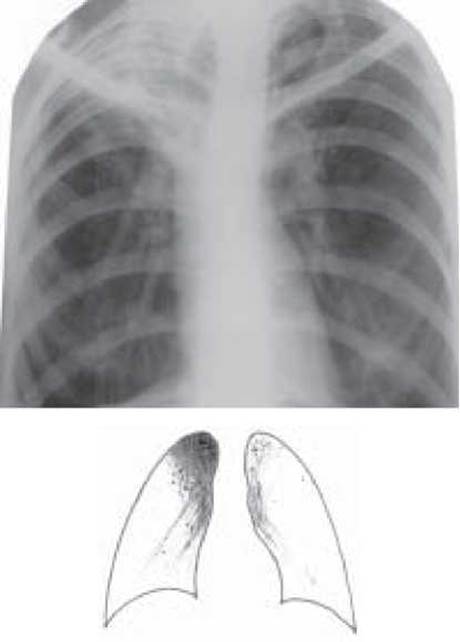
Fig. 21. Cirrhotic Tuberculosis of the upper lobe of the right lung. Overview radiograph
Patients complain of fatigue, shortness of breath, cough with sputum production, occasional hemoptysis, and fever. Over time, lung contraction and narrowing of one half of the chest develop, accompanied by its lagging during Respiration and mediastinal shift toward the affected side. Palpation reveals a shift of the Trachea (Thymus sign) and the apex beat of The Heart toward the lesion. Pulsation of the pulmonary artery is sometimes visible in the 2nd intercostal space. Over the cirrhotic area, vocal fremitus is enhanced, Percussion reveals dullness, and Auscultation detects moist rales of various calibers, sometimes squeaking and crackling rales against the Background of bronchial breathing.
Diagnosis is based on patient history, clinical and radiological findings, as well as laboratory and functional tests.
Differential diagnosis is performed with inactive post-tuberculous and post-pneumonic cirrhosis, stage III Pneumoconiosis, stage III sarcoidosis, and Developmental anomalies of the lungs (agenesis, pulmonary aplasia, lobar hypoplasia).
Treatment. During exacerbations of the tuberculous process, as well as for the Prevention of relapses, anti-tuberculosis drugs to which MBT are sensitive are prescribed. During exacerbations of the non-specific inflammatory process, Antibiotics, mucolytics, expectorants, and postural drainage are used. Treatment and prevention of complications (Chronic cor pulmonale, Pulmonary Hemorrhage and Hemoptysis, Renal Amyloidosis) are essential. For localized unilateral cirrhosis with periodic specific and non-specific flare-ups or hemoptysis, and under satisfactory functional parameters, resection of the affected segment, lobe, or lung is performed.
In spring and autumn, it is advisable to conduct prophylactic courses of anti-Tuberculosis Treatment and sanitation of the bronchial tree. Therapeutic physical training is also recommended.
1. Definition of cirrhotic pulmonary tuberculosis, its pathogenesis, and pathomorphology.
2. How does cirrhotic tuberculosis differ from metatuberculous cirrhosis?
3. From which clinical forms of pulmonary tuberculosis can cirrhotic tuberculosis develop?
4. Clinical presentation of cirrhotic pulmonary tuberculosis (5 clinical variants).
5. Complications of cirrhotic pulmonary tuberculosis.
6. Diagnosis and Cytology/practical/136.html">DIFFERENTIAL DIAGNOSIS OF cirrhotic pulmonary tuberculosis.
7. Specific therapy features for patients with cirrhotic pulmonary tuberculosis. Indications for Surgical treatment.
Last update: 10/08/2026
Editorial and Educational Adaptation: This material has been compiled based on the primary/original source text. The project team performed an editorial review, corrected technical inaccuracies, structured sections, and adapted the content for an educational format.
What was processed:
- elimination of formatting defects (OCR errors, structural breaks, corrupted characters);
- editorial organization of content;
- standardization of terminology in accordance with academic sources;
- verification of factual statements against the original source text.
All mentions of the author, publication year, and origin of the primary text have been preserved in accordance with the source.