Tuberculosis Study Guide - M. M. Savula 2002
Extrapulmonary tuberculosis
Bone and joint tuberculosis
Tuberculosis of the knee joint (tuberculous gonitis)
Primary osteitis in tuberculous gonitis is localized in the epicondyles of the Femur, Tibia, or the Patella. At this stage, the patient's general condition is virtually unaffected. In children, mild signs of systemic toxicity may occur, such as decreased appetite, sweating, and occasional low-grade fever. There are no local manifestations of the disease at this point; however, as the process approaches the joint, intermittent pain arises. The joint becomes slightly swollen, its contours are effaced, and a small amount of effusion appears.
Radiological examination reveals a small area of destruction in one of the bones forming the joint.
When the specific destructive process in the bone ruptures into the joint cavity, spreading beyond the articular ends of the bones and onto the synovial membrane, joint pain intensifies, the joint becomes visibly enlarged and deformed, and the patient limps (Fig. 29). The Muscles of the limb atrophy, causing it to thin, but the Skin fold on the affected side is thicker (Alexandrov's sign). In this phase, fistulae and a cold abscess may form on the lateral surface of the joint. Radiographically, increased bone porosity and areas of destruction are observed. The articular surfaces appear irregular, and the joint space is initially widened and later narrowed.
Class="center">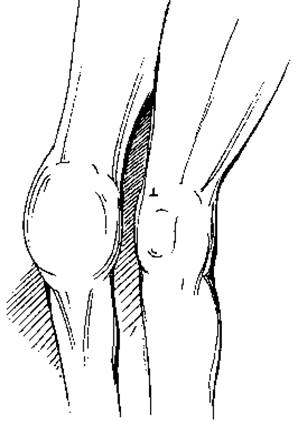
Fig. 29. Joint deformity in tuberculous gonitis. Atrophy of the thigh and lower leg muscles.
As the process subsides, metatuberculous arthrosis develops, leaving persistent deformities and impaired joint function, with possible periodic exacerbations.
The Diagnosis of tuberculous gonitis is based on the clinical and radiological presentation and the results of the Analysis of the knee joint aspirate.
Last update: 10/08/2026
Editorial and Educational Adaptation: This material has been compiled based on the primary/original source text. The project team performed an editorial review, corrected technical inaccuracies, structured sections, and adapted the content for an educational format.
What was processed:
- elimination of formatting defects (OCR errors, structural breaks, corrupted characters);
- editorial organization of content;
- standardization of terminology in accordance with academic sources;
- verification of factual statements against the original source text.
All mentions of the author, publication year, and origin of the primary text have been preserved in accordance with the source.