Pharmacognosy with the Basics of Plant Biochemistry - Kovalyov V. M. 2004
Special Part
Vitamins
Aromatic Vitamins
The aromatic group includes Vitamins K, which are 2-methyl-1,4-naphthoquinone derivatives exhibiting antihemorrhagic activity. Higher plants contain only vitamin K1.
Phylloquinone (vitamin K1, antihemorrhagic) features a naphthoquinone core in its Structure. A high-molecular-weight aliphatic diterpene alcohol residue, phytol—which is also a component of chlorophyll—is attached at the C-3 position.
Class="center">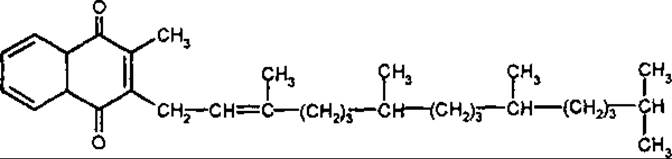
Vitamin K1
Plants that accumulate significant amounts of vitamin K are of great value. These include stinging nettle, corn silk, Guelder rose, shepherd's purse, alfalfa, spinach, and others. The Physiological Role of vitamin K1 is associated with prothrombin formation and the cessation of bleeding. The daily requirement for an adult is 0.2–0.3 mg.
Heterocyclic Vitamins
The heterocyclic group includes vitamins E, P, PP, B, and several others.
Tocopherols (vitamin E, the reproductive vitamin) are chemically derivatives of chroman (benzo-γ-dihydropyran).
The structural foundation of group E vitamins is the tocol molecule (6-hydroxy-2-methyl-2-(4',8',12'-trimethyl-3'-tridecyl)chroman):
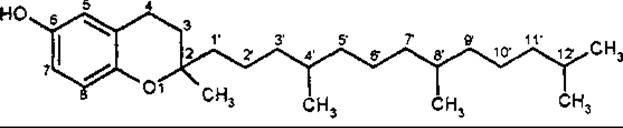
Tocol
Seven isomers are known, among which α-, β-, and γ-tocopherols are the most widespread in plants, differing in the number of methyl groups at the C-5, C-7, and C-8 positions. α-Tocopherol is the most active.
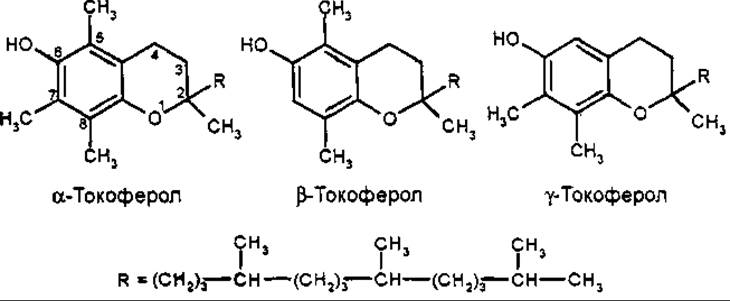
Tocopherols are found in vegetable oils—corn, soybean, sunflower, cottonseed, peanut, sea buckthorn, rosehip, etc.—as well as in the green parts of plants, primarily in young cereal sprouts. This practically eliminates the possibility of hypovitaminosis and avitaminosis due to an adequate Dietary intake of vitamin E.
It is known that tocopherols regulate the normal development and function of the Gonads, as well as embryonic development. In addition, β- and γ-tocopherols exhibit significant antioxidant activity. The daily requirement is 15 IU (1 IU corresponds to 1 mg of D,L-α-tocopherol).
Bioflavonoids (group P vitamins, permeability vitamins) are most active in combination with ascorbic acid, which is why they are sometimes referred to as Vitamin C2. Group P vitamins encompass a large group of natural substances: flavones, flavonols, flavans, catechins, flavanones, anthocyanins, and others.
Natural sources for obtaining Flavonoids include tea leaves (catechins, flavonols), citrus peel (flavanones, flavones), rosehip fruits (anthocyanins, flavones, flavonols), black chokeberry fruits (anthocyanins, flavonols, flavans), buckwheat herb, Japanese sophora flower buds (flavones, flavonols), as well as bilberry, Guelder rose, and strawberry fruits (anthocyanins), among others.
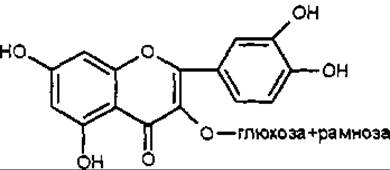
Rutin (quercetin 3-rutinoside)
Rutin, quercetin, and total extracts are used in isolated form. The daily requirement is 15–20 mg.
More details on group P Vitamins can be found in the section «Flavonoids».
Vitamin PP (nicotinic acid, nicotinamide, niacin, antipellagra factor) is found in vegetables, fruits, buckwheat groats, and green walnuts. Yeast and animal Organs (especially the Liver) are rich in nicotinamide.
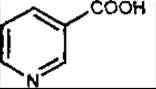
Nicotinic acid
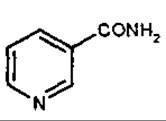
Nicotinamide
Nicotinic acid and its amide serve as prosthetic groups for the Coenzymes dehydrogenase I and dehydrogenase II, which act as hydrogen carriers and thus participate in the body's metabolic processes. Nicotinic acid normalizes the Functions of the Skin and The Nervous system, and stimulates peripheral Circulation. Some researchers consider it to be a provitamin, while nicotinamide is regarded as the true vitamin PP. The daily requirement is 15-30 mg.
Vitamin B6 (pyridoxine, antidermatitic) encompasses several related substances: pyridoxol (pyridoxine), pyridoxal, and pyridoxamine, which are mutually interconvertible.
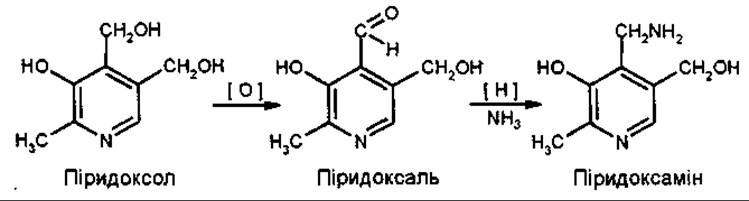
These compounds are found in rice husk, wheat and corn germs, peas, soybeans, and oat flour. They are abundant in yeast, liver, meat, fish, and other sources. Vitamin B6 affects the nervous system, skin, and digestive organs. It has been proven to play a significant role in the utilization of Fatty acids and lowers Blood sugar levels by activating Insulin production. The daily requirement is 1.8-3.0 mg.
Thiamine (vitamin B1, antineuritic) is based on two heterocycles: pyrimidine and thiazole, linked together by a methyl radical.
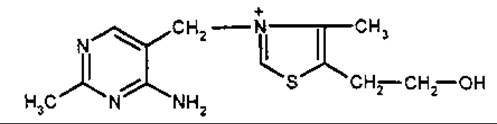
Thiamine
Thiamine is found in yeast, plant pollen, germs and seed coats of cereal crops (wheat, buckwheat, corn, oats), as well as in peanuts, nuts, grapes, beans, onions, carrots, and others.
Vitamin B1 is especially essential for individuals engaged in heavy mental and physical labor, during physical and nervous overstrain, and for pregnant and nursing women. Insufficient intake of this vitamin leads to the accumulation of lactic and pyruvic acids, which disrupts Cardiac Activity, causes polyneuritis, and more. The daily requirement is 1.5-2.6 mg.
Riboflavin (vitamin B2, growth vitamin) is based on the heterocyclic system of isoalloxazine, which consists of two heterocycles: pyrazine and pyrimidine. This is a highly specific structure, and even minor changes to it lead to a loss of vitamin activity or The formation of antagonists.
Vitamin B2 is found in significant quantities in plant pollen (about 1.5 mg/100 g) and saffron styles (Stigmata Сrосі), and is present in wheat germs, oats, corn, rice bran, alfalfa, green peas, beans, tomatoes, hazelnuts, yeast, as well as in animal products.
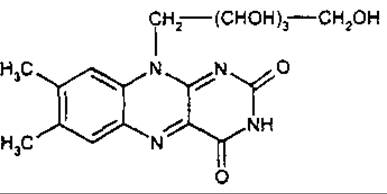
Riboflavin
Riboflavin improves the METABOLISM of CARBOHYDRATES, fats, and Amino Acids. It plays a certain role in the Prevention of allergic conditions. Vitamin B is a part of enzyme systems. The daily requirement is 1.5-3.0 mg.
Biotin (vitamin H1, antiseborrheic) features a structure based on a biophenol and imidazole Skeleton (with carbon atoms at the C-3 and C-4 positions shared), and its side chain is represented by valeric acid.
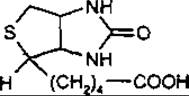
Biotin
Of the eight optical isomers and four racemates, only D-(+) biotin possesses biological activity. It is found in rice bran, soybeans, beans, peanuts, onions, raisins, and other foods, but liver and Kidneys are the richest sources (200-250 mcg/100 g), while among plant products, rye grain (46 mcg) and cauliflower (17 mcg) are the highest. It is part of the prosthetic group of A number of Enzymes, participates in Carboxylation and Decarboxylation processes, as well as the deamination of such vital Amino acids as Serine, Threonine, and aspartic acid. It promotes the synthesis of Unsaturated fatty acids in the liver. A deficiency of biotin leads to neurotrophic disorders, seborrheic dermatitis, lethargy, loss of appetite, and Muscle pain. The daily requirement is 150-200 mcg.
Folic acid and its derivatives (vitamin Bc, vitamin B9, folacin, anti-anemic) are found in the green leaves of plants (from the Latin *folium* — leaf). The Coenzyme forms of folacin participate in the Biosynthesis of Purine bases (adenine and guanine), which are components of DNA and RNA. This determines the vital role of this vitamin in the Biosynthesis of Nucleic acids, GROWTH AND DEVELOPMENT processes, hematopoiesis, and embryonic development. Its deficiency causes severe forms of anemia. Folic acid enters The Human Body through food and is synthesized by the intestinal microflora. It is a derivative of pterin and glutamic acid.
Last update: 06/08/2026
Editorial and Educational Adaptation: This material has been compiled based on the primary/original source text. The project team performed an editorial review, corrected technical inaccuracies, structured sections, and adapted the content for an educational format.
What was processed:
- elimination of formatting defects (OCR errors, structural breaks, corrupted characters);
- editorial organization of content;
- standardization of terminology in accordance with academic sources;
- verification of factual statements against the original source text.
All mentions of the author, publication year, and origin of the primary text have been preserved in accordance with the source.