Human Biochemistry Volume 1 - Murray R. 1993
Metabolism of Proteins and Amino Acids
Catabolism of Amino Acid Nitrogen
Biomedical Significance
Ammonia, which is derived primarily from the a-amino groups of Amino Acids, is potentially toxic to humans. The exact mechanism of this toxicity remains incompletely understood. The body eliminates ammonia by converting it into non-toxic urea. The normal metabolic conversion of ammonia to urea (The Urea Cycle) is essential for maintaining health. In severe Liver disorders—such as extensive cirrhosis (replacement of normal liver Cells with fibroblasts and Collagen) or acute hepatitis—ammonia accumulates in the Blood, triggering specific clinical symptoms. Treatment of children suffering from inherited deficiencies of a urea cycle enzyme must be grounded in a thorough understanding of the biochemistry of urea formation.
In a healthy adult, normal protein turnover accounts for 1–2% of the total body protein pool per day and is primarily associated with the degradation of Muscle Proteins into amino acids. Approximately 75–80% of the released Amino acids are reutilized for Protein Synthesis. The remainder is either metabolized into End products of Nitrogen METABOLISM that are excreted from the body or converted into glucose, ketones, and/or carbon dioxide (Fig. 30.1). Daily protein degradation amounts to 30–40 g. Because roughly 16% of protein mass consists of nitrogen, daily nitrogen loss is 5–7 g. To maintain a normal steady state, an adult requires an average Dietary intake of 30–60 g of protein or an equivalent amount of amino acids, with protein quality being of critical importance. Quality in this context refers to how closely the essential amino acid profile of a dietary protein matches that of the proteins being synthesized. Regardless of the source, any amino acids not immediately incorporated into new proteins are rapidly degraded; in other words, excess amino acids are not stored. Consequently, excessive amino acid intake is pointless: although excess amino acids undergo Catabolism to yield energy, Introduction/36.html">CARBOHYDRATES and Lipids perform this function much more efficiently.
Class="center">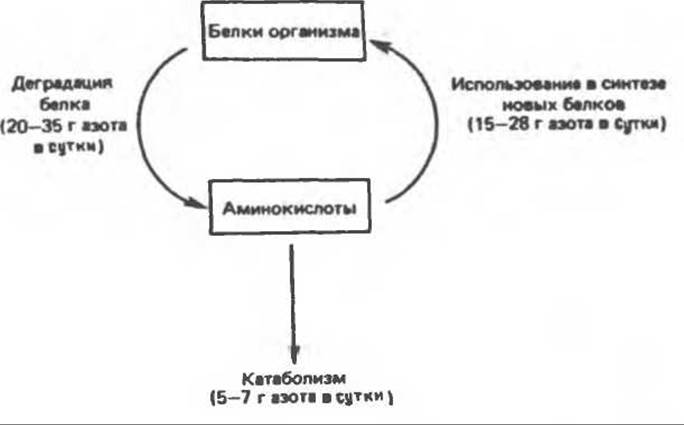
Fig. 30.1. Quantitative relationships in protein and Amino Acid Turnover.
A number of terms are widely used in Nutrition and medicine to describe nitrogen metabolism. Nitrogen balance refers to the difference between the total amount of nitrogen entering the human (or other Organism) body and the total amount excreted. If nitrogen intake exceeds excretion, an individual is said to be in a positive nitrogen balance. Important Examples include periods of growth and Pregnancy; nitrogen balance is positive in both a healthy growing child and a healthy pregnant woman. An adult normally remains in nitrogen equilibrium, where nitrogen intake is balanced by fecal and urinary excretion. In a negative nitrogen balance, The amount of nitrogen excreted exceeds the amount ingested. A prime example is seen in patients with inadequate dietary nitrogen intake (such as in kwashiorkor); a similar state occurs in advanced cancers and in certain postoperative settings.
Amino acids ingested in amounts exceeding the requirements for Protein Biosynthesis cannot be stored, yet neither are they excreted unchanged. The amino groups of excess amino acids are removed via Transamination or Oxidative Deamination, and their carbon skeletons are converted into amphibolic intermediates. In some organisms (such as fish), the final product of nitrogen catabolism is free ammonia; such organisms are termed ammonotelic. Other organisms (birds and amphibians) excrete nitrogen as uric acid and are called uricotelic. Mammalian organisms excrete nitrogen as urea and are designated as ureotelic.
Ammonia is toxic to the Central Nervous system. The Mechanism of this toxicity is not entirely clear, but it appears to be linked to the Reversal of the reaction catalyzed by Glutamate dehydrogenase (see below), which consequently decreases the pool of a-ketoglutarate. Uric acid and its salts have very low solubility in Water and precipitate in Tissues and interstitial fluids at concentrations exceeding a few milligrams per 100 mL. Therefore, higher organisms lack sufficient tolerance for these end products of nitrogen metabolism. For this reason, humans and other mammals convert the end products of nitrogen metabolism into a highly soluble, non-toxic compound: urea.
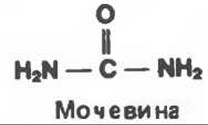
Urea biosynthesis can be conveniently divided into 4 stages: 1) transamination, 2) oxidative deamination, 3) Ammonia Transport, and 4) urea cycle reactions. Figure 30.2 outlines The pathway of Amino Acid Nitrogen catabolism. Although each of these stages also plays a specific role in Amino acid biosynthesis pathways (see Chapter 24), they are examined in this chapter from the perspective of amino acid catabolism.

Fig. 30.2. Flow of nitrogen during amino acid catabolism. Although the reactions depicted here are reversible, they are shown as unidirectional to emphasize the direction of metabolite flux during amino acid catabolism in mammals.
Last update: 06/08/2026
Editorial and Educational Adaptation: This material has been compiled based on the primary/original source text. The project team performed an editorial review, corrected technical inaccuracies, structured sections, and adapted the content for an educational format.
What was processed:
- elimination of formatting defects (OCR errors, structural breaks, corrupted characters);
- editorial organization of content;
- standardization of terminology in accordance with academic sources;
- verification of factual statements against the original source text.
All mentions of the author, publication year, and origin of the primary text have been preserved in accordance with the source.