Biochemistry and Molecular Biology - Belyasova N.A. 2002
Fundamentals of Genetic Engineering
Practical Application of Genetic Engineering Methods
Site-Directed Mutagenesis and Protein Engineering
Introduction/32.html">Genetic Engineering Methods, particularly the cloning of individual genes or their parts, as well as DNA Sequencing, have significantly advanced mutagenesis methodology by overcoming the major limitations of classical approaches to inducing Mutations in genomes. Classical genetic analysis involves exposing an entire genome to a mutagenic factor in vivo, which triggers random—and frequently multiple—mutations, greatly complicating mutant identification. Mutant individuals are detected through altered phenotypic traits, whereas The Nature of the mutation can only be determined after DNA sequencing. Modern targeted mutagenesis essentially reverses this workflow: the Gene or segment of interest is first cloned, its Structure is determined via sequencing, and then the desired alterations are introduced in vitro. The consequences of the induced mutation are subsequently assessed by introducing the mutated gene back into the host Organism.
The simplest approach to targeted mutagenesis involves treating a cloned DNA fragment with a mutagenic agent; however, this inevitably yields random structural modifications within the fragment as well. More reliable and commonly used methods of targeted mutagenesis are performed without relying on mutagenic chemicals. The most prevalent Selection/21.html">Types of mutations thus introduced include deletions, insertions, and nucleotide substitutions.
Deletions. These types of mutations are generated during targeted mutagenesis using endonucleases, which include both restriction and nonspecific Enzymes. The simplest Application of Restriction enzymes involves digesting a genome with a restriction endonuclease that generates multiple double-strand breaks with sticky ends. The resulting fragments are then re-circularized using DNA ligase, which can yield molecules lacking a specific DNA segment. This approach creates extended deletions and is typically employed in preliminary experiments to determine the Functions of relatively large segments of cloned DNA.
Small deletions are generated via the following Procedure. The cloned fragment, residing within a vector, is cleaved at a suitable restriction site (Fig. 21.1). The resulting linear molecule is treated with exonuclease III, which hydrolyzes one strand of the DNA starting from the 3' end. This produces a population of molecules with single-stranded 5' overhangs of varying lengths. These overhangs are subsequently digested with S1 nuclease, which is specific for single-stranded DNA, thereby forming deletions within the DNA. Alternatively, Bal 31 exonuclease can be used, as it catalyzes the degradation of both strands starting from the ends of linear DNA molecules. The enzymatic reactions are controlled by adjusting incubation time, Temperature, and Enzyme Concentration to induce deletions of varying lengths. Prior to circularization, these deletion variants of linear DNA are frequently outfitted with linkers to ensure that restriction sites are present in the vicinity of the deletion. Other modifications of these described methods also exist.
Class="center">
Fig. 21.1. Generation of deletions in cloned DNA fragments using restriction enzymes. Foreign DNA is highlighted in dark, and vector DNA in light.
Insertions. To obtain insertions, cloned DNA is cleaved with a restriction enzyme or a nonspecific endonuclease, and the resulting fragments are then ligated in the presence of the segment intended for insertion into the DNA. Chemically synthesized polylinkers are most frequently used as such segments (Chapter 20).
Insertions, much like deletions, can disrupt the integrity of a gene or The structure of its regulatory regions, resulting in the synthesis of a defective protein (typically inactive in the case of extended deletions or reading frame shifts) or altering the METABOLISM/31.html">Transcription of the gene of interest. This approach is most commonly used to generate regulatory mutants and construct expression vectors (Chapter 20).
Point mutations. These mutations involve nucleotide substitutions. Several approaches can be employed to generate them, including cytosine deamination, nucleotide analog incorporation, incorrect nucleotide incorporation during gap repair, and others.
The first method relies on the fact that cytosine residues in single-stranded DNA can be deaminated to uracil by Treatment with bisulfite ions. Single-stranded regions in DNA are typically generated near restriction sites, for instance, through the action of exonuclease III. Following bisulfite treatment, the single-stranded gaps are filled in using DNA polymerase, and the ends are ligated. At sites where uridylate was formed instead of cytidylate during deamination, an adenylate will occupy the complementary position, and upon Replication of such a molecule, a G-C pair will be replaced by an A-T pair.
Another approach for inducing substitutions involves treating cloned DNA with a restriction enzyme in the presence of ethidium bromide, which intercalates between base-pair planes and disrupts the duplex structure, thereby generating a single-strand break in the DNA. A small gap is created at the site of the single-strand break and subsequently filled in using DNA polymerase, dATP, dGTP, dCTP, and N-4-hydroxycytosine triphosphate instead of dTTP. Hydroxycytosine triphosphate is incorporated into the strand in place of thymidylate, but during DNA replication, it pairs equally well with both adenylate and guanylate. Consequently, through the incorporation of guanylate following an additional round of replication, an A-T → G-C substitution occurs at this site (Fig. 21.2). Because this method introduces nucleotide substitutions directly within a restriction site, it becomes easy to distinguish vectors with the original sequence from mutant ones: simply digesting them with the restriction enzyme used in the experiment will leave the mutant molecules uncut.
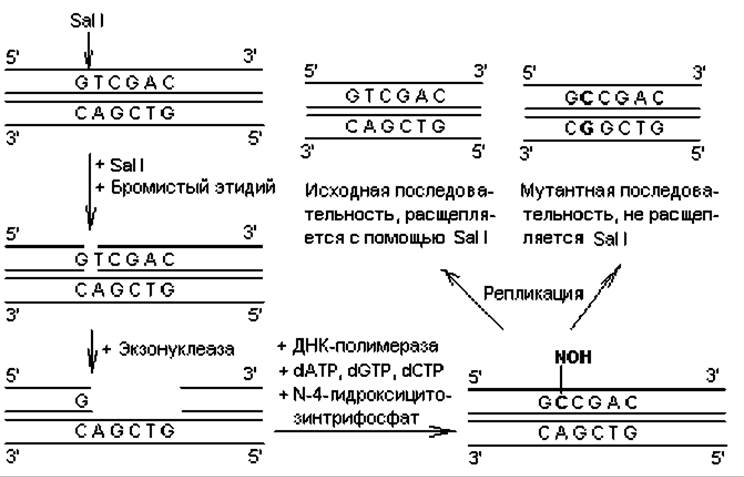
Fig. 21.2. Introduction of nucleotide substitutions during targeted mutagenesis.
A similar method relies on utilizing only three of the four possible NUCLEOTIDES when filling in a single-stranded gap with DNA polymerase. In most cases, the enzyme halts at the position in the molecule where the nucleotide complementary to the missing one is encountered. Occasionally, however, DNA polymerase makes an error and incorporates one of the three available nucleotides. This leads to The formation of circular molecules containing unpaired, non-complementary nitrogenous bases. When such vectors are introduced into bacterial Cells, this damage is partially repaired in a fraction of the molecules. As a result, the original sequence is restored in half of the molecules following replication, while the mutation becomes fixed in the other half. Mutant molecules can be identified using the method described above.
Site-specific mutagenesis. The previously characterized methods of targeted mutagenesis share the feature that the mutation sites are chosen at random. In contrast, site-specific mutagenesis techniques allow mutations to be introduced into a precisely defined region of a gene. This is achieved using synthetic (chemically synthesized) oligonucleotides with a predetermined sequence. The method is advantageous because it does not require convenient restriction sites to be present. It is based on the formation of heteroduplexes between a synthetic oligonucleotide carrying the mutation and a complementary single-stranded DNA strand within a vector.
The procedure is carried out as follows. A short oligonucleotide (8–20 monomers) is synthesized to be complementary to the region of the gene where the mutation is desired. One or more nucleotide substitutions are intentionally introduced into the central region of the oligonucleotide. The gene or fragment under investigation is cloned into an M13 phage-based vector to yield circular single-stranded recombinant DNA molecules. The recombinant vectors and oligonucleotides are then mixed and annealed. Hybridization of the oligonucleotide to its complementary region takes place, while the non-complementary nucleotides remain unpaired. The oligonucleotide acts as a primer in an in vitro polymerization reaction facilitated by DNA polymerase, and the circle is sealed with ligases. The resulting circular molecule is introduced into E. coli cells, where partial repair of the mutated regions and replication take place. Mutation frequencies typically range from 1% to 50%. The selection of cells containing mutant DNA molecules can be accomplished in several ways, with the radioactively labeled oligonucleotide method holding distinct advantages for mutagenesis. In this scenario, the nucleotide serves as a hybridization probe. The principle behind using such a probe is that it is fully complementary to the mutant DNA and only partially complementary to the wild-type DNA. Hybridization conditions (primarily temperature) can be optimized such that the labeled probe forms a stable hybrid exclusively with the mutant DNA sequence, which can then be detected via autoradiography.
Site-specific mutagenesis is particularly valuable because it enables the isolation of mutations independently of their phenotypic expression. This method opens up new avenues for investigating the functions of gene regulatory elements, adjusting promoter "strengths," optimizing ribosome-binding sites, and so forth. One of the primary Applications of this methodology is Protein Engineering.
Protein engineering. This term refers to a set of methodological approaches that enable the redesign of a protein molecule through the targeted introduction of specific mutations into its structural gene (site-specific mutagenesis) and, consequently, desired Amino Acid Substitutions into the Primary Structure of the protein.
A striking example of engineering more active Proteins is the work conducted by Fersht and colleagues on the enzyme tyrosyl-tRNA synthetase from the bacterium Bacillus stearothermophilus. Analyzing the consequences of amino acid substitutions within the Active Site of this enzyme led to the Conclusion that removing groups that form weak Hydrogen Bonds with the substrate can actually enhance its substrate affinity. Specifically, it was discovered that Threonine-51 (occupying position 51 in the peptide chain) forms a long, weak Hydrogen bond with the ribose ring oxygen during the binding of tyrosyl adenylate. At the same time, it was found that Proline occupies this exact same position in E. coli. Site-specific mutagenesis of the gene encoding B. stearothermophilus tyrosyl-tRNA synthetase made it possible to introduce the thr-51 → pro-51 substitution into the peptide. As a result, ATP binding in the enzyme's active site was dramatically improved, and its catalytic activity increased 25-fold.
Another equally significant, practically important example of protein modification is the alteration of subtilisin from Bacillus amyloliquefaciens carried out by Estell and coworkers. Subtilisins are Serine proteinases secreted into the environment by bacilli. These enzymes are produced on a large scale by the biotechnology industry and are widely used as detergent components. A major drawback of subtilisins is the sharp decline in their proteolytic activity when exposed to oxidizing agents, including those found in laundry detergents. The objective in redesigning the subtilisin BPN' molecule was to stabilize it against chemical oxidation.
Preliminary experiments demonstrated that in the presence of hydrogen peroxide, subtilisin rapidly loses activity due to The oxidation of a Methionine-222 residue, which gets converted into the corresponding sulfoxide. Site-specific mutagenesis was employed to replace this methionine residue with all 19 of the other common protein Amino Acids. Plasmids harboring the mutant genes were introduced into strains carrying deletions in the corresponding genes, and The properties of the resulting subtilisins were analyzed. Mutants featuring serine and Alanine at position 222 proved to be reasonably stable against hydrogen peroxide. The most active variant was the mutant containing a Cysteine-222 residue, which exhibited a specific activity 38% higher than that of the wild-type strain.
An analogous approach successfully improved The activity of β-interferon. Other notable achievements in protein engineering include research into clarifying the transforming activity of oncoproteins; altering enzyme thermostability, such as obtaining thermolabile renin and thermostable α-amylase; increasing the binding efficiency of Insulin to its Cell/33.html">Plasma Membrane receptor by substituting Histidine for aspartate at position 10 of the hormone's β-chain; alongside numerous other Examples. A vast array of protein engineering products has already found Practical Application in Industrial processes.
Last update: 06/08/2026
Editorial and Educational Adaptation: This material has been compiled based on the primary/original source text. The project team performed an editorial review, corrected technical inaccuracies, structured sections, and adapted the content for an educational format.
What was processed:
- elimination of formatting defects (OCR errors, structural breaks, corrupted characters);
- editorial organization of content;
- standardization of terminology in accordance with academic sources;
- verification of factual statements against the original source text.
All mentions of the author, publication year, and origin of the primary text have been preserved in accordance with the source.