Biotechnology - Yu.O. Sazykin 2006
Special Biotechnology
Challenges in the Discovery, Development, and Application of Antibiotics in Medical Practice
Antibiotics as Secondary Metabolites and Their Producers
The history of antibiotic science began when London microbiologist A. Fleming discovered a mold colony of the genus Penicillium in 1929 on an Agar plate inoculated with Staphylococcus. This colony had formed As a result of a fungal spore from the air accidentally landing on the agar. He noticed a clear zone of agar surrounding the colony. The fungus produced the antibiotic penicillin, which not only halted the reproduction of Staphylococcus but also caused the subsequent lysis of its Cells. However, purified penicillin was isolated only a decade later, at the beginning of World War II, when Structure/149.html">The problem of combating wound infections became critically urgent.
The term "Antibiotics" encompasses substances produced by microorganisms that selectively inhibit the growth of other microorganisms. Later, this concept was extended to products of their chemical modification, reflected in the term "semi-synthetic antibiotics." Some antimicrobial antibiotics possess The ability to suppress the growth of tumor cells, which led to yet another new term — Introduction/45.html">Antitumor Antibiotics. It was antibiotics, whose medical use for infectious diseases began in 1940, that triggered (through mortality reduction) dramatic global demographic shifts: rapid population growth in developing countries, increased life expectancy in developed countries, and so on. In the global market, the annual output value of the antibiotic industry now exceeds 20 billion USD and continues to grow rapidly.
A crucial characteristic of antibiotics is their selective action on METABOLISM. Typically, out of several thousand metabolic reactions, an antibiotic inhibits only one or a few. In this regard, antibiotics contrast sharply with antiseptics, whose activity is significantly lower (antibiotics suppress microorganism growth at concentrations of about 1 μg/ml and lower).
Antibiotics belong to A wide variety of chemical compound classes. About 14,000 natural antibiotics produced by microorganisms are known, of which roughly 200 are used in medical practice. Antibiotics comprise exclusively low-molecular-weight substances with a molecular mass of no more than a few thousand Daltons. However, the majority of antibiotics applied in medicine have a molecular mass within one thousand Daltons. Lytic Enzymes produced by microorganisms, despite their antimicrobial activity, are not classified as antibiotics (they are protein toxins).
Antibiotics are highly effective against infectious diseases caused by most Gram-positive and Gram-negative Bacteria, as well as many pathogenic Fungi. They are successfully used to treat certain protozoan, rickettsial, and large viral infections.
Treatment success depends on choosing the right antibiotic for the individual patient. While the antimicrobial spectrum of all medically used antibiotics is well known, the specific species and Properties of the infectious agent in a particular patient are usually not. At the same time, treatment—especially for severe conditions—must be started promptly. Examination and questioning of the patient, along with preliminary Conclusions about the localization and Nature of the infection, typically allow the physician to select one of the so-called "antibiotics of choice." Nevertheless, rational and targeted antibiotic therapy must be based on thorough bacteriological Diagnostics, involving the isolation and identification of the pathogen and the assessment of its susceptibility to various drugs, in order to choose the most effective treatment.
To determine pathogen susceptibility, standard paper disks impregnated with an antibiotic solution and dried are used. These disks are placed On the surface of a solid nutrient medium inoculated with the pathogen culture, and following incubation in a thermostat, the diameter of the growth inhibition zone created by the antibiotic diffusing into the agar is measured. Modern clinical microbiology laboratories utilize automated systems that allow for the rapid Processing of A large number of such tests.
Sometimes, after comparing the pathogen's susceptibility to different antibiotics, the initially prescribed "antibiotic of choice" is replaced or supplemented with another drug that proves more effective in the specific case. A frequent reason for such replacement is the spread among pathogens of strains resistant to a given antibiotic. Nevertheless, the range of available natural and semi-synthetic antibiotics does not completely guarantee the success of antibiotic therapy.
It is known that antibiotics are not primary metabolites. As a rule, their structure differs sharply from primary metabolites. Occasionally, their molecules incorporate fragments featuring structures unusual for organisms or metabolite analogues, such as aminocyclitols and aminosugars in Aminoglycosides, or macrocyclic lactones and aminosugars in macrolides and polyenes. Unlike primary metabolites (precursors of macromolecular compounds), antibiotics are, with rare exceptions, virtually undetectable During the first hours of culture growth. For instance, antibiotics produced by fungi or actinomycetes can be detected in the culture broth or producer mycelium only on the second or third day of growth, and even then in insignificant quantities. Their accumulation peaks on the fifth or sixth day.
Although primary metabolites (Amino Acids, sugars, Fatty acids, Purines, etc.) are utilized in the synthesis or "assembly" of the antibiotic molecule, antibiotic production is subject to the general laws of intracellular regulation, and the compound ultimately becomes necessary for its producer.
There are several hypotheses regarding the Biological Role of antibiotics. The most widespread is the hypothesis that antibiotics serve as a mechanism for the producer to overcome "stressful" situations, regardless of whether such stress is caused by nutrient depletion resulting from the growth of a competing culture or from the proliferation of cells within its own culture.
The production of an antibiotic with a specific structure is not a strictly species-specific trait. Strains belonging to the same species, when isolated from natural sources, can sometimes produce entirely different antibiotics. A particularly large number of such Examples are found within the species Streptomyces rimosus. Different strains of this species can synthesize structurally distinct antibiotics: for example, the aminoglycoside antibiotic streptomycin, the polyene antibiotic candicidin, or the peptide-structured antibiotic viridogrisein.
Microbial strains that are far from closely related in their systematic position may sometimes produce similar structures. Cephalosporins are produced not only by fungi but also by actinomycetes (in the latter case, they are termed cephamycins). Antibiotics whose core component is a beta-lactam Nucleus are synthesized not only by fungi and actinomycetes but also by isolated strains of certain bacterial species, including even non-spore-forming ones.
All these findings are difficult to explain on the assumption that each antibiotic plays a specific role in its producer's metabolism. The Japanese researcher Umezawa, who discovered several valuable practical antimicrobial and antitumor antibiotics, even proposed the hypothesis that antibiotics are merely incidental substances for the strain. He suggested that antibiotic Biosynthesis genes might be localized in extrachromosomal genetic elements—Plasmids—and transmitted from one microorganism species to another via conjugation or, for example, carried by temperate phages of broad Specificity. Currently, Umezawa's hypothesis has been rejected; antibiotic biosynthesis genes are now believed to be localized exclusively in Chromosomes.
Attention has shifted to a new concept: in microorganisms, particularly actinomycetes, a portion of the genomic genes remains in a "silent" state. They are not expressed, meaning the products encoded by these genes—including antibiotics—are not synthesized. However, under The Influence of various stimuli, a particular region of the "silent" genome becomes active. This explains why different strains of the same species produce different antibiotics, as well as why microorganisms of different species produce similar antibiotics. Of course, this does not imply that any actinomycete can produce any antibiotic. Yet, THE CONCEPT OF "silent" genes forces us, at a modern molecular level, to return to a principle stated by the pioneer of antibiotic science, American microbiologist S. Waksman. He argued that isolating a soil microorganism on artificial nutrient media and cultivating it under non-natural conditions does not provide a true picture of the microorganism's full biosynthetic potential or the range of secondary metabolites it produces. However, modeling natural environments is an exceptionally complex task. First, they are poorly understood at the micro level. Second, their diversity must be immense.
Tens of thousands of antibiotic producers have been isolated and characterized in laboratories worldwide. Typically, antibiotic producers are soil microorganisms such as Molds, actinomycetes, and spore-forming bacteria.
Molds, or "lower" mycelial fungi, differ from "higher" fungi by the absence of a fruiting body. Molds are widely distributed in soil and are classified as eukaryotic microorganisms featuring a well-defined, membrane-bound nucleus. Molds also possess subcellular structures—Cell/35.html">Mitochondria—where enzymes catalyzing bioenergetic processes are concentrated. The fungal Cell wall consists of Chitin, a polymer containing aminosugar residues. Overall, fungal cells feature a complex Organization and are much larger than bacterial cells.
Molds are multicellular microorganisms with a complex developmental cycle. They form various types of mycelium (e.g., aerial mycelium on The surface of an aqueous medium), spore-bearing structures with spores, and other morphological forms. The fungal developmental cycle lasts 6–7 days. Molds produce hundreds of different antibiotics, yet only a select few find application in medical practice. The most important group of fungal-produced antibiotics consists of Penicillins and cephalosporins. They are collectively known as beta-lactam antibiotics because the crucial part of their molecule responsible for antimicrobial activity is a reactive four-membered beta-lactam ring (a cyclic amide):
Class="center">
The beta-lactam ring derives its name from the fact that its formation involves the closure of a bond between the carbon of The amino acid carboxyl group and the nitrogen of the amino group located at the beta-carbon atom. Beta-lactam antibiotics are produced by two genera of molds: Penicillium (hence penicillins) and Cephalosporium (cephalosporins). Nowadays, the name Acremonium is preferred over Cephalosporium. Two beta-lactam producers are widely known: Penicillium chrysogenum and Acremonium chrysogenum. The former produces benzylpenicillin:

while the latter produces cephalosporin C:

Penicillins feature a sulfur-containing five-membered ring condensed with the beta-lactam structure, whereas cephalosporins feature a six-membered ring. Fungi also include the producer of another medically important antibiotic. A representative of the genus Fusidium, specifically Fusidium coccineum, produces a steroid-structured antibiotic called fusidic acid:
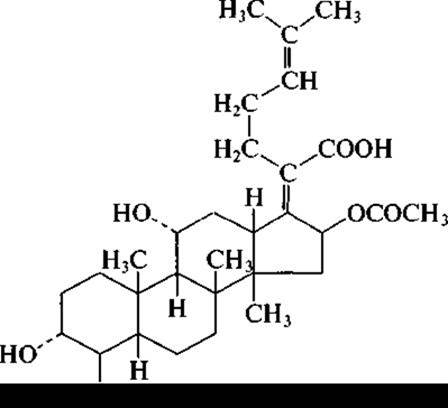
It is worth mentioning another valuable medicinal product produced by fungi. At the turn of the 1970s and 1980s, a cyclic peptide was isolated from a fungus of the genus Tolypocladium; however, it exhibited weak antimicrobial activity and was therefore "discarded" as an antibiotic. Nevertheless, it proved to be a highly effective immunosuppressant. This cyclic peptide, named cyclosporine (specifically cyclosporine G), is now widely used in Organ and tissue transplantation, as well as in the treatment of certain autoimmune diseases.
The name "actinomycetes" reflects a previously widespread misconception that these microorganisms were ray fungi.
It has been established that actinomycetes are much closer to bacteria than to fungi. They are prokaryotes, meaning their genome is not enclosed within a nucleus but exists as a circular chromosome not separated from the Cytoplasm by a nuclear membrane.
Actinomycete cells also lack mitochondria, and their cell wall is composed of a heteropolymer called peptidoglycan. All these features ally actinomycetes with bacteria. However, unlike "true" bacteria (eubacteria), actinomycetes are Multicellular Organisms with a complex developmental cycle, typically lasting 5–6 days, during which they form sporophores and spores.
Actinomycetes are producers of a vast array (around 4,000) of diverse antibiotics.
The majority of antibiotics used in medical practice are produced by actinomycetes. Several species belonging to the genera Streptomyces and Micromonospora (for example, Streptomyces griseus and Micromonospora purpurea) synthesize aminoglycoside antibiotics, which include streptomycin, gentamicin, neomycin, kanamycin, and A number of other broad-spectrum antibacterial agents that have become widely established in clinical practice.
As can be seen from the structural formulas of two representative aminoglycosides — streptomycin:
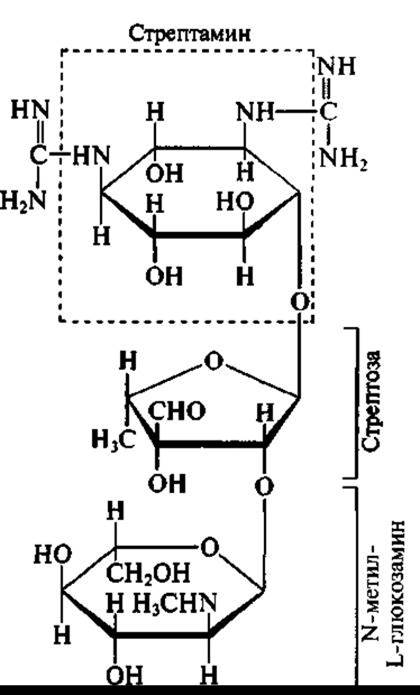
and gentamicin (the latter is produced industrially not as a single pure substance, but as a complex of three closely related compounds: gentamicin C1, gentamicin C1a, and gentamicin C2):

the aminoglycoside molecule invariably contains:
✵ a six-membered aminocyclitol moiety;
✵ sugar and/or aminosugar residues.
In addition to natural aminoglycosides, semi-synthetic aminoglycoside antibiotics—which are products of the chemical modification of natural aminoglycosides—are currently used in medical practice.
Species belonging to the genus Streptomyces (Streptomyces aureofaciens, Streptomyces rimosus, etc.) produce the well-known tetracycline-class antibiotics, such as tetracycline:

chlortetracycline (with a Cl at C7), and oxytetracycline (with an OH at C5).
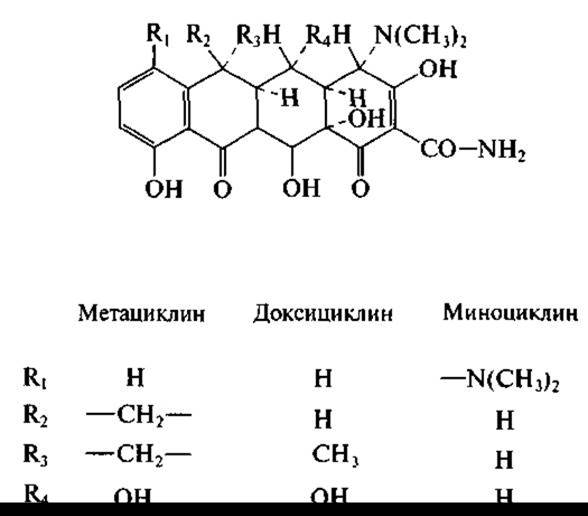
All of them share a similar antibacterial spectrum and are well absorbed orally, although tetracycline offers certain advantages (better tolerability). As evident from their chemical structures, they contain a four-ring core and differ only along the upper periphery of the molecule, while the lower periphery remains identical.
The upper periphery of the tetracycline molecule has been chemically modified to yield semi-synthetic Tetracyclines—doxycycline, minocycline, and methacycline (the first of which exhibits prolonged Circulation in the Blood, while the second possesses enhanced antibacterial potency):
Macrolide antibiotics produced by actinomycetes are widely known; these feature a macrocyclic lactone ring attached to sugars and/or aminosugars. In particular, this group includes erythromycin A (produced by Streptomyces erythraeus):
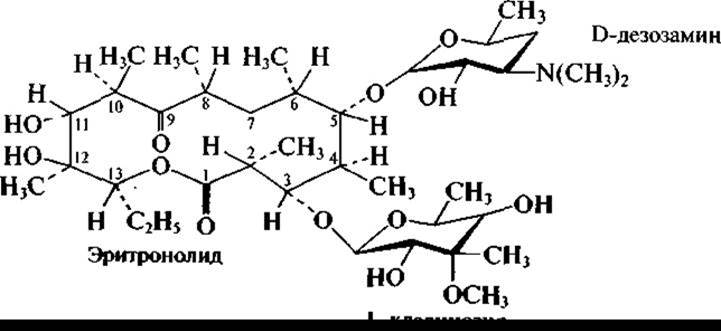
and the structurally related oleandomycin, produced by Streptomyces antibioticus:

These antibiotics are readily absorbed when taken orally. Being narrow-spectrum antibiotics, they are highly effective exclusively against Gram-positive bacteria.
Antibiotics with a complex ansamycin structure have been isolated from an actinomycete initially named Streptomyces mediterranei and later reclassified as Nocardia mediterranea. They feature a naphthalene core connected to an aliphatic chain via ester and amide bonds. The most prominent among them is rifampicin (also known as rifampin), which is, however, a semi-synthetic antibiotic:

Rifampicin is successfully used in the Treatment of tuberculosis. In addition to antibacterial agents, actinomycetes also produce antibiotics that inhibit the growth of fungi and Yeasts, including pathogenic ones. For instance, Representatives of the genus Streptomyces, such as Streptomyces noursei, produce antifungal antibiotics belonging to the polyene macrolides. The macrocyclic lactone ring in these antibiotics contains a series of conjugated double bonds. The best known of these are amphotericin B (a heptaene):

and nystatin (a tetraene-diene):

The molecules of polyene antibiotics also incorporate amino sugars. Polyene antibiotics are widely used in medical practice. Due to their high toxicity, they are primarily administered topically or orally.
When taken orally, they are frequently prescribed alongside antibacterial antibiotics to prevent the rapid proliferation of Yeast following the suppression of bacterial flora. Actinomycetes also produce a number of antitumor antibiotics, over ten of which have found clinical application in the treatment of certain forms of Cancer. For example, Streptomyces verticillus produces bleomycin, an antibiotic with a complex glycopeptide structure. Currently, the most important group is considered to be the anthracyclines, which include daunomycin (R1 = R2 = СН3), adriamycin (R1 = СН3; R2 = СН2ОН), and carminomycin (R1 = Н; R2= СН3):
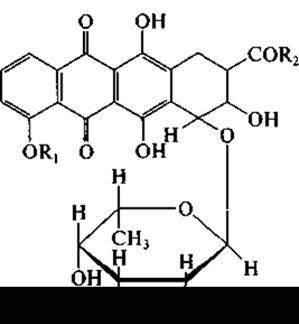
along with their semi-synthetic derivatives. Anthracyclines are produced by various species of the genus Streptomyces.
As can be seen from the given formula, anthracyclines contain a structure partially similar to that of tetracyclines, as well as an aminosugar moiety. However, anthracyclines and tetracyclines share no similarities either in their spectrum of antibiotic activity or in their clinical Applications.
Aerobic spore-forming Gram-positive bacteria (bacilli) belong to eubacteria. Like all bacteria, they lack a true nucleus. Their circular chromosome is smaller in size than that of actinomycetes. Consequently, their genome is simpler, meaning it contains fewer genes than that of actinomycetes, let alone fungi. Bacteria lack mitochondria. Their cell wall is compositionally similar to that of actinomycetes and consists of peptidoglycan. The life cycle of bacteria is significantly shorter than that of fungi and actinomycetes, lasting about a day and a half.
Over a thousand antibiotics of bacterial origin have been discovered. Most of them are represented by Peptides and cyclopeptides. As early as World War II, a cyclic decapeptide, gramicidin S, was introduced into medical practice for wound treatment:

The producer of the antibiotic is Bacillus brevis.
As can be seen from the given formula, in addition to L-amino acids (valine, Ornithine, leucine, Proline), the antibiotic also contains D-phenylalanine.
Later, another antibiotic, polymyxin B, which also found application in medical practice, was isolated from a different species of soil spore-forming bacteria (Bacillus polymyxa). It is a representative of the polymyxin family, which comprises over 20 compounds that differ in specific amino acid residues as well as in the fatty acid residue incorporated into their molecules. The structure of polymyxin B contains three fragments: a cyclopeptide, a linear tripeptide, and a 6-methyloctanoic acid residue (the non-peptide part of the molecule):
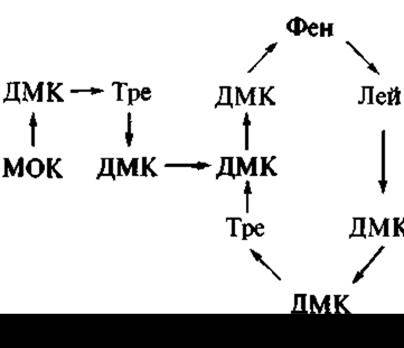
Here, DAB stands for the $\alpha,\gamma$-diaminobutyric acid residue; MOA stands for the 6-methyloctanoic acid residue.
Unlike gramicidin, polymyxin B is used not only for topical application, but also for intramuscular administration. Overall, the antibiotics produced by soil spore-forming bacteria are not as diverse as those produced by actinomycetes and play a lesser role in medical practice.
Last update: 06/08/2026
Editorial and Educational Adaptation: This material has been compiled based on the primary/original source text. The project team performed an editorial review, corrected technical inaccuracies, structured sections, and adapted the content for an educational format.
What was processed:
- elimination of formatting defects (OCR errors, structural breaks, corrupted characters);
- editorial organization of content;
- standardization of terminology in accordance with academic sources;
- verification of factual statements against the original source text.
All mentions of the author, publication year, and origin of the primary text have been preserved in accordance with the source.