Fundamentals of Molecular Biology. Part 2: Molecular Genetic Mechanisms - A. N. Ogodtsov 2011
Control of Gene Expression
Regulation of Eukaryotic Transcription
In eukaryotes, RNA polymerase II, which transcribes structural genes, binds to a whole array of Proteins known as METABOLISM/31.html">Transcription factors that sequentially attach to the TATA sequence of the promoter region.
Despite the individual Nature of the regulatory element repertoire in eukaryotic structural genes, each of them typically features:
1) a promoter region (the TATA box, or Hogness box) consisting of eight NUCLEOTIDES, including the TATA sequence;
2) the CCAAT sequence (CAT box);
3) a region of repeating GC dinucleotides (GC box).
These elements are located at distances of 25, 75, and 90 bp from the initiation site, respectively (Figure 27) (bp stands for base pair, denoting a complementary pair of nucleotides).
The minus signs preceding the numbers in Figure 27 indicate that these elements reside within the DNA molecule to the left of the Transcription initiation site (+1) (upstream of the transcription start site). The arrow denotes the direction of transcription. The positions and sizes of the regulatory elements are not drawn to scale.
Class="center">
Figure 27 - Regulatory elements of eukaryotic structural genes
The turning on and off of transcription is governed by additional transcription factors that bind to specific DNA regions.
Transcription of a eukaryotic structural Gene begins with the binding of transcription factor IID (TFIID) to the TATA box. TFIID is a multiprotein complex comprising at least 14 subunits, one of which is known as the TATA-binding protein (TBP) (Figure 3) (Figure 28(a)).
Subsequently, other transcription factors (TFIIA, TFIIB, TFIIE, TFIIF, and TFIIH (Figure 28(b))) bind to TFIID and the DNA regions adjacent to the TATA box. Finally, RNA polymerase II associates with this entire multi-protein complex. The TFIIF factor properly positions RNA polymerase II at THE START OF the transcribed gene.
This entire protein assembly anchored to the TATA box, including RNA polymerase II, is referred to as the transcription preinitiation complex.
It is worth noting that the promoters of certain genes lack a TATA box. Such genes typically encode proteins required by The Cell for housekeeping Functions, and are thus called housekeeping genes. In this scenario, a specialized Sp1 protein binds to a 10-nucleotide GGGGCGGGGC sequence within the GC box and recruits the TBP (TATA-binding protein), even though the gene lacks a canonical TATA box. The entire transcription preinitiation complex then assembles around this TBP protein to initiate transcription.
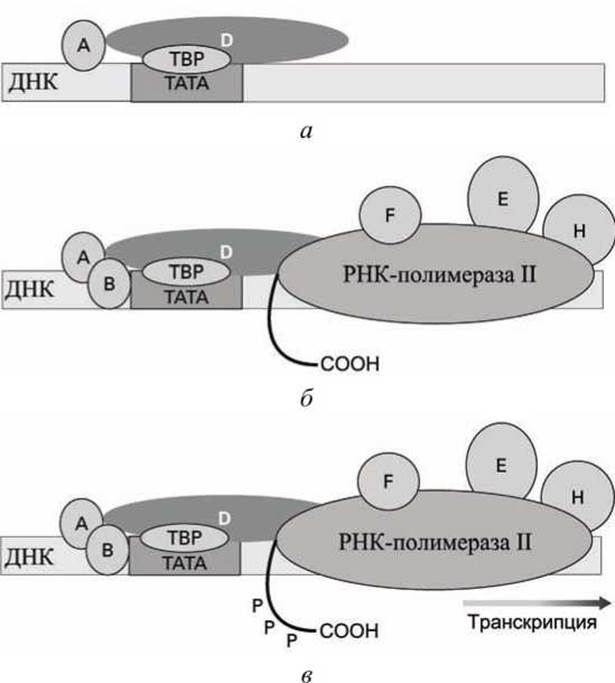
Figure 28 - Eukaryotic Transcription initiation complex
In any case, transcription initiation occurs when the C-terminal domain of RNA polymerase II is phosphorylated. Phosphorylation of this domain causes RNA polymerase II to detach from the preinitiation complex, and DNA-to-RNA transcription commences at the +1 site (Figure 28(b)).
Although the assembly of the transcription preinitiation complex is generally sufficient for RNA Synthesis, transcription rates can be significantly enhanced through the binding of activator proteins to DNA near the gene's start site. These activator proteins are also referred to as transcription factors, and the DNA nucleotide sequences to which they attach are called enhancer sequences. Interestingly, enhancer sequences can be located either upstream of the gene's transcription start site (in the "-" region) or downstream (though much less frequently) (inoxel/the "+" region).
The deployment of such transcription factors and enhancer sequences determines precisely which Genes are transcribed and at which stage of the Cell Cycle. For instance, Figure 29 illustrates the activation of the Myosin gene transcription in Skeletal Muscle and the Repression of the same gene in hepatocytes (Liver Cells), mediated by the presence or absence of the corresponding activator protein within those specific tissue cell types.

Figure 29 - Transcription of a gene in different Tissues
Hormonal Introduction/30.html">Regulation of Gene Expression. As an example illustrating how the transcription of eukaryotic genes is controlled, let us examine The regulation of certain genes by glucocorticoid Hormones, which are Steroid Hormones produced by the Cells of the adrenal cortex (Figure 30).
Because these hormones are uncharged and nonpolar, they can easily diffuse across The cell membrane. The Cytosol contains protein transcription factors possessing steroid hormone-binding sites; consequently, these factors are known as steroid Hormone Receptors.

Figure 30 - Regulation of transcription by steroid hormones
When glucocorticoid hormones are absent from the cytosol, receptor proteins remain inactive because they are bound to inhibitory Hsp90 proteins, preventing them from entering The Nucleus through nuclear pores. However, when glucocorticoid hormones appear in the cytosol and bind to their respective receptor sites, the Hsp90 proteins dissociate from the receptors, allowing the hormone-receptor complex to be transported across the nuclear membrane into the nucleus. Inside the nucleus, two such complexes can bind to a 15-bp nucleotide sequence located upstream of the TATA box, known as the hormone response element (HRE). The HRE functions as an enhancer sequence. The glucocorticoid receptor-hormone complex interacts with the preinitiation complex attached to the TATA box, resulting in a dramatic increase in the transcription rate of the gene containing the HRE sequence.
Figure 31 illustrates why the glucocorticoid hormone receptor binds to DNA AS A dimer.

Figure 31 - Palindromic DNA hormone response element (HRE) bound to dimerized steroid hormone receptors
The HRE is a palindrome, meaning a DNA segment whose two nucleotide strands are identical when each is read in the 5'→3' direction. For our example, the HRE has the following Structure

Each strand of the HRE contains a six-nucleotide sequence, AGAACA, called the core recognition motif. A single glucocorticoid receptor protein molecule binds to this sequence. Because the HRE contains two such motifs, two receptors attach to the HRE. The two 6-nucleotide sequences are separated by three Base Pairs (designated as NNN in Figure 31), which provide sufficient space for the receptor homodimer to bind to the HRE. These three base pairs can be of any sequence, as they do not affect the binding affinity of the receptor complex.
This example illustrates The Mechanism of Hormonal Regulation of transcription. In general, once a hormone enters the bloodstream, it binds to specific cell receptors that facilitate its entry into the cell. Inside the cell, the hormone interacts with one of the cellular proteins and alters its conformation. In this modified state, the protein enters the nucleus and binds to a specific regulatory element that initiates the Transcription of the corresponding gene.
Gene Expression IN both PROKARYOTES AND EUKARYOTES is regulated primarily by mechanisms that control transcription initiation.
The binding of the RNA polymerase-σ factor complex to the promoter is the first step in transcription initiation in E. coli.
The nucleotide sequence of a promoter determines its strength — how frequently (per unit time) different RNA polymerase molecules can bind to the promoter and initiate transcription.
Repressors are proteins that bind to the operator. The operator is a DNA segment located adjacent to or overlapping the promoter. The binding of a repressor to the operator inhibits transcription initiation.
The DNA-binding activity of repressors is regulated by Inducers, which are small effector molecules. This allows the bacterial cell to regulate the transcription of specific genes in response to Changes in the concentration of various environmental components.
The lac Operon and certain other bacterial genes are also regulated by activator proteins that bind near the promoter and increase The rate of RNA polymerase transcription initiation.
The primary sigma factor in E. coli is σ70, but several other less common sigma factors exist, each associated with its own specific promoter nucleotide sequence.
Transcription initiation by all E. coli RNA polymerases, except those containing σ54, can be regulated by Repressors and activators that bind to DNA near the transcription start site.
Genes transcribed by σ54-RNA polymerase are regulated by activators that bind to an enhancer located more than 100 nucleotides upstream of the start site. The DNA forms a loop to bring the activator and σ54-RNA polymerase into close proximity.
In Two-component regulatory systems, one protein acts as a sensor that monitors the concentration of nutrients or other environmental components. Under appropriate conditions, the γ-phosphate of ATP is transferred first to a Histidine residue on the sensor protein and then to an aspartic acid residue on a second protein called the response regulator. The phosphorylated response regulator then binds to a regulatory DNA nucleotide sequence, stimulating or repressing the transcription of specific genes.
In eukaryotes, RNA polymerase II utilizes the TATA-binding protein and other protein transcription factors to bind to the promoter. This set of proteins is termed the transcription preinitiation complex and is sufficient for RNA synthesis. To enhance transcription in response to an external signal (such as a hormone), other proteins are recruited that bind to enhancer sequences. These proteins interact with the preinitiation complex and boost transcription levels.
1. What is the operator in the lac operon, and what is its function?
2. What substance acts as the inducer of the lac repressor?
3. What is The Role of cAMP in the regulation of lac operon transcription?
4. What is the role of the CAP protein in the regulation of lac operon transcription?
5. Binding to which substance enables the CAP protein to attach to DNA and activate transcription of the lac operon?
6. What is an inducer, and what is the function of inducers?
7. What are the Similarities and differences between gene transcription by RNA polymerases associated with the σ70 and σ54 sigma factors?
8. What is an enhancer?
9. Characterize the role of both components in two-component regulatory systems.
10. Which transcription factors are part of the eukaryotic transcription preinitiation complex?
11. Describe the mechanism of Transcriptional Regulation by steroid glucocorticoid hormones.
Last update: 12/08/2026
Editorial and Educational Adaptation: This material has been compiled based on the primary/original source text. The project team performed an editorial review, corrected technical inaccuracies, structured sections, and adapted the content for an educational format.
What was processed:
- elimination of formatting defects (OCR errors, structural breaks, corrupted characters);
- editorial organization of content;
- standardization of terminology in accordance with academic sources;
- verification of factual statements against the original source text.
All mentions of the author, publication year, and origin of the primary text have been preserved in accordance with the source.