Human Anatomy Part 1 - K. A. Dyubenko, A. K. Kolomiytsev, Yu. B. Chaykovsky 2002
General Part
Historical Outline
Anatomical Schools in Ukraine — Kharkiv Anatomical School
The Department of Anatomy at the Medical Faculty of Kharkiv University was founded in 1805. It played a pivotal role in the ESTABLISHMENT AND DEVELOPMENT of the Kharkiv Anatomical School. Anatomists of Kharkiv University (D. F. Lambl, M. A. Popov, H. M. Yosifov, V. P. Vorobyov, R. D. Synelnykov, and others) brought enduring fame to national and global science.
Initially, in accordance with the University Statute of 1804, students studied anatomy, physiology, and forensic medicine at the department. This was an era of theoretical instruction, meaning lectures served as the sole teaching method. Educational resources were scarce; the anatomical theater, opened in 1806, occupied two small rooms in a gardener's cottage. Most of the professors invited from abroad lacked specialized expertise.
Professor L. J. Vannoti (1771–1819) became the first HEAD of the Department of Anatomy, leading it from 1805 to 1811. He was a scholar of encyclopedic knowledge. Having studied at the University of Freiburg, he defended his dissertation there in 1798 and earned his doctorate in medicine. He served as a surgeon in the Roman Army, advanced his medical training in Vienna, and maintained a medical practice in Lviv. In 1805, he was invited to Kharkiv University to take up a teaching position. Over the course of the 1807 winter, he prepared 44 anatomical specimens, which laid the foundation for the anatomical museum. The first graduating Class of 9 physicians took place in 1815. In total, 98 physicians were trained over the span of 10 years.
Following L. J. Vannoti, the department was headed from 1811 to 1826 by Professor I. D. Knyhin (Bulhakov) (1773–1830), who had studied anatomy under the guidance of P. A. Zahorsky. He divided the teaching of anatomy into distinct courses—anatomy, physiology, and forensic medicine—taught by specialized instructors, while personally focusing his lectures primarily on physiology. This period was characterized by an anatomical-physiological focus. Of particular note is I. D. Knyhin's inaugural lecture "On Respiration" (January 17, 1813), in which all complex issues were addressed from a functional perspective and grounded in the progressive materialist viewpoints of the time. He is widely regarded as the pioneer of physiological science in Ukraine.
Beginning in 1826, the department was led by Professor A. S. Venediktov. This period was marked by the refinement of the pedagogical process: anatomical specimens were demonstrated during lectures, and the anatomical museum was enriched with new exhibits. A. S. Venediktov compiled the first written catalog of the museum's specimens.
From 1837 to 1853, the department was headed by Professor P. A. Naranovych (1801–1873), an alumnus of the Chernihiv Seminary and the St. Petersburg Medico-Surgical Academy. He delivered lectures based on P. A. Zahorsky's textbook and, later, on his own manual. At P. A. Naranovych's behest, the university constructed a seven-room anatomical theater (1840–1842) that remained in use until 1883. Thanks to P. A. Naranovych, the anatomical museum expanded significantly, reaching a collection of 1,113 exhibits.
From 1853 onward, the department was managed by Professor T. S. Ilyinsky, an erudite lecturer who enriched macroscopic anatomy with insights into the microscopic Structure of Organs, a novel approach in anatomical education.
The department reached a notable peak between 1860 and 1865 under the leadership of Professor D. F. Lambl (1824–1895). He revised the curriculum in accordance with the new University Statute of 1863. D. F. Lambl made substantial contributions to improving anatomical instruction: under the new system, students performed dissections and passed an "examination" specimen, and The Scope of the microscopic anatomy course was expanded. D. F. Lambl's scholarly legacy comprises over 200 works, the majority dedicated to pathological anatomy. World renown came to the scientist with his discovery of intestinal Protozoa (lamblia, Lamblia intestinalis). D. F. Lambl replenished the museum with the finest examination specimens prepared by students and also established a museum of pathological anatomy within the department. He was the first to describe the circular fibers of the ciliary Muscle of the eye. In 1893, he was awarded the P. A. Zahorsky Prize for his monograph "Self-Dislocation of the Spine."
In 1865, Professor I. K. Wagner took charge of the department. During his tenure, in 1887, a new anatomical theater was built at 41 Sumska Street, featuring a 250-seat lecture hall as well as facilities for Practical Classes and a museum. I. K. Wagner's scholarly works focused on Developmental Anomalies and general questions of anatomy. Together with M. O. Popov, he translated J. Henle's two-volume textbook "Handbuch der systematischen Anatomie des Menschen" into Russian.
At the turn of the 20th century, the department was headed by prominent Kharkiv University scientists M. O. Popov and O. K. Belousov.
From 1888 to 1897, during the tenure of Professor M. O. Popov (1843–1897) as head of the department, the educational process reached a high academic level. Between 100 and 125 cadavers were utilized annually for The Study of anatomy. Great emphasis was placed on museum curatorship, the study of The Nervous system, and neurohistological Research Methods.
From 1897 to 1908, the department was led by Professor O. K. Belousov (1848–1909), a graduate of Kyiv University. A talented lecturer and artist, he devoted immense energy and time to refining anatomical research methods. The professor designed a specialized dissecting magnifying Glass mounted on a custom stand. In 1906, he published his original "Synoptic Tables of the Nervous System."
O. K. Belousov dedicated himself to expanding the museum's collection. He donated 62 specimens to it and prepared A large number of masterfully crafted anatomical models (moulages). In 1882, his specimens and models were displayed at the All-Russian Art Exhibition in Moscow and at the Brussels International Congress, where they received diplomas and awards. Commissioned by O. K. Belousov in 1903, V. P. Vorobyov began establishing a new educational museum model. Although O. K. Belousov published only 9 works in total, his doctoral dissertation, "A New Method for Injecting Anatomical Specimens, Materials for the Anatomy of Human Vascular Nerves" (1889), has retained its scientific relevance to this day.
A leading figure among the scholars of the Kharkiv Anatomical School is O. K. Belousov’s pupil, Professor V. P. Vorobyov (1876–1937), Honored Scientist, and from 1934 an Academician of the Academy of Sciences of the UkrSSR, who served as head of the Department of Anatomy at Kharkiv Medical University (1908–1910) and the Women's Medical Institute (until 1917). From 1919 to 1921, he worked in Bulgaria, where he organized the Department of Anatomy at the Medical Academy in Sofia, which he headed and which was subsequently named after V. P. Vorobyov.
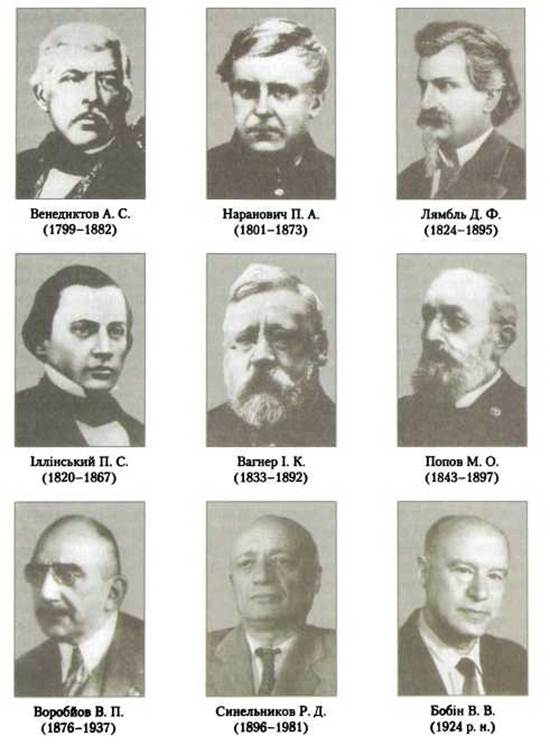
Kharkiv Anatomical School
V. P. Vorobyov was one of the founding fathers of the functional approach in anatomy. He proposed original research Methods for Investigating the Autonomic nervous system and established the innervation characteristics of several organs. His most renowned works on the Anatomy of the Nervous System include: "NERVES OF THE Dog's Stomach" (1918), "Nerves of The Heart" (1926), and "Nerves of Human Tendons" (1908). He described intra-organ cardiac plexuses, authored the "Fundamentals of Embryology, Histology, and Anatomy of Teeth and the Oral Cavity" (1913–1922), and developed a macro-microscopic method for studying the Water/140.html">Anatomical Structure of organs, which became known in morphological science as "V. P. Vorobyov’s Macro-Microscopic Method."
V. P. Vorobyov authored original instructional guides on anatomy, as well as the first Ukrainian-language textbook and three-volume atlas "Human Anatomy for Students and Physicians" (Kharkiv, State Medical Publishing House, 1934) and the pioneering domestic five-volume "Atlas of Human Anatomy." He mentored numerous prominent anatomists in Ukraine (V. V. Bobin, F. A. Volynsky, M. S. Kondratyev, O. P. Lavrentyev, R. D. Synelnykov).
From 1937 to 1971, the department was headed by Professor R. D. Synelnykov (1896–1981), a pupil of Academician V. P. Vorobyov, who made immense contributions to the advancement of macro-microscopic anatomy. His doctoral dissertation, "Nerves of the Human Urinary Bladder" (1938), focused on the autonomic nervous system. R. D. Synelnykov supervised 13 doctors of science, published 120 scholarly papers, and authored the widely acclaimed three-volume "Atlas of Human Anatomy," which has gone through multiple editions.
From 1971 to 1992, the department was headed by Professor V. V. Bobin, who carried forward the scholarly traditions of the Kharkiv Anatomical School. He explored issues of Symmetry and Asymmetry in The structure of the nervous system, as well as questions regarding compensatory innervation and nerve plasticity. V. V. Bobin authored 250 scholarly publications, including 10 monographs, and co-authored a manual on the clinical anatomy of Cranial Nerves (1973). The culmination of his many years of research was the prominent monograph "Surgical anatomy of the Nerves of the Masticatory Apparatus," co-authored with H. A. Hajiyev and V. B. Shadlynska. He trained a generation of doctors and candidates of Medical and biological sciences; his pupils (V. M. Lupyr, S. Yu. Maslovsky, V. I. Reshetilov) went on to head academic departments across Ukraine. Today, the Department of Human Anatomy is led by V. V. Bobin's pupil, Professor V. M. Lupyr.
Last update: 08/08/2026
Editorial and Educational Adaptation: This material has been compiled based on the primary/original source text. The project team performed an editorial review, corrected technical inaccuracies, structured sections, and adapted the content for an educational format.
What was processed:
- elimination of formatting defects (OCR errors, structural breaks, corrupted characters);
- editorial organization of content;
- standardization of terminology in accordance with academic sources;
- verification of factual statements against the original source text.
All mentions of the author, publication year, and origin of the primary text have been preserved in accordance with the source.