PLANT MORPHOLOGY - T. A. Sautkina - 2012
CHAPTER 1. MORPHOLOGY AS A SCIENCE. SUBJECT, OBJECTIVES, AND METHODS OF PLANT MORPHOLOGY
The term "Morphology" (from the Greek morphe, meaning form, and logos, meaning doctrine or study) was proposed in 1817 by the great German poet, thinker, and naturalist J. W. von Goethe (1749–1832). However, The Study of plant form and Structure began to develop long before Goethe gave it a name.
As morphological data accumulated, plant morphology gradually branched into several specialized disciplines. Organography—morphology in the narrow sense, which is the science of the External structure of PLANTS AND THEIR Organs—split off from it. The study of internal plant structure evolved into plant anatomy. The processes of individual development are studied by plant Embryology. Specific morphological disciplines include Cytology (the study of Cell Structure), palynology (the study of fossil and modern spores and pollen), stomatography (the study of The structure of stomatal complexes), and A number of other sciences with narrower research focuses.
Class="center">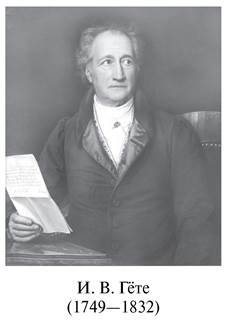
Like any scientific discipline, plant morphology has its own problems, objectives, and Research Methods.
MAIN OBJECTIVES OF Morphology
1. Studying the patterns of plant organ formation (the morphogenetic process) over the course of evolution.
2. Studying the patterns of plant organ formation during ontogeny.
3. Studying topographical regularities that reflect the spatial arrangement of newly emerging organs.
All of these objectives are aimed at solving The problem of morphogenesis in plants.
The main Methods of Plant morphology are observation, description, and comparison. These methods are modified and become more complex depending on the researcher's goals, the subject of study, and the level of development of technical research tools.
1.1. History of the Development of Plant Morphology. Directions (Stages) of Development
The history of The Development of morphology, as well as botany in general, begins with the works of Theophrastus. In his Enquiry into Plants, Theophrastus named about 500 plant species, dividing them into trees, shrubs, subshrubs, and herbs. Thus, he provided the first concept of life forms. Theophrastus correctly partitioned the plant body into vegetative organs: ROOT, stem, and leaf. He provided descriptions of leaves for a wide range of plants. He was the first to introduce terms such as "fruit", "pericarp", and "pith", reported data on plant reproduction, described the seed germination of many plants, and introduced METABOLISM/2.html">THE CONCEPT OF Sexual Dimorphism in date palms, among other contributions.
The first tentative steps of this young and developing branch of botany—morphology—coincide with the Renaissance. The most noticeable influence on its development during this period was exerted by the Italian physician, botanist, and philosopher A. Cesalpino (1519–1603). Morphological terminology is handled better in his works than in medieval herbals. He was the first to address the question of homologous organs, considering cotyledons and true plant leaves to be homologues.
A significant role in the development of plant morphology and the formulation of morphological terminology was played by the German naturalist and philosopher J. Jung (1587–1657). However, the most important contributions in the 17th century were made by the Italian biologist and physician M. Malpighi (1628–1694) and the English botanist N. Grew (1641–1712). They were the first to study plants dynamically throughout their development. This attempt at a dynamic approach to the study of plants should be considered highly progressive and novel for morphology. Nevertheless, the morphological investigations of M. Malpighi and N. Grew were incomplete and inconsistent. Their interests were multifaceted: seedling and seed structure, leaf formation, cell and tissue structure, root characteristics, and modified underground organs such as rhizomes, bulbs, and tubers—this is far from a complete list of subjects covered in their works. Independently of one another, they published their research results in The Anatomy of Plants (N. Grew's work was published in 1672, and M. Malpighi's in 1675 and 1679).

In fact, until the late 17th century, not a single comprehensive morphological study had been completed. Therefore, the period of morphological development from the time of Theophrastus through the 17th century is conventionally referred to as the initial period.
The initial period was succeeded by the descriptive, or Linnaean, period in the development of morphology. By the 18th century, an enormous body of factual material had accumulated in the scientific folios of ancient and medieval scholars and in the collections of botanical gardens in Italy, Germany, France, the Netherlands, England, and Russia, gathered through the exploration of local floras. Consequently, there arose a pressing need to catalog this vast multitude of species. Accomplishing this task was extremely difficult because each author had their own approach to characterizing plants, and a unified terminology and descriptive framework had not yet been established, leading to considerable confusion. Often, scientists working in different countries gave different names to the very same species (generating a multitude of synonyms) or, conversely, completely different species ended up with identical names (giving rise to homonyms).
The great Swedish botanist C. Linnaeus rendered an immense service by establishing scientific terminology—that is, introducing precise names to designate various plant parts. All terminology was developed in Latin. In Philosophia botanica (1751), C. Linnaeus wrote: "The exceptional utility of terms lies in the brevity of exposition." He introduced about 1,000 terms—some borrowed from predecessors, others coined by himself—which proved so successful that they have survived to the present day. The Use of specialized terms made descriptions of various taxa concise, precise, and comparable. Thus, morphology rendered an invaluable service to the burgeoning field of plant Taxonomy. Thanks to the monumental labor of C. Linnaeus, morphology was placed at the service of taxonomy. The primary objective of morphology during this period was to discover and minutely describe ever-new organ forms in various plants. The descriptive method was the principal approach during this stage of morphological development.

The 18th century also laid the foundations of comparative morphology, marking the beginning of the comparative-morphological period in the study of plant organisms. This period conventionally begins around 1790, with the publication of J. W. von Goethe's work Metamorphosis of Plants (Versuch die Metamorphose der Pflanzen zu erklären). Unlike C. Linnaeus, J. W. von Goethe was not a professional botanist and did not aim to describe new forms.
Based on his long-term observations of plant development from seed to flower and fruit formation, he put forward the idea in his work that all organs of a flowering plant are fundamentally unified, asserting that all floral parts are the result of the modification of a single organ—the leaf, which Goethe considered primary. Goethe termed this process of modifying a single organ and its manifestation in highly diverse forms as "metamorphosis." Ideas concerning the transformation of certain plant organs had been expressed by a number of botanists before Goethe. For instance, A. Cesalpino believed that flower petals were modified leaves. N. Grew held the same view regarding The Nature of petals and sepals, while M. Malpighi maintained that rhizomes, tubers, and bulbs were modifications of the stem. C. F. Wolff suggested that all plant parts except the stem are modified leaves. Because these assertions lacked sufficient substantiation, they went largely unnoticed. At the same time, the problem of unity and organ metamorphosis in plants was deeply elaborated by Goethe. He identified Three types of metamorphosis: progressive, regressive, and indifferent. By progressive morphology Goethe meant the complexification of the STRUCTURE OF THE original organ—the leaf—giving rise to floral elements. He defined regressive metamorphosis as instances where a complex structure is simplified, such as the transformation of stamens into petals. Indifferent metamorphosis, according to Goethe, was associated with changes that could arise in a plant due to insect damage or the Influence of other factors. However, while identifying these types of organ metamorphosis, Goethe failed to correctly indicate the causes of this phenomenon, believing instead that the occurrence of metamorphosis was linked to changes in plant Nutrition.
The Doctrine of metamorphosis became the first independent problem in morphology, exerting a profound influence on the subsequent Development of the science. Influenced by Goethe's ideas, a series of comparative morphological works began to emerge, comparing not only mature organisms but also plants and their organs at various Selection/3.html">Stages of development. In tribute to J. W. von Goethe's contribution, the period of comparative morphology is frequently called the Goethean period.
Several specific research directions can be distinguished within comparative morphology. The history of 19th-century morphology begins with the works of the Swiss botanist A. P. de Candolle (1778–1841). Unlike Goethe, de Candolle was a professional botanist, which allowed him to develop morphological problems on a broad comparative basis. He established certain regularities in plant structure, developed the doctrine of Symmetry, extended the law of correlation to plants, and argued that the modification of one organ leads to the modification of another linked to it. A. P. de Candolle arrived at the crucial Conclusion that the similarity of organs depends on their function, position, number, and interrelationships, thereby effectively laying the groundwork for The concepts of ANALOGOUS AND HOMOLOGOUS organs. The widespread Introduction of the comparative method into plant morphology is unquestionably de Candolle's achievement, although his morphology remained static; he focused exclusively on studying fully formed plants. At the same time, the use of the comparative method accumulated an immense body of factual data regarding the structural patterns of plant organisms and laid the foundations for a new theoretical problem in morphology: the Water/144.html">Origin of the primary plant organs.

The mid-19th century was marked by the rapid development of microscopic techniques, which enabled a deeper investigation into plant ontogeny. A fundamentally new aspect of these studies was that morphologists began to examine the processes occurring within reproductive organs. Consequently, a comparative-ontogenetic approach emerged within comparative morphology. Russian scientists played a major role in the development of this field.
One of the earliest studies on flower ontogeny was conducted by the Russian botanist N. I. Zheleznov (1816–1897). In 1840, he published his findings on Flower Development in Tradescantia.
An outstanding discovery was made by Moscow University Professor I. D. Chistyakov (1843–1877). In 1874, he provided the first description of mitosis in horsetails. In addition, he investigated spore development in clubmosses, horsetails, ferns, gymnosperms, and angiosperms.

I. N. Gorozhankin (1848–1904) carried out a series of studies on the comparative morphological analysis of gametophytes and Fertilization processes in gymnosperms. He also made a substantial contribution to the morphology of Algae. However, his greatest achievement was undoubtedly the establishment of a prominent school of morphologists at Moscow University, whose members conducted fruitful research in both the morphology of Higher Plants and algal studies.
One of I. N. Gorozhankin's most distinguished students was V. I. Belyayev (1855–1911). He investigated the development of the male gametophyte in higher spore-bearing and seed plants and, based on his findings, constructed a morphological reduction series for the male gametophyte. Although this series was not phylogenetic, it was of paramount importance for the subsequent development of evolutionary morphology. V. I. Belyayev also studied the Development and Structure of spermatozoa in charophyte algae, horsetails, and ferns, proving that a spermatozoon consists not only of a single Nucleus—as many botanists previously believed—but also contains Cytoplasm.
A special place in the History of Plant morphology is held by Kyiv University Professor S. G. Navashin (1857–1930). In 1898, at the 10th Congress of Russian Naturalists and Physicians, he delivered a report on Double fertilization in angiosperms. His discovery fundamentally transformed the prevailing views on fertilization in angiosperms and provided an explanation for phenomena such as xenia and mosaic endosperm, which had long been known to geneticists but remained unexplained prior to Navashin's discovery.

Almost concurrently with the comparative-ontogenetic approach, a comparative-phylogenetic—or more precisely, evolutionary—direction began to take shape in plant morphology. Its development was spurred by two events that occurred in 1859. That year saw the publication of Charles Darwin's (1809–1882) groundbreaking work, On THE ORIGIN OF Species by Means of Natural Selection, which put an end to metaphysical concepts regarding the permanence of the organic world. In the same year, the American scientist J. Dawson discovered fossil plants in the Lower Paleozoic strata of Eastern Canada, which he believed to be the earliest land colonizers. He assigned them the generic name Psilophyton (from the Greek psilos, meaning bare, and phyton, meaning plant). This discovery initially caused a sensation, but was subsequently largely forgotten, although it played a positive role in the history of morphology. Influenced by Darwin's ideas and prompted by the discovery of fossil plants, research into the morphology of vegetative organs and flowers, as well as the anatomy and morphology of fossil plants, expanded significantly and took on a new direction.
"The phylogenetic approach in morphology addressed one of the principal tasks that emerged after the advent of Darwin's theory: to uncover phylogenetic links between organisms in order to establish kin relationships, trace the sequence in which forms appeared during the course of evolution, and demonstrate The Unity of origin of the organic world"1.
1 History of Biology from Ancient Times to the Early 20th Century. Moscow, 1972, p. 334.
Among the works produced during this period, special mention should be made of the Austrian botanist A. Eichler's (1839–1887) Blüthendiagramme (Floral Diagrams), published between 1875 and 1878. Eichler studied the floral morphology of various angiosperm families and presented a system of floral diagrams ranging from simpler to more complex structures, thereby reflecting the evolutionary path of this organ.
A prominent proponent of evolutionary views in morphology was St. Petersburg University Professor A. N. Beketov (1825–1902). Independently of Charles Darwin, Beketov concluded that the development of organic forms is a historical process, and he was the first to explain the causes of metamorphosis from a materialist scientific standpoint. According to Beketov, metamorphosis is the result of plants adapting their form to various and changing environmental conditions while carrying out physiological Functions.

Significant attention was also devoted to the study of fossil plants. For instance, the French plant morphologist O. Lignier (1855–1916) and the German botanist H. Potonié (1857–1913) examined potential pathways for leaf formation from the telomes of psilophytes (rhyniophytes) and the evolution of branching patterns, effectively laying the groundwork for the telome theory, which was subsequently formulated in 1930 by the German paleobotanist W. Zimmermann. This theory explained the body structure of early land plants and demonstrated how the organs of higher plants could have evolved from their constituent elements, or telomes.
In parallel with the evolutionary approach, an experimental-morphological direction began to take shape in plant morphology. The earliest experimental-morphological studies were conducted in Russia. In 1868, Kazan University Professor N. F. Levakovsky (1833–1898), while studying root system development under laboratory conditions across varying moisture levels, temperatures, and soils with differing physical properties and chemical compositions, discovered significant alterations in both the external and Internal Structure of roots. The modification of roots under The Influence of zinc was also investigated by the great Russian plant physiologist K. A. Timiryazev (1843–1920), who in 1890 also coined the term "experimental morphology."

Of exceptional interest are the experimental-morphological studies conducted by French botanists G. Bonnier (1853–1901) and E. Letellier, which demonstrated The impact of ecological conditions on the morphological traits of the aerial parts of various plants. However, the true classics of experimental morphology are widely considered to be the German botanists G. Klebs (1857–1918) and K. Goebel (1855–1932). They essentially defined the mission of experimental morphology, rightly believing that its primary objective was to learn how to direct the individual Development of Plants by altering their environmental conditions.
A major contribution to experimental morphology was made by N. P. Krenke (1892–1939), renowned for his work on Plant Regeneration and transplantation, as well as for formulating The Theory of cyclic Aging and rejuvenation in plants. This theory provided the scientific foundation for vegetative plant propagation. Understanding the regularities of Organism Development and Age-related changes enabled Krenke to predict early maturity in plants from early developmental stages, which was of great practical significance.
A unique continuation of the work done by evolutionary morphologists can be seen in the research of the Soviet plant physiologist and ecologist B. A. Keller (1874–1945). Keller viewed the primary pathway of plant evolution as a morphological and physiological reorganization driven by changing environmental conditions. He proposed the so-called method of ecological series, which involved studying the gradual shift in habitat conditions alongside the corresponding parallel changes in plants.
Thus, from approximately the mid-19th century onward, three closely intertwined approaches developed within plant morphology: the comparative-ontogenetic, the comparative-phylogenetic (evolutionary), and the experimental-morphological. These research directions remain represented in nearly equal measure to this day.
1.2. The Significance of Morphology as a Scientific Discipline
Although plant morphology is a relatively ancient science, it has by no means lost its relevance today. As in centuries past, humanity remains deeply concerned with fulfilling its basic needs—foremost among them, food security. Today, just as in the distant past, humans are not immune to severe and insidious diseases, the search for treatments which drives researchers back to the plant kingdom time and time again.
Finally, humanity now faces an urgent and pressing challenge that has only recently entered public discourse: the conservation of the plant world and the rational use of its resources. These and many other questions are addressed by the science of botany and its numerous branches, including plant morphology.
Plant morphology as a science has both fundamental and applied significance. As a fundamental discipline, morphology forms The basis of all related botanical fields, primarily plant systematics and physiology. As a scientific discipline, it plays a vital role in plant phylogeny, since plant characteristics provide the sole reliable basis for assigning species to specific taxa and establishing evolutionary relationships among them.
Morphology is also of great importance for genetics and plant breeding. In genetic and breeding research, it is essential to have data on the viability of pollen and the pistil stigma, pollination types, and other indicators that ensure the normal fertilization process. Breeding methods are used to shape the optimal plant architecture.
Morphological data have found widespread Practical Application. A reliable method in geology is spore-pollen analysis, based on the study of fossil pollen grains and spores, which makes it possible to determine the age of sedimentary rocks and purposefully explore for mineral resources. This same method is widely used in archaeology, geomorphology, and paleogeography, allowing researchers to reconstruct the flora and vegetation of specific regions during distant geological epochs. Spore-pollen analysis is also applied in medicine (for identifying allergens), commodity science (such as determining honey quality), and other fields.
Data from morphological studies are utilized across various sectors of the economy. For instance, in crop production, the selection of plant pairs for mixed cropping (such as vetch-oat mixtures) is based on assessing crop yields in both monocultures and polycultures.
Understanding the relationships between certain forest-forming tree species and mycorrhizal Fungi contributed to the successful establishment of artificial shelterbelts in the steppe zone, which was of major significance for the development of forestry science.
Various resource assessment studies also rely heavily on morphological data. Specifically, research into the morphological aspects of reproductive processes allows for the optimization of harvesting schedules and volumes for wild medicinal, berry, technical, and other plant crops, thereby providing recommendations for the sustainable use of natural resources.
Science-based conservation measures for specific plant species can only be developed based on the study of their morphological growth and developmental features.
Morphological data serve as the primary basis for authenticating herbal medicinal raw Materials supplied to pharmacies and pharmaceutical manufacturing plants.
Descriptive morphology, the oldest branch of the science, has lost none of its relevance to this day. Historical and contemporary reference guides—such as floras, atlases, and plant identification keys for various regions—are built entirely upon descriptive morphology data. These publications are in high demand and serve as essential tools not only for researchers, university and college professors in biology and agriculture, but also for schoolteachers and nature enthusiasts. Regional plant identification guides and floras have become particularly crucial nowadays in light of intensified global efforts to preserve biodiversity.
Last update: 07/08/2026
Editorial and Educational Adaptation: This material has been compiled based on the primary/original source text. The project team performed an editorial review, corrected technical inaccuracies, structured sections, and adapted the content for an educational format.
What was processed:
- elimination of formatting defects (OCR errors, structural breaks, corrupted characters);
- editorial organization of content;
- standardization of terminology in accordance with academic sources;
- verification of factual statements against the original source text.
All mentions of the author, publication year, and origin of the primary text have been preserved in accordance with the source.