MEDICAL BOTANY - A.G. Serbin - 2003
SECTION 3. SYSTEMATICS
KINGDOM CHROMISTA — CHROMISTA. TRUE ALGAE — ALGAE
Traditionally, to designate the group of photosynthetic lower plant organisms living in Water and damp places, the biological concept of "Algae" is used rather than a taxonomic unit. All aquatic inhabitants are divided into two ecological groups: algae living in the water Column at a depth of up to 100 m make up the phytoplankton, while plants attached to the bottom substrate form the phytobenthos. Among true algae living outside bodies of water, a distinction is made between aerophytes, which cover damp objects, trees, and buildings, and soil algae.
Photosynthetic protists constitute an informal group of true (thalloid) algae. Their body—the thallus—is of microscopic or macroscopic size, usually lacking true Tissues and Organs, and is sometimes differentiated into leaf-like and stem-like parts. Their life forms vary in Organization: non-cellular, unicellular, colonial, multicellular filamentous, laminar, branched, etc.
The Cells of true algae are largely similar to those of higher plants, yet they possess several distinctive features:
✵ there may be multiple nuclei;
✵ The Cell wall typically undergoes mucilaginous degeneration and contains, In addition to Pectins, Cellulose, and hemicellulose, Proteins, Chitin, silica, and calcium carbonate;
✵ pigments are concentrated in chromatophores—Plastids of various shapes bounded by a 2–4-layered membrane, sometimes containing protein bodies called pyrenoids, around which reserve substances accumulate;
✵ along with photosynthetic chlorophylls "a", "b", and carotenoids, chromatophores typically contain chlorophylls "c", "d", and specific pigments that impart a characteristic coloration to the thallus;
✵ vacuoles may contain cell sap, gypsum crystals, or function as pulsating (contractile) vacuoles that facilitate cell movement;
✵ some algae possess a red "eyespot"—an organelle that responds to light;
✵ some species possess flagella that facilitate movement.
The cellular Structure of algae is illustrated using the unicellular green alga Chlamydomonas as an example (Fig. 3.106).
Class="center">Fig. 106. Structure and Life cycle of Chlamydomonas: A — asexual reproduction; B — sexual process; 1 — vegetative individual; 2 — formation of zoospores; 3 — zoospore; 4 — formation of Gametes; 5 — gamete copulation (heterogamy); 6 — zygote; 7 — germination of the zygote; a — flagella; b — Cytoplasm; c — nucleus; d — chromatophore with photosynthetic membranes; e — pyrenoid; f — contractile vacuole; g — eyespot

Algae reproduce vegetatively, asexually, and sexually. Vegetative Reproduction in unicellular forms occurs through direct Cell Division, in colonial forms through fragmentation of colonies, and in filamentous forms through pieces of the thallus. Asexual reproduction is mediated by biflagellate zoospores lacking a cell wall, or by non-motile, non-flagellated aplanospores. The sexual process involves the fusion (copulation) of gametes, which are formed in unicellular gametangia, lack a cell wall, and bear two flagella.
The zygote formed by the fusion of gametes develops a thick cell wall, accumulates nutrient reserves, and germinates either immediately or following a dormant period. Upon germination, the zygote undergoes meiotic nuclear division in some cases to yield haploid plants, whereas in other cases the zygote nucleus divides mitotically to give rise to diploid plants.
There are several types of Sexual reproduction in algae: hologamy, isogamy, heterogamy, oogamy, and conjugation (see Figs. 2.3, 3.106, 3.107, 3.108).
Fig. 3.107. Life Cycle of the filamentous green alga Ulothrix: A — asexual reproduction; B — sexual reproduction; 1 — parent individual; 2 — formation of zoospores in zoosporangia; 3 — release of zoospores; 4 — new individuals; 5 — formation of gametes in gametangia; 6 — release of gametes; 7 — fusion of isogametes; 8 — zygote;
9 — germination of the zygote

Classification. Although a definitive, universally unified classification of true algae does not yet exist, it is standard practice to divide them into divisions based on thallus pigmentation. The color of the thallus depends on the composition and relative Abundance of specific pigment groups within the chromatophores. Currently, phycologists distinguish five divisions (Table 3.1, p. 118).
A comparative Overview of the divisions Brown algae — Phaeophyta and Green algae — Chlorophyta is presented in Table 3.4. The structure of selected representatives from these divisions and their developmental cycles are illustrated in Figures 3.106, 3.107, 3.108, and 3.109.
The significance of algae is profound and multifaceted. They help maintain a stable atmospheric composition, enrich water bodies with oxygen, act as natural biological purifiers, provide food and shelter for aquatic organisms, and serve as fodder, fertilizers, and raw Materials for the food, pharmaceutical, medical, and engineering industries, among others. Green, blue-green, and red microalgae possess a biomass characterized by high plasticity, a valuable chemical profile, technological adaptability, a high conversion rate of light energy, and ecological purity. Through controlled Biosynthesis (photobiotechnology), algal biomass is used to produce a range of products: native biomass, feed and food additives, "Phyton" adhesive for pelleting crop seeds, bactericidal and regenerating ointments, pharmaceutical drugs, natural pigments, and more. Phyllophora, Ahnfeltia, Gracilaria, and other members of the Division Red Algae serve as sources of Lignin and phycocolloids, specifically Agar and agaroide.
Fig. 3.108. Life cycle of the filamentous green alga *Spirogyra*: 1 — thallus fragment; 2 — apposed heterothallic filaments; 3 — onset of conjugation; 4 — zygote formation; 5 — zygote division; 6 — germination of the haploid cell into a vegetative individual; a — cell wall; b — cytoplasm; c — nucleus; d — spiral chromatophore; e — pyrenoids

Fig. 3.109. Representatives of brown algae and The life cycle of *Laminaria*: A — *Fucus*; B — *Sargassum*; C — *Nereocystis*; D — *Macrocystis*; E — *Laminaria digitata*; F — *Saccharina latissima* and its developmental cycle; 1 — mature sporophyte (a — blade; b — stipe, or stalk, with holdfast/rhizoids; c — zoosporangia with zoospores); 2 — female zoospore and its germination; 3 — male zoospore and its germination; 4 — female gametophyte; 5 — oogonium; 6 — egg cell; 7 — male gametophyte; 8 — antheridium; 9 — spermatozoa; 10 — zygote and its division; 11 — developing sporophyte
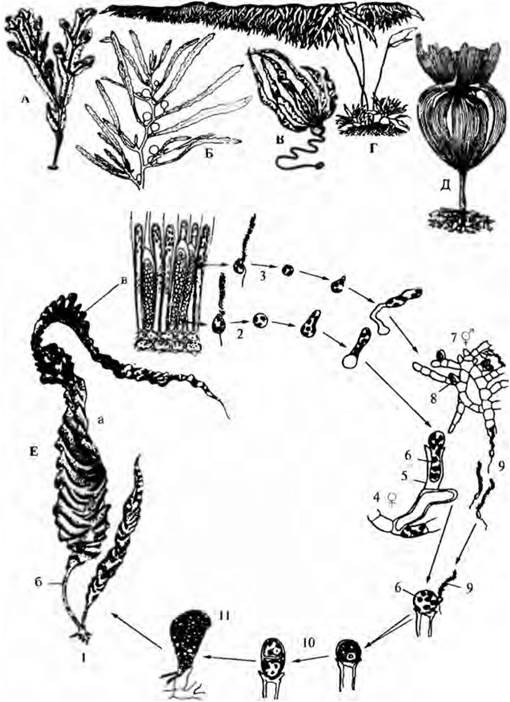
Table 3.4. CHARACTERISTICS OF THE divisions Phaeophyta and Chlorophyta
Features |
Brown algae — Phaeophyta |
Green algae — Chlorophyta |
|
1 |
2 |
3 |
|
Number of species, distribution, habitat |
About 1,500 species, typically found in cold seas on rocky coastal substrates |
About 7,000 species; in freshwater and less commonly saline water bodies, on soils, in soils, on tree trunks, on snow, and as a component of Lichens |
|
Level of organization |
Unicellular and multicellular, with small or large thalli composed of false or, less commonly, true tissues |
Unicellular, multicellular, colonial, and coenocytic |
|
Dominant generation |
Diploids, less commonly haploids |
Haploid |
|
Mucilaginous, pectin-hemicellulose matrix; cellulosic fibrils |
Mucilaginous, pectin-hemicellulose matrix; fibrils composed of cellulose, Xylan, mannan, and other Polysaccharides |
||
Chromatophore structure |
Enclosed by a system of membranes connected to the nuclear membrane. Pyrenoid Kidney-shaped, protruding from the chromatophore |
Double-membrane envelope. Pyrenoids traversed by thylakoids. Eyespot present |
|
Pigments |
Chlorophylls a, c; β-carotene, xanthophylls, fucoxanthin |
Chlorophylls a, b; α- and β-carotene, lutein, neoxanthin, and other carotenoids |
|
Reserve substances, localization |
Laminarin, chrysolaminarin, mannitol, oil — in the cytoplasm |
Starch — in the cytoplasm, matrix, and chromatophore pyrenoids |
|
Vacuoles |
Containing cell sap with tannin-like substance — fucosan |
Containing cell sap, as well as contractile vacuoles for osmoregulation |
|
Gametangia |
Unicellular or multicellular, containing one or many gametes |
Typically unicellular, containing one or many gametes |
|
Oogamy |
Occurs most frequently outside the oogonium |
Occurs within the oogonium |
|
Zoosporangia, zoospores |
Unicellular with (n) and multicellular with (2n) zoospores |
Typically unicellular with (n) zoospores, less commonly with aplanospores |
|
Selected representatives, their ecology, significance, and utilization |
Laminaria — distributed in northern seas, contains laminarin, mannitol, fructose, proteins, Vitamins, iodine-bromine salts, potassium, sodium, calcium, magnesium, phosphorus, alginic acid, alginates, and Trace Elements. Used |
Chlorella — a unicellular, non-flagellated alga of freshwater bodies, moist soils, and tree trunks; forms symbiotic associations with Fungi to build lichen thalli; cultivated as a protein and vitamin source |
|
in the food and textile industries; in medicine, the powder is recommended for Metabolic Disorders, sclerosis, constipation, proctitis, thyroid disorders, and gastrointestinal diseases. Fucus is used as a fertilizer, animal feed, and a raw material for producing agar-agar for the food industry, microbiology, and other fields. |
Ulothrix — a filamentous, benthic alga of flowing freshwater habitats Chlamydomonas — a unicellular, biflagellated alga of small, polluted water bodies Spirogyra — a filamentous alga with a spiral chromatophore, forming a slimy film On the surface of freshwater bodies Volvox — a colonial alga forming a hollow, gelatinous sphere, inhabiting freshwater, standing bodies of water |
||
Last update: 07/08/2026
Editorial and Educational Adaptation: This material has been compiled based on the primary/original source text. The project team performed an editorial review, corrected technical inaccuracies, structured sections, and adapted the content for an educational format.
What was processed:
- elimination of formatting defects (OCR errors, structural breaks, corrupted characters);
- editorial organization of content;
- standardization of terminology in accordance with academic sources;
- verification of factual statements against the original source text.
All mentions of the author, publication year, and origin of the primary text have been preserved in accordance with the source.