Pharmacognosy with Basics of Plant Biochemistry - Kovalyov V. M. 2004
Special Part
Phenolic Compounds
Medicinal plants and raw materials containing simple phenol derivatives
BEARBERRY LEAF — FOLIA UVAE URSI,
BEARBERRY SHOOTS — CORMI WAE URSI
Common bearberry, syn. bear's grape — Arctostaphylos uva-ursi (L.) Spreng., fam. Ericaceae
Bearberry, bear's eardrop; the name comes from the Greek arktos meaning bear and staphyle meaning grape cluster. Similarly, the Latin uva means grape cluster, and ursi is the genitive form of ursus meaning bear, i.e., bear's grape.
Plant description. A prostrate dwarf shrub, 30-50 cm tall. Stems lying, 0.3-1(2) m long, heavily branched, with ascending flowering branches. Leaves oblong-obovate, small, 1-2.2 cm long, 0.5-1.2 cm wide, leathery, brittle, entire-margined, rounded at the apex with sometimes a slight notch, short-petioled, with reticulate venation; dark green and shiny above, lighter, matte, and glabrous beneath. Flowers bisexual, pink, regular, on short pedicels, in drooping racemes at the branch tips; corolla urceolate, 5-toothed at the apex. Fruit — a red, berry-like, globose, mealy drupe.
Class="center">
Distribution. Occurs in small patches in Polissia in pine forests, on dry sandy soils. The main harvesting regions are Belarus, Lithuania, and Russia.
Harvesting. The raw material is harvested in spring, before or at the beginning of flowering, and in autumn, from THE START OF fruit ripening until they drop. The growth of young shoots begins during the post-flowering period, and the arbutin content drops to a minimum. Young leaves darken during drying, which lowers the quality of the raw material.
During harvesting, shoots are cut off with special long knives. They are dried under sheds or in dryers at temperatures up to 50 °C. The dried raw material is either threshed or left as intact shoots.
Chemical composition of the raw material. The main active constituents are phenolic Glycosides, namely arbutin (8-12 %), methylarbutin, free hydroquinone, and occasionally arbutin forms an ester with gallic acid. Recently, a new glycoside, piceoside, has been identified in bearberry leaves.
The raw material contains phenol carboxylic acids: protocatechuic and gallic (6 %); Flavonoids (0.8-1.5 %) — quercetin, kaempferol, myricetin, and their glycosides; Tannins (7-19 %) — gallotannin, ellagitannin; triterpenoids, a-amyrin derivatives — ursolic acid (0.4-0.75 %), uvaol; Iridoids; Vitamin C, and carotenoids.
Biological activity and application. The decoction is used as an antiseptic, diuretic, and anti-inflammatory agent for pyelitis, cystitis, and urethritis. It is a component of diuretic herbal teas.
The pharmacological action of the raw material manifests itself only under an alkaline urine reaction, since in an alkaline environment, arbutin and methylarbutin undergo Hydrolysis to hydroquinone, which determines the antibacterial and irritant effects, thereby increasing diuresis. Tannins and their hydrolysis products enhance the anti-inflammatory activity.
With excessive and prolonged use, bearberry preparations can cause Kidney irritation and Miscarriage in pregnant women.
In homeopathy, leaves harvested during the flowering period are used for Urinary Tract diseases, as well as for non-itchy urticaria.
COWBERRY LEAVES — FOLIA VITIS IDAEAE
COWBERRY SHOOTS — CORMI VITIS IDAEAE
Cowberry — Vaccinium vitis-idaea L., fam. Ericaceae (Heath family); the name originates from the Latin vaccinium meaning berry bush, and vitis idaea meaning Idaean grape (from Mount Ida on the island of Crete).
Plant description. An evergreen dwarf shrub with a long creeping rhizome. The stem is erect, branched, 8-25 cm high. Leaves are short-petiolate, glossy, with recurved margins, coriaceous, elliptic or obovate, obtuse or slightly emarginate at the apex, with entire or slightly serrulate margins curved downwards, 7-30 mm long, dark green above, light green beneath, with noticeable dark brown dots (glands). Flowers are actinomorphic, with a white-pink campanulate corolla, arranged in terminal racemes. It flowers in May–June, and fruits ripen in July–August. The fruit is a juicy, red berry.
Distribution. It grows in Polissya, the Carpathians, and sporadically in the northern part of the Forest-Steppe zone in coniferous and mixed forests. It is widespread in the central and northern zones of Europe, Siberia, and the Far East.
Harvesting. The leaves are harvested in spring before bud burst or in autumn after fruiting. Leaves are plucked by hand during berry harvesting, or shoots are cut or broken off. They are dried under a canopy or in dryers at a Temperature of 35-40 °C.
Chemical COMPOSITION OF THE raw material. The main active constituents are phenolic glycosides: arbutin (5-7 %), methylarbutin (3 %), pyroside, caffeoylarbutin, etc. In addition, the raw material contains phenolcarboxylic and hydroxycinnamic acids — caffeic, ferulic, chlorogenic and isochlorogenic, o-pyrocatechuic; flavonoids — (+)-catechin, (+)-gallocatechin, kaempferol, myricetin, hyperoside; tannins (20 %); iridoids; triterpenoids — ursolic acid; vitamin C (up to 32 mg%).
Application. The decoction is used as a diuretic and antiseptic agent for urolithiasis, pyelitis, and cystitis. It serves as a substitute for bearberry leaves.

RHIZOMES AND ROOTS OF RHODIOLA — RHIZOMATA ET RADICES RHODIOLAE ROSEAE
Rosy stonecrop — Rhodiola rosea L., stonecrop family — Crassulaceae
Roseroot, golden ROOT; the name originates from Greek rhodos — rose, and Latin roseus — pink.
A perennial, succulent, dioecious, glaucous plant with a woody, thick, multi-headed tuberous, wrinkled rhizome covered with brownish triangular scales. Straight roots up to 10 cm long and 2-5 cm wide extend from the rhizome. The rhizomes and roots are brownish externally, slightly glossy, or the color of old gilding. When scraped, a lemon-yellow cork layer is revealed.
It has an aroma reminiscent of roses.
Stems are erect, simple, 10-35 cm high. Leaves are alternate, sessile, fleshy, glabrous, oblong-ovate, pointed, with a cuneate base and serrate margins. Flowers are regular, unisexual, with four- or occasionally five-membered floral whorls in a corymbose, multi-flowered inflorescence. The fruit is an oblong follicle.
Distribution. It grows in the Carpathians along the banks of mountain rivers and on rocks. Commercial thickets are found in the Altai Mountains at an altitude of 1500–2500 m above sea level. It is also found in the polar-arctic regions of Europe and Siberia, the Tien Shan, and the Far East. The plant is cultivated.
Harvesting. Rhizomes are dug up from the end of flowering to the end of the vegetative period, shaken free of soil, freed from stems, washed, cleaned of old cork, and air-wilted. Afterward, they are cut into pieces 2-10 cm long and dried in dryers at 50-60 °C. Raw Materials from young plants with only one or two stems should not be harvested.
Chemical composition of the raw material. The main active constituents are phenol alcohols and their glycosides (up to 1 %), among which tyrosol (p-hydroxyphenylethanol) and its glucoside, salidroside (rhodioloside), predominate.

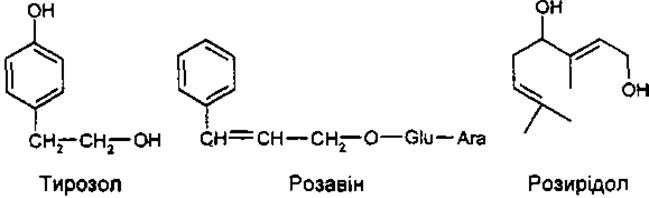
The raw material also contains cinnamic alcohol glycosides — rosin, rosavin, rosarin; flavonoids — derivatives of herbacetin, tricin, kaempferol; the flavolignan rhodiolin; monoterpenes — rosiridin and rosiridol. Hydrolyzable tannins account for 20 %; essential oil is present (0.8-0.9 %). Rhodiola is a manganophilic plant, meaning it is a manganese accumulator.
Biological activity and application. Liquid extract of rhodiola, containing no less than 0.5 % salidroside, is used as a tonic and adaptogenic agent. The raw material is also used in dietary supplements.
VIOLET HERB — HERBA VIOLAE
Wild pansy — Viola tricolor L., field pansy — Viola arvensis Murr., violet family — Violaceae
Wild pansy, field pansy, Heart's ease; viola is the Latin name for fragrant plants of the cabbage family, possibly a diminutive of Greek ion — violet; Latin arvensis means field; tricolor means three-colored.
Plant. The wild pansy is an annual or biennial herbaceous plant 10–45 cm tall. Stems are simple or branched, slightly ribbed. Leaves are alternate, usually petiolate, simple, with two pinnatipartite or pinnatifid stipules; the lower ones are broadly ovate, the upper ones are oblong, with blunt-toothed or coarsely crenate margins, up to 6 cm long and up to 2 cm wide. Flowers are axillary, bisexual, irregular, with a motile five-petaled corolla. Calyces consist of five green sepals; the corolla consists of five unequal petals, with the lower ones larger than the upper ones, bearing a spur at the base. The color of the leaves is green, and the stems are green or light green. In the field pansy, the corolla is yellow with paler upper petals; in the wild pansy, the upper petals are blue-violet, the lateral ones are lighter with one to three dark nectar stripes; the lower petal is always yellow. The fruit is a unilocular, oblong-ovate capsule that opens with three Valves. Seeds are small, oval, smooth, light brown.
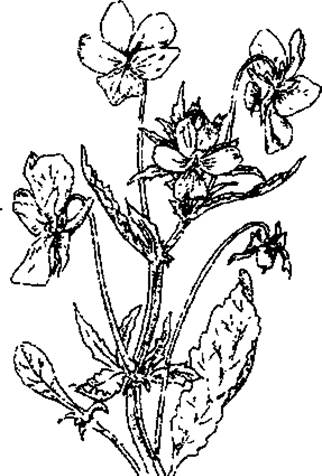
Distribution. Found throughout Ukraine in dry meadows and forest edges, as a weed in crops; it also grows in the Caucasus, Central Asia, Siberia, and the Far East.
Harvesting. Each species of violet is collected separately. The herb is cut during flowering at a distance of 5 cm from the ground. The harvesting rotation for the raw material is two years. It is dried quickly in the air in the shade.
Chemical composition of the raw material. The herb contains salicylic acid (0.1 %), flavonoids (see the section «Flavonoids»), essential oil containing methyl salicylate, saponins (14 %) including ursolic acid, carotenoids, and vitamin C.
Biological activity and application. The infusion is used as an expectorant, diuretic, diaphoretic, and anti-inflammatory agent. It is included in pectoral and diuretic herbal mixtures.
In homeopathy, the entire fresh flowering wild pansy plant is used for diathesis in infants, as well as for Skin diseases and nocturnal enuresis.
PEONY HERB — HERBA PAEONIAE ANOMALAE
PEONY RHIZOMES AND ROOTS — RHIZOMATA ET RADICES PAEONIAE ANOMALAE
Mammled peony, Mary's root — Paeonia anomala L., peony family — Paeoniaceae
Incorrect peony (Paeonia anomala, woodland peony); the plant is named after Paeon, the Greek god of healing; the Latin specific epithet anomala comes from the Greek a- (not) and nomalos (regular).
A perennial herbaceous plant standing 60-100 cm tall. The rhizome is short, multi-headed, dark brown or yellowish-brown, light yellow on a fresh break, wrinkled, with branched, spindle-shaped, thickened, fleshy, sessile roots 1-9 cm long and 0.2-0.5 cm thick. The stem is erect, simple, grooved or prominently ribbed, glabrous, brownish-green, up to 35 cm tall. Leaves are glabrous, petiolate, twice or thrice pinnatisect into narrow lanceolate lobes, alternate, highly wrinkled, dark green above and light green below. Flowers are regular, bisexual, large (8-13 cm in diameter), 5- or 6-petaled, solitary at the apex of the stem; petals are intense red, notched at the apex. The fruit is an aggregate follicle.
Distribution. The plant is widespread in Eastern and Western Siberia. It grows in forests, forest glades, and at forest edges. In Ukraine, it is cultivated in botanical gardens and parks.
Harvesting. Underground Organs can be harvested throughout the entire growing season, but it is best to do so concurrently with the herb during the flowering period. The aerial part is separated from the underground part. Rhizomes and roots are dug up, shaken free of soil, washed, and sliced. The raw material is dried in attics or under sheds, and finished in dryers at a temperature of 45-60 °C.
Chemical composition of the raw material. The rhizomes and roots of the peony contain the glycoside salicin, methyl salicylate, salicylic and benzoic acids, flavonoids, tannins (8%), and sugars (10%). The essential oil (1.6%) includes monoterpenoids: paeonol, paeonoside, paeonolid, etc. Up to 0.3% of ascorbic acid has been found in the leaves.


Biological activity and application. Peony tincture is used as a sedative. It is prescribed for neurasthenia accompanied by hyperexcitability, insomnia, and hypochondria. Peony preparations cause a slight increase in the acidity of gastric juice.
WILLOW BARK — CORTEX SALICIS
Purple osier — Salix acutifolia Willd., fam. Willow family — Salicaceae
Sharp-leaf willow; salix is the Latin name of the plant.
Plant. A dioecious tree or shrub up to 5 m tall. The bark is 1.5-3 mm thick, reddish or yellow. Leaves are entire, alternate, lanceolate, elongated-acuminate, glabrous, green above and bluish-green below, 6-15 cm long.
Flowers are bisexual, borne in sessile, thick, silvery-pubescent catkins. It blooms in March-April, long before the leaves appear. The fruit is a capsule.
Distribution. Found throughout the Northern Hemisphere, along the banks of rivers and Water bodies. Cultivated as an ornamental plant.
Harvesting. The bark is harvested during the sap flow period from 3-4-year-old branches. It is dried outdoors or in well-ventilated areas.
Chemical composition of the raw material. Contains Phenolic Compounds: pyrocatechol, salicyl alcohol; p-coumaric, ferulic, salicylic, and other acids; phenolic glycosides — salicin (0.6%), populin, salicortin, picein; flavonoids, catechins, and condensed tannins (up to 12.5%).
Biological activity and application. Willow bark decoction is used for rinsing the Mouth and throat in cases of stomatitis, gingivitis, periodontal disease, and inflammatory processes as an anti-inflammatory, analgesic, antiseptic, and astringent agent. Luteolin standard and cynaroside (luteolin glucopyranoside), used in pharmaceutical analysis, are derived from the bark.
Willow bark is a component of dietary supplements.

RASPBERRY FRUIT — FRUCTUS RUBI IDAEI
Raspberry — Rubus idaeus L., fam. Rose family — Rosaceae
Raspberry; the name comes from rubus, the Latin name for raspberry or blackberry; from ruber, meaning red; idaeus comes from the Greek idaios, meaning of Mount Ida (according to Pliny, originating from Mount Ida on the island of Crete).
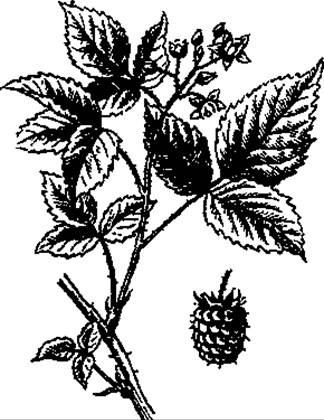
Plant. A subshrub with annual vegetative shoots and woody biennial stems that form shortened flowering branchlets. Annual shoots are herbaceous and covered with prickles; in autumn they become woody, and the following year they bloom and bear fruit. Leaves are alternate, ternate or imparipinnate, irregularly serrate along the margin, dark green above and white-tomentose below. Flowers are bisexual, 5-petaled, white, arranged in corymbose-hairy inflorescences and axillary few-flowered racemes. The fruit is a complex red or yellow juicy eterio of round or conical shape, consisting of numerous (30-60) fused individual drupelets. They form a hollow cone with a rounded apex 7.5-12 mm in diameter. Inside, the drupelets contain a pit with a pitted surface. The fruits are grayish-raspberry colored, and the pits are dark yellow; the odor is specific and pleasant, and the taste is bittersweet. The fruits ripen in July.
Distribution. Wild raspberry grows in all forest regions and the northern part of the Forest-Steppe zone in forests, among shrubbery, and in forest flood-plain meadows.
Harvesting. Fully ripe fruits, free of pedicels and receptacles, are harvested in dry weather, placed in shallow baskets or buckets, quickly transported to the drying site, spread in a thin layer, initially withered outdoors, and finally dried in dryers at a temperature of 50-60 °C.
Chemical composition of the raw material. The fruits contain CARBOHYDRATES: fructose, glucose, sucrose (4-8 %), pectic substances, and dietary fiber; organic acids such as malic, salicylic, sorbic, formic, tartaric, and others (totaling over 2 %); Vitamins C, B1, B2, carotene, PP; potassium, iron, and copper salts. They also contain essential oil, benzaldehyde, triterpene acids, flavonoids (1.4%): quercetin glycosides, anthocyanins; Coumarins, and tannins.
Biological activity and application. An infusion of dried fruits is used as a diaphoretic and antipyretic remedy for colds. It is a component of diaphoretic herbal mixtures.
Fresh fruits exhibit anti-sclerotic properties; raspberry syrup (Sirupus Rubi idaei) improves the taste and smell of medicines. They are widely used in the food industry and in dietary supplements.
ARTICHOKE LEAVES AND FLOWER HEADS — FOLIA ETANTHODIA CYNARAE
Globe artichoke — Cynara scólymus L., fam. Asteraceae
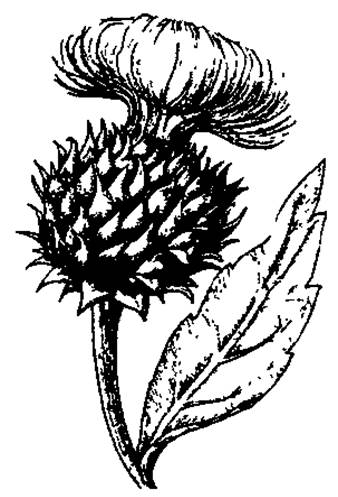
Globe artichoke. A perennial herbaceous plant. The stem is erect, branched, gray-green, 0.5-2 m tall. Leaves are pinnately dissected, sometimes simple, pubescent underneath. Flowers are blue or blue-violet, gathered in large flower heads 6-8 cm in diameter. The fruit is an achene.
Distribution. Native to the Mediterranean region. Cultivated in Ukraine as a vegetable crop in open ground (in southern regions) and protected ground (in northern regions).
Chemical composition of the raw material. The leaves contain phenolcarboxylic acids: caffeic, chlorogenic, neochlorogenic, 4-O-caffeoyl- and O-caffeoyl-D-quinic, as well as cynarin (1,4-di-O-caffeoyl-D-quinic acid) and tannins. Flavonoids are represented by luteolin derivatives.

The flower heads contain protein (3 %), carbohydrates (10-15 %), ascorbic acid, vitamins B1 and B2, carotene, and isolated sesquiterpene lactones of the guaianolide group: cynaropicrin and grosheimin.
Biological activity and application. The combination of cynarin, phenolic acids, and flavonoids provides anti-sclerotic, choleretic, hepatoprotective, and diuretic activities of the raw material and the medication Chophytol.
Boiled artichoke inflorescences are used for food.
MALE FERN RHIZOMES — RHIZOMATA FILICIS MARIS
Male fern — Dryópteris filix-mas (L.) Schott., fam. Dryopteridaceae (Aspidiaceae)
Male fern; the name comes from the transliteration of the Greek name of this plant; Greek drys — oak, pteris — fern; Latin filix — fern, mas — male.
Plant description. A perennial fern with a short, thick, horizontal or oblique cylindrical rhizome, densely covered with the remnants of leaf petioles arranged imbricately; the petioles are thick, elastic, densely covered with large lanceolate brown scales. Leaves are short-petioled, 1 m long, 20-25 cm wide, gathered in a funnel-shaped cluster near the rhizome; leaf blades are bipinnate, oblong-oval; second-order segments are obliquely dentate. The undersides bear brown sori arranged in two rows along the sides of the midrib and covered by kidney-shaped indusia with indented centers; beneath them are oval sporangia containing spores. In June-July, the spores germinate and give rise to the sexual generation — a gametophyte in the form of a small, flat, green heart-shaped prothallium, on which archegonia and antheridia are formed. Following Fertilization, the asexual generation — the sporophyte — develops from the egg Cell of the archegonium.
Distribution. Grows in the forest zone of the European part of the CIS, and in the mountain-forest belt of the Caucasus and Central Asia.
Harvesting. Rhizomes are dug up in early spring or autumn, freed from soil, cut lengthwise and crosswise, and dried in an attic or in dryers at temperatures not exceeding 40 °C. The plant is poisonous! Safety regulations must be observed.
Chemical composition of the raw material. The main active constituents are phenolic compounds, which are monomeric, dimeric, and trimeric derivatives of phloroglucinol of varying degrees of complexity: aspidinol, albaspidin, filicic acid, etc. The total amount of phloroglucides is referred to as "crude filicin".


Filicic acid
In addition, the raw material contains tannins (7-8 %), triterpenoids, B vitamins, higher aliphatic alcohols, Higher Fatty acids, and their esters.
Last update: 06/08/2026
Editorial and Educational Adaptation: This material has been compiled based on the primary/original source text. The project team performed an editorial review, corrected technical inaccuracies, structured sections, and adapted the content for an educational format.
What was processed:
- elimination of formatting defects (OCR errors, structural breaks, corrupted characters);
- editorial organization of content;
- standardization of terminology in accordance with academic sources;
- verification of factual statements against the original source text.
All mentions of the author, publication year, and origin of the primary text have been preserved in accordance with the source.