Biochemical Foundations of Human Vital Activity - Volkov N.I., Nesen E.N. 2000
Biochemical Foundations of Human Vital Activity
Biochemistry of Lipids
Fat Digestion and Absorption
The primary factors required for The breakdown of dietary fat in the digestive tract are the presence of fat-splitting Enzymes along with optimal conditions for their activity (pH), and emulsifiers to convert fat into a finely dispersed (emulsified) state. Bile acids serve as such emulsifiers.
Since the Oral Cavity lacks these necessary conditions, no chemical Digestion of fats takes place there. The Stomach contains lipase with very low activity. This is because the highly acidic environment of the stomach (pH 1.5–2.5) suppresses The activity of lipase (pH 7.8–8.1), and emulsifiers are absent. Consequently, only fats that are already emulsified—such as those found in milk and egg yolk—can be digested here.
The bulk of dietary neutral fat Hydrolysis occurs in the Small Intestine under the action of active lipases. The intestinal environment is weakly alkaline, which is optimal for the activity of lipase delivered here via pancreatic juice.
Class="center">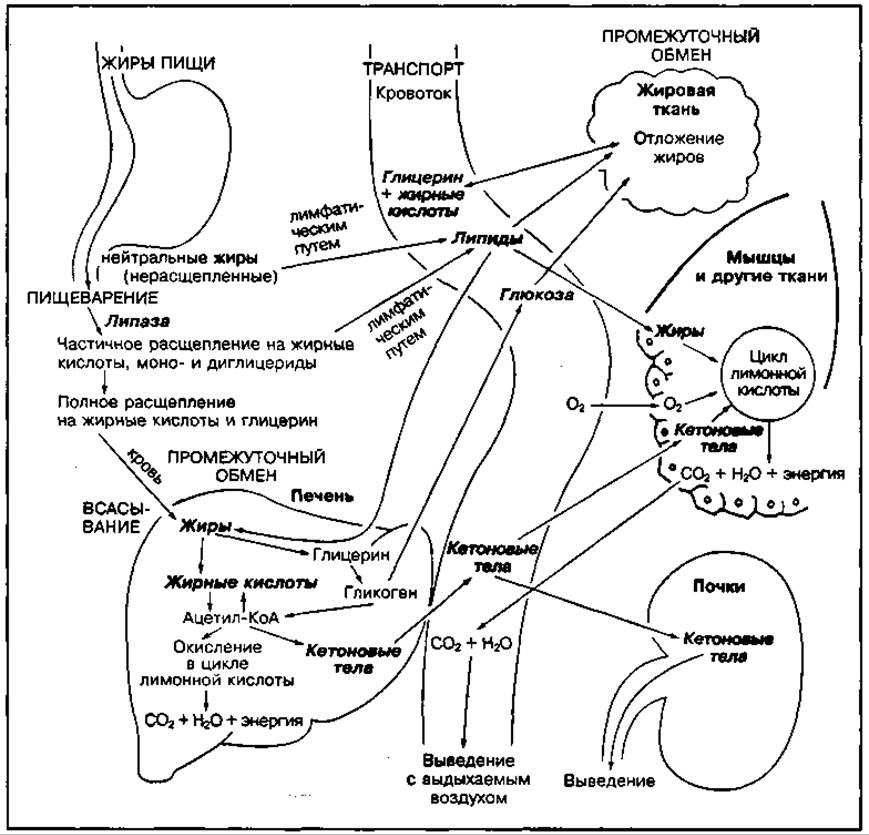
Fig. 69 Main Stages of Lipid METABOLISM in the Body
The formation of stable emulsions plays a major role in the breakdown of dietary fats, leading to the reduction of fat particle size. The diameter of these spherical fat droplets is approximately 1000 nm. The stability of fat emulsions in Water is achieved through emulsifiers that prevent small fat droplets from coalescing into larger ones (Fig. 70). This increases the surface area of the fat droplets in the aqueous medium, making them much more accessible to enzymatic action. Fat emulsifiers are bile acid salts, which also activate hydrolytic enzymes and facilitate the absorption and transport of Fatty acids in the body. Bile acids are synthesized in the Liver from Cholesterol and enter the intestine via bile.
Complete hydrolysis of neutral fats in the small intestine yields glycerol and free fatty acids (Fig. 71). However, partially hydrolyzed mono- and diglycerides also remain.

Fig. 70 Fat emulsification: a — a layer of water, oil, and emulsifier molecules (•); b — an emulsified fat molecule surrounded by emulsifier molecules, with their hydrophilic groups facing the water and hydrophobic groups facing the oil

Fig. 71 Digestion and breakdown of fats
Dietary Phospholipids are similarly broken down in the duodenum and emulsified by bile acid salts. The hydrolytic Cleavage of phospholipids is carried out by several specific phospholipases A, B, C, and D delivered with pancreatic juice. These enzymes cleave different ester bonds, as illustrated in the scheme of phosphatidylcholine hydrolysis:

The action of phospholipases yields glycerol, fatty acids, nitrogenous compounds, and phosphoric acid. The water-soluble products of phospholipid hydrolysis are readily absorbed by the intestinal wall.
Dietary Steroids are broken down in the small intestine into cholesterol and fatty acids by hydrolytic enzymes known as esterases. These enzymes are secreted with Pancreatic juice and are active only in the presence of bile acid salts.
Cholesterol enters The Human Body primarily through egg yolk, meat, liver, and Brain tissue in amounts ranging from about 0.2–0.5 g, either as free cholesterol or its esters (cholesteryl esters). Cholesterol esters are cleaved into cholesterol and fatty acids with the participation of cholesterol esterase, an enzyme found in Pancreatic and Intestinal juices. Cholesterol is poorly soluble in water and is absorbed as a complex with bile acids.
During digestion, about 40% of fats are completely broken down into their structural components, 50% are partially hydrolyzed, and 10% remain unhydrolyzed.
As fat hydrolysis products are formed, they are absorbed by the Cells of the intestinal mucosa ("villi"). Glycerol, phosphoric acid, amino alcohols, and short-chain Fatty acids are highly soluble in water and pass directly into the bloodstream during absorption without significant modification. Long-chain Fatty Acids and partially hydrolyzed triglycerides are insoluble in water and are absorbed exclusively as water-soluble complexes with bile acids, known as choleic acid complexes (choleates). Choleates enable fatty acids to penetrate the mucosal cells of the intestine, where these complexes break down into fatty and bile acids. The released bile acids return via the portal Venous system to the liver, where they are reincorporated into bile, while the fatty acids are used for The Biosynthesis of the body's own fats.
The initial synthesis of Organism-specific fats occurs directly within the intestinal epithelial cells from glycerol and fatty acids. Subsequently, these fats enter The Lymphatic system and are transported as Structure/178.html">Protein Complexes (Lipoproteins) that vary in chemical composition, particle size, and specific function. The ratio of these lipoproteins in the Blood changes during Lipid Metabolism disorders and is used for diagnostic purposes.
Through the thoracic lymphatic duct, they enter the bloodstream. Within 1–2 hours after a meal, blood lipid levels increase (alimentary hyperlipemia). The peak hyperlipemia is observed 4–6 hours after consuming a fatty meal, and blood fat levels normalize 9–10 hours postprandial.
To pass from the blood into body Tissues, fats are broken down on the vascular walls into fatty acids and glycerol. In the tissues, they are resynthesized and stored as fat reserves in adipose depots or oxidized during bioenergetic processes.
Last update: 06/08/2026
Editorial and Educational Adaptation: This material has been compiled based on the primary/original source text. The project team performed an editorial review, corrected technical inaccuracies, structured sections, and adapted the content for an educational format.
What was processed:
- elimination of formatting defects (OCR errors, structural breaks, corrupted characters);
- editorial organization of content;
- standardization of terminology in accordance with academic sources;
- verification of factual statements against the original source text.
All mentions of the author, publication year, and origin of the primary text have been preserved in accordance with the source.