Evolution of Viruses - Zhdanov V. M. 1990
Special Section
Reoviruses and Related Virus Groups
In addition to the extensive group of reoviruses (family Reoviridae), double-stranded RNA is found in many other virus groups: Yeast and mold Viruses with a linear continuous RNA (10 viruses); fungal viruses with two RNA segments—bipartite (about 20 viruses), tripartite with three segments (4 viruses), monopartite bisegmented fungal viruses (4 viruses), and monopartite bisegmented animal viruses (4 viruses). To these should be added yeast killer factors, which are double-stranded RNA molecules lacking protein coats [Matthews R., 1982]. We will mention these 5 virus groups only briefly, as available data on them are insufficient to form any concepts regarding their evolution.
Viruses of the first group have a genome with a Molecular Weight of 3х106—5,7х106. Virions are polyhedra with a diameter of 35—40 nm, constructed from protein molecules with a molecular weight of 73 000—160 000. Two subgroups (genera) are distinguished: Helminthosperium maydis and Saccharomyces cerviridae.
Viruses of the second group have been found in Molds and other Fungi. Their genome consists of two monocistronic fragments of double-stranded RNA with a molecular weight of 0.9х106— 1.6х106, which are enclosed in separate particles (bipartite virus). In addition, defective particles with incomplete genome fragments are encountered. The RNA is packaged in Proteins with a molecular weight of 42 000—72 000, and the particles have an icosahedral shape with a diameter of 30—35 nm. The second protein is a polymerase with a molecular weight of 56 000. In the better-studied virus of this group (the Penicillium solaniticum virus, PsV-S group), there are several types of particles with varying densities—ranging from 1.3 to 1.39 g/ml, depending on their different RNA content, including empty capsids. Based on their aggregate properties, about 10 species-rank groups are distinguished among bipartite fungal viruses. All of them, as might be expected
expected, possess virion polymerase in addition to capsid protein. These two virus groups have recently been segregated into independent families—Totiviridae and Partitiviridae [Brown R., 1986].
Viruses of the next group have a genome in the form of double-stranded RNA, are tripartite viruses, and have also been found in molds. The segments are monocistronic with a molecular weight of about 2x10⁶, and are packaged into separate icosahedral particles 35—40 nm in diameter, formed by a protein with a molecular weight of 110 000—120 000. The particles also contain viral polymerase.
A separate group is formed by two-segment monopartite animal viruses containing double-stranded RNA. These viruses affect a wide range of hosts (fish, Mollusks, chickens, ducks, turkeys, Drosophila). One of the most thoroughly studied viruses in this group is the infectious pancreatic necrosis virus of salmonids; morphologically, it appears as an icosahedron 60 nm in diameter with a density of 1.32 g/ml. Its genome consists of two fragments with molecular weights of 2.5х106 and 2.3x10⁶. The RNA is non-infectious, and the virions contain a virus-specific polymerase. The capsid contains 4 proteins with molecular weights of 105 000, 54 000, 31 000, and 29 000 in varying ratios (22, 544, 550, and 122 molecules per virion, respectively). Furthermore, non-virion proteins are synthesized during Replication, and structural proteins mature via proteolytic Cleavage of precursors. Despite their wide host range, these viruses form a compact group with consistent nucleic acid and protein characteristics [Dobos P. et al., 1979]. Some of them are serologically related. It has been proposed to classify them into an independent group, Birnavirus, whose virions feature a capsid composed of 132 morphological units with cubic Symmetry and T-13 [Schwanz-Pfitzner I. et al., 1984]. Recently, they were assigned to an independent family, Birnaviridae, with a single eponymous genus [Brown R., 1986].
The Birnaviruses include Drosophila X virus. Its double-stranded RNA consists of two segments—A and B (2.3x10⁶ and 2.2x10⁶). Virions contain 5 proteins: large (110 000), medium (49 000 and 45 000), and small (34 000 and 27 000). Infected Cells synthesize 5 non-structural proteins (110 000, 67 000, 34 000, and 27 000), as well as a protein with a molecular weight of 49 000, which is a cleavage product of the 67 000-weight protein. The Genome strategy of this virus is therefore distinct from that of other double-stranded RNA viruses [Nagy E., Dobos P., 1984].
Thus, the 4 virus groups mentioned above, despite their apparent divergence, share a great deal in common. In particular, their genome strategy appears to be very similar, as their RNA is non-infectious and Functions only in the presence of viral polymerase, which is present either within the virions or within the particles of di- and tripartite viruses. As will be shown below, this brings them close to reoviruses. Perhaps another representative should be added to them—Phage Φ6, which infects pseudomonads. Its genome consists of three double-stranded RNA fragments with a total molecular weight of 10.4x10⁶. The molecular weights of the fragments are 2.3x10⁶, 3.1x10⁶, and 5.0x10⁶. The viral RNA encodes the synthesis of 11 proteins, including transcriptase (with molecular weights ranging from 6 000 to 82 000). The virus has a capsid with cubic symmetry (60 nm in diameter) and an outer lipid envelope (virion diameter 75 nm) [Day L., Mindich L., 1980]. The virus has been classified into a separate family, Cystoviridae.
Yeast killer factors also consist of double-stranded RNA. They apparently lack their own proteins, resembling Plasmids in this respect, although their genome is RNA rather than DNA. Their genome contains a Gene for the synthesis of a toxin—an acidic protein with a molecular weight of 10 000—20 000 that kills non-killer Yeasts. In its MECHANISM OF ACTION (The formation of membrane channels through which ions escape), the killer toxin resembles bacteriocins, although they are chemically distinct substances that differ in molecular weight and Structure, not to mention the fact that colicins are DNA-containing plasmids [Kagan B., 1983].
The family Reoviridae includes the genera Reovirus (true reoviruses), Orbivirus (viruses transmitted by Blood-sucking Arthropods), Rotavirus (agents of intestinal diseases), Phytoreovirus (agents of plant tissue tumors), Fijivirus (plant reoviruses of the second subgroup), and Cypovirus (agents of cytoplasmic polyhedroses). All of these are viruses with double-stranded, multisegmented RNA.
Virions are spherical, 75 nm in diameter, and consist of a double-layered capsid enclosing the virion RNA. The outer capsid is an icosahedron with 12 vertices, and the precise number of capsomers is not definitively established (ranging from 92 to 180). They are organized into hexons and pentons, appearing as cylinders 18—20 nm in diameter with a channel 4—6 nm wide. The inner capsid, or core, has a diameter of 52 nm and is also an icosahedron with 12 vertices. The genome consists of 10 segments of double-stranded RNA with a total molecular weight of about 16x106. According to their size, 3 classes of RNA molecules are distinguished: large (L1—L3) with a molecular weight of 2.7х106 and 4 500 Base Pairs, medium (M1—M3) with a molecular weight of 1.3х106 and 2 300 base pairs, and small (S1—S4) with a molecular weight of 0.6х106 — 0.8х106 and 1 200 base pairs. Each segment encodes the synthesis of a single structural or non-structural protein. The synthesis of core proteins is encoded by segments L1 and L3 (designated as λ1 and λ3, respectively), as well as segments M1 and M2 (μ1 and μ2) and S2 (σ2). The synthesis of outer capsid proteins is encoded by segments M2 (μ1c), S1, and S3 (σ1, σ3). Within the virion, the outer capsid is formed not only by its proteins but also by protruding internal proteins (Fig. 29). Protein σ1 functions as a hemagglutinin. During replication, two non-structural proteins are produced, encoded by genes M3 (μNS) and S3 (σNS), with molecular weights of 75 000 and 36 000. The molecular weights of λ proteins are 155 000, 140 000, and 135 000; those of μ proteins are 80 000, 72 000, and 70 000; and those of σ proteins are 42 000, 38 000, and 34 000, respectively.
Let us briefly recall the CHARACTERISTICS OF THE main groups (genera) of this extensive family.
Class="center">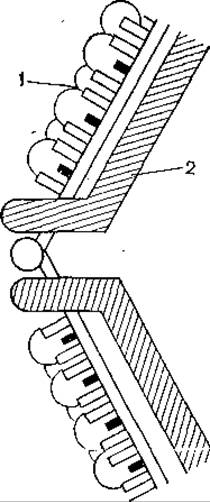
Fig. 29. STRUCTURE OF THE reovirus capsid (diagram).
1 — outer capsid; 2 — inner capsid.
Reoviruses (more than 10 viruses) infect humans, monkeys, cattle, small ruminants, bats, and birds—that is, exclusively warm-blooded animals. Their genome consists of 10 segments of double-stranded RNA packaged in a double-layered icosahedral capsid 60—76 nm in diameter, with 12 hollow surface projections. The total molecular weight of the genome is 14x106— 15x106, and the mass of its individual fragments ranges from 0.2x10⁶ to 2.7x10⁶. The RNA possesses large (L), medium (M), and small chains, as well as short chains consisting of 2—20 NUCLEOTIDES. The plus-strand of virion RNA contains a cap structure m7GpppGmpCp at its 5' end [Uryvaev L. V., 1982]. The encoded proteins are designated accordingly as λ, μ, and σ. Virions contain 10 Polypeptides, including transcriptase, nucleotide phosphohydrolase, and capping enzyme. Serological types of the virus cross-react. Reoviruses, including orbiviruses, are characterized by the conservation of 3'-terminal sequences across both different genes and genes of various viruses belonging to the same genus [Mertens P., Sangar D., 1985]. Other genera generally share similar characteristics while exhibiting certain distinctions.
The large group (genus) of orbiviruses, numbering over 100 representatives, is subdivided into 13 serological groups, of which the most numerous are the bluetongue virus of sheep, Kemerovo, Changuinola, and African horse sickness groups [Spence R. et al., 1985]. The total genome of orbiviruses, consisting of 10 segments, has a molecular weight of 14.9x10⁶ in bluetongue virus. The Colorado tick fever virus genome contains 12 segments with a total molecular weight of 18x106. Genome segments share similar sequences at their 3' ends, which evidently serve as recognition sites for viral transcriptase. Due to genome segmentation, reassortants form under natural and experimental conditions, as demonstrated with bluetongue viruses of sheep. The 4 major and 3 minor orbivirus proteins are distributed in size similarly to those of reoviruses. In total, 12 proteins with molecular weights ranging from 20 000 to 141 000 are synthesized during replication.
The group (genus) of rotaviruses infects humans, monkeys, cattle, small ruminants, pigs, horses, wild mammals (antelopes, deer, rodents, etc.), dogs, and birds. The total number of rotaviruses is difficult to determine because their various serovars are similar in humans and animals. Rotaviruses are agents of intestinal infections, and asymptomatic carriage is possible. The rotavirus genome consists of 11 fragments with molecular weights ranging from 0.2x10⁶ to 2.2x10⁶, with a total molecular weight of 10x106 — 12x106. Virions contain 8—10 polypeptides and have an icosahedral shape with a diameter of 65—75 nm. During mixed infection with two closely related rotaviruses, reassortants arise not only in tissue cultures but also upon animal infection. These serve as sources for Selection, which manifests differently under various conditions [Gombold J., Ramig R., 1986]. Gene reassortment occurs with particular ease in rotaviruses. In particular, it is possible to obtain reassortants between well-cultivated animal rotaviruses (e.g., bovine) and "uncultivated" human rotaviruses. This approach can be utilized to produce live, Attenuated Vaccines for humans [Midthun K. et al., 1985]. It is entirely natural to assume that these processes occur in nature, and this may well be the reason for the extensive cross-antigenic relationships between Human and Animal rotaviruses. For instance, it has been shown [Allen A., Desselberger U., 1985] that rotaviruses isolated from chronically infected immunodeficient children are reassortants between human and bovine rotaviruses.
Serological relationships among rotaviruses are quite complex. For example, rotaviruses isolated from cats are serologically closely related to simian (SA11) and human (type 3) rotaviruses, but not to other serovars [Birch C. et al., 1985]. Cell attachment and The production of virus-neutralizing Antibodies are associated with an outer envelope glycoprotein having a molecular weight of 38 000 — 41 900 [Sahara M. et al., 1985].
In addition to these virus groups (genera), there are unclassified animal rotaviruses, such as rabbit syncytial virus.
Among the extensive group of plant reoviruses, the genera Phytoreovirus (the first subgroup of plant reoviruses) and Fijivirus (the second subgroup) are distinguished, each comprising several viruses. The first genus includes more than 30 plant wound tumor viruses, as well as rice dwarf viruses. Their genome consists of 12 fragments with molecular weights ranging from 0.3x10⁶ to 3x10⁶; the total molecular weight is 16x106. Virions contain 7 polypeptides. The virions are icosahedra approximately 70 nm in diameter, featuring a double-layered coat with a core diameter of 59 nm. The viruses are transmitted by aphids and replicate in both plants and aphids. The genus Fijivirus includes many hundreds of serovars grouped into the maize rough dwarf virus group (about 400 varieties) exhibiting cross-serological reactions, the Fiji disease virus group (119 varieties), and the maize sterile stunt virus group (about 220 varieties). The genome consists of 10 fragments with molecular weights from 106 to 2.9x10⁶; the total molecular weight is 18x106 — 20x106. However, some authors report lower figures. For instance, the total genome molecular weight of rice ragged stunt virus is 11.63x10⁶ [Boccardo G., Milne R., 1980]. Virions contain 7 proteins and are icosahedra 65—71 nm in diameter with 12 vertices of 5-fold symmetry. The envelope is double-layered, with a core diameter of 50—55 nm. They are transmitted by planthoppers.
Reoviruses also include numerous agents of cytoplasmic polyhedroses (two groups). The first group includes 12 viruses, a typical representative being the silkworm cytoplasmic polyhedrosis virus. Its genome consists of 10 fragments with molecular weights ranging from 0.3x10⁶ to 2.7x10⁶; the total molecular weight is about 15x106 [Payne C., Rivers C., 1976]. Virions contain up to 5 Peptides, as well as transcriptase, nucleotide phosphohydrolase, and capping enzyme. Virions have a diameter of 50—65 nm and 12 projections. The viruses infect Lepidoptera, Diptera, other insects, and crustaceans.
Cypoviruses have a genome consisting of 10 segments with a total molecular weight of 13x106—16x106. Virions are 50—65 nm in diameter, with 12 tubular projections located at the vertices of the icosahedron; the outer capsid lacks this structure. Virions of reoviruses across all genera contain an RNA-dependent RNA polymerase (transcriptase) and Enzymes for cap-structure formation (including their methylation).
Another group contains about 150 insufficiently classified viruses that infect aphids and leafhoppers. Some of these viruses can also replicate in plants. Their genome consists of 8 fragments with molecular weights ranging from 0.5x10⁶ to 2.5x10⁶; the total molecular weight is about 12x106.
Following adsorption onto cellular receptors, virions penetrate cells via viropexis (endocytosis), with protein σ1 (hemagglutinin) playing a decisive role in this process. This is accompanied by partial deproteinization of the internalized virions by cellular proteases, resulting in the removal of the outer capsid and exposure of the core. Subsequently, mRNA synthesis is carried out by means of virion transcriptase (the product of gene L1, protein λ3, and the product of gene M2, protein μ1c). First and foremost, mRNAs encoding the synthesis of proteins λ1—3, σ2, and μNS are synthesized and processed (capping). Newly synthesized RNAs exit the core through openings in the projections. This is followed by Translation and genome replication, and subsequently by the METABOLISM/31.html">Transcription and translation of late genes. Different Genes are transcribed at varying rates: for example, segment M2 (encoding protein μ1) is transcribed 6 times faster and translated 30 times more intensively than segment L1 and its product λ3. Virion assembly takes place in the Cytoplasm, and virions leave infected cells following cell lysis.
Turning to the Discussion of potential evolutionary pathways of double-stranded RNA viruses, several considerations can be made. Yeast killer systems, which share properties similar to plasmids, can be regarded as the progenitors of these viruses. They represent "naked" RNA molecules whose double-stranded nature serves as an effective defense against cellular Nucleases (as "naked" single-stranded RNA is unlikely to survive in the cytoplasm). Their replication relies on the cellular RNA-synthesizing systems present in lower eukaryotes (fungi), since these structures lack their own RNA Synthesis machinery. Other fungal dsRNA viruses (mono-, bi-, and tripartite) serve as Examples of further evolution. They have acquired two key features that define them as classic viruses: their own capsid protein and their own RNA replicase (transcriptase). This was a crucial milestone that allowed double-stranded RNA viruses to occupy new ecological niches—not only ancient eukaryotes like fungi, but also higher animals (birnaviruses). Genome fragmentation and multipartiteness each have their own Advantages and disadvantages, which likely presented an evolutionary alternative for this category of viruses. Specifically, as the genome increased in size, it was partitioned into fragments, each functioning as a separate gene—inherently much more resistant to environmental factors than a massive genome with a molecular weight of 15x106 — 20x106. It should be noted that such a large genome could not replicate efficiently, given that a size of 7x10⁶—8x10⁶ (albeit calculated for single-stranded RNA) represents the upper limit for RNA size.
Despite the similarities between the compared viruses, certain differences in their genome strategies also exist. The yeast virus, which possesses a capsid-associated polymerase, replicates conservatively, and transcription proceeds via the same mechanism. In phage Ф6 and other fungal viruses, transcription occurs semi-conservatively. In reoviruses, both Transcription and Replication are conservative [Nemeroff M., Bruenn J., 1986].
Thus, the intrinsic capsid protein and virion polymerase emerged as very early adaptations, possibly originating around a billion years ago. It is therefore no coincidence that dsRNA viruses include primitive representatives (a single capsid protein and a single polymerase—in other words, the minimal gene count) that parasitize the most ancient eukaryotes, the fungi. Intermediate groups remain largely unknown, as reoviruses are much more recent entities parasitizing arthropods, warm-blooded animals, and plants. All of these likely arose no earlier than 300 million years ago, and most likely significantly later, given that despite their wide host range, they are remarkably uniform and exhibit limited diversity.
Reoviruses serve as a clear illustration of the complex and still poorly understood pathways of viral evolution. Their characteristic features include a fragmented double-stranded RNA genome, a double-layered capsid, and a virion-associated RNA-dependent RNA polymerase. The molecular weight of the genome, which consists of 10–12 fragments, ranges from 10x106 to 18x106, with each gene encoding the synthesis of a corresponding virus-specific protein. These viruses replicate in the cytoplasm, and their genome transcription and replication are mediated by their own specific segment.
Ecologically, these viruses form five distinct groups. Orthoreoviruses parasitize the respiratory and digestive tract cells of humans, monkeys, cattle, small ruminants, dogs, and birds (comprising about 20 viruses). Another genus, rotaviruses, includes the causative agents of infant diarrhea, Nebraska calf diarrhea, murine diarrhea, and diseases in other animals [Drozdov S.G. et al., 1982]. The third genus, orbiviruses, comprises typical arboviruses transmitted by mosquitoes, biting midges, and ticks (about 15 viruses). Among them are pathogens of major veterinary importance, such as bluetongue virus of sheep, African horse sickness virus, Colorado tick fever virus, and epizootic hemorrhagic disease virus of deer. The fourth group consists of cytoplasmic polyhedrosis agents of silkworms and other insects (around 150 viruses). Finally, the fifth group includes rice and maize dwarf viruses, Fiji disease virus, and plant wound tumor viruses (about 10 viruses), which are transmitted by insect vectors such as aphids.
The striking similarity in Genome Organization across all five viral genera (in terms of molecular weight and fragment number), combined with the presence of a unique RNA-dependent RNA polymerase in their virions and the absence of antigenic relationships between groups, suggests that their evolution as isolated lineages occurred over a prolonged period. The cytoplasmic polyhedrosis viruses are likely the most ancient group. These are nearly symbiotic viruses that cause chronic persistence in lepidopteran and dipteran hosts rather than acute pathological processes. The virions are occluded within capsule-forming proteins. The Abundance of these viruses and the insect species they affect, along with the chronic Nature of the infection described above, indicate a unique ecological balance established between parasite and host. It can be hypothesized that these viruses, or their evolutionary precursors, served as the source for two distinct evolutionary branches: plant reoviruses and orbiviruses. In both instances, insects (arthropods) were retained as vectors—not merely mechanical ones, since plant reoviruses replicate within aphid bodies, while orbiviruses multiply within the Tissues of insects and ticks. The remaining two groups, orthoreoviruses and rotaviruses, likely have a more recent origin, with the loss of the vector being a secondary adaptation. Naturally, this Conclusion remains highly hypothetical, and further research is needed to determine when and why representatives of different evolutionary branches lost their shared Antigens. To this end, serological relationships among the numerous cytoplasmic polyhedrosis viruses of insects, as well as plant reoviruses and orbiviruses, warrant detailed study.
Orbivirus infections are typically zoonotic with natural foci, as exemplified by epizootic hemorrhagic disease of deer, which is transmitted by biting midges; it is quite possible that deer serve as secondary reservoirs and indicators of natural foci for this orbivirus. Colorado tick fever is another naturally focal infection. Some orbiviruses have not yet been associated with specific diseases, having been isolated solely from their vectors (e.g., Kemerovo and Okhotsky viruses). At the same time, well-established domestic animal zoonoses exist, including bluetongue in sheep, African horse sickness, and Ibaraki disease in cattle. Bluetongue, transmitted by midges (Culicoides), was originally confined to South Africa before spreading to North Africa, the Middle East, Southern Europe, and the Americas. Sixteen distinct serotypes are recognized. The spread of the disease far beyond its original range indicates a "break" from its natural focus, driven by the ubiquitous presence of midge vectors, the involvement of mosquitoes (Aedes) and ked flies (Melophagus) in the viral cycle, and The Role of birds in introducing the virus to new regions [Syurin V.N., Fomina N.V., 1979]. African horse sickness, transmitted by midges and mosquitoes, is another established domestic animal zoonosis with nine known serotypes, which has spread from South Africa to the Middle and Near East and Southern Europe. This is also true for Ibaraki disease of cattle, prevalent in Japan, Indonesia, and Taiwan. None of these viruses have been shown to be pathogenic to humans.
Orthoreoviruses and rotaviruses appear to be the products of advanced, long-term evolution. Reotype 3 viruses infect a broad range of wild and domestic animals in addition to humans. These viruses primarily cause gastrointestinal and respiratory disorders (hence the acronym Respiratory Enteric Orphans), which are typically mild and tend toward asymptomatic persistence. The absence of prominent clinical symptoms, the polymorphic nature of the Pathogenesis, and the anthropozoonotic character of human reoviral infections all suggest that reoviruses continue to undergo active evolution. From this perspective, reoviral diseases in birds exhibit a more distinct clinical profile. In chickens, reoviruses induce tendinitis and synovitis as well as bursitis; in turkey poults, they cause blue comb disease; and in ducks, they lead to septicemia. All of these conditions are caused by distinct reoviruses that are non-pathogenic to humans, with transmission occurring via contaminated feed and Water [Syurin V.N., Fomina N.V., 1979].
Last update: 13/08/2026
Editorial and Educational Adaptation: This material has been compiled based on the primary/original source text. The project team performed an editorial review, corrected technical inaccuracies, structured sections, and adapted the content for an educational format.
What was processed:
- elimination of formatting defects (OCR errors, structural breaks, corrupted characters);
- editorial organization of content;
- standardization of terminology in accordance with academic sources;
- verification of factual statements against the original source text.
All mentions of the author, publication year, and origin of the primary text have been preserved in accordance with the source.