Human Anatomy and Physiology - I. V. Gayvoronsky 2011
A Brief Historical Outline
History of Physiology
The Development of physiology is inextricably linked to The Emergence of new anatomical insights. Discoveries in these two sciences largely progressed in parallel.
Even physicians in Ancient Greece described the Functions of various Organs. Notably, Aristotle (384–322 BC) argued that The Heart is responsible for the movement of Blood. Hippocrates (460–377 BC) described four main temperament types. However, he attributed behavioral differences in humans to the predominance of a specific "fluid" (blood, phlegm, yellow Bile, or black bile) in the body. Herophilus (born ca. 304 BC) established the RESPIRATORY FUNCTION OF the Diaphragm. By dissecting corpses and performing vivisections on criminals, Erasistratus (350–300 BC) concluded that human movements are controlled by the brain. He also described several Functions of the digestive organs.
The ancient Roman physician Claudius Galen conducted numerous experiments on pigs involving the transection of the Spinal Cord at various levels; he studied The Structure of the brain and became convinced that the brain itself is the center of thought, voluntary movement, and sensation. This refuted the prevailing notion that humans think, move, and feel thanks to the heart.
The Tajik physician, scholar, and philosopher Abu Ali Ibn Sina (Avicenna) synthesized virtually all existing medical knowledge of his time in his monumental work, The Canon of Medicine. The first volume of this treatise contains scattered data on the Structure and function of certain organs and systems of The Human Body.
The founder of experimental physiology is the English physician William Harvey (1578–1657). He is credited with the Discovery of the circulatory loops: in 1628, he published Anatomical Account of the Motion of The Heart and Blood in Animals, which described the SYSTEMIC AND PULMONARY circulations, as well as the laws governing blood flow.
The hypothesis concerning the reflex principle of the Central Nervous system's operation was put forward by the brilliant French philosopher, physicist, and mathematician René Descartes (1596–1650).
One of the most crucial branches of physiology is The Study of bioelectrical phenomena. The pioneer of this field (electrophysiology) is rightfully considered to be the Italian physicist and anatomist Luigi Galvani (1737–1798). He discovered electrical currents in Muscles, which he termed "animal electricity." Further research in electrophysiology led to the invention of one of the most widely used devices in modern clinical practice—the electrocardiograph. This instrument was developed by the Dutch physiologist Willem Einthoven (1860–1927).
Among Russian scientists who made substantial contributions to the development of physiology, special mention should be made of I. M. Sechenov, I. P. Pavlov, N. E. Vведенский, L. A. Orbeli, P. K. Anokhin, and A. M. Ugolev.
Ivan Mikhailovich Sechenov is widely regarded as the "father" of Russian scientific physiology. He devoted considerable attention to developing The Theory of the reflex arc, the core principles of which he outlined in his work Reflexes of the Brain. He substantiated The connection between consciousness and thinking. Sechenov is also credited with discovering The phenomenon of inhibition within the central nervous system.
Class="center">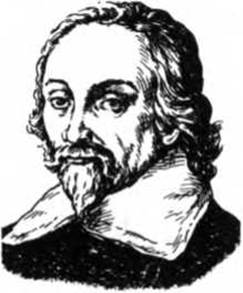
William Harvey (1578–1657)

Ivan Mikhailovich Sechenov (1829–1905)
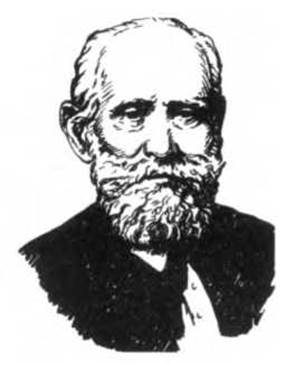
Ivan Petrovich Pavlov (1849–1936)
The great Russian scientist and academician I. P. Pavlov conducted his primary scientific research within the walls of the Military Medical Academy. He was awarded the Nobel Prize for his work in the Physiology of Digestion. The core principles formulated by I. M. Sechenov were later confirmed in Pavlov's research. His discovery of conditioned reflexes and the Development of concepts concerning the physiology, pathology, and types of Higher Nervous Activity laid the foundation for subsequent research in this field; it was he who divided all reflex Responses of the Organism into unconditioned and conditioned.
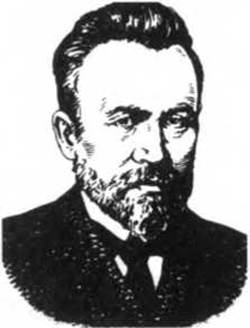
Nikolai Yevgenyevich Vvedensky (1852–1922)

Leon Abgarovich Orbeli (1882–1958)

Pyotr Kuzmich Anokhin (1898–1974)
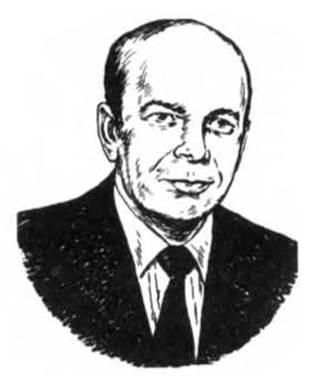
Alexander Mikhailovich Ugolev (1926–1991)
Nikolai Yevgenyevich Vvedensky focused on the PHYSIOLOGY OF THE nervous and muscular systems. He substantiated the theory of nerve unfatiguability and formulated The Doctrine of parabiosis (a functional state of organs and Tissues on the borderline between life and death).
Leon Abgarovich Orbeli is one of the founders of evolutionary physiology, known for his research on the functions of the Autonomic nervous system, primarily its sympathetic division. He also focused on the physiology of work and rest.
Pyotr Kuzmich Anokhin is the author of the theory of functional systems. He proposed the theory of compensatory recovery of impaired organ functions through other organs and established a new field in physiology: functional Neurochemistry.
Aleksandr Mikhailovich Ugolev dedicated his research to the physiology of the Digestive System. He discovered membrane (contact) digestion, formulated the theory of the common evolutionary origin of exocrine and Endocrine glands, and studied the enzymatic adaptation of digestive glands.
1. Define anatomy.
2. What is the Subject Matter of physiology?
3. Explain the meaning of the terms “norm”, “developmental anomaly”, and “malformation”.
4. Name notable domestic anatomists and describe their contributions to the discipline.
5. Which physiologists do you know? What was their role in studying the life processes of the human body?
Last update: 08/08/2026
Editorial and Educational Adaptation: This material has been compiled based on the primary/original source text. The project team performed an editorial review, corrected technical inaccuracies, structured sections, and adapted the content for an educational format.
What was processed:
- elimination of formatting defects (OCR errors, structural breaks, corrupted characters);
- editorial organization of content;
- standardization of terminology in accordance with academic sources;
- verification of factual statements against the original source text.
All mentions of the author, publication year, and origin of the primary text have been preserved in accordance with the source.