HUMAN MEDICAL BIOLOGY, ANATOMY, PHYSIOLOGY AND PATHOLOGY - Ya.I. Fedonyuk 2010
BIOLOGY
CHAPTER 1. BIOLOGICAL FOUNDATIONS OF HUMAN VITAL ACTIVITY
1.4. ONTOGENETIC LEVEL OF LIFE ORGANIZATION
1.4.3. Biology of Individual Development
Regeneration
Regeneration (Greek regeneratio - renewal) is the restoration of damaged, worn-out, or lost structures by an Organism. Regeneration maintains the integrity of the organism and its Homeostasis. Physiological, reparative, and pathological regeneration are distinguished.
Physiological regeneration is the restoration of structures lost in the course of the normal vital activity of an organism. For example, erythrocytes live for 120 days, and every second 4 billion of these Cells die, with an equal number being newly formed in the Hematopoietic Organs.
Reparative regeneration is the restoration of structures damaged or lost As a result of pathological changes or trauma. Reparative regeneration can be typical, when the organ restored after loss does not differ from the undamaged one, and atypical, when the restored organ differs in shape or Structure from the normal one. Typical regeneration is called homomorphosis, and atypical is called heteromorphosis. An example of typical regeneration is the restoration of a limb in a newt or axolotl, while an example of atypical regeneration is The formation of a tail-like appendage instead of a limb in certain lizards.
Methods of reparative regeneration include epimorphosis, morphallaxis, and endomorphosis.
Epimorphosis is the outgrowth of a lost organ from the wound surface. Limbs in newts and axolotls and tails in lizards are restored via epimorphosis. The regeneration process begins with the resorption of Tissues adjacent to the wound and the intensive proliferation of cells, from which a regeneration rudiment (blastema) is formed. Subsequent Cell proliferation leads to an increase in the size of the rudiment, and Cell Differentiation leads to the Formation of the organ. Scarring also belongs to epimorphosis, in which wound closure occurs, but without the restoration of the lost organ.
Morphallaxis is the restoration of a whole organism or organ through the reorganization and regrouping of Cells of the remaining body part. The organism or organ formed in this way has smaller dimensions, but subsequently increases in size. Through morphallaxis, a whole planaria, a whole hydra, or a whole starfish from a single ray can be restored from a part of the body.
Endomorphosis (regenerative hypertrophy) is regeneration within an organ, in which not the shape, but the mass (volume) of the organ is restored. In mammals, the Liver, Lungs, Kidneys, Adrenal Glands, Pancreas, Salivary Glands, and Thyroid Gland regenerate via endomorphosis. Thus, after the experimental removal of 2/3 of a rat's liver, the wound surface heals with a scar, the removed part does not regrow, and the shape of the organ is not restored. At the same time, due to an increase in the number and size of cells, the mass and function of the organ approach normal levels (Fig. 1.90).
Class="center">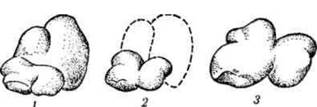
Fig. 1.90. Liver restoration in a rat via regenerative hypertrophy (after Liozner):
1 - liver before surgery; 2 - liver after removal of the left and central lobes (the detached part of the organ is indicated by dashes);
3 - liver after regeneration.
Compensatory hypertrophy is closely related to regenerative hypertrophy; it occurs when, after damage or removal of one of the paired organs, the remaining organ increases in size and enhances its function (kidneys, Ovaries, lungs).
Autotomy (self-mutilation) is the involuntary shedding of body parts by animals, mostly upon their sharp irritation. Subsequently, the lost body parts are restored. Autotomy serves primarily as an adaptation for passive defense against enemies.
It is characteristic of many invertebrates. For example, hydroid polyps cast off tentacles, starfish cast off rays, holothurians cast off tentacles and viscera, certain crustaceans cast off claws, and spiders cast off legs. Among vertebrates, autotomy is observed only in lizards, which break off their own tails. The tail, having separated from the body, distracts the enemy's attention, allowing the lizard to escape. Autotomy is a form of reparative regeneration.
Pathological regeneration is the restoration of tissues that are not identical to the healthy Tissues of the organ. For example, massive proliferation of Cytology/practical/45.html">Dense Connective Tissue may occur at the site of deep Burns, while normal Skin is not restored.
Levels of regeneration include intracellular and supracellular. Intracellular regeneration encompasses the processes of restoration of macromolecules and cellular Organelles. The lifespan of protein molecules averages 12–20 hours, after which they are replaced by newly synthesized ones. An increase in the number of cytoplasmic organelles is achieved, depending on their structure, through the formation of new ones or through the division of remaining ones (Mitochondria). Restoration at supracellular levels (tissue, organ, organismal) is ensured through the новоутворення (new formation) of cells, intracellular regeneration, or a combination of both mechanisms.
Features of regenerative processes in humans. In humans, cell proliferation forms The basis of physiological and reparative regeneration of the skin epidermis, intestinal epithelium, and hematopoietic tissue. In The Nervous system, due to the loss of the ability of Nerve Cells to divide, reparative processes are carried out almost exclusively by increasing the number of intracellular structures (intracellular regeneration). With age, the capacity for intracellular regeneration in nerve cells gradually decreases. Liver, Kidney, and lung cells retain The ability to proliferate, which increases particularly in the event of organ trauma. At the same time, intracellular regeneration also plays a role in the restorative processes of these organs.
Evolution of regenerative capacity. Physiological regeneration is characteristic of all organisms. The capacity for reparative regeneration in phylogenesis varies even within the same phylum. For example, among Coelenterates, hydras have a high regenerative capacity. However, jellyfish, which also belong to this phylum, are almost incapable of restoration. In general, Sponges, coelenterates, and worms possess a high capacity for regeneration, which is frequently carried out in full volume—a whole organism is restored from a part of the body. A number of biologists (B.P. Tokin, 1958) isolate this form of reparative regeneration into a separate phenomenon—somatic Embryogenesis—and view it as a variant of Vegetative Reproduction. In planarians, for example, a whole organism is restored from 1/10 of the original part, and in hydras—from 1/200. In plants, a whole organism can be restored from a single somatic cell under certain conditions.
In Arthropods and Mollusks, only the regeneration of individual organs is observed. Representatives of lower Chordates are capable of restoring a whole organism from a part of it (ascidians). In vertebrates generally, the capacity for regeneration decreases. However, in amphibians, especially tailed amphibians, it is well expressed. Thus, newts regrow a severed limb and tail, and can even regenerate eyes. In reptiles (lizards), tail regeneration occurs. Birds and mammals restore skin, bones, Muscles, and Internal Organs.
Last update: 08/08/2026
Editorial and Educational Adaptation: This material has been compiled based on the primary/original source text. The project team performed an editorial review, corrected technical inaccuracies, structured sections, and adapted the content for an educational format.
What was processed:
- elimination of formatting defects (OCR errors, structural breaks, corrupted characters);
- editorial organization of content;
- standardization of terminology in accordance with academic sources;
- verification of factual statements against the original source text.
All mentions of the author, publication year, and origin of the primary text have been preserved in accordance with the source.