PLANT PHYSIOLOGY AND BIOCHEMISTRY
Lecture Notes
2. STRUCTURE AND FUNCTIONS OF THE PLANT CELL
Organs, Tissues, and Functional Systems of Higher Plants
The body of higher plants is composed of two main parts—the SHOOT and the ROOT—which form the primary axis of the plant. The shoot includes the stem, leaves, vegetative buds, flowers, and fruits; the root system consists of the primary, lateral, and adventitious roots.
The stem primarily serves supportive and conductive Functions. It exhibits motility (in the zone of elongation), often acts as a storage site for reserve substances, and in many cases, serves as an organ of vegetative propagation (stolons, tendrils). Throughout evolution, numerous modifications of the stem have emerged, leading to new functions. For instance, underground rhizomes, tubers, and bulbs facilitate Vegetative Reproduction, nutrient storage, and survival during unfavorable seasonal conditions. Succulent, photosynthetic stems are adaptations to Water scarcity. Tendrils provide structural support, while thorns offer protection.
The leaf is a specialized organ for aerial Nutrition, responsible for Photosynthesis, gas exchange, and Transpiration. Leaves can also function as storage Organs (cotyledons), provide protection (thorns), offer support (tendrils), or act as trapping mechanisms (in carnivorous plants).
The root is a specialized organ for soil nutrition, serving to anchor the plant in the ground and possessing motility (in the zone of elongation). Roots may perform storage functions (tubers, fleshy roots) or facilitate Respiration (in wetland plants). The adaptation to new functions has led to The Development of prop roots, stilt roots, adhesive roots (as in ivy), aerial roots (in orchids), and more.
Vegetative buds are embryonic shoots that enable plant growth. They are classified as apical, axillary, or adventitious (arising from any part of the plant from living Cells). A bud consists of stem and leaf components. The stem portion is known as the shoot apical meristem, which is protected by scales—modified embryonic leaves.
Generative organs facilitate sexual reproduction, leading to The formation of seeds and fruits.
Flower buds in most woody plants are initiated in the year preceding flowering. These buds are the primordia of flowers.
A flower is a modified, unbranched shoot with limited growth, adapted for sexual reproduction and the subsequent development of seeds and fruits. A typical flower consists of the pedicel, receptacle, perianth, androecium, and gynoecium. The Structural Features of a flower are primarily determined by its pollination strategy.
A fruit is an organ of angiosperms that develops after Fertilization from the pistil, and sometimes from other PARTS OF THE flower, as they enlarge and undergo modification.
Vegetative organs ensure the growth and branching of shoots, while generative organs facilitate The process of sexual reproduction.
Each of the aforementioned plant organs is composed of several types of Tissues (groups of cells of common origin that perform a specific physiological function and share a similar morphological Structure, which optimizes that function). Based on their functional significance, plant tissues are categorized as follows:
- meristematic (Meristems);
- assimilatory (chlorenchyma, palisade and spongy parenchyma);
- storage; dermal (epidermis, rhizodermis, periderm, endodermis);
- secretory;
- mechanical;
- conductive;
- aerenchyma.
Plants possess several functional systems that span the entire Organism, each consisting of multiple tissue types and specialized cells. These include systems for autotrophic and soil nutrition, the vascular-conductive system, the structural support system, the motility system, and the Reproductive System.
The respiratory and excretory systems are diffuse in nature. Plants respire through their entire surface area.
Most plants lack specialized Sensory Organs. Furthermore, plants do not have a Nervous System. The transmission of electrical impulses occurs via the vascular bundles.
All characteristics of a plant organism are intrinsically linked to its mode of nutrition. Autotrophic nutrition is the defining feature of plants, supported by root uptake. Nevertheless, certain Cells and Tissues rely on heterotrophic nutrition, either permanently or temporarily.
The primary functions of a plant organism are illustrated in the diagram below (Fig. 1).
Class="center">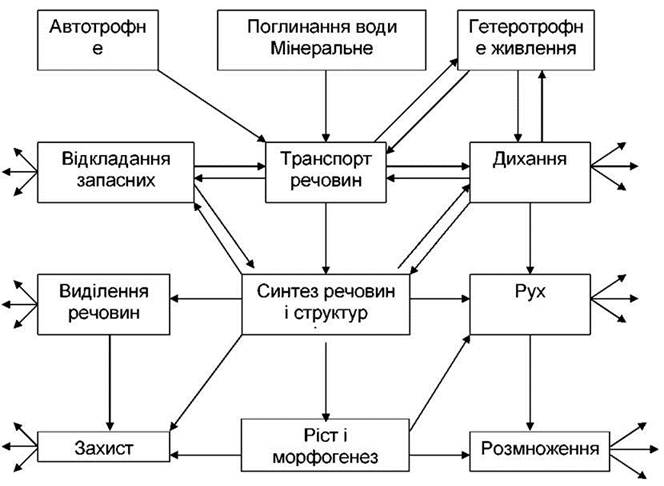
Fig. 1. Primary functions of a plant organism
The Transport of substances occupies a central position in the METABOLISM of the entire plant. This transport occurs via the apoplast (the phase of Cell walls and intercellular spaces), the symplast (the syncytium of protoplasts), and potentially the endoplast (the continuous cisternae of The Endoplasmic reticulum). Long-distance transport primarily takes place through The Vascular System (xylem and phloem). Nutrients, through the process of respiration, are utilized for the Synthesis of specific metabolites and cellular structures. Concurrently, some substances are sequestered in vacuoles or excreted externally. Plant morphogenesis, as well as reproductive processes, are driven by Cell Division, growth, and differentiation. Motile responses also play a significant role in many phenomena. The plant's defensive functions are realized through the synthesis of protective compounds—some of which are secreted externally—and the development of specialized Anatomical and morphological structures. All these processes require energy, which is generated through respiration.
In summary, a higher plant is a complex biological system whose functional activity is sustained by 10–15 organs, 30–40 distinct specialized tissues, and several dozen specialized cell types (by comparison, the body of a hydra consists of two tissue types and ten cell types, while a worm is composed of ten to twelve specialized tissues).
Last update: 07/08/2026
Editorial and Educational Adaptation: This material has been compiled based on the primary/original source text. The project team performed an editorial review, corrected technical inaccuracies, structured sections, and adapted the content for an educational format.
What was processed:
- elimination of formatting defects (OCR errors, structural breaks, corrupted characters);
- editorial organization of content;
- standardization of terminology in accordance with academic sources;
- verification of factual statements against the original source text.
All mentions of the author, publication year, and origin of the primary text have been preserved in accordance with the source.