PLANT PHYSIOLOGY AND BIOCHEMISTRY
Lecture Notes
11. PLANT GROWTH AND DEVELOPMENT
The Use of Synthetic Growth Regulators in Crop Production
Synthetic growth regulators have been used for practical purposes since the 1940s. Their role is expanding, particularly in vegetable production and wheat cultivation, offering significant economic benefits.
One of the key strategies for increasing crop yields and improving product quality is The Use of plant growth regulators—natural or synthetic compounds capable of inducing significant changes in Plant GROWTH AND DEVELOPMENT at low concentrations. Recently, they have become essential components of intensive agricultural cultivation technologies.
Exogenous Application of phytohormones is necessary when endogenous levels are insufficient. This most often occurs during critical Stages of Ontogeny (e.g., seed germination, flowering, or fruit set) or when the integrity of the plant Organism is compromised (e.g., during vegetative propagation or tissue culture). Unfavorable growing conditions, such as Water deficit or nutrient deficiency, can also inhibit the synthesis of endogenous Hormones, necessitating exogenous supplementation.
Cells, Tissues, and Organs must be receptive to exogenous phytohormones; that is, they must be competent.
Competence is determined by the presence of specific receptor Proteins and the overall state of intracellular processes. A Cell may be competent to respond to a specific phytohormone at one growth phase but not at another.
The Physiological Effect of all phytohormones depends on their concentration and ratios. Excessive concentrations typically lead to metabolic inhibition and organismal death rather than stimulation.
Endogenous phytohormones are localized within specific cellular compartments; therefore, exogenous application cannot fully replicate their natural function, as the distribution of externally applied hormones differs from that of endogenous ones.
Auxin-type regulators
Certain synthetic compounds exert effects similar to IAA. However, they are effective at lower concentrations and exhibit more prolonged activity. These include IBA (indole-3-butyric acid), 2,4-D (2,4-dichlorophenoxyacetic acid), and NAA (1-naphthaleneacetic acid).
These growth regulators are used for:
1. stimulating ROOT cutting development and regenerating root systems
[IBA (~15 mg/L, 10-20 h), NAA];
2. inducing parthenocarpic (seedless) fruit production, often with increased sugar content
[tomatoes, cucumbers, especially in greenhouses];
3. reducing fruit drop (in apples and pears, auxin application facilitates nutrient transport to the fruit and prevents The formation of the abscission layer in pedicels),
[NAA, 2,4-D delay ripening, which improves storage life];
4. thinning flowers and fruitlets in fruit crops
[NAA (15-50 mg/L) - spraying tree canopies during flowering];
5. weed control (at high concentrations, 2,4-D can be used as a selective herbicide)
[2,4-D - 0.6-1.5 kg/ha - used to control broad-leaved weeds in cereal crops].
Cytokinins. Cytokinins can be used to:
· regulate growth and Organogenesis in isolated cell and organ cultures;
· break apical dominance, thereby inducing the growth of lateral shoots;
· delay senescence processes;
· enhance Plant resistance to adverse environmental conditions.
Gibberellins. For Structure/179.html">Practical Applications, preparations of gibberellic acid derived from Fusarium fungal cultures are used. They are utilized for:
1. increasing The production of seedless grape varieties
[Treatment of high-value seedless grape varieties with gibberellin promotes the formation of large, dense clusters with massive berries];
2. breaking dormancy (in potato tubers, seeds)
[treating harvested potato tubers with a solution of gibberellic acid (1-2 mg/L) and thiourea (20 mg/L) facilitates rapid sprouting];
3. stimulating malting
[gibberellins ensure synchronous germination of barley seeds and activate amylases, which improves malt quality for brewing].
4. increasing green mass yield (due to enhanced stem elongation).
Ethylene and its derivatives: ethephon, hydrel.
Used to accelerate the ripening of green fruits before sale, to stimulate uniform fruit ripening, to thin flowers and Ovaries, and to increase the number of female flowers.
Abscisic acid. The application of ABA is highly promising for reducing Transpiration intensity and increasing plant drought resistance.
Synthetic and Other growth regulators. The Institute of Bioorganic Chemistry and Petrochemistry of the NAS of Ukraine has developed a complex of plant growth regulators based on N-oxidized pyridine compounds (S. P. Ponomarenko, 1999), namely:
✵ Ivin — an effective growth stimulant for vegetable crops;
✵ Poteytin — a stimulant for the growth and development of potatoes. It increases resistance to viral diseases and improves tuber quality;
✵ Emistim S, an extract of growth substances in 60% ethyl alcohol, a biostimulant for the growth and development of grain and other crops;
✵ Zeastimulin — increases yield and enhances the resistance of corn plants to diseases and adverse conditions;
✵ Triman-1 — for increasing the productivity of grain crops;
✵ Agrostimulin — for increasing seed germination energy and viability.
Herbicides. This term encompasses a large group of synthetic substances capable not only of inhibiting growth but also of causing plant death. Due to the discovery that dicotyledonous plants are highly sensitive to them compared to monocotyledonous plants, they began to be used for weed control.
For instance, selective action was discovered in 2,4-dichlorophenoxyacetic acid, which does not damage cereal crops but destroys dicotyledonous weeds. This is explained by the fact that it easily penetrates the apical meristem of dicots (where it causes their destruction) and does so quite slowly in the intercalary meristem of monocots. The selectivity of herbicides (e.g., simazine, triiodobenzoic acid) is based on their Specificity in absorption, transport, degradation, and physiological action.
In recent years, requirements for plant protection products have changed significantly. Primarily, this involves integrated crop protection that is completely safe for the environment. New herbicides (Satis, Dialen Super, Dual, and others), which are widely used in Ukraine, help preserve yield potential. For example, Satis is a combined product containing 6% triasulfuron and 12% fluoroglycofen-ethyl, recommended for weed control in cereal crops (wheat, barley). It eliminates annual dicotyledonous weeds (cleavers, wild radish, field mustard, creeping thistle, field pennycress, common lambsquarters, field forget-me-not, gallant soldier, field woundwort, corn poppy, and others), including those resistant to 2,4-D. Both active components have different Mechanisms of action. While fluoroglycofen-ethyl acts as a contact herbicide with a pronounced scorching effect, triasulfuron inhibits tissue growth (acting as an inhibitor of Amino acid synthesis, primarily valine and isoleucine).
Retardants. This group comprises synthetic substances that inhibit stem elongation. Although their structure bears no resemblance to phytohormones, they are capable of altering the plant's hormonal status, thereby influencing physiological processes. Retardants are substances that induce internode shortening by inhibiting SHOOT growth and enhancing lodging resistance; some (CCC, Phosphon D, AMO-1618) suppress gibberellin synthesis, resulting in reduced shoot length.
Chlormequat chloride (CCC), Alar, and others are used to prevent lodging in cereals, restrict excessive growth of vegetable seedlings, and promote compact growth in shrubs and tree crowns, as well as to reduce fruit drop.
THE SPECTRUM OF morphactin activity (fluorene-9-carboxylic acid) is exceptionally broad. They inhibit seed germination, weaken apical dominance in shoots while strengthening it in roots, and promote callus formation, among other effects.
Class="center">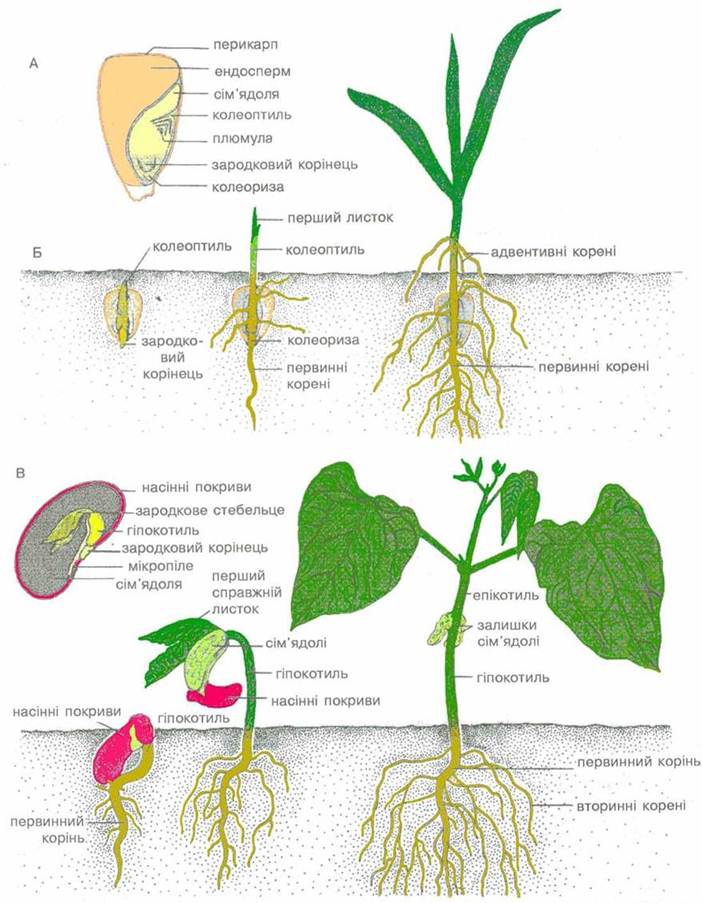
Fig. 26. Seed germination (A) and seedling development in monocots (B) and dicots (C).
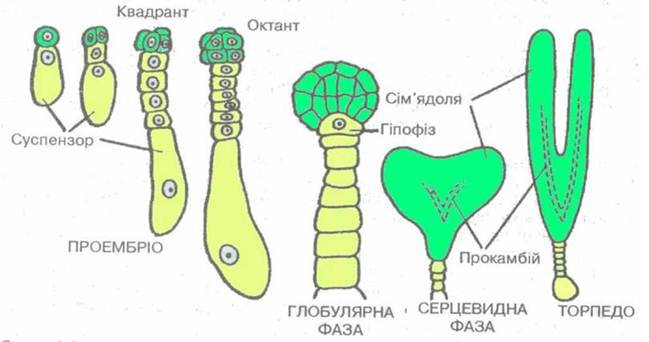
Fig. 27. MAIN STAGES OF embryo development.

Fig. 28. Etiolated subterranean seedlings and morphological changes induced by light during the transition to an above-ground lifestyle:
a - cereals; b - dicots with hypogeal germination; c - dicots with epigeal germination: 1 - coleoptile, 2 - mesocotyl, 3 - primary compound leaf, 3' - first true leaf, 4 - epicotyl, 5 - hypocotyl.
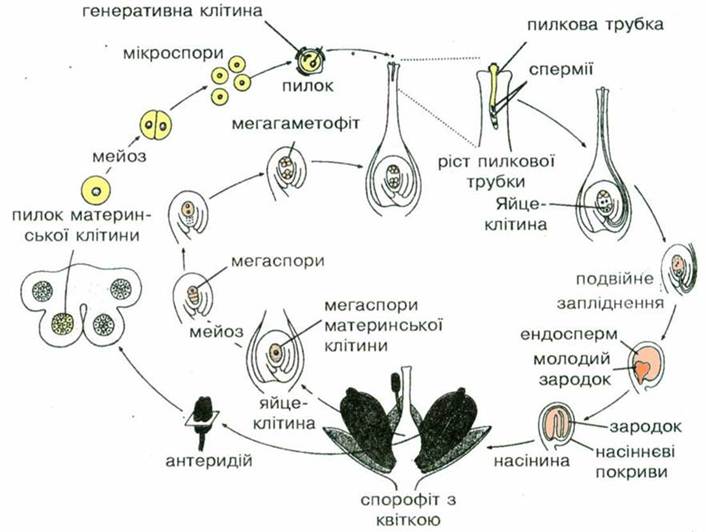
Fig. 29. Life Cycle of angiosperms.
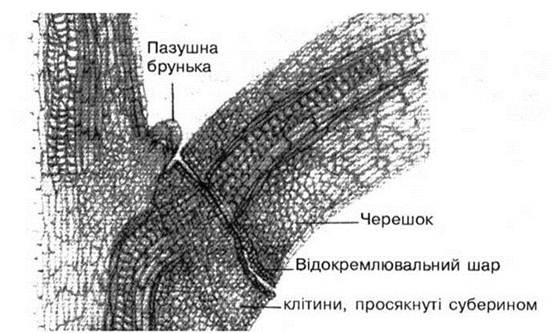
Fig. 30. Formation of the abscission layer in a leaf petiole during leaf fall.
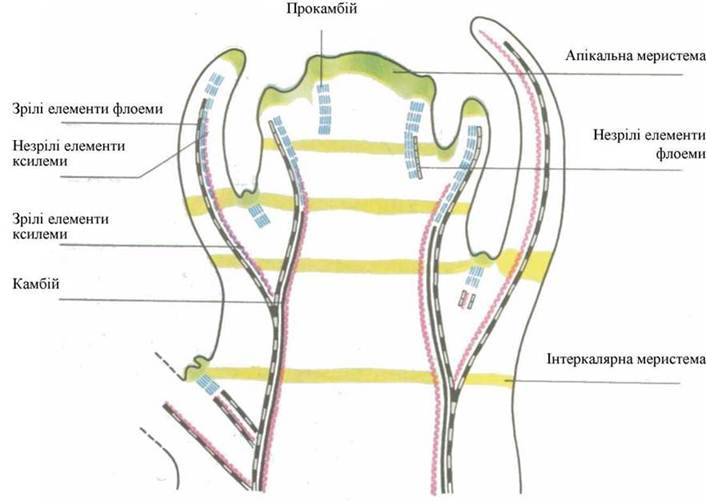
Fig. 31. Diagram of meristem distribution in a stem.
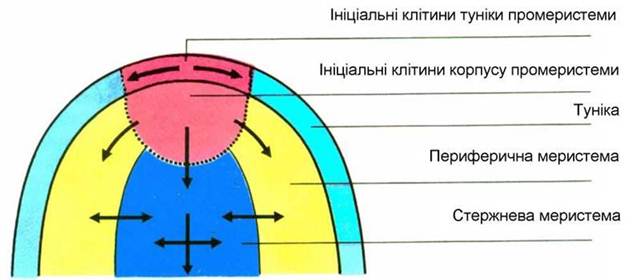
Fig. 32. Diagram of The structure of a stem apical meristem (shoot apex).
Arrows indicate the direction of Cell Division.
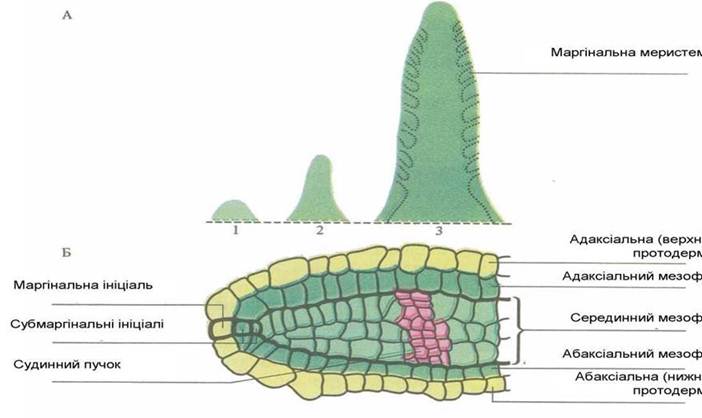
Fig. 32. Initial Stages of leaf development (A) and cross-section of a leaf primordium (B):
1 - primordium initiation; 2 - finger-like primordium; 3 - primordium with marginal meristem.
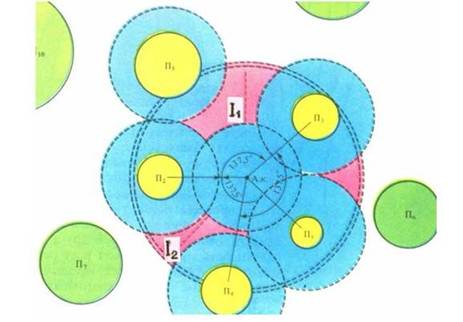
Fig. 33. Diagram of the fern apex structure (after C.W. Wardlaw, 1949).
It is believed that the apical cell (A.c.) and the developing leaf primordia (P1-P5) are surrounded by zones of a cell division inhibitor secreted by them. P6-P10 are primordia that do not secrete the inhibitor. Only in zone I (initial) is the inhibitor concentration minimal, which facilitates the initiation of a new primordium.
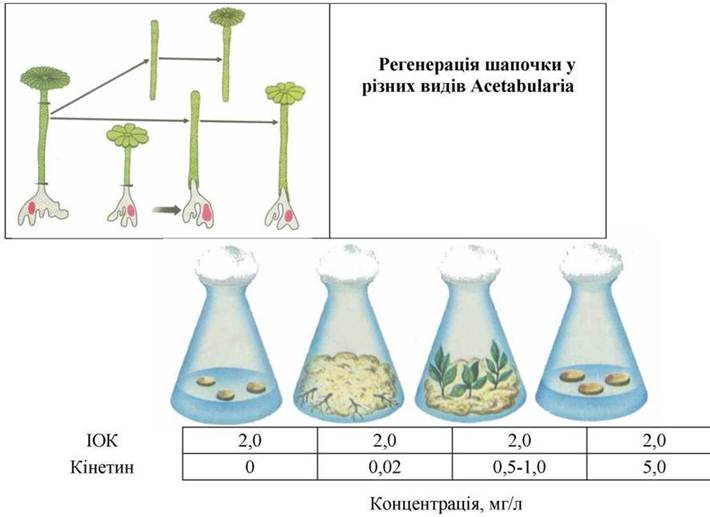
Fig. 34. Combined effect of IAA (2 mg/L) and kinetin on the growth and differentiation of tobacco stem pith callus.
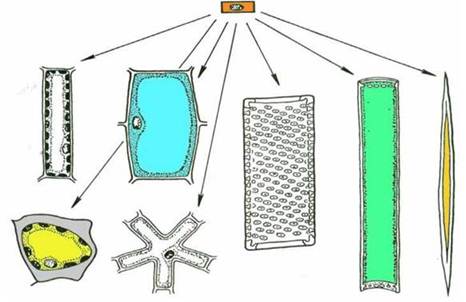
Fig. 35. Model of Cell Differentiation.
Homogeneous meristematic cells can give rise to a variety of permanent tissue cells (from left to right): palisade, guard, parenchyma, stellate, vessel and sieve tube elements, and sclerenchyma fibers.
Last update: 07/08/2026
Editorial and Educational Adaptation: This material has been compiled based on the primary/original source text. The project team performed an editorial review, corrected technical inaccuracies, structured sections, and adapted the content for an educational format.
What was processed:
- elimination of formatting defects (OCR errors, structural breaks, corrupted characters);
- editorial organization of content;
- standardization of terminology in accordance with academic sources;
- verification of factual statements against the original source text.
All mentions of the author, publication year, and origin of the primary text have been preserved in accordance with the source.