Plant Physiology - Musienko M. M. 2001
General principles of regulation of plant growth and morphogenesis
Other growth regulators
One of the key reserves for increasing crop yields and improving crop quality is The Use of plant growth regulators. Plant growth regulators are natural or synthetic compounds that, at low concentrations, can induce significant changes in Plant GROWTH AND DEVELOPMENT. In recent years, they have increasingly become an integral component of intensive crop production technologies. Specifically, the Institute of Bioorganic Chemistry and Petrochemistry of the National Academy of Sciences of Ukraine has developed a series of plant growth regulators based on N-oxidized pyridine compounds (Ponomarenko, 1999). These include:
·Ivin, with the active ingredient 2,6-lutidine N-oxide, an effective growth stimulant for vegetable crops;
·Poteitin, a complex of 2,6-lutidine N-oxide with succinic acid, a stimulant for potato growth and development. It increases resistance to viral diseases and improves tuber quality;
·Vmystym S, an extract of growth substances in a 60% ethanol solution, a biostimulant for the growth and development of cereals and other crops;
·Zeastimulin, a complex of 2,6-lutidine N-oxide with formic acid, which increases yield and enhances the resistance of corn plants to diseases and unfavorable conditions;
·Triman-1, aqua N-oxide-2-methylpyridinemanganese(11) chloride, designed to enhance the productivity of cereal crops;
·Agrostimulin, a complex of 2,6-lutidine N-oxide with growth substances, designed to increase seed germination energy and viability, among others.
Herbicides
This term encompasses a large group of synthetic substances capable not only of inhibiting growth but also of causing plant death. Due to the discovery of their high toxicity to dicotyledonous plants compared to monocots, they began to be widely used for weed control.
Thus, selective activity was discovered in 2,4-dichlorophenoxyacetic acid, which does not harm cereal crops while destroying dicotyledonous weeds. This is explained by the fact that it easily penetrates the apical meristem of dicotyledons (where it causes tissue destruction) while having a relatively weak effect on the intercalary meristem of monocots. The selectivity of herbicides (such as simazine, triiodobenzoic acid, etc.) is based on specific Species Differences in absorption, translocation, degradation, and physiological action.
In recent years, requirements for plant protection products have changed significantly. First and foremost, crop protection must be integrated and completely environmentally safe. New herbicides (Satis, Shogun, Dialen Super, Dual, Primextra, among others), which have found wide application in Ukraine, help preserve the full yield potential. For example, Satis is a combined product containing 6% triasulfuron and 12% fluoroglycofen-ethyl, and is recommended for weed control in cereal crops (wheat, barley). It destroys annual dicotyledonous weeds (cleavers, wild radish, field mustard, creeping thistle, 298
field pennycress, common lambsquarters, field forget-me-not, gallant soldier, annual hedgenettle, corn poppy, and others), including strains resistant to 2,4-D. Both active components have different Mechanisms of action. While fluoroglycofen-ethyl acts as a contact herbicide with a strong scorching effect, triasulfuron inhibits tissue growth (acting as an inhibitor of Amino acid synthesis, primarily valine and isoleucine).
Synthetic growth regulators are also known, such as retardants, which bear no structural resemblance to phytohormones yet are capable of altering the plant's phytohormonal status and thereby influencing physiological processes.
Retardants are substances that cause internode shortening by suppressing SHOOT growth and imparting lodging resistance; some agents (CCC, Phosfon D, AMO-1618) inhibit gibberellin synthesis, thereby reducing shoot length. The retardant (BASF) delays stem formation in wheat and other cereals by inhibiting kaurene synthesis and, consequently, gibberellin synthesis:
Class="center">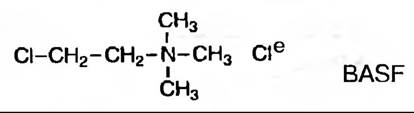
Morphactins (fluorene-9-carboxylic acid) exhibit an exceptionally wide spectrum of activity; they inhibit seed germination and apical dominance in shoots while accelerating it in roots, and promote callus formation, among other effects.
Last update: 07/08/2026
Editorial and Educational Adaptation: This material has been compiled based on the primary/original source text. The project team performed an editorial review, corrected technical inaccuracies, structured sections, and adapted the content for an educational format.
What was processed:
- elimination of formatting defects (OCR errors, structural breaks, corrupted characters);
- editorial organization of content;
- standardization of terminology in accordance with academic sources;
- verification of factual statements against the original source text.
All mentions of the author, publication year, and origin of the primary text have been preserved in accordance with the source.