MODERN BOTANY - P. RAVEN - 1990
SECTION II. ENERGY AND LIVING CELLS
CHAPTER 7. PHOTOSYNTHESIS
Conclusion
During Photosynthesis, light energy is converted into chemical energy, and carbon is "fixed" into Organic compounds.
The overall equation for photosynthesis is as follows:
СО2 + 2Н2А + Light energy —> (СН2О) + Н2О + 2А,
where Н2А represents Water or another compound that can be oxidized, i.e., can donate electrons.
The First stage of photosynthesis is the absorption of light energy by pigment molecules. The pigments involved in eukaryote photosynthesis include chlorophylls and carotenoids, which are packaged within chloroplast thylakoids in the form of photosynthetic units called Photosystems. Light absorbed by pigment molecules raises their electrons to a higher energy level. Pigment molecules are packaged within photosystems in such a way that they are able to transfer this energy to a specialized pigment molecule called the reaction center. There are Two Photosystems: Photosystem I and Photosystem II.
Not all photosynthetic reactions require light. The set of reactions that requires light is referred to as "light reactions," while the one that does not need light is referred to as "dark reactions."
According to the widely accepted scheme of the light reactions of photosynthesis, light energy is captured by the reaction center P680 of photosystem II. Electrons from P680 are elevated to a higher level toward an electron acceptor. As electrons are removed, they are replaced by electrons from a water molecule, and oxygen is released. The electron pairs then "cascade down" the Electron Transport Chain to photosystem I; during electron transport, a proton gradient is generated that drives the synthesis of ATP from ADP and phosphate (Photophosphorylation). Meanwhile, light energy absorbed by photosystem I is channeled to its reaction center P700. Energized electrons inevitably interact with the coenzyme NADP, while the departed electrons in P700 are replaced by electrons from photosystem II. The energy released in the light reactions is stored in the form of NADPH2 and ATP molecules produced during photophosphorylation. Photophosphorylation also occurs during Cyclic electron transport bypassing photosystem II.
Much like Oxidative Phosphorylation in Cell/35.html">Mitochondria, photophosphorylation in METABOLISM/14.html">Chloroplasts is also a chemiosmotic process. As electrons are transported along The electron transport chain from photosystem II to photosystem I, Protons are pumped from the stroma into the thylakoid space, establishing a potential energy gradient. When protons overcome this gradient by moving from the thylakoid space back into the stroma, they pass through ATP synthase, resulting in ATP formation.
In the dark reactions, which take place in the chloroplast stroma, NADPH2 and ATP produced in the light reactions are used to reduce carbon dioxide to organic carbon. This is accomplished via The Calvin Cycle. A carbon dioxide molecule combines with the initial substrate, the five-carbon sugar ribulose-1,5-bisphosphate (RuBP), yielding a three-carbon compound, 3-phosphoglycerate. With each turn of the cycle, one carbon atom is incorporated. Three turns of the cycle yield a three-carbon molecule, glyceraldehyde-3-phosphate, two molecules of which (six turns of the cycle) can combine to form a glucose molecule. Ribulose bisphosphate is regenerated with every turn of the cycle.
Plants in which the Calvin cycle is the sole pathway for carbon fixation and 3-phosphoglycerate is the first stable product of СО2 assimilation are called C3 plants. In so-called C4 plants, Carbon dioxide is initially fixed onto phosphoenolpyruvate to yield oxaloacetate, a four-carbon compound. Oxaloacetate is then rapidly converted into either malate or aspartate, which transport СО2 to the RuBP of the Calvin cycle. In C4 plants, the Calvin cycle operates in bundle-sheath Cells, whereas the C4 pathway operates in mesophyll cells. C4 plants utilize СО2 more efficiently than C3 plants, partly because phosphoenolpyruvate carboxylase is not inhibited by О2, thus giving C4 plants The ability to absorb СО2 with minimal water loss. Furthermore, C4 plants practically lack Photorespiration—The process of СО2 release and О2 uptake in the light.
Crassulacean Acid Metabolism (CAM) has been discovered in many succulent plants. In CAM plants, СО2 fixation by phosphoenolpyruvate carboxylase to form C4 compounds occurs at night when the Stomata are open. The C4 compounds stored during the night subsequently release СО2 to the RuBP of the Calvin cycle during the day when the stomata are closed. In CAM plants, both the Calvin cycle and the C4 pathway take place within a single cell; thus, both of these pathways, which are spatially separated in C4 plants, are separated temporally in CAM plants.
Appendix 1. Light and Life
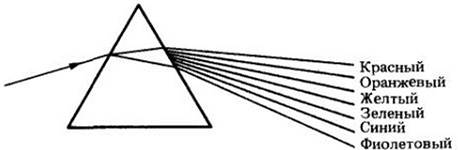
Nearly 300 years ago, the English physicist Isaac Newton (1642–1727) obtained THE SPECTRUM OF visible light by passing a ray of light through a prism. This experiment demonstrated that white light consists of a range of different colors—from violet at one end of the spectrum to red at the other. Their Separation is made possible by the fact that rays of different colors are refracted at different angles as they pass through a prism.
Class="center">Figure from one of Newton's papers illustrating his "critical experiment" on the decomposition of "white" light into its components. Sunlight enters a dark room on the left and, passing through prism A, produces a color spectrum. Aperture Y allows only rays of a single color to pass through. Passing through the second prism F, they are refracted but do not change their color. In this way, Newton demonstrated that the prism itself does not change the color of the rays, but simply refracts rays of different colors to varying degrees

In the 19th century, the brilliant English physicist James Clerk Maxwell (1831–1879) established that the light we see Y is only a small fraction of the continuous spectrum of electromagnetic waves. As Maxwell demonstrated, all radiation forming this spectrum propagates in the form of waves. Their wavelengths—i.e., the distances from one wave crest to another—vary over a wide range, from nanometers for X-rays to kilometers for low-frequency radio waves. The shorter the wavelength, the greater its energy. In the visible spectrum, red light has the maximum wavelength and blue light the minimum. A common property of radiation is its ability to propagate in a vacuum at a speed of 300,000 km/s.
By 1900, it became clear that the wave theory of light did not always adequately explain experimental facts. For example, in 1888, a seemingly quite simple experiment was conducted. It turned out that a zinc plate irradiated with ultraviolet light acquires a positive charge. It was soon established that the metal becomes charged because radiation knocks electrons out of its atoms through its energy. Subsequently, it was discovered that this photoelectric effect is characteristic of all metals, and for each of them, it manifests at a critical wavelength unique to that specific element. In other words, irradiation with waves of a specific or shorter length (i.e., having higher energy) is required. The hypothesis formulated by Bohr and other physicists that the electron orbitals of atoms have specific energy levels is based on these observations.
In some elements, such as sodium, potassium, and selenium, this critical wavelength lies within the visible spectrum. Therefore, ordinary light can induce electron movement (electric current) in them. The operation of electric "eyes" that open doors, for example, as well as light meters and television cameras, is based on this principle of converting light energy into electrical energy.
Wave or Particle?
This is a rather complex question. Wave theory asserts that the brighter the light, the greater the force "knocking" electrons out of atoms. However, wavelength matters, not brightness. Even the effect occurs, whereas a brighter light with a longer wavelength does not produce it. Moreover, increasing the brightness of the critical light increases the number of electrons knocked out of the metal, but not the speed at which they leave the atoms. To increase their speed, shorter-wavelength light must be used. In addition, energy does not need to accumulate in the metal. Even weak light with a critical wavelength acts instantaneously.
To explain these phenomena, Albert Einstein formulated the quantum theory of light in 1905. According to this theory, light consists of packets of energy called photons, or light quanta. The energy of a photon (or quantum) is always inversely proportional to the wavelength of light, meaning that the longer the wave, the lower its energy. Photons of violet light, for example, carry nearly twice as much energy as photons of red light, which has the maximum wavelength in the visible region.
Wave theory allows physicists to describe certain Properties of Light in one mathematical way, while quantum theory describes them in another. These two models do not contradict each other; rather, they are complementary. To gain a more comprehensive understanding of such a complex phenomenon as light, it is necessary to use both.
The coexistence of these two theories illustrates one of the subtleties of the scientific method. If a scientist defines and measures light as waves, it exhibits wave properties. Conversely, if a quantum approach is used, light "appears" as a stream of particles. As Albert Einstein noted, "Our observations depend on the theory we use."
Adaptation to Light
As Maxwell demonstrated, visible light constitutes only a small fraction of the entire radiation spectrum. From a physical standpoint, the difference between light and darkness—so apparent to humans—consists of just a few nanometers in wavelength. There are no "qualitative" boundaries within the light spectrum. Why then is only a small fraction of electromagnetic radiation responsible for Vision, phototropism (the directional growth of organisms toward light), Photoperiodism (seasonal changes in living beings regulated by day and night length), as well as photosynthesis, the process upon which all life depends? In essence, all biological activity is linked to
When white light passes through a prism, it separates into a spectrum of various colors. This occurs because the rays of each color differ slightly in wavelength, all within the same narrow wavelength range. Is this merely a coincidence?
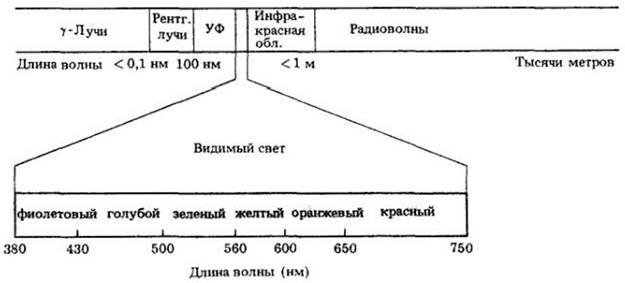
One of the prominent specialists studying the relationship between light and living organisms, George Wald of Harvard University, Answers these questions in the negative. He suggests that life, wherever it may exist, must depend on the same specific region of the broad radiation spectrum. His hypothesis is based on two premises. First, Living matter is composed of immensely complex molecules featuring intricate structures and specific configurations maintained primarily by Hydrogen Bonds or even weaker interactions. Radiation with an energy higher than that of blue light can break these bonds, disrupting the Structure and function of these molecules. At wavelengths below 200 nm, radiation strips electrons from atoms, forming ions, which is why it is termed ionizing radiation. Conversely, radiation with wavelengths longer than visible light is strongly absorbed by water, which makes up the bulk of living organisms' mass. If such long-wavelength light reaches organic molecules, it can merely increase their kinetic energy without altering their structure. Only radiation within the visible spectrum is capable of exciting molecules—thereby inducing structural changes in biological systems.
The second idea is that visible light, unlike other Regions of the electromagnetic spectrum, was "selected" by organisms because it is the most accessible. The majority of solar radiation reaching our planet falls within this range. Higher-energy (i.e., shorter) waves are filtered out by oxygen and ozone in the upper atmosphere, while a significant portion of infrared radiation is absorbed by water vapor and carbon dioxide before ever reaching the Earth's surface.
This can be referred to as "environmental fitness"; the suitability of conditions for life and the conformity of living systems to the physical parameters of their environment are mutually interdependent phenomena. If such a relationship did not exist, life would be impossible.
Appendix 2. The Carbon Cycle
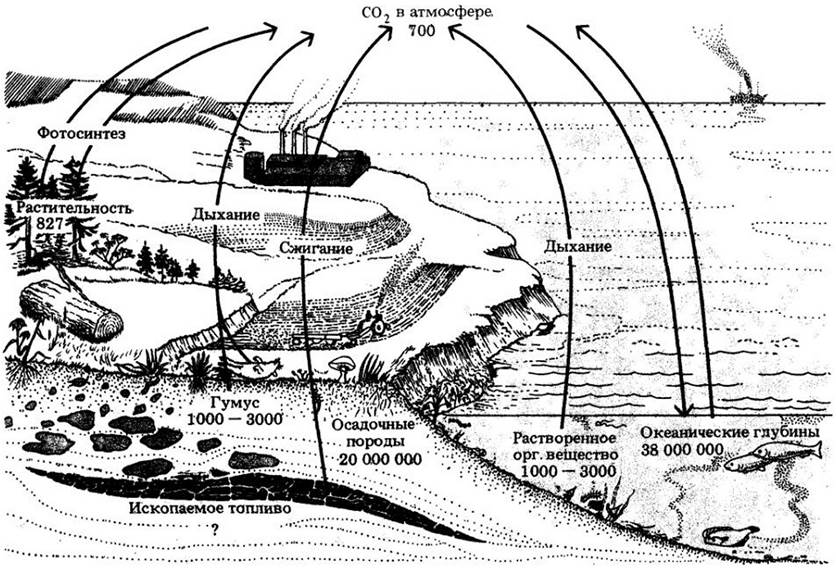
During photosynthesis, living systems absorb carbon dioxide from the atmosphere and incorporate it into organic, carbon-containing compounds. Through Respiration, these compounds are broken down again into СО2 and Н2О. On a global scale, these processes constitute the carbon cycle. The primary photosynthetic contributors in this cycle are plants, phytoplankton, marine Algae, and cyanobacteria. They synthesize CARBOHYDRATES from carbon dioxide and water while releasing oxygen into the atmosphere. Through photosynthesis, approximately 75 billion tons of carbon are fixed into carbon-containing compounds each year.
A portion of these carbohydrates is utilized by the photosynthetic organisms themselves. Plants release СО2 from their roots and leaves, whereas marine algae and cyanobacteria release СО2 into the water, maintaining an equilibrium with atmospheric carbon dioxide. Roughly 500 billion tons of carbon are stored as dissolved carbon dioxide in the oceans, and 700 billion tons reside in the atmosphere. Some carbohydrates are consumed by animals that feed on plants, algae, and other organisms, subsequently releasing carbon dioxide. A massive quantity of carbon is contained within the dead remains of plants and other organisms. Furthermore, fallen leaves, shells, feces, and other debris accumulating in the soil or sinking to the ocean floor are decomposed by decomposers—small invertebrates, Bacteria, and Fungi. As a result of these processes, СО2 is released back into the air and water. Additionally, vast reserves of carbon lie deep beneath the Earth's surface in the form of coal and petroleum, which were formed millions of years ago.
Natural processes of photosynthesis and respiration are mutually balanced. For millions of years, the concentration of carbon dioxide in the atmosphere remained, as far as we can tell, relatively constant. By volume, it represents a very small fraction of the atmosphere—about 0.03%. This is crucial because carbon dioxide, much like other atmospheric components, absorbs heat from solar radiation.
Since 1850, the concentration of carbon dioxide in the atmosphere has been steadily rising, driven in part by the burning of fossil fuels, the expansion of agricultural land, and deforestation, particularly in the tropics. Some ecologists predict that the expanding carbon dioxide "blanket" will elevate global temperatures and consequently lead to an expansion of desert regions. Others, more optimistic, foresee an increase in the photosynthetic activity of plants and algae spurred by higher carbon dioxide levels. The majority, however, are deeply concerned by the fact that although the consequences of our activities are difficult to predict, we continue to pursue them aggressively.
The carbon cycle. Arrows indicate the movement of C atoms. Numbers represent estimates of stored carbon quantities expressed in billions of tons. The amount of carbon released through respiration and fuel combustion is believed to have begun exceeding the amount fixed via photosynthesis.
Appendix 3. Carbon Isotope Composition in С3 and С4 Plants
In the free atmosphere, carbon dioxide exists in the forms of 12СО2, 13СО2, and 14СО2. Unlike 14С, the 13С and 12С forms represent stable isotopes. Plants assimilate them to varying degrees. It is now established that С3 plants discriminate against 13С to a greater extent than С4 plants. This "sorting out" of 13С occurs primarily at the carboxylation stage involving ribulose-1,5-bisphosphate carboxylase. In С3 plants, this enzyme discriminates against 13С more strongly than phosphoenolpyruvate carboxylase does in С4 plants. As a result, С4 plants contain more 13С than С3 plants.
The concentration of stable isotopes in plants is expressed as the δ13С value relative to the 12С and 13С abundances of a standard reference material (measured using a mass spectrometer). The δ13С value for С3 plants is approximately -27‰ (relative to the standard), whereas for С4 plants it is roughly -11‰. The δ13С index is widely used to classify plants as either С3 or С4 types.
This metric is also vital for physiological ecologists. Because plants serve as food for herbivores within an ecosystem, analyzing the δ13С value in Stomach contents and feces allows researchers to determine whether herbivores prefer consuming С3 or С4 plants.
Last update: 07/08/2026
Editorial and Educational Adaptation: This material has been compiled based on the primary/original source text. The project team performed an editorial review, corrected technical inaccuracies, structured sections, and adapted the content for an educational format.
What was processed:
- elimination of formatting defects (OCR errors, structural breaks, corrupted characters);
- editorial organization of content;
- standardization of terminology in accordance with academic sources;
- verification of factual statements against the original source text.
All mentions of the author, publication year, and origin of the primary text have been preserved in accordance with the source.