Human Biochemistry, Volume 1 - Murray R. 1993
Structure and Functions of Proteins and Enzymes
Peptides
Peptide Conformation in Solution
Theoretically, a peptide can exist in A wide variety of conformational states (i.e., possessing numerous possible spatial arrangements of atoms). However, available data suggest that in solution, the range of feasible Conformations is quite narrow. The predominance of specific conformations is governed by factors such as steric hindrance, Coulombic interactions, hydrogen bonding, and hydrophobic interactions (Chapter 5). Just as with Proteins, the physiological activity of Polypeptides (such as angiotensin and vasopressin) also depends on their conformation (Chapters 45 and 48).
Physiologically Active Peptides
Animal, plant, and bacterial Cells contain a multitude of distinct polypeptides (ranging from 3 to 100 amino acid residues) endowed with high physiological activity. Some of these, particularly most mammalian polypeptide Hormones, contain solely peptide bonds formed between the α-amino and α-carboxyl groups of the twenty L-α-Amino Acids found in proteins. However, polypeptides (unlike proteins) may also incorporate Other Amino Acids or derivatives of standard, protein-derived amino acids. Several Examples of this type are presented below.
The short polypeptides bradykinin and kallidin induce smooth Muscle relaxation and are generated through the Limited proteolysis of specific Plasma Proteins. Because these peptides derive from proteins, they contain exclusively protein-derived amino acids:
Class="center">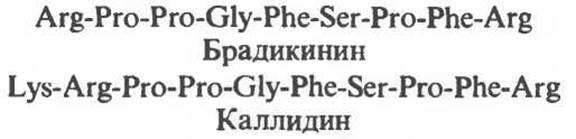
Glutathione (Fig. 4.4) is found in All living organisms; it is an atypical tripeptide in which the N-terminal glutamate and Cysteine are linked by a non-α-peptide bond. In humans and other animals, glutathione is essential for the function of numerous Enzymes. Current evidence indicates that glutathione, acting in concert with the enzyme glutathione reductase, participates in The formation of "correct" Disulfide Bonds in many proteins and polypeptide hormones (Chapter 5).
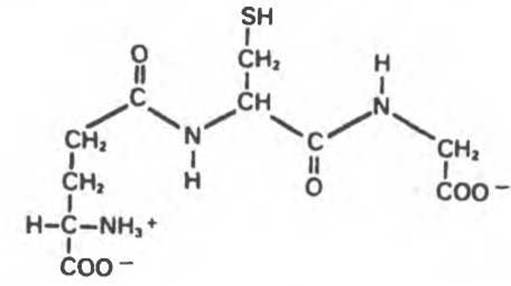
Fig. 4.4. Glutathione (γ-glutamylcysteinylglycine).
Polypeptide Antibiotics synthesized by Fungi frequently contain both D- and L-amino acids, as well as certain non-protein amino acids. Examples include tyrocidine and gramicidin S, which are cyclic polypeptides containing D-phenylalanine and the non-protein amino acid Ornithine. The synthesis of these polypeptides does not occur on Ribosomes.
Another example is thyrotropin-releasing hormone (Fig. 4.5). Its N-terminal glutamate is cyclized to form a pyroglutamic acid residue, while the C-terminal carboxyl group of Proline is amidated.
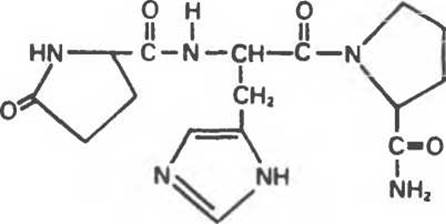
Fig. 4.5. Thyrotropin-releasing hormone (pyroglutamylhistidylprolinamide).
Mammals synthesize a polypeptide that encompasses several smaller polypeptides with potential physiological activity. β-Lipotropin—a pituitary hormone that stimulates the release of Fatty acids from adipose tissue—contains Amino acid sequences identical to those of certain other polypeptide hormones possessing distinct physiological activities (Fig. 4.6). This high-molecular-weight polypeptide serves as a precursor for smaller polypeptides.
Last update: 06/08/2026
Editorial and Educational Adaptation: This material has been compiled based on the primary/original source text. The project team performed an editorial review, corrected technical inaccuracies, structured sections, and adapted the content for an educational format.
What was processed:
- elimination of formatting defects (OCR errors, structural breaks, corrupted characters);
- editorial organization of content;
- standardization of terminology in accordance with academic sources;
- verification of factual statements against the original source text.
All mentions of the author, publication year, and origin of the primary text have been preserved in accordance with the source.