Biotechnology - Yu.O. Sazykin 2006
Applied Biotechnology
Challenges in the discovery, development, and application of antibiotics in medical practice
Biotechnology of Antibiotics
Virtually no producer isolated from soil or other natural sources can be used directly in manufacturing. A natural strain produces only minute amounts of Antibiotics. By treating with mutagens and multi-step Selection of active variants, it is usually possible to boost the strain's activity, as The amount of antibiotic it produces increases thousands or even tens of thousands of times. For example, As a result of decades of breeding work in many laboratories worldwide, The activity of the penicillin producer has increased from tens of micrograms to fractions of a gram of antibiotic per milliliter of medium.
In industrial mutant strains (commonly referred to as "superproducers"), the antibiotic produced in massive quantities must not affect:
* their own Biosynthesis;
* the vital activity of the producer itself.
As is known, excessive metabolite production leads to the cessation of its biosynthesis via feedback inhibition. In the case of superproducers, the feedback mechanism is bypassed.
The vital activity of superproducers is maintained due to several factors:
* the peak concentration of the antibiotic is reached when culture growth is either finishing or practically complete;
* the antibiotic is synthesized in cellular compartments separated from the sites of vital metabolic processes;
* once the antibiotic leaves the mycelium and enters the medium, it does not re-enter the mycelium, meaning that antibiotic Transport Across the producer's Cell wall is unidirectional.
However, The ability to produce excessive amounts of antibiotics is unstable. It is easily lost, either fully or partially; therefore, industrial producers are stored under special conditions, with their activity checked periodically. If necessary, they are plated out into individual colonies from which the most active ones are then selected.
When developing antibiotic biotechnology, the General Properties of producers are taken into account, as well as the fact that each antibiotic is the end product of a long chain of specific enzymatic reactions.
Producers of most antibiotics, including those most crucial for medical practice, are aerobes or (less commonly) facultative anaerobes. Consequently, in the early years following the discovery of penicillin, gramicidin S, and certain other substances, their producers were cultivated On the surface of liquid nutrient media under stationary conditions in microbiological Roux bottles or flasks placed in thermostats or incubator rooms. The producer culture grew only on the medium's surface. This method was labor-intensive, uneconomical, and failed to yield large quantities of antibiotics. Very soon, surface Fermentation was replaced by submerged fermentation. Air was sparged through the nutrient medium, and the medium was continuously agitated. This made it possible to utilize the entire volume of the medium for producer growth.
Only submerged fermentation made modern biotechnological production possible, enabling the large-scale output of the final product.
The accumulation curves for the producer's biomass and the antibiotic in the culture liquid, as well as in the producer's mycelium, do not coincide in time. The second curve lags significantly behind (Fig. 13).
Class="center">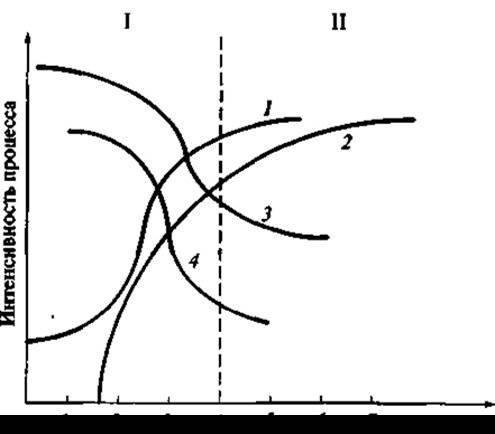
Fig. 13. Features of the fermentation process in antibiotic production:
1 — trophophase; II — idiophase; 1 — biomass; 2 — antibiotic; 3 — CARBOHYDRATES; 4 — nitrogen sources
This applies to producers of all major antibiotics: Fungi, actinomycetes, and spore-forming Bacteria. The first phase of producer culture development during fermentation is termed the "trophophase" or phase of balanced growth. The second is the "idiophase" or phase of unbalanced growth. During the trophophase, the antibiotic is either undetectable in the culture liquid or present only in negligible amounts. During the idiophase, biomass growth slows down. Rapid accumulation of the antibiotic in the culture liquid begins. In the trophophase, carbon and nitrogen sources in the medium are rapidly consumed, and their amounts decrease. In the idiophase, their consumption slows down, and by the end of the idiophase, partial lysis of the dense mycelial culture occurs.
Simultaneously, a certain number of new young mycelial filaments can be detected in the culture; these are already exposed to a nutrient-depleted medium and participate in antibiotic biosynthesis.
Thus, intensive antibiotic biosynthesis is promoted by a significant depletion of carbon and nitrogen sources in the medium, especially readily assimilated ones. Derepression of the Enzymes responsible for antibiotic synthesis takes place. However, cultivating producers on nutrient-depleted media from the very beginning of fermentation is impractical, because negligible biomass accumulation during the trophophase ultimately leads to negligible antibiotic accumulation by a small population of producer Cells.
High-productivity fermentation requires strict adherence to specific conditions. Antibiotic producers are cultivated on various media, ranging from relatively simple to complex compositions. The latter are known as complex media. They may include soybean meal, cottonseed flour, corn steep liquor, and other natural multicomponent sources of nutrients. Individual Organic compounds and mineral salts are also added to the media. For each producer strain, the optimal medium composition for antibiotic biosynthesis is selected individually. This applies even to strains of the same species producing the same antibiotic. Nevertheless, certain general regularities are taken into account when working with most producers.
Carbon catabolite regulation is one of the mechanisms affecting The biosynthesis of secondary metabolites. It is well known that glucose is the best source of carbon and energy for any Organism. However, rapid Glucose Catabolism sharply reduces antibiotic biosynthesis. Glucose has been shown to impair the biosynthesis of beta-lactams, Aminoglycosides, and many Other Antibiotics produced by various organisms. Regarding antibiotic biosynthesis, it should be noted that glucose, fructose, sucrose, and galactose are potent repressors of this process. It must be emphasized that glucose catabolites suppress not the activity of antibiotic biosynthetic enzymes, but the synthesis of these enzymes themselves. Slowly utilized Polysaccharides (such as starch) are more favorable for antibiotic biosynthesis. Lactose, which is also utilized slowly, is not a repressor of biosynthesis either: upon its Hydrolysis, the released glucose represses beta-galactosidase, thereby slowing down lactose hydrolysis (and the appearance of glucose in the medium).
High phosphorus content in the medium (in the form of inorganic phosphate salts) is unfavorable for the biosynthesis of most antibiotics. The general reason for this is the enrichment of The Cell with high-energy phosphorus compounds (primarily ATP), which increases the growth rate of the mycelium. A large amount of biomass accumulates, but relatively little antibiotic. For example, highly active tetracycline-producing strains contain less ATP in their mycelium and grow more slowly than the original low-active tetracycline producers. The adverse effect of phosphorus on the biosynthesis of beta-lactam antibiotics is explained at the biochemical level by the following mechanism: The formation of the LLD-tripeptide—the key compound initiating the synthesis of Penicillins and Cephalosporins—is inhibited by glucose-6-phosphate. The interaction between readily oxidizable sugar and phosphate exerts a negative effect on biosynthesis. However, all of the above does not mean that phosphorus can be completely excluded from the medium. Antibiotic biosynthesis drops when phosphorus is present in excess, so the optimal phosphorus content in the medium is selected for each producer strain.
Ammonium and other readily utilized nitrogen sources, much like readily oxidizable carbohydrates, stimulate the growth of beta-lactam and polyene antibiotic producers (erythromycin, Rifamycins, etc.), but negatively affect their biosynthesis. Soybean meal, cottonseed flour, and SCP (Single-Cell Protein) are degraded slowly during fermentation—meaning that Amino Acids and ammonium ions are released from them gradually; therefore, they are used as components of nutrient media to achieve high antibiotic yields. The mechanism by which readily assimilable nitrogen sources exert a negative effect on antibiotic biosynthesis remains unclear. Evidence suggests that in beta-lactam producers, it is related to the level of Glutamine Synthetase in the mycelium. Glutamine is known to serve as an amino group donor for A number of amino acids, which in turn act as precursors for beta-lactam antibiotics. It is likely that this MECHANISM OF ACTION on biosynthesis varies among different producers. In any case, the adverse effect of readily assimilable nitrogen sources on biosynthesis is always accounted for during medium selection, and the concentration of such compounds is carefully monitored.
Some primary metabolites serve as direct antibiotic precursors; for instance, valine is incorporated into the tripeptide from which beta-lactam structures are formed. When valine is present in excess and reaches a high concentration in the mycelium, it inhibits its own biosynthesis via feedback. Being in excess, it suppresses the activity of acetohydroxy acid synthase, the first enzyme in its biosynthetic pathway. Consequently, this also reduces the Formation of the tripeptide, and ultimately, of the beta-lactam antibiotic.
Some primary metabolites, however, are the End products of a branched metabolic pathway. One 'branch' or end of this pathway terminates in a primary metabolite, while the other leads to an antibiotic. For instance, alpha-aminoadipic acid serves, on the one hand, as a direct precursor to Lysine and, on the other, to a beta-lactam antibiotic, as it is incorporated into the tripeptide that serves as the Starting Material for its synthesis. An excess of lysine triggers feedback inhibition on the formation of alpha-aminoadipic acid, thereby reducing the synthesis of not only lysine but also the beta-lactam antibiotic (see Fig. 8).
These Examples demonstrate that in highly active antibiotic-producing strains obtained through Introduction/32.html">Genetic Engineering, the feedback regulation mechanisms governing the biosynthesis of primary metabolites required for antibiotic molecule formation must be disrupted. It is worth noting, for example, that lysine suppresses penicillin biosynthesis in low-yielding producers. Conversely, 'isogenic' high-yielding strains derived from them no longer respond to an excess of lysine in the medium with a decrease in antibiotic biosynthesis.
Structure/19.html">The Importance of aeration in supporting the growth of producers during the fermentation stage is due to the fact that the majority of them are aerobes. Oxygen is essential for the biosynthesis of several antibiotics, as it is consumed during the closure of the beta-lactam and thiazolidine rings in the formation of the beta-lactam structure. For example, The conversion of isopenicillin N from the LLD-tripeptide requires molecular oxygen in a 1:1 stoichiometric ratio (with the limiting oxygen saturation of the culture liquid at 30%). When fermentation proceeds successfully, oxygen is consumed at a rate of 1 mmol/(L·min). Overall, oxygen demand depends on biomass concentration and its metabolic activity. Optimizing oxygen supply is achieved by increasing its mass transfer rate.
Following the fermentation stage, the culture liquid contains the dissolved antibiotic, the producer mycelium, its lysis products, and various Components of the spent nutrient medium, including high- and low-molecular-weight organic substances as well as inorganic salts.
Sometimes, the antibiotic is present not only in the culture liquid but also within the mycelium. Furthermore, the culture broth often exhibits high viscosity. Consequently, isolating an antibiotic from such a complex heterogeneous system is far from straightforward.
Historically, it was precisely the failure of chemists to isolate and purify penicillin that delayed its introduction into medical practice by a decade. The Methods and sequence of Isolation and Purification operations currently in use are tailored to each specific antibiotic and dictated by its physicochemical properties, such as localization, the COMPOSITION OF THE culture broth, and its rheological and other characteristics.
During the preliminary Processing stage of the culture liquid, the dissolved antibiotic is separated from the mycelial suspension and the colloidal components of the broth. If a portion of the antibiotic remains bound within the mycelium, it is transferred into the aqueous phase, for instance, by altering the pH of the culture liquid (as in the case of Tetracyclines). Conversely, sometimes the dissolved and mycelium-bound antibiotics are combined into a common precipitate, from which the antibiotic is subsequently extracted. The native solution is separated from the mycelium and colloidal particles via filtration or centrifugation, employing rotary drum vacuum filters, filter presses, various types of separators, and so forth.
The next stage aims to obtain the antibiotic as an individual, isolated substance. This requires taking into account the considerable lability of many antibiotics, which places strict limitations on the conditions of their extraction.
THE PRINCIPLE OF organic solvent extraction is employed in the purification of vital antibiotics such as penicillin, erythromycin, and several others. Upon transferring into an organic solvent, the target antibiotics are simultaneously freed from numerous impurities. By varying the pH and thereby altering the solubility of the antibiotic in Water (or more precisely, in a buffer solution), the antibiotic can be repeatedly cycled between phases, shedding a specific fraction of impurities with each transfer.
A classic example of the final step in an extraction-based isolation and purification process is the recovery of penicillin from the organic solvent butyl acetate, where it exists in the form of a free acid: a saturated aqueous solution of potassium acetate is added to the butyl acetate, causing potassium penicillin to precipitate out as crystals. These crystals are then washed with butanol and dried.
Ion-exchange resins (both cationites and anionites) are also widely utilized in antibiotic purification. These sorption methods once played a pivotal role in solving The Challenge of producing highly purified aminoglycoside antibiotics—such as streptomycin and others possessing basic properties. Because aminoglycosides have poor solubility in organic Solvents, extraction methods cannot be applied to them. In streptomycin production, for instance, carboxyl cation exchangers in the sodium form can be successfully employed. Desorption is carried out using a sulfuric acid solution. Following an additional purification step involving the passage of streptomycin through a sulfocation exchanger (to remove sodium ions), streptomycin sulfate is obtained.
In addition to traditional extraction and sorption methods, a complex set of techniques collectively known as membrane technology is playing an increasingly important role in the isolation and purification of antibiotics.
When dehydrating antibiotic preparations, either freeze-drying (lyophilization) or spray drying is employed, depending on the specific Properties of the substance. In the latter method, the antibiotic solution is atomized through nozzles into droplets 5–25 µm in diameter within a stream of air heated to 160 °C. Drying takes place within a fraction of a second. Subsequently, the preparation is packaged into sterile vials under conditions that guarantee sterility.
Since antibiotic biosynthesis is carried out under aseptic conditions, maximum possible precautions against contamination must also be observed during isolation, purification, and formulation. Nevertheless, ensuring the sterility of injectable preparations and controlling the microbial load in topical products remains one of the most formidable challenges in the manufacturing of both antibiotics and Pharmaceuticals in general. Therefore, if non-sterile batches of packaged products are detected, radiation sterilization is occasionally applied as an exceptional measure to address the non-standard situation. Certain Types of ionizing radiation are permissible for the sterilization of medicinal products, as outlined in official pharmacopoeial documents.
It is well established that ionizing radiation is routinely used to sterilize surgical instruments, rubber gloves, disposable syringes, and the like. It must be emphasized that during such sterilization (at minimal doses), contaminating microorganisms lose their ability to reproduce and are killed due to DNA damage (causing nucleotide cross-linking and DNA strand breaks). In contrast to radiation sterilization, thermal sterilization denatures many cellular Proteins, resulting in more extensive cellular damage, whereas Membrane filtration does not kill microbial cells but rather physically removes them from the pharmaceutical preparation.
As previously mentioned, radiation (or ionizing) sterilization is employed in specific manufacturing facilities due to objective difficulties in implementing new production technologies, and sometimes for economic reasons. It has been established that the sterilizing dose of ionizing radiation is 2.5 Mrad (1 rad = 100 erg/g).
Professionals with a higher pharmaceutical education must adopt a clear, scientifically grounded stance against prevailing radiophobia—the misconception that radiation sterilization could induce radioactivity in irradiated products. Gamma rays from the cobalt-60 (60Co) isotope and high-speed electrons with energies not exceeding 5 MeV generated by accelerators, which are approved for drug sterilization, cannot induce radioactivity in the treated preparations regardless of the absorbed radiation dose, as they lack the energy to split atomic nuclei.
Gamma rays from (60Co) travel several tens of meters in air, several tens of centimeters in water, and a few centimeters in lead. In an industrial setup, the protective water layer surrounding the hermetic sterilization chamber—which houses standard 60Co rods up to 1 meter in length and packages of the pharmaceutical product to be sterilized—must be several meters thick. The sterilization chamber is equipped with an automated remote-control system that allows the cobalt rods to be inserted into and retracted from the chamber, thereby separating the radiation source from the product packages. The sterilization cycle is typically calibrated so that the sterilizing dose (2.5 Mrad) is absorbed by the product over the course of approximately 24 hours. It should also be borne in mind that the half-life of 60Co is about five years. Naturally, working with radioactive cobalt installations constantly demands rigorous safety precautions.
Facilities that utilize high-energy electrons for sterilization differ fundamentally in many respects from the system described above. The penetration depth of electrons accelerated to the energy levels permitted for drug sterilization is relatively shallow. Electrons cannot 'penetrate' multiple rows of vials or ampoules. Achieving the sterilizing dose of 2.5 Mrad takes only seconds or fractions of a second. Consequently, vials are fed individually via a conveyor belt past a specialized 'window' through which
they receive the sterilizing dose. Once powered off, such a sterilization unit becomes completely safe from a radiological standpoint.
Extensive experience in applying radiation sterilization to biotechnological products has been gathered in the processing of antibiotics: freeze-dried bulk substances packaged in vials, antibiotic salts, and their formulations with various excipients have all been subjected to sterilization.
In a number of cases, preparations were artificially inoculated with various species of microorganisms and their spores. A sterilizing dose of 2.5 Mrad guaranteed absolute sterility. At the same time, the irradiated preparations—the majority of antibiotics (natural and Semisynthetic penicillins, aminoglycosides, tetracyclines, and several others)—retained their potency and met all pharmacopoeial standards. The notable exceptions were polyenes, i.e., structures containing conjugated double bonds (such as nystatin, which exhibited a marked loss of activity upon irradiation).
When compared with non-irradiated products, certain subtle differences could be observed: white (colorless) powders lost their 'lustrous' sheen, acquiring a matte finish, while red (actinomycins) and yellow (tetracyclines) powders appeared duller.
Exposure to radiation also alters the crystal lattice of Glass. It darkens, opacifies, and consequently takes on a commercially unappealing appearance, although its functional properties remain entirely intact. This darkening is reversible, albeit very slow at room Temperature (taking several months to disappear). Withholding irradiated products from distribution for such an extended period would effectively shorten the shelf life available to the consumer. Theoretically, specialty glass containing certain rare-earth elements could be used to manufacture vials and ampoules, but such glass is far too expensive for producing hundreds of millions of standard packaging units.
Last update: 06/08/2026
Editorial and Educational Adaptation: This material has been compiled based on the primary/original source text. The project team performed an editorial review, corrected technical inaccuracies, structured sections, and adapted the content for an educational format.
What was processed:
- elimination of formatting defects (OCR errors, structural breaks, corrupted characters);
- editorial organization of content;
- standardization of terminology in accordance with academic sources;
- verification of factual statements against the original source text.
All mentions of the author, publication year, and origin of the primary text have been preserved in accordance with the source.