Biochemistry in Tables, Schemes, and Graphs - S.D. Zhamsaranova 2009
Carbohydrate Metabolism and Functions
Glucose Catabolism
Glycolysis is a series of reactions resulting in The breakdown of glucose into two molecules of Pyruvate (aerobic glycolysis) or two molecules of lactate (anaerobic glycolysis). All ten reactions of glycolysis take place in the Cytosol and occur in all Organs and Tissues.
Class="center">SEQUENCE OF GLYCOLYSIS REACTIONS
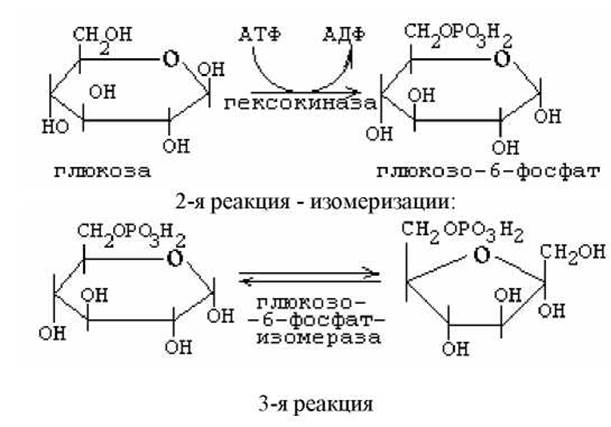
Reaction 1
Hexokinase (HK) acts to destabilize the robust glucose molecule:
At this stage, fructose-6-phosphate is further destabilized by Phosphofructokinase (PFK), yielding fructose-1,6-bisphosphate:
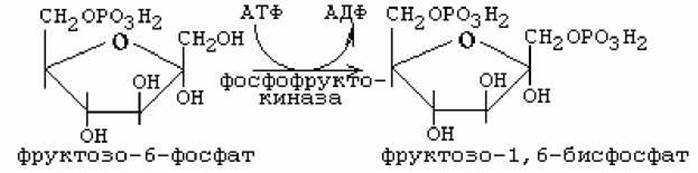
Phosphofructokinase is a key enzyme and serves as a "secondary control checkpoint." The Vmax of PFK is greater than the Vmax of HK. Therefore, when glucose is abundant, HK acts as the rate-limiting step for the entire pathway.
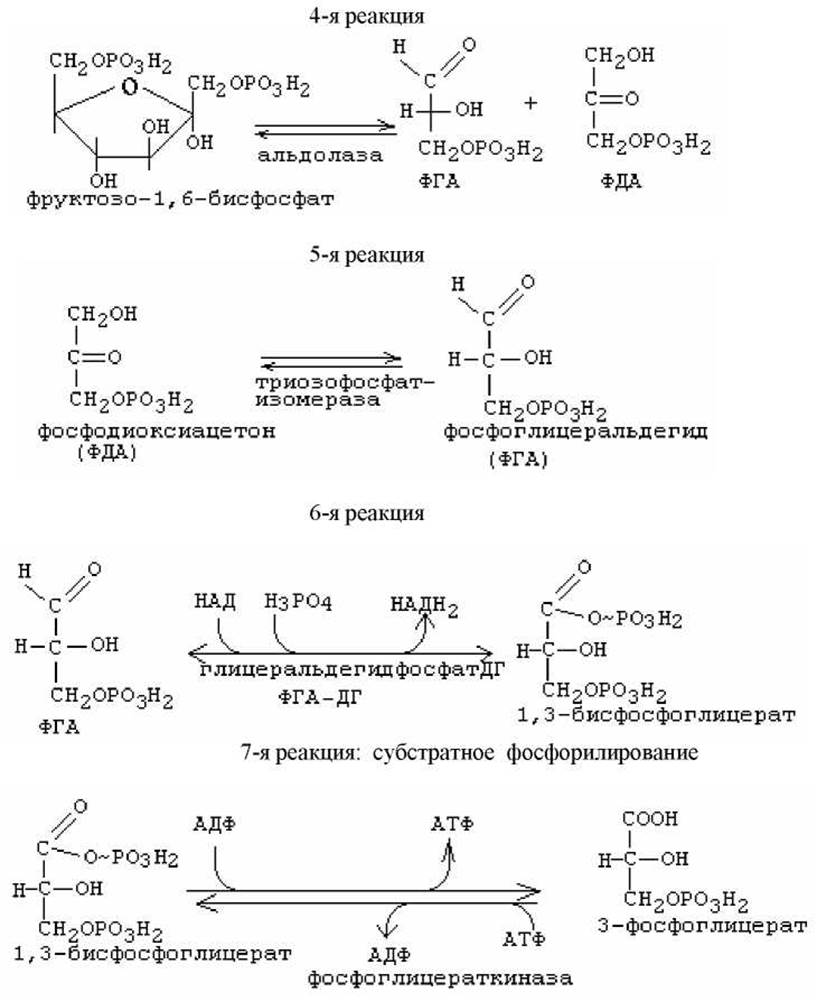
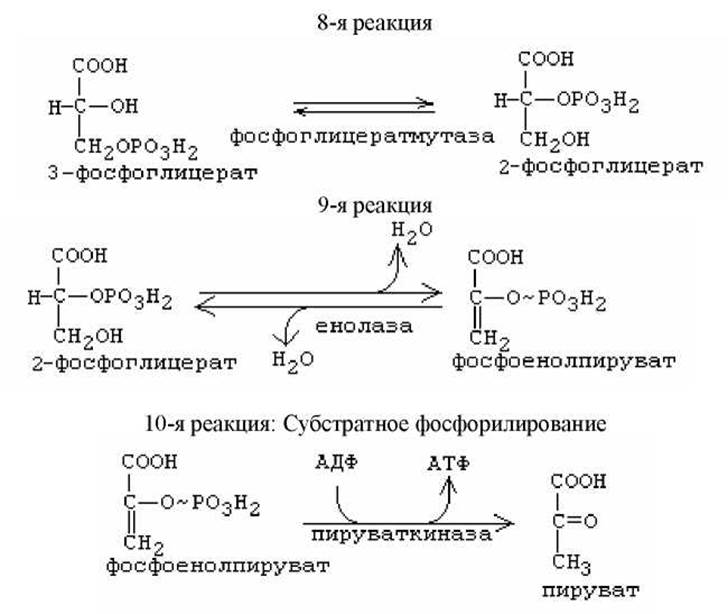
Among the 10 reactions, only one is an oxidation. This is reaction 6: G3P —> 1,3-bisphosphoglyceric acid. This reaction itself does not require oxygen. Typically, NADH2 enters the Cell/35.html">Mitochondria and transfers its hydrogen to oxygen via the Electron Transport Chain.
The transport of hydrogen from cytoplasmic NADH2 to mitochondrial NADH2 is generally mediated by the malate-aspartate shuttle mechanism illustrated in the figure.
MALATE-ASPARTATE SHUTTLE

The MALATE-ASPARTATE shuttle is the most versatile mechanism in body Cells, operating at high rates in the myocardium, renal tissue, and Liver. In this transport system, hydrogen from cytoplasmic NAD is transferred to mitochondrial NAD(!), meaning that 3 ATP molecules are generated in the mitochondria with no energy loss during hydrogen transfer. The malate-aspartate system is particularly crucial for liver tissue, as Acetyl-CoA is transported out of the mitochondria (as citrate) while hydrogen is transported into the mitochondria (as malate).
PATHWAYS OF GLUCOSE Catabolism
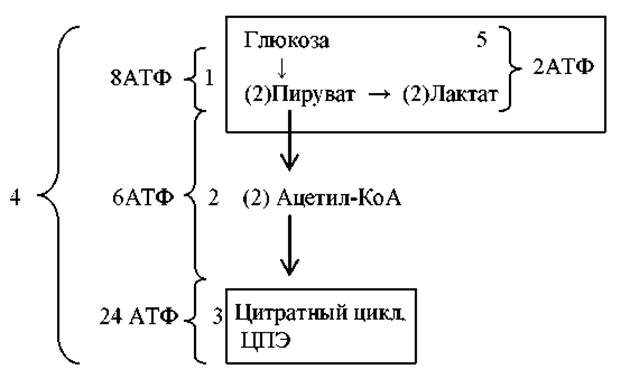
1 — aerobic glycolysis; 2, 3 — common catabolic pathway; 4 — aerobic breakdown of glucose; 5 — anaerobic breakdown of glucose (boxed). (2) — stoichiometric coefficient.
Last update: 06/08/2026
Editorial and Educational Adaptation: This material has been compiled based on the primary/original source text. The project team performed an editorial review, corrected technical inaccuracies, structured sections, and adapted the content for an educational format.
What was processed:
- elimination of formatting defects (OCR errors, structural breaks, corrupted characters);
- editorial organization of content;
- standardization of terminology in accordance with academic sources;
- verification of factual statements against the original source text.
All mentions of the author, publication year, and origin of the primary text have been preserved in accordance with the source.