Textbook - BIOLOGICAL CHEMISTRY - Hubsky Yu.I. - 2000
Chapter III. METABOLISM OF MAJOR CLASSES OF BIOMOLECULES
CHAPTER 12. CARBOHYDRATE METABOLISM. II. ALTERNATIVE PATHWAYS OF MONOSACCHARIDE METABOLISM. REGULATION OF GLUCOSE METABOLISM
12.4. REGULATION OF GLUCOSE METABOLISM. DIABETES MELLITUS
The normal Blood glucose concentration in a healthy human (in the postabsorptive state) is 3.3-5.5 mmol/L (60-100 mg %). This level of glycaemia is vital for the normal METABOLISM/26.html">Energy Metabolism of the Brain and is maintained through a dynamic balance between PHYSIOLOGICAL AND BIOCHEMICAL processes that supply glucose to the blood and those that reduce its level in Blood Plasma by uptake into the Cells of Internal Organs.
Class="center">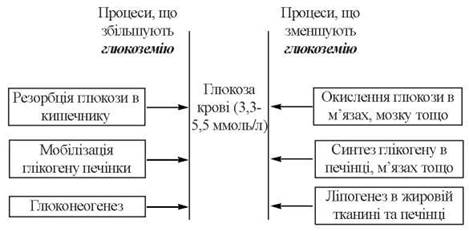
Changes in blood plasma glucose concentration trigger shifts in the Biosynthesis and secretion of Hormones that play a major role in regulating the enzymatic control of glucose metabolism, primarily Glucagon, Insulin, glucocorticoids, and somatotropin.
Glucagon. Insulin
The glucagon/insulin ratio is of paramount importance in regulating the balance between Gluconeogenesis and Glycolysis.
1. A decrease in blood glucose levels (hypoglycaemia), occurring several hours after the last meal, is accompanied by an increased secretion of the hormone glucagon by the α-Cells of the pancreatic islets, which stimulates gluconeogenesis via the mechanisms discussed above. Through the activation of the cascade adenylate cyclase system in hepatocyte membranes, glucagon stimulates Glycogen phosphorolysis, which also contributes to an increase in free glucose levels.
2. An increase in blood glucose levels (hyperglycaemia) stimulates the secretion of the hormone insulin by the pancreatic β-cells, which increases the permeability of Plasma Membranes in many cells to glucose (except for the brain), thereby promoting their intracellular metabolism. Insulin decreases the synthesis rate of gluconeogenesis Enzymes in The Liver and, conversely, stimulates the synthesis of key regulatory enzymes of glycolysis—hexokinase, Phosphofructokinase, and Pyruvate kinase—thus shifting glucose metabolism from the gluconeogenic to The Glycolytic Pathway. In addition, insulin stimulates glycogen synthesis in the liver and Muscles, which is another metabolic process aimed at reducing free glucose concentration.
Adrenaline is a hormone of The adrenal medulla whose increased secretion leads to elevated blood glucose levels by stimulating glycogen phosphorolysis (for details, see Chapter 13) in muscles and partially in the liver, which, via the glucose-6-phosphatase reaction, results in hyperglycaemia.
Glucocorticoids, primarily represented by cortisol, stimulate gluconeogenesis (and consequently raise blood glucose levels upon prolonged administration into the Organism) by promoting the hepatic synthesis of gluconeogenic enzymes—mainly PEP carboxykinase—and enzymes that convert certain glucogenic Amino Acids (Serine, Tyrosine, Tryptophan) into gluconeogenesis substrates.
Somatotropin is an adenohypophyseal hormone that, similarly to insulin, increases the permeability of Cell/33.html">Plasma Membrane cells in Muscle and adipose tissue to glucose, but, unlike insulin, activates gluconeogenesis in the liver.
Diabetes mellitus is an endocrine disorder characterized by a genetically determined absolute or relative deficiency of the pancreatic hormone insulin. The Pathogenesis of diabetes mellitus is rooted in decreased insulin production by the β-cells of the pancreatic islets (insular apparatus) or the inability of target cell receptors to respond to insulin.
Accordingly, the following types are distinguished:
- insulin-dependent diabetes mellitus (IDDM), which develops As a result of the destruction of a significant number (usually over 90 %) of insulin-secreting β-cells. The cause of β-cell destruction is a genetically predetermined autoimmune process. IDDM accounts for 10-15 % of all diabetes cases and manifests as hyperglycaemia accompanied by a tendency toward ketonaemia and ketoacidosis. This form of diabetes usually develops at an early age (under 30 years), most frequently in children and adolescents;
- non-insulin-dependent diabetes mellitus (NIDDM) is a form of diabetes in which most patients retain β-cells in the pancreatic islets, but specific cellular responses to insulin or The regulation of its secretion in response to elevated blood glucose concentrations are impaired. NIDDM typically develops in adults (over 30 years of age) and elderly individuals, manifesting as hyperglycaemia and obesity.
The most characteristic clinical and biochemical manifestation of diabetes mellitus is an abnormally elevated Blood Glucose Level in the fasting state or after a meal, exceeding the values typical of physiological, alimentary hyperglycaemia and reaching 500 mg % or higher. In mild forms of the disease, hyperglycaemia is not observed in the postabsorptive state and is detected only through glucose tolerance testing performed via a "glucose load".
The standard method for diagnosing diabetes mellitus is the "oral glucose tolerance test", administered to the patient (after a 10-14 hour fast) per os with a solution containing 75 g of glucose; baseline and subsequent blood glucose measurements are taken over a 2-hour period at 15-minute intervals (Table 12.1).
Table 12.1. Diagnostic criteria for diabetes mellitus in adults proposed by the National Diabetes Data Group (USA) (from R.Berkow (Ed): The Merck Manual of Diagnosis and Therapy, 1992)
Parameter |
Blood glucose, mg% |
|
healthy individuals |
diabetes mellitus |
|
FPG1 |
below 115 |
140 or higher |
OGTT2 |
below 140 |
200 or higher |
1 — fasting plasma glucose;
2 — oral glucose tolerance test (at 2 h).
In addition to the aforementioned method involving a single glucose administration to the patient, “double sugar loading tests” (the Staub-Traugott curve) are also utilized (Fig. 12.8).
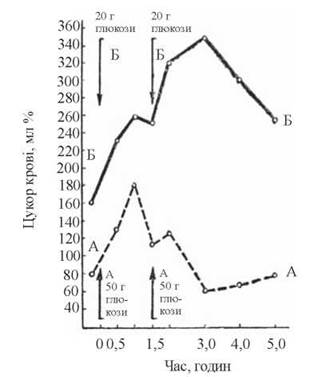
Fig. 12.8. Blood glucose curves following a double glucose tolerance test.
A — healthy individual; B — patient with diabetes mellitus.
When blood glucose levels exceed 180 mg % (the “renal threshold” for glucose), it begins to be excreted in the urine, a condition known as glucosuria. Severe forms of uncompensated diabetes mellitus are accompanied by significant disruptions in Lipid Metabolism — specifically ketonemia and ketonuria (Chapter 16, Section 16.4) — as well as enhanced protein and Amino Acid Catabolism, leading to The Development of azotemia and azoturia.
Last update: 06/08/2026
Editorial and Educational Adaptation: This material has been compiled based on the primary/original source text. The project team performed an editorial review, corrected technical inaccuracies, structured sections, and adapted the content for an educational format.
What was processed:
- elimination of formatting defects (OCR errors, structural breaks, corrupted characters);
- editorial organization of content;
- standardization of terminology in accordance with academic sources;
- verification of factual statements against the original source text.
All mentions of the author, publication year, and origin of the primary text have been preserved in accordance with the source.