BIOTECHNOLOGY - V. H. Gerasymenko - 2006
Part I. General Biotechnology
Chapter 3. FUNDAMENTALS OF MOLECULAR BIOLOGY
3.2. PROTEIN BIOSYNTHESIS AND ITS REGULATION
3.2.3. Regulation of Protein Synthesis
The ability of Bacteria to rapidly adapt to changing environments and efficiently utilize a variety of nutrients is achieved by controlling Protein Synthesis at the transcriptional level through changes in mRNA synthesis rates. Another pathway regulating the Rate of protein synthesis operates at the translational level; however, its mechanism is less understood and is of secondary importance in bacteria.
In Eukaryotic Cells, the control of METABOLISM/35.html">Protein Biosynthesis at the translational level plays a leading role. By regulating The rate of enzyme synthesis, The Cell maintains a concentration ratio of Enzymes that ensures an optimal level of metabolism adapted to environmental conditions. It is important to note that while Some enzymes are maintained in bacterial cells at a constant concentration regardless of metabolic demands (constitutive enzymes), the amounts of others can vary a thousandfold or more depending on conditions (inducible enzymes).
Glycolytic enzymes serve as an example of the first case, whereas β-galactosidase—which catalyzes the hydrolytic Cleavage of lactose into glucose and galactose—exemplifies the second.
The Molecular and genetic mechanisms regulating the rate of Protein synthesis in prokaryotes were elucidated by François Jacob and Jacques Monod (1961–1964) and formulated as The Operon hypothesis, which was fully confirmed by direct biochemical studies. It was discovered that when E. coli is grown in a medium containing lactose instead of glucose, it synthesizes large amounts of β-galactosidase—exceeding baseline levels by more than 103-fold—along with two functionally related enzymes: β-galactosidase permease and protein A. In this process, lactose acts as an inducer, and the phenomenon is known as coordinated induction.
To explain The Mechanism of inducer action, Jacob and Monod proposed a model (Fig. 3.12). In this model, three structural genes (lac genes) — z, y, and a — are preceded by a DNA region containing two regulatory sites: the promoter (p) and the operator (o), as well as the adjacent regulatory Gene i, which encodes the repressor protein. These genes collectively form an operon. In addition to the lac operon, other operons more complex than the lactose operon have been identified in bacteria. For example, the his operon encodes nine enzymes required for The biosynthesis of The amino acid Histidine.
Class="center">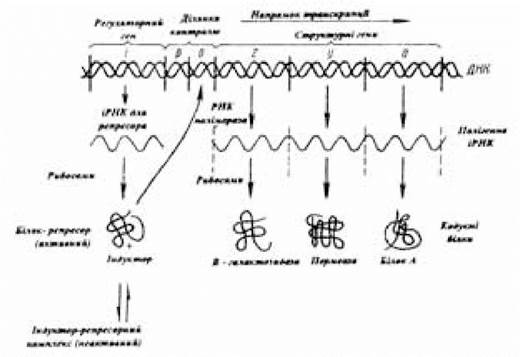
Fig. 3.12. Scheme of protein synthesis regulation
(according to F. Jacob and J. Monod, 1964)
Transcription of the lac operon can be induced by lactose. The inducer interacts with a second specific binding site on the repressor protein (while the first site binds the repressor to the operator). Formation of the inducer-repressor complex reduces the affinity of the repressor for the operator, causing the complex to dissociate from it. Once freed from protein repression, the DNA region (operon) becomes accessible to RNA polymerase, which transcribes the z, y, and a genes. This is followed
by the Translation of mRNA, thereby providing access to a new source of carbon and energy: lactose. Substituting lactose in the standard E. coli growth medium with an easily metabolizable substrate such as D-glucose leads to the dissociation of the inducer-repressor complex. This restores the repressor's high affinity for the operator, thereby inhibiting the transcription of the structural genes in the lac operon.
The Molecular Weight of the lac repressor isolated by Walter Gilbert and Benno Müller-Hill (1967) is approximately 150 kDa, and a typical E. coli cell contains only about 10 molecules of this protein. Some operons include an additional promoter comprising 85 nucleotide Base Pairs, located between the inhibitory region (gene i) and the operator. The segment of the promoter closest to the operator (about 40 nucleotide pairs) serves as the RNA polymerase binding site. The functional role of The nucleotide sequence adjacent to the i gene (about 38 base pairs) is to bind a specific protein known as the catabolite gene activator protein, or CAP (catabolite activator protein). The RNA polymerase binding site is located under the control of the CAP region. In the absence of glucose, CAP and cyclic AMP (cAMP) form a complex that, upon binding to the CAP site on the DNA, creates the steric conditions necessary for RNA polymerase to access the primary binding site and advance through the uninhibited operator region (since the inducer-repressor complex cannot inhibit the operator) to transcribe the lac genes.
The presence of glucose in the medium at levels meeting cellular demands leads to a decrease in cAMP levels, preventing The formation of the CAP-cAMP complex. This impedes RNA polymerase from binding to the operator and initiating transcription of the structural z, y, and a genes. Thus, cAMP acts as a sensitive sensor monitoring the availability of glucose in the medium. The concentration of cAMP depends on the relative activities of adenylate cyclase, which catalyzes cAMP synthesis from ATP, and phosphodiesterase, which mediates cAMP Hydrolysis. This regulatory Mechanism of enzyme synthesis allows Prokaryotic Cells to maintain metabolism at a level that ensures maximum efficiency.
Last update: 11/08/2026
Editorial and Educational Adaptation: This material has been compiled based on the primary/original source text. The project team performed an editorial review, corrected technical inaccuracies, structured sections, and adapted the content for an educational format.
What was processed:
- elimination of formatting defects (OCR errors, structural breaks, corrupted characters);
- editorial organization of content;
- standardization of terminology in accordance with academic sources;
- verification of factual statements against the original source text.
All mentions of the author, publication year, and origin of the primary text have been preserved in accordance with the source.