Human Anatomy Part 1 - K. A. Dyubenko, A. K. Kolomiysev, Yu. B. Chaykovsky 2002
Special Section
Urinary System, systema urinarium - General Overview
Urinary Organs - Kidneys
The Urinary Organs include (Fig. 298):
- Kidneys, renes [nephros];
- Ureters, ureterus;
- Urinary Bladder, vesica urinaria;
- Urethra, urethra.
The Kidney, ren [nephros], is a paired organ in which urine is continuously produced by the filtration of fluid from capillaries into Bowman's capsule.
The kidneys perform a variety of Functions:
- regulate Water and Electrolyte balance;
- maintain the body's acid-base balance;
- excrete metabolic end products (urea, uric acid, creatinine, and others) and foreign substances from the Blood, eliminating them via urine;
- synthesize glucose from non-carbohydrate precursors (Gluconeogenesis);
- produce Hormones (renin, Erythropoietin, and others).
Kidney DISEASES ASSOCIATED WITH impaired renal functions can lead to edema, Hypertension, uremia, and acidosis in humans.
An adult kidney is bean-shaped and bright brown in color (Fig. 299). Its weight ranges from 120 to 200 g; length is 10-12 cm, width is 5-6 cm, and thickness is 3-4 cm. The kidney has two surfaces: the anterior surface, facies anterior, and the posterior surface, facies posterior; two borders: the lateral border, margo lateralis (convex), and the medial border, margo medialis (concave), facing THE Vertebral Column; as well as two extremities (poles): a rounded superior extremity, extremitas superior, and a pointed inferior extremity, extremitas inferior. The medial border features a depression in its middle part, the renal sinus, sinus renalis. The entrance to the sinus is bounded by anterior and posterior Lips and is called the renal hilum, hilum renalis (see Fig. 299), which contains the renal pedicle, crus renale, consisting of the renal artery, renal vein, renal pelvis, renal nerve plexus, and Lymphatic vessels.
Class="center">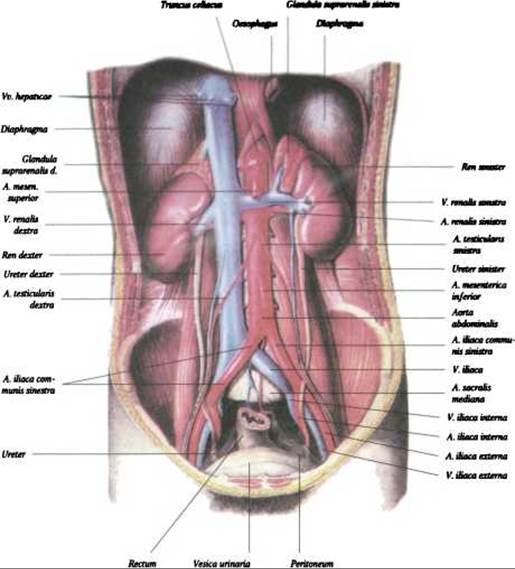
Fig. 298. Urinary organs, organa urinaria (anterior view) (after R. D. Sinelnikov)
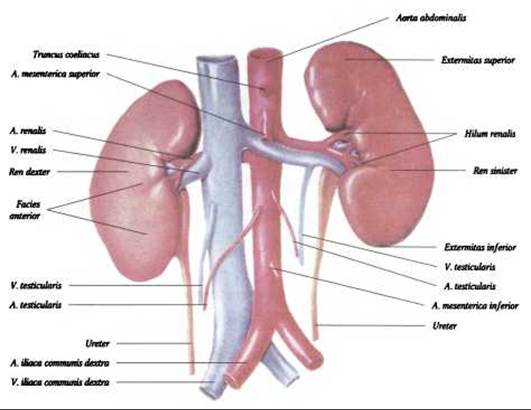
Fig. 299. Kidneys, renes (anterior view) (after R. D. Sinelnikov)
Last update: 08/08/2026
Editorial and Educational Adaptation: This material has been compiled based on the primary/original source text. The project team performed an editorial review, corrected technical inaccuracies, structured sections, and adapted the content for an educational format.
What was processed:
- elimination of formatting defects (OCR errors, structural breaks, corrupted characters);
- editorial organization of content;
- standardization of terminology in accordance with academic sources;
- verification of factual statements against the original source text.
All mentions of the author, publication year, and origin of the primary text have been preserved in accordance with the source.