HUMAN MEDICAL BIOLOGY, ANATOMY, PHYSIOLOGY, AND PATHOLOGY - Ya.I. Fedonyuk 2010
BIOLOGY
CHAPTER 1. BIOLOGICAL FOUNDATIONS OF HUMAN VITAL ACTIVITY
1.4. ONTOGENETIC LEVEL OF LIFE ORGANIZATION
1.4.2. Basics of Human Genetics
Genetics, Human Genetics, Medical Genetics: Subject, Tasks, Methods
Genetics (from the Greek genetikos – pertaining to origin, and logos – science) is the science of heredity and Variability. The term "genetics" was first proposed in 1906 by the English scientist W. Bateson. The subject of genetics is heredity and variability—two fundamental properties inherent in All living organisms (p. 76). The main task of genetics is to study the patterns of heredity and variability in order to develop ways to control them in the interests of all humankind. To accomplish this task, genetics employs the method of Hybridization analysis, proposed in 1865 by G. Mendel. This is a purely genetic method, unique to genetics and not used in other sciences. The hybridization method is extremely precise, making genetics an exact science.
Genetic patterns underlie all biological phenomena. Genetics is a leading science in modern natural science. Genetic knowledge is an integral part of all scientific programs aimed at environmental protection and human health. Genetics is closely intertwined with medicine, given that approximately 5% of children are born with various genetic defects. All branches of genetics are of vital importance to medicine. This is due to the universality of genetic laws, which were first established in experimental models and later proved equally applicable to humans. Data from experimental genetics are applied in the Diagnosis, Treatment, and Prevention of Hereditary diseases. Through Introduction/32.html">Genetic Engineering and biotechnology, pharmaceutical products (such as Insulin, interferon, and Antibiotics) are produced in vitro to meet the needs of practical medicine.
Human genetics is the science that studies human heredity and variability. Its primary task is to investigate the patterns of human heredity and variability to safeguard the health of current and future generations. The hybridization method—crossing—is not applicable to humans. Nevertheless, human genetics successfully progresses through alternative methods, including genealogical, twin, cytogenetic, somatic Cell hybridization, biochemical, dermatoglyphic, population-statistical, and molecular-genetic (DNA analysis) methods, among others.
Human heredity as an independent subject of research was first singled out in 1865 by the English biologist F. Galton. He proposed a series of methods for human genetic analysis (genealogical, twin, statistical, dermatoglyphic), studied the inheritance of human traits (character, intellect, talent, work capacity), and developed methods for their quantitative assessment. F. Galton founded a distinct direction in genetics known as eugenics (from the Greek eu – good, genesis – birth, origin) and defined its main goal as improving humankind and the human race as a whole. He saw the paths to such "improvement" in the selective reproduction of certain individuals (e.g., gifted, talented) and the restriction of marriage for others.
Theoretically, eugenics was based on actual facts regarding the hereditary determination of normal and pathological traits, but in practice, it was implemented in several countries (such as Nazi Germany) as an inhumane recognition of certain population categories as "inferior," subjecting them to statutory forced sterilization ("racial hygiene"). Eugenics programs severely hindered The Development of human genetics for a long time.
Medical genetics is the science that studies human hereditary pathology. Its subject matter includes human Hereditary diseases and conditions with a hereditary predisposition. Medical genetics investigates the Etiology AND Pathogenesis of hereditary diseases, develops methods for their diagnosis, treatment, and prevention, and explores the relative roles of hereditary and non-hereditary factors in the development of multifactorial disorders. The main objective of medical genetics is to study hereditary diseases to prevent their occurrence across generations and to protect human heredity from harmful environmental factors. To achieve this, medical genetics utilizes the same methods as human genetics. The subjects of medical genetics include individuals with hereditary pathology, as well as their families, healthy and affected relatives. The growing significance of hereditary diseases is illustrated by data from V. McKusick's catalogs published in recent decades: in 1966, 1,487 hereditary diseases were known, rising to about 4,000 in 1982, and 6,678 in 1994.
Medical genetics is linked with all clinical sciences. Clinical genetics is a specialized branch of medical genetics. Their ultimate goal is singular: to assist the patient and prevent the recurrence of hereditary diseases in future generations. In their ongoing struggle for human health across generations, modern medical genetics and clinical practice focus primarily on the prevention of hereditary diseases through prenatal diagnosis, Genetic Counseling, identification of heterozygous carriers of mutant genes, guidance for couples with an increased risk of having an affected child, and the development of legislation aimed at preventing environmental pollution by mutagens.
The Study of hereditary diseases was pioneered by the English physician A. Garrod in 1908. By investigating the pedigrees of patients with alkaptonuria, he established the hereditary nature of this condition and proposed a genetic hypothesis attributing inherited Metabolic Disorders to "inborn errors of METABOLISM" arising from a genetically determined deficiency of a specific enzyme.
Class="center">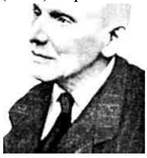
Sergey Nikolayevich Davydenkov
(1880–1961)
The development of medical genetics in Ukraine is closely associated with the work of the prominent Russian neuropathologist and geneticist S.N. Davydenkov. After graduating from Moscow University in 1904, he worked for several years as a practicing physician in psychiatric hospitals in the Moscow and Kharkiv governorates, and from 1912 to 1920, following the defense of his doctoral dissertation, served as a professor at the Kharkiv Women's Medical Institute. In 1925, his book Hereditary diseases of The Nervous system was published in Kharkiv. He formulated THE PRINCIPLE OF the genetic heterogeneity and clinical polymorphism of hereditary diseases, substantiated the necessity of classifying hereditary diseases based on genetic patterns rather than clinical manifestations, and in the 1920s in Moscow, established the world's first medical-genetic consultation clinic. In Ukraine, the first medical-genetic consultation center was founded in 1968 at the Kyiv Research Institute of Pediatrics, Obstetrics, and Gynecology. Humans as a specific subject of genetic analysis: Humans represent a complex and specific subject for genetic analysis. As previously noted, the hybridization method—the fundamental approach for studying heredity and variability in animals and plants, which relies on experimental crosses—is inapplicable to humans. Experimental human marriages are impossible, and genetic experiments on people are prohibited. There are several other features that pose challenges to the study of human heredity and variability. The main ones are: 1) slow generational turnover (approximately every 25–30 years); the human lifespan, as an object of observation, may exceed the lifespan of the researcher; 2) a small number of children per family; 3) a complex karyotype comprising 46 Chromosomes (24 linkage groups: 22 pairs of autosomes, and X and Y sex chromosomes); for comparison, Drosophila has 8 chromosomes (4 linkage groups); 4) humans exhibit significant genotypic polymorphism, which, combined with diverse environmental and social conditions, results in a high degree of phenotypic polymorphism. At the same time, humans as a genetic model possess advantageous characteristics, notably the thorough understanding of the human phenotype (anatomical, physiological, immunological, biochemical, and clinical).
Last update: 08/08/2026
Editorial and Educational Adaptation: This material has been compiled based on the primary/original source text. The project team performed an editorial review, corrected technical inaccuracies, structured sections, and adapted the content for an educational format.
What was processed:
- elimination of formatting defects (OCR errors, structural breaks, corrupted characters);
- editorial organization of content;
- standardization of terminology in accordance with academic sources;
- verification of factual statements against the original source text.
All mentions of the author, publication year, and origin of the primary text have been preserved in accordance with the source.