HUMAN MEDICAL BIOLOGY, ANATOMY, PHYSIOLOGY, AND PATHOLOGY - Ya.I. Fedonyuk 2010
BIOLOGY
CHAPTER 2. BIOGENOCENOTIC LEVEL OF LIFE ORGANIZATION AND HUMAN PLACE IN IT
2.7. OTHER COMMON ANIMALS FROM VARIOUS TAXA OF MEDICAL IMPORTANCE
The medicinal leech (Hirudo medicinalis). It belongs to the type Annelida, Class Hirudinea, and order Gnathobdellida. It inhabits ponds, lakes, and marshes, leading a semi-predatory, semi-parasitic lifestyle. It feeds on the Blood of vertebrates, attacking them in the Water. The volume of blood consumed can be 2-3 times the mass of the leech itself.
Morphophysiological characteristics. The body is elongated, flattened dorsoventrally, and 15-20 cm long (Fig. 2.69). It possesses two suckers: anterior and posterior. Parapodia and setae are absent. Locomotion is carried out using the suckers. The external annulation of the body does not correspond to the internal segmentation, with each internal segment matching 5 external rings. The Skin-muscular sac consists of a cuticle, under which lie the epithelium and two Muscle layers. The body cavity is reduced and replaced by parenchyma; only sinuses and Organs remain. The Digestive System comprises anterior, middle, and posterior sections. In the Oral Cavity, there are three jaws equipped with chitinous Teeth. When biting, the leech cuts through the host's skin, forming a tri-radiate wound from which it sucks blood. Unicellular Salivary Glands open into the Pharynx, secreting hirudin, which prevents Blood Coagulation. This explains why the wound continues to bleed. Posterior to the pharynx lies the Esophagus, which opens into The Stomach. The stomach forms 10-11 pairs of lateral pouches, or caeca. These act as a reservoir where blood remains unclotted for several months, as if preserved. From the caeca of the midgut, blood passes into the hindgut, where Digestion takes place. The Nervous system consists of a circumoesophageal nerve ring and a ventral nerve cord. Leeches breathe through their entire skin surface. The Circulatory system is reduced, its function performed by coelomic fluid remnants. The excretory system is of the metanephridial type, though significantly modified. The Reproductive System is hermaphroditic.
Life cycle. Development is direct. Eggs develop within a cocoon.
Pathogenic effect. Leeches are temporary ectoparasites. They may parasitize the Nasal cavity, pharynx, Larynx, and Trachea, which they enter when drinking water directly from a body of water. By secreting hirudin, they cause prolonged bleeding. When entering the trachea, they can cause asphyxia because their size increases during blood feeding.
Application of the medicinal leech in medicine. The ability of the medicinal leech to suck blood, specifically drawing it away from Internal Organs, has long been utilized in medicine. Medicinal leeches are specially bred and then distributed to hospitals. They are used in ophthalmology for conditions associated with increased intraocular pressure (glaucoma), Vascular Diseases accompanied by thrombus formation, Hypertension, and pre-stroke states (hirudotherapy). Hirudin, a valuable medicinal substance, is extracted from their salivary glands.
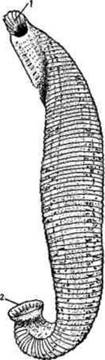
Fig. 2.69. Medicinal leech (Hirudo medicinalis):
1 - anterior sucker; 2 - posterior sucker.
Class Amphibia (Amphibians). A small group of vertebrates (about 2,000 species) combining features of aquatic and terrestrial animals. Their life cycle invariably includes an aquatic larval stage. Adult forms require constant skin moisture for normal physiological activity, and therefore inhabit areas near water bodies or locations with high humidity. Amphibians are a vital component of ecosystems; they regulate the populations of numerous invertebrates, destroy harmful insects, and eliminate insect vectors of vector-borne diseases (such as mosquitoes). In many countries, the meat of certain frogs is consumed by humans. Frogs serve as standard laboratory animals and classical objects of physiological study. The eggs (spawn) of certain amphibians are a classical model in experimental Embryology. The skin of amphibians (toads, etc.) contains poison glands whose secretion is hazardous to humans (Section 2.6.3). Populations of numerous amphibian species are in catastrophic decline due to the pollution of water bodies.
Class Reptilia (Reptiles). The first strictly terrestrial vertebrate animals. Although some species inhabit water (turtles, crocodiles), all such cases represent secondary adaptations to the aquatic environment. Over 4,000 extant species are known. Together with birds and mammals, they form the group of higher vertebrates known as Amniotes. All amniotes are true terrestrial vertebrates. Due to embryonic membranes (amnion, allantois, serosa), their development is not tied to water. Reptiles constitute a crucial link in evolution, serving as the ancestors of birds and mammals. The vast majority of reptiles are beneficial. They destroy harmful insects and rodents. The meat of many turtle species, certain snakes, and monitor lizards is consumed as food in various countries. The skin of crocodiles, snakes, and turtle shells are used to manufacture various products.
Medical significance. Bites from venomous snakes are dangerous to humans. Snake venom is a valuable pharmacological raw material.
Class Aves (Birds). Birds represent a highly specialized group of higher vertebrates adapted for flight. The class includes over 8,000 species. They play a major role in biogeocenoses and possess significant practical importance. Birds are a source of meat, eggs, down, and feathers. They destroy harmful insects, rodents, and weed seeds. A large number of birds serve as objects for commercial and sports hunting. Poultry farming is an important branch of agriculture.
Medical significance. Many species of wild and domestic birds suffer from ornithosis (psittacosis), viral diseases that can be transmitted to humans. Infection occurs through contact with birds during their care or when Processing carcasses. Certain bird species act as intermediate hosts for Toxoplasma and as natural reservoirs for the pathogens of tick-borne and Japanese encephalitis.
Class Mammalia (Mammals). Mammals are the most highly organized class of vertebrate animals. The main Progressive features of mammals include: 1) a high Development of the Central nervous system, particularly the Cerebral Cortex, which is the center of Higher Nervous Activity—owing to this, the ADAPTIVE REACTIONS OF mammals to environmental conditions are highly complex and sophisticated; 2) viviparity and feeding of the young with milk, a product of the maternal Organism; 3) the capacity for thermoregulation. These and other organizational traits have driven the widespread distribution of mammals across the globe. Mammals are a source of meat, fat, milk, hides, fur, and wool, as well as serving as draft animals.
Medical significance. Deer antlers (panty), musk, sperm whale spermaceti, and the Endocrine glands of domestic animals are used in The production of medications. Catgut, used in surgery, is manufactured from sheep intestines. Mammalian organs are utilized for tissue culture. Therapeutic and prophylactic sera are obtained from certain mammals. Many mammals serve as laboratory animals used to test the pharmacological effects of drugs and study the progression of infectious or parasitic processes.
Mammals act as sources of human infection with agents of infectious and parasitic diseases. Dogs can transmit rabies, Toxoplasmosis, and echinococcosis. They also serve as hosts for A number of helminths (Clonorchis, Paragonimus, Trichinella). Opisthorchiasis occurs in cats and dogs. Cattle can transmit brucellosis, tuberculosis, anthrax, FOOT-and-Mouth disease, and taeniorhynchosisi; horses can transmit glanders; and pigs can transmit taeniasis and trichinellosis. Many wild mammals serve as natural reservoirs for disease pathogens. The Order Rodentia (Rodents) is of great medical significance. This is the most numerous order of mammals. Natural reservoirs of plague include marmots, susliks, gerbils, and rats; for tularemia—the water vole, common vole, house mouse, and susliks; for leishmaniasis—gerbils and the thin-toed suslik. Many species of mouse-like rodents (especially voles) serve as intermediate hosts for Alveococcus.
Last update: 08/08/2026
Editorial and Educational Adaptation: This material has been compiled based on the primary/original source text. The project team performed an editorial review, corrected technical inaccuracies, structured sections, and adapted the content for an educational format.
What was processed:
- elimination of formatting defects (OCR errors, structural breaks, corrupted characters);
- editorial organization of content;
- standardization of terminology in accordance with academic sources;
- verification of factual statements against the original source text.
All mentions of the author, publication year, and origin of the primary text have been preserved in accordance with the source.