Pharmacognosy with the Basics of Plant Biochemistry - Kovalyov V. M. 2004
Special Part
Alkaloids
Piperidine and Quinolizidine Alkaloids (Lysine Group)
Piperidine Alkaloids
Approximately half of all known alkaloids contain a piperidine ring in their Structure. Their Biosynthesis in plants can proceed via two pathways: from Lysine and its metabolites, or from acetate. The "lysine" and "acetate" pathways are not isolated and function in parallel during the Biosynthesis of certain alkaloids. In nature, the "lysine" pathway predominates.
Lysine is converted into piperidine via three pathways. In the first pathway, Oxidative Deamination removes the α-amino group, yielding ε-amino-α-ketocaproic acid. This acid spontaneously cyclizes into Δ-piperideine-2-carboxylic acid. Subsequent decarboxylation yields Δ-piperideine, the direct precursor of the piperidine alkaloid ring.
The second pathway leading to this precursor begins with the removal of the terminal amino group from lysine. In this case, the intermediates are α-aminoadipic acid semialdehyde and Δ-piperideine-6-carboxylic acid.
Another possible route involves the decarboxylation of lysine to the symmetrical amine putrescine. This mechanism is followed by the deamination of putrescine to 5-aminopentanal, with subsequent ring closure of the aliphatic amino aldehyde chain to form Δ-piperideine.
Class="center">"Lysine" Pathway of Piperidine Alkaloid Core Biosynthesis

Among lysine-derived alkaloids, the following groups are distinguished: piperidine (lobeline from Lobelia inflata, Lobeliaceae; piperine from Piper nigrum, Piperaceae; sedamine from Sedum spp., Crassulaceae); coniine (coniine from Conium maculatum, Apiaceae); isopelletierine (isopelletierine, pelletierine from Punica granatum, Punicaceae); arecoline (arecoline from Areca catechu, Arecaceae); ricinine (ricinine from Ricinus communis, Euphorbiaceae); and quinolizidine (cytisine, pachycarpine from Thermopsis lanceolata, Sophora pachycarpa, Fabaceae).
Lobeline, nicotine, cytisine, and anabasine belong to the class of "respiratory" analeptics, which exert a reflex effect on the respiratory center. They stimulate or restore the Functions of the respiratory and vasomotor centers in the Medulla Oblongata, excite the ganglia of the Autonomic Nervous system and The adrenal medulla, leading to a significant increase in Blood pressure.
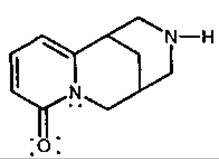
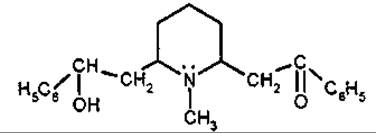
Anabasine, lobeline, and cytisine are used to alleviate nicotine cravings and withdrawal symptoms, facilitating smoking cessation. The similarity in the biological action of these alkaloids during nicotine withdrawal can be explained by the structural resemblance of their chemical frameworks to nicotine, particularly the spatial arrangement of active centers—specifically, the nitrogen and oxygen atoms containing lone electron pairs.
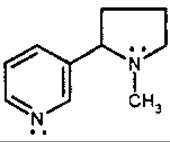
Nicotine
Lobeline
Cytisine
The analeptic properties of these alkaloids are utilized in cases of poisoning by carbon monoxide, morphine, and hypnotics.
Pelletierine, isopelletierine, methylisopelletierine, and pseudopelletierine are alkaloids found in the ROOT bark of the pomegranate (Cortex Granati radicis, pomegranate — *Punica granatum* L., family Punicaceae). The plant is cultivated in tropical and subtropical regions of Iran, Asia Minor, the Caucasus, and the Americas.

Pelletierine
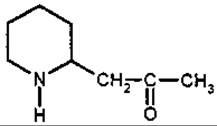
Isopelletierine
The root bark contains 0.5–0.9% of liquid volatile alkaloids and about 22% of Tannins. The fruit peel is rich in tannins and is used in the Treatment of dysentery. Pomegranate fruits are also a source of citric acid.
Piperine and piperitine are alkaloids derived from the fruits of black pepper (Fructus Piperis nigri, black pepper — *Piper nigrum* L., family Piperaceae).
Black pepper was the most expensive spice during the Middle Ages. It is cultivated in the Malay Archipelago, Ceylon, India, Indonesia, and South America.

Piperine
The fruits contain 5–9% alkaloids, 1–2.5% essential oil, Diterpenes, and resin.
Black pepper is of great importance in the food industry as a spice that stimulates appetite and AIDS Digestion. Previously, the fruits were used to treat Gonorrhea and Chronic Bronchitis.
Coriine is the main volatile alkaloid isolated from the herb and seeds of poison hemlock (Herba et fructus Conii maculati, poison hemlock — Conium maculatum, fam. Apiaceae). The action of coniine is similar to that of nicotine. A dose of 0.5–1 g causes death resulting from reflex respiratory arrest. The herb and seeds contain 0.1% alkaloids (coniine, conhydrine, methylconiine, coniceine, etc.), essential oil, caffeic acid, and Flavonoids.

Coniine

Ricinine
In therapeutic doses, hemlock preparations exhibit analgesic, anticonvulsant, and hemostatic properties. In homeopathy, they are used as an agent to help resolve benign tumors.
Ricinine has been isolated from the seeds of the castor oil plant (Ricinus communis, fam. Euphorbiaceae). It is a potent poison.
Last update: 06/08/2026
Editorial and Educational Adaptation: This material has been compiled based on the primary/original source text. The project team performed an editorial review, corrected technical inaccuracies, structured sections, and adapted the content for an educational format.
What was processed:
- elimination of formatting defects (OCR errors, structural breaks, corrupted characters);
- editorial organization of content;
- standardization of terminology in accordance with academic sources;
- verification of factual statements against the original source text.
All mentions of the author, publication year, and origin of the primary text have been preserved in accordance with the source.