Biochemistry - Chemical Reactions in Living Cells, Volume 3 - D. Metzler 1980
Metabolism of Nitrogenous Compounds
Folic Acid, Flavins, and Dimethylbenzimidazole
Isotope-labeling experiments have demonstrated that both riboflavin and Folic acid are derived from a guanosine derivative. The product retains all the atoms of the purine ring, except for the C-8 atom of the five-membered ring. Figure 14-34 illustrates hypothetical pathways originating from guanosine triphosphate, which serves as the initial precursor in at least some organisms. The first step, reproduced in experiments with Cell-free enzyme systems capable of synthesizing pterins, involves the hydrolytic removal of formate. This is followed by an Amadori rearrangement, the product of which undergoes simple ring closure between the carbonyl group and an adjacent amino group [158–162]. This yields dihydroneopterin triphosphate (Ch. 8, Sec. L), designated as X in Fig. 14-34, which features the side chain shown in equation (14-56). Following aldol Cleavage, a series of reactions ensues (Fig. 14-34) leading directly to The formation of folate Coenzymes. The Formation of other pterins can proceed via straightforward modifications. For instance, biopterin may be formed from neopterin phosphate through phosphate elimination, ketonization, and reduction [equation (14-56)]. Both the inversion at the C-1' atom indicated in this equation and The intermediate formation of sepiapterin (Ch. 8, Sec. L), which contains a 3'-carbonyl group, suggest a preliminary dehydrogenation reaction yielding a C-1'-carbonyl prior to phosphate elimination.
Class="center">
The pathways of riboflavin synthesis are schematically outlined in Fig. 14-34; they were established through studies conducted on the fungus Eremothecium (Supplementary Note 8-3) and on Saccharomyces mutants [163–165]. Reduction of the Amadori rearrangement product (shown as a triphosphate in Fig. 14-34, though its actual form remains uncertain)1), accompanied by deamination and dephosphorylation, yields the flavin precursor 4-ribitylamino-5-amino-2,6-dihydroxypyrimidine. The additional carbon atoms required to build the benzene ring of riboflavin are incorporated in two stages. Although not definitively proven, there is good reason to believe these carbon atoms are supplied by Pyruvate following its conversion to acetoin [equation (9-28)] or diacetyl.
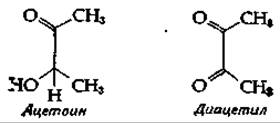

FIG. 14-34. Biosynthesis of folic acid, riboflavin, and the dimethylbenzimidazole moiety of vitamin B12.
1) According to recent work with a Salmonella mutant, the direct precursor of riboflavin is not the triphosphate shown in Fig. 14-34, but rather guanosine [165a].
The spontaneous Condensation of diacetyl with the diamine precursor yields 6,7-dimethyl-8-ribityllumazine. Completion of the flavin ring requires four additional carbon atoms, which are provided by a second molecule of diacetyl. This does not occur directly, but rather via The transfer of a diacetyl residue from a second molecule of 6,7-dimethyl-8-ribityllumazine, as illustrated in Fig. 14-34. At first glance, this reaction appears quite remarkable, though the impression is less striking when one considers that this bimolecular reaction proceeds spontaneously under mild conditions. However, the enzymatic process studied by Plaut may proceed somewhat differently than the non-enzymatic reaction. Detailed mechanisms have been proposed for this process, which is accompanied by the regeneration of the precursor (4-ribitylamino-5-amino-2,6-dihydroxymethylpyrimidine) containing two amino groups.
Dimethylbenzimidazole can also be derived from 6,7-dimethyl-8-ribityllumazine through a process similar to riboflavin synthesis, but in this case, the resulting riboflavin undergoes degradation, hydrolytically cleaving the pyrimidine ring to form the imidazole Nucleus [166]. It is also possible that free riboflavin, constituting a separate pool, reacts in this manner.
1. Can you comment on (including the mechanism) the following observation: Nitrogenase reduces acetylene to Ethylene, but does not reduce ethylene to ethane, whereas cyclopropene is reduced to a mixture of cyclopropane and propene? [see McKenna C. E., McKenna M., Higa M. T., JACS, 98, 4657–4659 (1976)].
2. Currently, there is considerable interest in breeding nitrogen-fixing Bacteria with enhanced Hydrogenase activity. The latter can oxidize H2 to H+. Explain why this might lead to higher Nitrogen Fixation efficiency in legume ROOT nodules [see Dixon R. O. D., Nature (London), 262, 173 (1976)].
3. Trace the pathways by which certain bacteria can convert: a) N2 into the nitrogen atom of Glutamic Acid and Glutamine; b) NO3 into the nitrogen atom of Alanine; c) the N of glutamic acid into the N of porphobilinogen; d) the N of glutamine into the N of adenylic acid; e) the N of aspartic acid into the N of Lysine.

4. Which 10 Amino Acids must necessarily be included in the diet of rats? Which Amino acids are essential for humans?
5. What is meant by the term "nitrogen balance"? To what extent can this concept be applied in nutritional studies?
6. Propose a biosynthetic pathway for tropine, a component of the Alkaloids found in stinking nightshade (*Datura*). The starting Materials are glutamic acid (which is first converted into Ornithine) and acetoacetate.
7. Propose a detailed scheme for The biosynthesis of fusaric acid, a metabolite produced by certain Fungi of the genus *Fusarium*, starting from aspartate and acetyl-CoA.

8. Propose a metabolic pathway for The conversion of Threonine into Glycine and acetyl-CoA. This pathway appears to be utilized by many bacteria for threonine degradation [see Bell S. C., Turner J. M., Biochem. Soc. Trans., 4, 497—500 (1976)].
9. Although HCN is highly toxic to most organisms, many higher plants are able to incorporate HCN into biosynthetic pathways. Propose pathways for the conversion of Serine and HCN into asparagine and α,γ-diaminobutyric acid. Propose a biosynthetic pathway in fungi for alanine from acetaldehyde, HCN, and ammonia. (Note: The corresponding non-enzymatic reaction is the well-known Strecker Amino acid synthesis.)
10. The E. coli ketopantoate hydroxymethylase is an enzyme catalyzing the initial committed step in pantothenic acid biosynthesis (see Fig. 14-10); the enzyme is not inactivated by borohydride in the presence of excess substrate and is activated by Mg2+ ions. How would you classify this enzyme According to the scheme proposed in Chapter 7? [see Powers S. G., Snell E. E., JBC, 251, 3786—3793 (1976)].
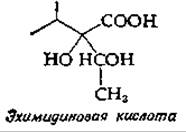
11. Propose a biosynthetic pathway for echimidinic acid, a product found in certain plants of the family Boraginaceae.
12. Draw the structural formula of protoporphyrin IX. a) Mark with asterisks all carbon atoms and with circles all nitrogen atoms whose direct precursors are the carboxyl carbon and the amino nitrogen of glycine, b) From which precursors are the remaining atoms derived? c) What additional precursor contributes atoms directly to the chlorophyll molecule? d) Answer the same question with respect to vitamin B12.
13. Some plants ("cyanogenic plants"), such as Prunus amygdalus and Sorghum, utilize cyanide by converting it into cyanogenic Glycosides, such as amygdalin (Fig. 14-23). It is believed that, In addition to the biosynthetic pathways shown in the figure, these glycosides can be formed from the corresponding Amino acids as follows: the amino group is hydroxylated to yield an N-hydroxyamino acid, which can be dehydrogenated to an oxime. The latter can be converted into a nitrile and (after an additional hydroxylation step) into a glycoside.
A novel carbon-nitrogen cycle has recently been proposed [Thatcher, R. T., Weaver, T. L., Science, 192, 1234–1235 (1976)]. This cycle operates in all cyanogenic plants, a fungus that converts cyanide into formamide, pseudomonads, and the nitrifying organisms Nitrosomonas and Nitrobacter. Propose a scheme for this proposed cycle and discuss the Chemistry of the individual reactions.
14. Describe the two major biosynthetic pathways for Aromatic Compounds. By which pathway, in your opinion, might the following compound be synthesized?

15. Gallic acid can be formed in plants via the shikimate pathway (Sec. 3.6), but it can also be synthesized in fungi via the polyketide pathway. Propose a detailed scheme for this metabolic pathway.
16. Propose a three-step pathway for the formation of salicylic acid (o-hydroxybenzoic acid) from Chorismic acid.
17. Propose a detailed mechanism for step g (Fig. 14-31), which involves the glutamine- and ATP-dependent amination of formylglycinamide ribonucleotide. There is evidence to suggest that this reaction is catalyzed by a single enzyme.
Last update: 06/08/2026
Editorial and Educational Adaptation: This material has been compiled based on the primary/original source text. The project team performed an editorial review, corrected technical inaccuracies, structured sections, and adapted the content for an educational format.
What was processed:
- elimination of formatting defects (OCR errors, structural breaks, corrupted characters);
- editorial organization of content;
- standardization of terminology in accordance with academic sources;
- verification of factual statements against the original source text.
All mentions of the author, publication year, and origin of the primary text have been preserved in accordance with the source.