Biochemistry - The Chemical Reactions of Living Cells, Volume 3 - D. Metzler 1980
Light in Biology
Photosynthesis
Specific Adaptation
The primary product of CO2 incorporation in The Calvin Cycle is 3-phosphoglyceric acid (Chap. 11, Sec. G, 2). It was precisely the rapid transfer of the radioactive label from 14СО2 into phosphoglycerate and other C3 compounds that enabled Calvin and his colleagues to establish The pathway of this complex cycle in the form presented in Fig. 11-4. Green Algae (with which Calvin worked), spinach, and other cultivated plants are frequently referred to as C3 plants. Another group of plants, predominantly tropical species capable of exceptionally rapid growth (specifically sugarcane, corn, and creeping weeds), behaves differently [123–127]. Radioactive CO2 is initially incorporated into C4 compounds—oxaloacetate, malate, and aspartate. C4 plants are characterized by high photosynthetic efficiency, which accounts for the rapid growth of creeping weeds and high corn yields. The maximum rate of CO2 incorporation in these plants can reach 40–60 mg CO2 per square decimeter of leaf surface per hour (~0.3 mmol CO2 m-2 s-1, or ~0.10 mol CO2 per mol of total chlorophyll per 1 s), which is twice as high as that of most agricultural crops.
a. Low Photorespiration Rate in C4 Plants
Like all other organisms, plants respire; however, when C3 plants are illuminated, their rate of oxygen consumption increases sharply. In the light, this rate (photorespiration) can account for 50% of the photosynthetic rate, preventing plants from achieving maximum photosynthetic efficiency. Understanding and controlling these processes constitute one of the most vital agricultural challenges. In particular, strategies such as breeding plant varieties with a low photorespiration rate or suppressed glycolate synthesis have been discussed [126, 127].
The rate of photorespiration is rather difficult to measure. Therefore, the literature frequently utilizes another metric—the CO2 compensation point1)—defined as the CO2 concentration (at a given constant light intensity) at which CO2 assimilation via Photosynthesis is balanced by Respiration. Air contains ~0.03% (or 300 ppm) CO2. For typical agricultural C3 plants, the CO2 compensation point is ~40–60 ppm at 25 °C. For C4 plants, this point is much lower, occasionally dropping below 10 ppm. The Significance of this difference becomes especially pronounced under high light intensity, as the CO2 concentration in the air above a canopy of growing plants drops noticeably. On hot days, the CO2 compensation point rises, causing C3 plants—unlike C4 plants—to experience a sharp decline in photosynthetic efficiency.
b. The Link Between Photorespiration and Glycolic Acid METABOLISM
The two-carbon glycolic acid is produced in large quantities within the Chloroplasts of C3 plants and is subsequently exported to the Cytosol [128]. One source of glycolate is likely phosphoglycolate, The formation of which is catalyzed by chloroplast ribulose 1,5-bisphosphate carboxylase [equation (7-28)]. Glycolic acid is generated As a result of O2 competing for the CO2-binding site on the enzyme (which readily explains why elevated atmospheric O2 levels raise the plant's CO2 compensation point). A second source of glycolate is a transketolase-mediated reaction that yields glycolaldehyde as a byproduct [equation (8-15)]. Glycolaldehyde is subsequently readily oxidized to glycolate. Other sources of glycolate may also exist.
1) The light compensation point is defined as the light intensity at which the rate of respiration equals the rate of CO2 consumption during photosynthesis.
Glycolate metabolism is characterized by a high rate, yet it occurs not in the chloroplasts, but in Peroxisomes (Microbodies; Chap. 1, Sec. B, 6). These Organelles contain a flavin-linked oxidase that converts glycolate into glyoxylate with the simultaneous production of H2O2 (Fig. 13-25) [129].
Class="center">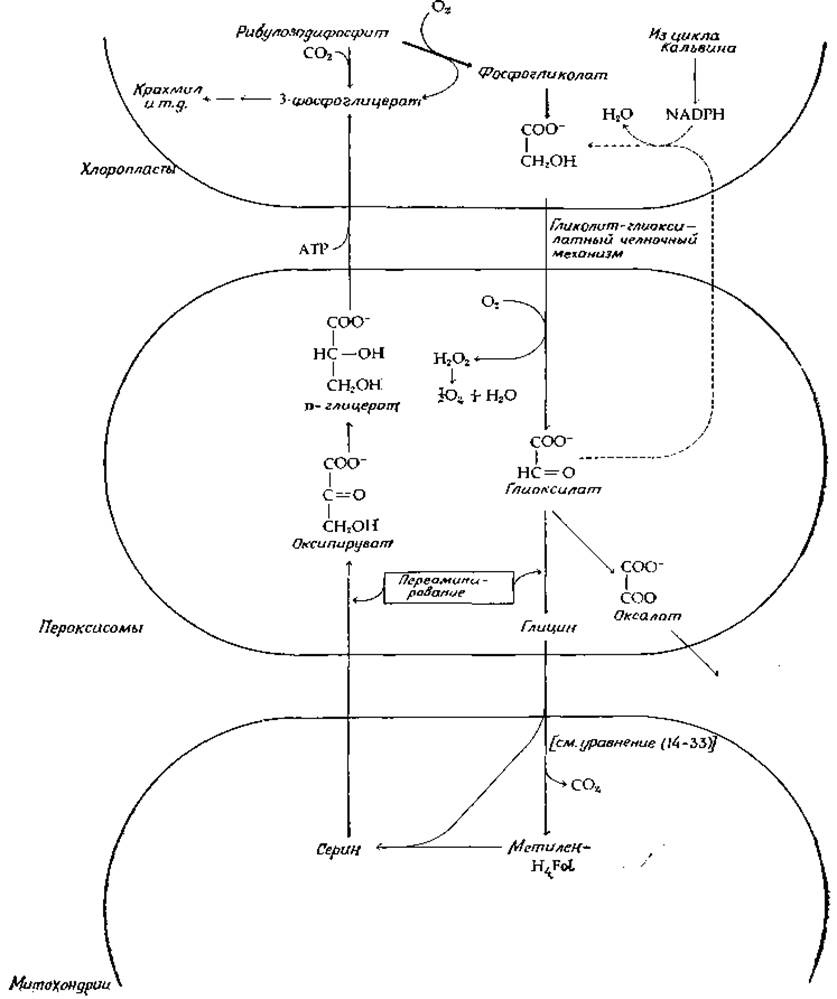
FIG. 13-25. Glycolate formation in chloroplasts and selected pathways of its metabolism in peroxisomes and Cell/35.html">Mitochondria [120].
A fraction of the generated hydrogen peroxide non-enzymatically decarboxylates glyoxylate (yielding formate and CO2), but the bulk of it is likely broken down within the peroxisomes by peroxidases or catalase (the latter enzyme is curiously absent from chloroplasts—which is presumably one reason why glycolate oxidation takes place specifically in microbodies). Transamination of glyoxylate yields Glycine, which can undergo decarboxylation in mitochondria (Fig. 14-32). Glycine can also be converted to Serine, a portion of which re-enters the peroxisomes, where it is oxidized to hydroxypyruvate and subsequently to glyceric acid (Fig. 13-25). The latter can then be utilized for glucose synthesis. The net result is an intensive stimulation of metabolic flux leading to the release of CO2; this appears to be The basis of light-induced Plant Respiration (although this matter is not yet fully understood).
c. The C4 Cycle Leading to Elevated Carbon Dioxide Concentrations
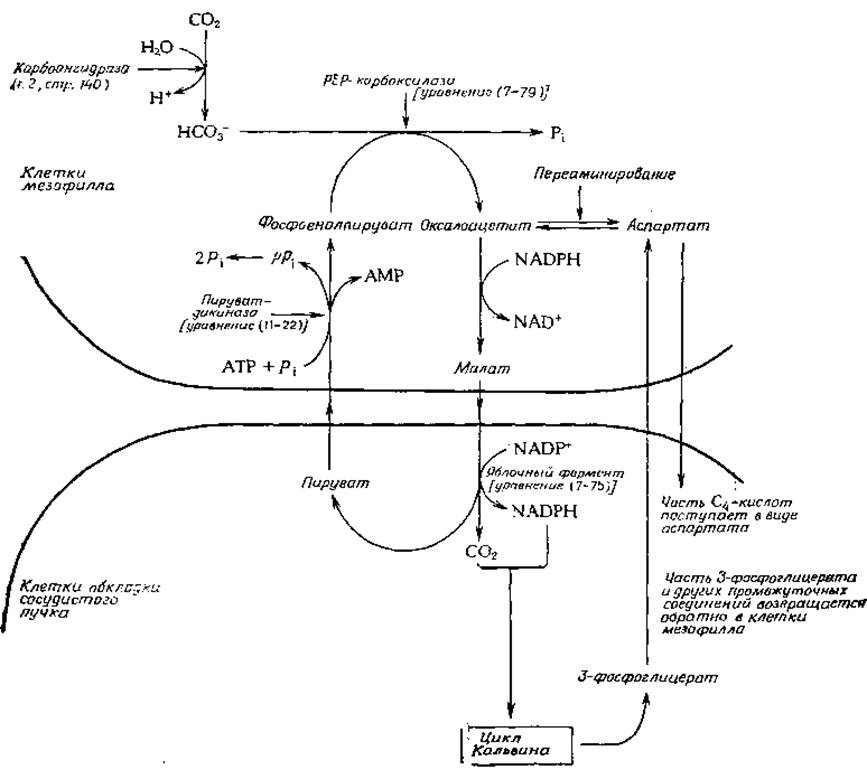
FIG. 13-26. The C4 cycle for elevating CO2 concentrations in C4 plants.
How is the intensity of photorespiration reduced in C4 plants? Initial data on CO2 incorporation into oxaloacetate suggested the existence of an alternative CO2 reduction pathway distinct from the Calvin cycle; however, further research revealed that the "secret" of C4 plants lies in their mechanism for concentrating CO2, which mitigates competition from O2. All C4 species exhibit a characteristic internal leaf anatomy: vascular bundles are surrounded by a single, dense layer of dark-green bundle-sheath Cells, which in turn is encompassed by a loose layer of mesophyll cells (the so-called "Kranz" anatomy). C4 plants feature a spatial Separation of Chemical Reactions between the mesophyll and bundle-sheath cells. The incorporation of CO2 (more precisely, the bicarbonate ion) into oxaloacetate occurs in the mesophyll and is catalyzed primarily by PEP carboxylase (Fig. 13-26). Oxaloacetate is reduced to malate with the participation of NADPH generated via light-dependent reactions. An alternative pathway involves the transamination of oxaloacetate to form aspartate. Subsequently, both malate and aspartate diffuse from the mesophyll cells into the bundle-sheath cells. Here, malate undergoes oxidative decarboxylation [catalyzed by malic enzyme; equation (7-37)] to yield Pyruvate (Fig. 13-26). Aspartate may also be converted within these same cells into oxaloacetate, malate, and pyruvate. Notably, the aggregate result of these transformations is The transport of CO2 from the mesophyll cells to the bundle-sheath cells, along with The transfer of two reducing equivalents in the form of NADPH (following the action of malic enzyme). CO2, NADPH (along with additional NADPH produced in the bundle-sheath chloroplasts), and ATP are then utilized in the Calvin cycle reactions to synthesize 3-phosphoglycerate and Other Compounds. According to estimates, of all the CO2 molecules utilized in the bundle-sheath cells, 85% arrive via the C4 cycle and only 15% through direct diffusion. This affords The Cell several advantages: a higher internal CO2 partial pressure is established, competition from O2 is diminished, and photorespiration is substantially suppressed.
Pyruvate produced in the bundle-sheath cells is largely returned to the mesophyll cells, where it is phosphorylated through the action of pyruvate, phosphate dikinase. This unusual enzyme [equation (11-22)] cleaves ATP into AMP and PPi, which is subsequently hydrolyzed to Pi. Consequently, the return of each pyruvate molecule to the cycle requires the expenditure of two high-energy phosphate bonds. For this reason, cyclic Photophosphorylation is believed to play a more crucial role in mesophyll chloroplasts than in bundle-sheath chloroplasts.
d. Metabolism in Crassulaceae Family Plants
The Crassulaceae family comprises a large group of plants, including many ornamental succulents such as stonecrop (Sedum). Metabolism in these plants is remarkable for the large amounts of malic and isocitric acids synthesized during the night. During the day, when photosynthesis takes place, these acids disappear. Another intriguing feature is that leaf Stomata (Chap. 1, Sec. D, 4) remain closed during the day and open only at night—an adaptation that allows these plants to conserve Water. The challenge facing these plants is to accumulate carbon dioxide at night and incorporate it into Organic compounds via photosynthesis during the day. A proposed mechanism for this process is schematized in Fig. 13-27. The left side of the diagram depicts nighttime reactions, during which starch is degraded to yield phosphoenolpyruvate (PEP). Although this compound could theoretically be generated via Glycolysis, tracer experiments indicate that Pentose Phosphate Pathway reactions play a more significant role in this context [96]. PEP acts as a CO2 acceptor, being converted into oxaloacetate, which is subsequently reduced to malic acid. These processes can be represented as a balanced Fermentation scheme [Fig. 13-27; equation (13-32)], utilizing the NADPH generated during The conversion of glucose-6-phosphate to ribulose-5-phosphate. During the day, when ATP and NADPH are abundant as products of photosynthesis, the reactions shown on the right side of the diagram take place. The initial stage—the release of CO2 from malic acid via malic enzyme—proceeds similarly to that in C4 plants. In this case, it serves to liberate the CO2 stored overnight, which is subsequently channeled into the Calvin cycle for organic synthesis. The remaining pyruvate is reconverted into starch.


FIG. 13-27. Hypothesized pathway of diurnal organic acid metabolism in Crassulaceae plants.
Interestingly, many plants accumulate significant amounts of malate in their Cytoplasm and vacuoles. This evidently serves as a reserve pool utilized during carbohydrate synthesis.
e. Direct Reduction to Formate
In broad beans (Vicia faba), a specific incorporation of the label from 14CO2 into glutamate at the C5 position is observed, which can be attributed to the direct reduction of CO2 to formate by reduced ferredoxin [130]:

As indicated in the diagram, the incorporation of the label can occur via glycine formed from glycolate. It is interesting to compare these reactions with the cyclic process of formate incorporation shown in Fig. 11-5.
Last update: 06/08/2026
Editorial and Educational Adaptation: This material has been compiled based on the primary/original source text. The project team performed an editorial review, corrected technical inaccuracies, structured sections, and adapted the content for an educational format.
What was processed:
- elimination of formatting defects (OCR errors, structural breaks, corrupted characters);
- editorial organization of content;
- standardization of terminology in accordance with academic sources;
- verification of factual statements against the original source text.
All mentions of the author, publication year, and origin of the primary text have been preserved in accordance with the source.