Antibiotics (Properties, Administration, Interactions) - Posokhova K.A., Viktorov O.P. 2005
Principles of Rational Antibiotic Therapy
I. Presence of well-founded indications for antibiotic prescription.
Careful patient Selection for those who genuinely require antibacterial therapy is particularly vital in outpatient practice for common infectious processes. Specifically, in acute viral respiratory infections, antibacterial Antibiotics, which have no effect on Viruses, are not indicated for patients. They are used when bacterial complications arise or for their Prevention in chronic conditions (e.g., Chronic Bronchitis) when There is a significant risk of exacerbation against the Background of suppressed immune activity caused by viral agents. Antibiotics are unjustifiably often used to treat Upper Respiratory Tract infections in children. In doing so, physicians often proceed from the mistaken assumption that mucopurulent nasal discharge is an undeniable sign of bacterial infection. Antibiotic prescription is likewise unnecessary in many cases of Middle ear
inflammation. Prolonged therapy with Tetracyclines or macrolides in acne patients is also recognized as erroneous.
Selective decontamination of the gastrointestinal tract, which has become widespread in intensive care unit patients, has been shown by recent studies not only to fail to improve Treatment outcomes but actually to promote the spread of antibiotic-resistant gram-positive microorganisms. Therefore, it should be used strictly based on definitive indications.
Antibiotics are also used far too broadly for surgical infection prophylaxis. Notably, in the USA over the past 15 years, their prescription for this purpose was unjustified in 40–75% of cases. Today, antibiotic prophylaxis is considered inappropriate in the following situations: ultrasound-guided transrectal prostate biopsy, endoscopic retrograde cholangiopancreatography, prevention of meningitis in basilar Skull fractures, presence of an indwelling urinary catheter in children, uncomplicated wounds, premature labor, treatment of children with upper respiratory tract infections, and treatment of acute bronchitis in adults without underlying pathology.
In chronic purulent processes (chronic abscess, Osteomyelitis, empyema, etc.), the purpose of prescribing antibiotics is to prevent the spread of infection resulting from the disruption of tissue barriers during surgical debridement of the purulent focus.
In certain mild acute infections (e.g., gastroenteritis), symptomatic treatment is preferred because prescribing antibiotics may contribute to carrier state development.
II. Selection of the most active and least toxic drug and the timeliness of its administration to the patient.
Drugs that are most effective against a specific type of infection and to which the majority of strains of a given pathogen are sensitive are called first-choice (first-line, first-group) drugs. Alternative drugs (second-line) are prescribed when the first-group drugs are ineffective or when the isolated pathogen strain is most sensitive specifically to them. Reserve drugs are used only in extreme cases (when first- and second-group antibiotics fail); as a rule, they cause numerous complications.
A list of antibiotics that serve as first-choice and alternative agents for various microorganisms causing infectious processes is presented in Appendix 2.
Before initiating treatment, prior to the first administration of an antibiotic, material for Bacteriological examination (Blood, excreta, etc.) must be collected to identify the pathogen and determine its susceptibility to antibacterial agents (antibiogram). If material is collected even after a single administration of an antibiotic or other antibacterial agent, the true causative agent often cannot be determined.
In certain infections, the choice of an antibacterial agent is based entirely on the clinical Diagnosis. This is possible when the disease-causing microorganism is typical of the given pathology: in lobar Pneumonia in young adults, it is most often the pneumococcus; in scarlet fever or erysipelas, hemolytic streptococci, etc.
Empirical therapy for severe infections is particularly crucial and demanding when THE START OF antibiotic administration cannot be delayed until antibiogram results are available. In such cases, the antibiotic is chosen based on the most frequent Etiology of infections in various locations (Appendix 1) and generalized data regarding the susceptibility of infectious disease pathogens to antibacterial drugs (Appendix 2). Treatment yields the best results when data on both the etiological Structure of diseases and microbial resistance in a given region—or ideally, within a specific healthcare facility—are taken into account simultaneously. Evaluating these factors is exceptionally important in the management of hospital-acquired infections. At the same time, all necessary samples for bacteriological analysis (blood, pus, urine, sputum, CEREBROSPINAL FLUID) must be obtained prior to the first administration of the medication. If necessary, after receiving the antibiogram results, if the previously prescribed drug shows no therapeutic effect within 3 days, it should be replaced with a more effective one.
In the empirical therapy of severe infections, the timeliness of antibiotic administration is of paramount importance. The most optimal approach is considered to be when the first dose of the antibacterial agent is administered right in the emergency department immediately after diagnosis is established. Such a tactic can significantly reduce mortality rates. Good results are also achieved when antibacterial therapy is initiated within the first 8 hours following patient hospitalization.
Surgical antibiotic prophylaxis should be administered no earlier than 2 hours before the start of surgery, ideally approximately 30 minutes before the incision, during induction of anesthesia.
III. Administration of optimal doses of the drug at optimal frequencies, taking into account the severity of the infectious process.
Bacterial susceptibility to antibiotics during microbiological testing is determined by the MIC, expressed in mg/L (or IU/L), which represents the concentration of an antibiotic that inhibits the growth of 90% of pathogen strains in vitro.
As a rule, to achieve an optimal therapeutic effect, the average therapeutic concentration (ATC) of the antibiotic in the blood should exceed the MIC by 3–4 times. However, in immunocompromised patients and in difficult-to-reach foci of infection (abscesses, meningitis), antibiotics must be used in doses that far exceed the MIC.
If doses are chosen incorrectly, the ATC of the drug is not achieved in Tissues. This can lead to treatment failure and The Development of microbial resistance to the drug. Intermittent administration of antibiotics (a specific number of doses per day) is traditionally considered more appropriate than continuous infusion. The frequency of drug administration depends on the duration for which its ATC is maintained in tissues (blood, cerebrospinal fluid, and other fluids and tissues where the infection is localized). The half-life of an antibiotic in the body can serve only as a rough guide for determining the time intervals between doses. At the same time, when determining the dosing frequency of antibacterial drugs, one must consider their MECHANISM OF ACTION, the presence of a post-antibiotic effect, and certain features and conditions required for the optimal manifestation of their antibacterial activity.
Typically, antibacterial drugs are used in doses that create a concentration in the host tissues exceeding the MIC (MPC) for the pathogen that caused the disease. At the same time, many antibiotics are able to retain their antimicrobial activity at concentrations lower than the MPC (sub-MPC effect). Furthermore, after the antibiotic is eliminated from the body, microbial viability (GROWTH AND REPRODUCTION) may not resume immediately, but after a certain time interval, a phenomenon known as the post-antibiotic effect. The presence of a post-antibiotic effect allows for a reduction in the daily dosing frequency of the antibiotic.
Recently, a Classification of antibiotics into concentration-dependent and time-dependent has been adopted (Table 1). The former include Aminoglycosides, fluoroquinolones, metronidazole, and amphotericin B; the latter include beta-lactams, glycopeptides, macrolides, and Lincosamides.
Class="center">Table 1. Concentration- and time-dependent antibiotics (I.G. Bereznyakov, 2002)
|
Concentration-dependent antibiotics |
Time-dependent antibiotics |
|
Aminoglycosides “New” macrolides (azithromycin, clarithromycin) Fluoroquinolones Amphotericin B Metronidazole Ketolides (telithromycin) Streptogramins (quinupristin/dalfopristin) |
Beta-lactams Erythromycin and other “old” macrolides Glycopeptides Clindamycin |
The antibacterial effect of concentration-dependent drugs directly depends on their concentration at the infection site. Accordingly, they exhibit the highest efficacy at high doses close to toxic levels. Therefore, for agents with a concentration-dependent effect—particularly aminoglycosides—single high-dose administration is more appropriate (at the beginning of treatment, 6–7 mg/kg, with subsequent adjustments based on repeated blood concentration measurements). The efficacy of time-dependent antibiotics is primarily determined by the duration of time that the drug concentration in the blood exceeds the MIC for the given pathogen. Moreover, to achieve the best antibacterial action, this excess must be maintained for at least 40% of the time interval between individual antibiotic doses. For this reason, when using time-dependent drugs, it is crucial to administer them at specific regular intervals throughout the day or, in some cases, via continuous intravenous drip infusion. Given the time-dependent nature of beta-lactam antibiotic efficacy, they are frequently administered via continuous infusion.
IV. Selection of the optimal route of drug administration, taking into account the severity and localization of the infectious process and the pharmacokinetic Properties of the given antibiotic.
The parenteral route of antibiotic administration for empirical therapy is used in critically ill patients with gastrointestinal dysfunction. This method is also employed for drugs with low oral bioavailability.
In newborns, regardless of the site of infection, antibiotics are prescribed primarily intravenously or intramuscularly; oral, rectal, or subcutaneous administration is less effective in children.
In the treatment of uncomplicated pneumonia, antibiotics are preferably administered orally, intramuscularly, or intravenously; in the presence of pulmonary destruction or abscesses, endobronchial administration is used.
Nowadays, step-down ( sequential) antibiotic therapy has become widespread: initial intravenous administration followed by a switch to oral administration once the patient's condition stabilizes. Step-down therapy utilizes drugs available in both parenteral and oral dosage forms (Table 2).
In uncomplicated infectious diarrhea, antibacterial agents are prescribed orally; however, if the pathogen penetrates from the intestinal lumen into the intestinal wall and especially into the systemic Circulation, parenteral administration is required.
Table 2. Drugs suitable for step-down therapy
|
Drug |
Pharmacological group |
Oral bioavailability (%) |
Half-life (h) |
|
Amoxicillin |
Aminopenicillins |
75-90 |
1-1.5 |
|
Cefradine |
First-generation Cephalosporins |
90 |
1.3 |
|
Clarithromycin |
Macrolides |
50-55 |
5-6 |
|
Erythromycin |
Macrolides |
35-45 |
1-1.5 |
|
Spiramycin |
Macrolides |
65-80 |
6-8 |
|
Azithromycin |
Azalides |
37 |
20-40 |
|
Ciprofloxacin |
Fluoroquinolones |
70-80 |
4 |
|
Levofloxacin |
Fluoroquinolones |
98 |
5-7 |
|
Ofloxacin |
Fluoroquinolones |
98 |
5-7 |
|
Cotrimoxazole |
Sulfonamides |
85-100 |
9-12 |
|
Doxycycline |
Tetracyclines |
90-100 |
18-22 |
|
Clindamycin |
Lincosamides |
90 |
1.5-3.5 |
|
Fosfomycin |
60 |
2.2 |
|
|
Fusidic acid |
90 |
16 |
|
|
Chloramphenicol |
Chloramphenicols |
80 |
1.5-3.5 |
|
Metronidazole |
Antianaerobic agents |
95 |
8 |
|
Fluconazole |
Antifungals |
90-100 |
30 |
In the treatment of meningitis and encephalitis, drugs that readily cross the blood-Brain barrier are administered intravenously, and in some cases, directly into the brain ventricles via neurosurgical intervention.
In certain infections, METABOLISM/18.html">The Influence of tissue and fluid pH on antibiotic activity is taken into account (Table 3); specifically, urine pH must be considered in Urinary Tract infections.
Penicillins are effective at a pH of 5.0-6.5, whereas macrolides and aminoglycosides are effective at a pH of 7.5-8.5.
For Skin infections, antibiotics are applied topically, whereas when the process is localized in the subcutaneous tissue or soft tissues, they are administered intravenously or intramuscularly.
In cases of deep tissue infiltrates, pneumonia, and urinary tract infections, iontophoresis (Electrophoresis) is sometimes used for antibiotic administration: ampicillin, ampiox, oxacillin, penicillin, methicillin, dicloxacillin, carbenicillin, and erythromycin penetrate from the negative pole; gentamicin, tobramycin, sisomicin, kanamycin, neomycin, lincomycin, clindamycin, and polymyxin B penetrate from the positive pole.
Table 3. Effect of pH on antibiotic activity (I.G. Bereznyakov, 2002)
|
Antibiotics |
Activity at pH |
||
|
< 5 |
6 |
7 |
|
|
Beta-lactams |
- |
++ |
+++ |
|
Aminoglycosides |
- |
+ |
+++ |
|
Chloramphenicol |
- |
+ |
+++ |
|
Tetracyclines |
+ |
+++ |
++ |
|
Rifampicin |
+++ |
++ |
++ |
|
Erythromycin |
- |
+ |
+++ |
|
Fluoroquinolones |
- |
+ |
+++ |
V. Determining the duration of the course of antibiotic therapy.
The duration of treatment depends on the type of pathogen, the selected antimicrobial agent, the site of the infection, and the patient's immune status, averaging from 5-7 to 14-21 days. Treatment is generally continued until the patient recovers and for approximately 3 days thereafter to prevent disease relapse. In typhoid fever, infective endocarditis, and tuberculosis, treatment is significantly longer, as these conditions may relapse long after Clinical Recovery. A single prophylactic dose of an antibiotic is entirely sufficient for most surgical Procedures. The average duration of antibacterial treatment courses for various infectious processes is provided in Appendix 8.
VI. Assessment of cure.
In certain infections (e.g., urinary tract infections, tuberculosis), bacteriological follow-up to confirm the eradication of the pathogen from the body is necessary after completing the course of treatment.
VII. Monitoring and prevention of adverse side effects and complications.
VIII. Addressing the appropriateness of combination antibiotic therapy, taking into account Synergism and antagonism between drugs.
Modern biological sample collection Methods help maximize the objectivity of bacteriological test results. However, even with their use, the causative microorganism cannot be identified in 30-50% of cases. Furthermore, routine microbiological tests fail to detect the majority of pathogens that are clinically relevant today.
Consequently, Empirical antibacterial therapy has become widely adopted both in Ukraine and abroad.
The modern classification of chemotherapeutic agents, which takes into account their chemical structure, mechanism of action, and spectrum of activity, includes the following groups:
Antibiotics
I. Beta-lactam antibiotics:
A. Penicillins.
B. Beta-lactamase inhibitors and combination drugs containing them.
C. Cephalosporins.
D. Monobactams.
E. Thienamycins (carbapenems).
II. Macrolides, azalides, streptogramins, Pristinamycins.
III. Lincosamides.
IV. Tetracyclines.
V. Aminoglycosides.
VI. Chloramphenicols.
VII. Glycopeptides.
VIII. Cyclic Polypeptides (polymyxins).
IX. Fluoroquinolones.
XI. Introduction/45.html">Antitumor Antibiotics.
Nitroimidazoles
Nitrofuran derivatives
Sulfonamides
Diaminopyrimidines
Antifungal drugs
Antiviral drugs
In this guide, we will limit our Discussion to antibacterial antibiotics (groups I-X of the above medications).
Beta-lactam antibiotics (beta-lactams) are the largest group of antimicrobial agents, united by the presence of a beta-lactam ring in their chemical structure, which is responsible for antimicrobial activity. When the beta-lactam ring is destroyed, the antimicrobial effect disappears. Depending on The structure of the second part of the bicyclic ring, beta-lactams are subdivided into penicillins, cephalosporins, carbapenems, and monobactams (Fig. 1).
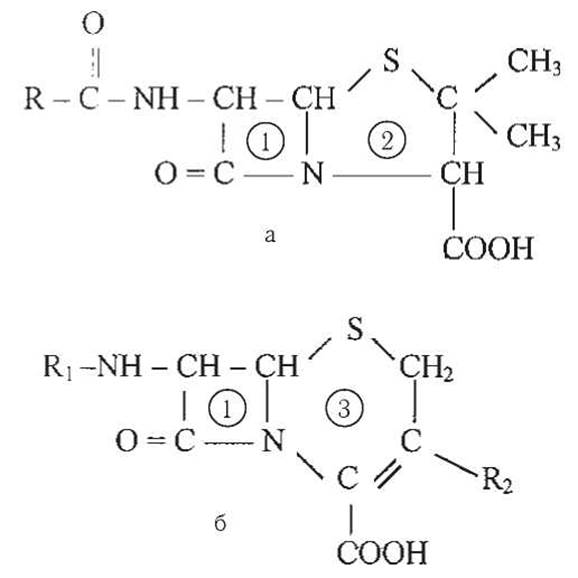
Fig. 1. Chemical Structure of penicillins (a) and cephalosporins (b)
1 - beta-lactam ring; 2 - thiazolidine ring; 3 - dihydrothiazine ring.
Last update: 10/08/2026
Editorial and Educational Adaptation: This material has been compiled based on the primary/original source text. The project team performed an editorial review, corrected technical inaccuracies, structured sections, and adapted the content for an educational format.
What was processed:
- elimination of formatting defects (OCR errors, structural breaks, corrupted characters);
- editorial organization of content;
- standardization of terminology in accordance with academic sources;
- verification of factual statements against the original source text.
All mentions of the author, publication year, and origin of the primary text have been preserved in accordance with the source.