MEDICAL BIOLOGY, HUMAN ANATOMY, PHYSIOLOGY AND PATHOLOGY - Ya.I. Fedonyuk 2010
BIOLOGY
SECTION 1. BIOLOGICAL BASES OF HUMAN VITAL ACTIVITY
1.3. MOLECULAR-GENETIC AND CELLULAR LEVELS OF LIFE ORGANIZATION
1.3.2. Structural, chemical, and functional organization of eukaryotic cells
Cell membranes, principle of compartmentalization
An essential component of The Introduction/5.html">Eukaryotic Cell is The system of cell membranes. Cellular (biological) membranes are structures that separate The Cell from its external environment and divide the intracellular space into distinct compartments. These compartments vary in shape, volume, enzyme content, and functional purpose. Compartmentalization ensures the spatial distribution of substances and processes within the cell. Thanks to compartmentalization, various enzymatic processes can occur simultaneously inside the cell. An individual compartment is represented by an organelle (e.g., a lysosome) or a part of it. The cell membranes of an animal cell include: The Plasma Membrane, nuclear envelope, membranes of The Endoplasmic reticulum, Mitochondria, Golgi apparatus, Lysosomes, phagosomes, and Peroxisomes.
Electron Microscopy studies have shown that The Structure of any cell membrane is based on the elementary biological membrane model. A biological membrane consists of three layers: two protein layers with a lipid bilayer sandwiched between them (protein-lipid-protein). The Lipid Bilayer is formed by two rows of lipid molecules, whose hydrophilic "heads" face outward, while their hydrophobic "tails" point inward toward the interior of the bilayer. Phospholipids and Glycolipids predominate among the Lipids. Proteins are mainly represented by Enzymes, ion channel proteins, and receptor proteins. Membrane Proteins are classified into integral, peripheral, and surface proteins. Integral proteins span the lipid bilayer entirely, peripheral proteins are partially embedded in it, and surface proteins attach to its surface. According to the modern fluid-mosaic model by Singer and Nicolson (1972), the foundation of a biological membrane is the polar lipid bilayer in which individual protein molecules are embedded. At normal temperatures, Membrane Lipids are in a fluid state, and membrane proteins float within this "lipid sea," forming a unique mosaic (Fig. 1.31).
Class="center">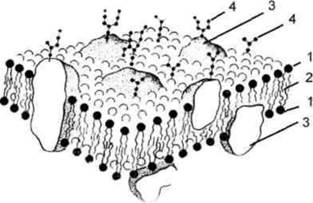
Fig. 1.31. Mosaic model of The cell membrane:
1 - hydrophilic lipid heads; 2 - hydrophobic lipid tails; 3 - protein molecules; 4 - carbohydrate molecules.
Last update: 08/08/2026
Editorial and Educational Adaptation: This material has been compiled based on the primary/original source text. The project team performed an editorial review, corrected technical inaccuracies, structured sections, and adapted the content for an educational format.
What was processed:
- elimination of formatting defects (OCR errors, structural breaks, corrupted characters);
- editorial organization of content;
- standardization of terminology in accordance with academic sources;
- verification of factual statements against the original source text.
All mentions of the author, publication year, and origin of the primary text have been preserved in accordance with the source.