BOTANY VOLUME 4 - ECOLOGY - 2007
14. ECOLOGY OF POPULATIONS AND PLANT COMMUNITIES
14.2. Plant Distribution Ranges
Plant distribution ranges (areas) refer to the geographical areas inhabited by a species or higher taxa. They are the result of the historical and spatiotemporal expansion or retraction of a taxon (Fig. 14.14, cf. 10.3). These ranges are determined by morphological and ecophysiological constitution (in terms of adaptability), competitive ability, dispersal capacity throughout Earth's history, and occurrence in suitable habitats. Even actively spreading taxa by no means always occupy all available living space (the "potential" range as opposed to the actual one), because migration and permanent colonization proceed slowly, or dispersal is hindered by limiting factors (e.g., seas, mountains, or desert expanses). The extremely rapid or, conversely, protracted spread of many species dispersed with human assistance (cf. anthropochory) vividly illustrates this. When modern distribution ranges are formed, genetic, ecological, and historical factors also come into play. Chorology describes and compares the distribution ranges of taxa (mostly species, but also genera or groups of closely related species). On this basis, complex relationships between range shapes and environmental conditions, both past and present, can be elucidated.
Class="center">Fig. 14.14. Origin of plant range types (expansion along the horizontal axis, time from bottom to top on the vertical axis, current status at the flat surface level, extinct populations below this level): A — range expansion (e.g., Trifolium repens, cf. Fig. 10.26). Population dieback and reduction to a disjunct range B (e.g., Pinus nigra, Fig. 10.31) or to a relict paleoendemic C (e.g., Ginkgo biloba, cf. Fig. 14.16); D — allopatric differentiation of a closely related group into three vicarious taxa (e.g., Erysimum sect. Cheiranthus, products of allopatric speciation of related species, so-called schizoendemics of various PARTS OF THE Aegean region); E — pseudo-vicariance of two non-related, but ecologically and thus geographically replacing species (e.g., Gentiana clusii and G. acaulis s. str. (= G. kochiana); F — form circle with a single center of diversity (Z — center of origin, R — relict endemics, N — neoendemics) (e.g., Carlina, cf. Fig. 14.21). The diagram illustrates that there is no direct correlation between the age of a taxon, its morphological diversity, and the size of its range

14.2.1. Range Types
Distribution ranges are compiled by combining the known occurrences of a single taxon and are best depicted on range maps (Fig. 14.15, cf. Figs. 10.31, 11.259, 14.16 – 14.18). The accuracy and informative value of a range map depend on the correct taxonomic delimitation of the species or its Separation from a group of closely related species, as well as on the reliability of floristic data regarding its recorded localities. Even for the chorological Analysis of the vascular plant flora of Central Europe, a complete systematic and floristic foundation is not yet available.
The cartographic representation of taxon distribution requires a degree of abstraction, because the frequency of occurrence and spatial arrangement of individuals in smaller and larger habitats, including the intervening spaces, are usually very uneven. Dot maps and outline maps are widespread, or both Methods are combined (cf. Figs. 10.31, 14.25). In modern chorological research utilizing electronic data Processing (e.g., international flora-mapping projects in Central Europe), grid maps have proven particularly successful; in these, the presence or absence of a taxon is recorded for a grid Cell of a fixed size (cf. Fig. 14.15). Altitudinal profiles can also be used to illustrate the vertical Distribution of a given taxon.
The following criteria are important for describing, comparing, and analyzing taxon ranges:
— size: ranging from local (endemic) to continental and nearly worldwide (cosmopolitan);
— continuity: from completely continuous to heavily fragmented (disjunct);
— population density: ubiquitous, widespread, scattered, or rare;
— distribution of morphological diversity within the range;
— position relative to the ranges of closely related taxa;
— geographical position of the range.
By comparatively evaluating numerous distribution ranges from these Perspectives, various range types can be established (cf. Fig. 14.14).
Fig. 14.15. Example of a preliminary grid map from the project "Mapping the Flora of Central Europe": Field Eryngo (Eryngium campestre, Apiaceae).
The presence or absence of the species is shown for grid fields measuring 10x6' of longitude and approximately 12x6 km in width. This sub-Mediterranean-Pontic species extends far to the north along warm, dry depressions and river valleys

14.2.1.1. Range Extent
All possible intermediate forms exist between taxa native to a single locality in the world and those with a worldwide distribution within their specific habitat requirements. Taxa restricted to a single, usually small range are called endemic, although this term is used rather broadly. Along with true rarities, primarily at the species level as local endemics, one also distinguishes regional endemics (e.g., occurring only in the Alps) or even continental endemics (e.g.,
occurring only in Australia), though the latter category is only meaningful at the family level. There are old, relict endemics — paleoendemics — and young ones — neoendemics. Widely distributed cosmopolites are predominantly plants associated with human activities, though natural cosmopolites also exist, primarily among spore-bearing plants.
Among well-known relict endemics that were once widespread are Ginkgo biloba (now surviving only in western China; Fig. 14.16), Sequoiadendron giganteum (California), and Welwitschia mirabilis (southwestern Africa). In contrast, restricted ranges are exhibited by Betula oycoviensis (southeastern Poland) and Papaver kerneri (southeastern Dolomites); species of the genus Erysimum sect. Cheiranthus in the Aegean region (cf. Fig. 10.32), which are known to have originated via Hybridization, represent adjacent ranges of closely related species, all of which belong to relatively young endemics (new species). The proportion of endemic taxa apparently increases with the age and degree of Isolation of the living space.
Fig. 14.16. Distribution of the genus Ginkgo in the Northern Hemisphere based on fossil records from the Early Jurassic through the Early Pliocene-Neogene period to the present day.
The maps are based on modern outlines of the Earth's surface. Changes since the beginning of the Jurassic period (nearly 200 million years ago) have had a negligible impact on potential migration pathways in the Northern Hemisphere.

Examples of cosmopolitan species among spore plants include the liverwort Marchantia polymorpha or the bracken fern Pteridium aquilinum, as well as marsh and aquatic plants widely dispersed by waterbirds, such as mare's tail (Hippuris vulgaris) and common reed (Phragmites australis). Numerous human-introduced weeds found worldwide in disturbed habitats (ruderal sites, often along roadsides) also fall into this category (e.g., species of the genera Plantago, Poa, Rumex, Senecio, Stellaria, Trifolium). At the family level, worldwide distribution is characteristic of taxa that are inherently high in species richness (Orchidaceae, Poaceae, Asteraceae, Fabaceae).
14.2.1.2. Natural Disjunctions of Ranges
Completely continuous distributions are rare. Toward the margins of their ranges, the distribution of most taxa becomes sparse, restricted to isolated outposts (or conversely, relict sites left behind during a retreat). When gaps in ranges are too large for taxa to bridge through normal dispersal mechanisms, they are referred to as exclaves and disjunctions, respectively. Many disjunctive patterns repeat quite regularly (regarding the Genetic consequences of artificial habitat fragmentation, see 10.3.2.2).
In Pinus sylvestris, we observe a relatively continuous main range in the north, whereas in the southern mountains there are disjunctive, smaller partial ranges, or exclaves. The three disjunctive partial ranges of the genus Fagus are nearly identical in extent (Fig. 14.17). The fact that disjunctions in Fagus, Hepatica (see Fig. 14.17), and other genera typical of broadleaved forests are remarkably similar is due to shared historical and climatic factors. The presence of disjunctions suggests either a reduction in a formerly continuous distribution area or, in extreme cases, Introduction from a very distant region. For hybridogenous taxa (e.g., allopolyploids) or ecological races, the possibility of repeated parallel emergence in different locations (polytopic origin) cannot be ruled out.
Fig. 14.17. Modern overall distribution of the beech family (Fagaceae) with the ranges of the genus Fagus and the related family Nothofagaceae with the ranges of the genus Nothofagus, as well as fossil records (+, x) for both genera

14.2.1.3. Population Density of Ranges
High population density indicates that a region is ecologically optimal for a given species. This often coincides with stronger expansion into diverse habitats (maximum ecological amplitude) and the greatest genetic diversification (morphological variety, center of Variability). The same applies to genera or families for which regions with exceptionally high species richness can be considered centers of diversity. These are also regions where such taxa thrive and are maintained, though they do not necessarily represent centers of origin. Based on all these criteria, the so-called core or center of a range can be established.
The dwarf eyebright (Euphrasia minima) grows in the Central Alps from the subalpine to the nival zone (1,400–3,100 m); its maximum occurrence, broadest ecological amplitude, and center of variation are found in the lower alpine belt between 2,000 and 2,300 m (49 phenotypes compared to two at the upper and eight at the lower distribution limits). An example of a genus center of diversity is the genus Ononis, which exhibits its highest species richness in the southwestern Mediterranean (Fig. 14.18), while among families, the Rubiaceae show high generic diversity in the humid tropics, which progressively decreases toward drier or colder regions.
Fig. 14.18. Center of diversity and zones of decreasing species numbers (indicated by numbers) for the genus Ononis (restharrow, Fabaceae)

14.2.1.4. Geographical Relationships Between Ranges
Based on the spatial positions of ranges and their centers, closely related species can be grouped into specific (hierarchically arranged) geoelements. The distribution centers of the most important geoelements contributing to the flora of Central Europe are shown in Fig. 14.19. By superimposing the ranges of numerous species belonging to specific geoelements, it is possible to determine their distribution center; this is illustrated in Fig. 14.20 using the circumpolar-arcto-alpine geoelement in the flora of Scandinavia as an example.
Fig. 14.19. Floristic regions of western Eurasia and North Africa within the Holarctic floristic kingdom of the Northern Hemisphere: regions; subregions; other boundary lines (provinces, etc.): Circumarctic, Circumboreal, Central European (with Atlantic, Sub-Atlantic, Central European, Alpine, Carpathian), Pontic-South Siberian (with Pannonian, Central Siberian, etc.), Macaronesian-Mediterranean (with Sub-Mediterranean, Caucasian, etc.), East Turanian (with Aralo-Caspian, etc.), Saharo-Sindhian. N — North; S — South; E — East; W — West; Z — Central
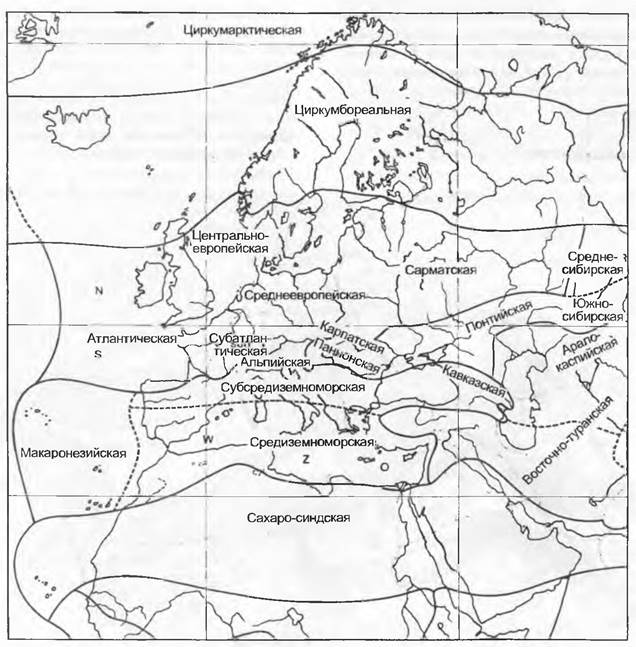
The genus Fagus belongs to the Holarctic element, Fagus sylvatica to the Central European element, and its close relative Fagus orientalis has a relict range in the mountains of the Caucasus (Ed. note) and along the Black Sea. The genus Laurus is represented in Europe by two species: L. nobilis and L. azorica (= L. canariensis); the former belongs to the Mediterranean geoelement, while the latter belongs to the Macaronesian one. These two closely related species of this relict genus highlight the close ties between the Macaronesian and Mediterranean floras (a unified range during the Tertiary period). The Scope of the pan-tropical and, correspondingly, the subordinate, narrower Neotropical element can be demonstrated using the families Arecaceae (palms) and Bromeliaceae.
Fig. 14.20. Distribution of 50 circumpolar-arcto-alpine Scandinavian species in the Northern Hemisphere. Concentration decreases toward the edges, and the depletion of this geoelement is indicated by shading of varying density

14.2.1.5. Climatic Floristic Zones
Latitudinal zones. Many ranges can be recognized by the fact that they are roughly bound to specific latitudes and exhibit a more or less belt-like shape (Fig. 14.21, see Fig. 14.17). Therefore, botanico-geographical (floristic) zones serve as a reliable conceptual framework for zoning and describing belt-type ranges that succeed one another sequentially from the equator to the pole in accordance with Temperature gradients (Fig. 14.22). Starting from the tropical (t) and adjacent subtropical (subtrop) zones, further northward zones include the meridional (m), submeridional (sm), temperate (temp), boreal (b), and arctic (a) zones, while southward zones include the southern (austr) and antarctic (antarkt) zones. These correspond to the Zones of the Northern Hemisphere: the former encompasses all zones from meridional to temperate, and the latter covers the boreal and arctic zones.
Fig. 14.21. Range formation and historical differentiation of life forms in the genus Carlina (stemless thistle, Asteraceae). The Macaronesian and East Mediterranean taxa of subgenus Carlowizia and subgenus Lyrolepis (1a, b, bottom left) are relict and relatively more ancient (ancestral), whereas others (2a, b and 3a, b, c) are circum-Mediterranean or Mediterranean-montane-Central European, respectively, representing expanding ranges and progressively derived taxa. Allopatric differentiation of C. vulgaris in the west and C. biebersteinii (leaf shown top right) in the east.

Continentality vs. oceanicity. Further differentiation can be achieved by considering that annual and daily temperature and humidity variations are most buffered in the oceanic sector; consequently, ranges are characterized according to their position relative to this sector as euoceanic (euoz), oceanic (oz), suboceanic (suboz), subcontinental (subk), continental (k), and eucontinental (euk). Oceanic ranges are located near coasts and are strongly influenced by the maritime, humid climate with small annual temperature amplitudes; continental ranges are situated in regions distant from the coast characterized by a dry climate and wide temperature amplitudes.
Fig. 14.22. Floristic zones and oceanic sectors of the Earth's biosphere (for Abbreviations, see text)

Altitudinal zones. Taking into account the altitudinal belts (see Fig. 14.44, Section 15.1.2) for Central Europe: planar (pI), colline (coll), montane (mo), subalpine (salp), and alpine (alp)], one can finally obtain a three-dimensional description of an area, represent it in the form of a formula, and group similar ranges into corresponding types.
The formula sm/mo-b(k) EURAS would characterize the range of Pinus sylvestris as submediterranean-montane to boreal, moderately continental, Eurasian; the distribution range of Quercus robur can be described by the formula sm/mo-temp(suboz) EUR, i.e., submediterranean-montane to temperate, weakly suboceanic, European; and Fagus sylvatica— m/mo-temp(oz) EUR, i.e., meridional-montane to temperate, oceanic, European.
14.2.1.6. Spectra of range types
Ranges and range types (see Fig. 14.14) can be conceptualized and compared according to very different criteria, which is now best done using computers. If we calculate the proportions of known range types in specific floras or vegetation units, the resulting range type spectra provide important Conclusions regarding their Structure and origin.
The high degree of endemism in the Hawaiian Islands (almost 20% of the genera and 90% of the species of the native vascular flora are endemic) emphasizes, for example, the relatively ancient geological age of this archipelago, the absence of ancient connections with continents, and the considerable autonomy of the evolution of local wildlife from a limited number of various founding individuals that managed to arrive there via long-distance dispersal pathways. The range spectra of mixed deciduous forests in the easternmost part of Europe show that, in contrast, the Urals feature a relatively high proportion of boreal and southern Siberian species,
further south, in the Donbas—sub-Mediterranean and Pontic geoelements. These differences become clear when considering the proximity of the respective glacial refugia, their role in postglacial forest recovery, and the current climatic situation in these regions.
14.2.2. Distribution
14.2.2.1. Migration capacities
Sessile plants can form and expand their ranges only when they produce dispersal units, the so-called diaspores (e.g., spores, seeds, closed fruits, vegetative propagation units such as bulbs and brood buds, etc.; see 11.2, seeds, fruits), by means of which they establish themselves in new locations. Such dispersal units are often produced in large quantities and are specialized either for autochory or for dispersal by wind, Water, or animals (see 11.2, seed plants). Naturally, distribution is successful only over relatively short distances, though it occasionally leads to long-distance dispersal.
The dispersal of a single species (migration) can take the form of a migration front, in small "steps" or large "jumps," as a probabilistic phenomenon involving The formation of outposts (Fig. 14.23).
Fig. 14.23. Plant migration can take the form of a broad (A) or narrow (B) distribution front (in small "steps") or through the establishment of outposts (C) even from relict habitats, as well as by large "jumps" (the latter being more frequent, with all transitions existing between them, and typification depending on gradations)

Small diaspores, or those equipped with good dispersal adaptations, can be detached, lifted high by storm winds, and carried for hundreds of kilometers. Migratory and waterfowl occasionally transport diaspores along transatlantic routes, and A number of recent disjunctions between South America and Africa often originated precisely in this way (e.g., epiphytic cacti of the genus Rhipsalis with succulent fruits, which even reached Madagascar and Sri Lanka). The coconut palm (Cocos nucifera), thanks to its buoyant fruits equipped with a water-impermeable hard shell and an oil-rich endosperm that retains viability in saltwater for a long time, has managed to colonize a range encompassing all tropical coasts of the world (see 15.2.16).
The best model object for assessing the rate and success of dispersal into distant biotopes is island habitats, both in the sea and on land, where mountain peaks, like islands, are isolated from each other over great distances. The example of Krakatoa is particularly instructive. Following the massive volcanic eruption in 1883, all life was eradicated on this group of islands located between Java and Sumatra. By 1934, already 271 species of land plants had established themselves there, having migrated from territories 45 to 90 km away.
Broadly speaking, chains of island habitats act as migration corridors (island or mountain "stepping stones"). Thus, the Indomalayan island region has in many cases served as a dispersal pathway between East Asia and the Australian-West Pacific territories. Similarly, along the Cordilleras in western North and South America or across the volcanic plateaus of East Africa, a prolonged floristic exchange took place between the Northern and Southern Hemispheres, representing one of the most recent events in Earth's past history (e.g., the genus Alnus, which managed to reach the Southern Andes via Central America).
Over past centuries, the natural mechanisms of long-distance species dispersal have gradually been pushed to the limit by human activity. Today, a species can "transfer" its diaspores via any airline flight or tourist luggage, opening up all parts of the world to it. Thus, natural Metrosideros forests in Hawaii could fall victim within a few decades to an invasion by Myrica faya from the Canary Islands, a species planted there in 1970 that has since grown completely out of control. The genus Eucalyptus is now widespread in all warm Regions of the world.
However, the transport potential of diaspores is reliably determined by only one of many factors, namely the size of the range and its status. Within many species-rich genera, narrow endemics or disjunct paleoendemics exist side by side with highly expansive weeds, and both have very similar diaspores (e.g., in the genus Taraxacum). Many Fungi, mosses, and ferns with their dust-like spores have range boundaries and disjunctions very similar to those of seed plants with heavy diaspores (e.g., the staghorn fern, Asplenium scolopendrium, and species of the genus Fagus, see Fig. 14.17). It is necessary to examine the factors that reduce actual migration compared to potential migration.
14.2.2.2. Barriers to migration
First of all, we must consider rapid range shifts associated with drastic environmental changes, such as during the onset and retreat of glaciations or in the case of anthropogenically induced climate warming. Among the many reasons that nonetheless hinder the migration of species and communities despite the removal of climatic boundaries and physical barriers to dispersal, three are particularly important.
• It is not "vegetation" that spreads, but individual species that must subsequently establish themselves in a completely novel biotic environment. Only in the highly improbable event that all species of a phytocoenosis migrate rapidly and simultaneously, or are so closely interdependent that they can only migrate together, would the phytocoenosis "move" as a whole.
• A partner is required for migration. In dioecious or self-sterile species, at least two different plant individuals are needed to propagate the Lineage. This is precisely why self-pollinating angiosperms are overrepresented on oceanic islands, since a population can form even from a single plant (see 10.1.3). Secondary dioecy is frequently observed (e.g., in Hawaii) as a way to escape potential Inbreeding depression. However, even when autogamous species predominate, the presence of a larger number of different founding individuals of the same species favors maintaining their vigor. Moreover, over 90% of all plant species form mycorrhizae, and it is entirely clear that these fungus-plant associations are highly specialized and partner compatibility is genetically very narrow. Many plant species require specific pollinators or even pathogens that can suppress potential competitors, etc.
• Soils and the rest of the ecotope do not migrate. Soils are formed under the Influence of the parent rock, climate, and plants. Thus, they are, in a sense, a response to the long-term presence of a specific plant community, which changes alongside the soil (succession; see Figs. 14.1, 14.33, Section 14.3.2), which is significant for the microhabitat from a climatic perspective.
Even with "open migration corridors" and matching climates and substrates in new habitats, the aforementioned circumstances result in migration rates being substantially slower than would be expected from diaspore dispersal alone. Under persisting environmental conditions, migration is limited by diaspore availability only in the rarest of cases. The permanent naturalization of a new plant species always faces vastly greater difficulties than diaspore transport. Not
compared to the several thousand accidentally introduced plant species (neophytes) in Europe, only a few hundred foreign angiosperm species have truly naturalized. In their new environments, they rarely encounter (or take a very long time to find) plant communities similar to those from which they migrated. As a rule, migration leads to the creation of novel plant communities consisting of a mixture of elements from different stages of introduction and originating from various regions.
Both the stemless gentian (Gentiana acaulis s.l.) and the edelweiss (Leontopodium alpinum) belong to the modern Central European mountain flora. However, while Gentiana acaulis s.l. is a native (autochthonous) species in this region and belongs to the late Tertiary core of the alpine flora, Leontopodium alpinum is a glacial-period migrant in the Alps, originating from Central Asia and migrating into the High Alps from the cold, dry foothill regions during the retreat of the glaciers.
The requirements for efficient seed dispersal, on the one hand, and adequate provisioning of seedlings, on the other, are mutually contradictory (see 14.1.3). Pioneer plants produce numerous tiny seeds that germinate only in the light and do not persist for long (e.g., in trees such as willow or pine). In contrast, species of late succession stages typically produce fewer, larger seeds well-equipped with nutrient reserves, which germinate in the shade (i.e., under competitive conditions) and retain viability for a long time (e.g., in beech or oak). All these factors determining migration success favor generalist species—elements of primary succession—which is why the world is overflowing with ruderal "aggressors" that only occasionally (though, unfortunately, this does still happen) invade local vegetation if it is sufficiently "open." Examples of such introductions include New World succulents (Agave, Opuntia) in the Mediterranean region, or the "occupation" of the sagebrush steppes of the Great Basin in western North America by the Eurasian grass Agropyron desertorum, which
increases the frequency of fires there, thereby altering the entire system (see Fig. 13.26).
Finally, organisms with rapid generation turnover (such as Bacteria or short-lived therophytes) are more capable of rapid dispersal than those that require many years to reach the fruiting stage (such as long-lived woody plants). The rate of a species' spread also depends on its reproductive biology and generation length, biotic interactions, and the actual conditions of the new habitat.
The postglacial migration of Fagus sylvatica (beech) from the margins of the Alps to the Baltic and North Seas (700 km) took nearly 3,000 years, and it required another 2,000 years for it to achieve a dominant position among other deciduous trees there (11.3.2.4); in western Scandinavia, the northward expansion of beech is not yet complete. Exclusively through Vegetative Reproduction, Elodea canadensis (Canadian waterweed), which appeared in Ireland in 1836 and in Berlin in 1859, proliferated at explosive rates in European waters and spread at the expense of native aquatic plants, although a noticeable retreat has been observed in recent decades (caused by a nematode attacking the plant's apical meristem).
14.2.2.3. Distribution and Modification
Along with the spatial expansion of species or their groups, an increase in diversity and trait progression frequently occur, following recurrent patterns (see 10.3). Three of these are particularly typical.
✵ Many taxa are woody plants in their native regions, whereas intensive diversification in the territories they colonize gives rise to herbaceous taxa. This is driven by the fact that species with a short life cycle have a higher probability of reaching distant areas during migration.
An example is the Evolution of the predominantly woody tropical Caesalpiniaceae toward the more advanced herbaceous Fabaceae of the temperate zone. In thistles of the genus Carlina (Asteraceae, see Fig. 14.21), the following evolutionary lines can be observed: from evergreen candelabra-like shrubs with small flower heads distributed in the laurophyllous forest belt of the Macaronesian islands (e.g., C. salicifolia, subg. Carlowizia, 1a) and large perennial herbs with strongly woody SHOOT bases growing in the Mediterranean (e.g., C. corymbosa agg., 2a), further either toward Mediterranean annuals (e.g., C. racemosa, 2b), or toward short-lived, monocarpic rosette plants (C. vulgaris agg., 3c), or, finally, to entirely stemless herbs with large flower heads (C. acaulis, 3a; C. acanthifolia, 3b) that reached the temperate regions of Western Eurasia during their dispersal.
✵ Very closely related is the fact that the expansion of closely related groups is often accompanied by abrupt changes in chromosome numbers that become fixed in the offspring.
Examples include dysploid series (see 10.1.2.2) in Myosotis, Chaenactis, Haplopappus, or the transition from diploids to polyploids, as in Asplenium, Biscutella, Galium, Achillea, Aegilops (see 10.3.3.4).
✵ A similar pattern is seen in the progressive modification of reproductive biology, almost invariably in a specific direction (see 10.1.3.3): from allogamy to autogamy, from sexual reproduction to apomixis, or through cladogenetically interpretable Changes in DNA sequences.
14.2.2.4. Range Contraction
Phases of progressive expansion in plant species are frequently followed by phases of stagnation or even regression, leading to range contraction. This is evident not only from modern distribution ranges but is also confirmed and even dated by fossil evidence. Many species that were pushed back into refugia during climatic fluctuations at the end of the Paleogene-Neogene period or during the Pleistocene glaciations never recovered their original ranges despite climate amelioration, or only partially recovered them. This was often accompanied by a loss of intraspecific genetic diversity and, consequently, adaptive capacity. Out of the Tertiary forest flora (see Fig. 11.29b), for instance, only relict ranges of Picea omorika or Aesculus hippocastanum have survived in Europe. The genera Ginkgo and Magnolia have completely died out in Europe. The former survived solely in Southeast Asia, while the latter survived in eastern North America and East Asia (from where it was re-introduced into European gardens; see Figs. 14.16, 14.24).
Fig. 14.24. Distribution of the family Magnoliaceae — current (shown by hatching) and in past periods of Earth's history (• — fossil records outside the modern range, from the Late Cretaceous through the Paleogene-Neogene period up to the Pleistocene)

The contraction and reduction of the range of the genus Ginkgo is a particularly striking example of such range dynamics on a geological scale (see Fig. 14.16). In the Late Jurassic, the distribution of Ginkgo was restricted to Central Asia. From the Late Jurassic to the early Paleogene-Neogene period, the genus reached Spitsbergen and Alaska and was represented by a great variety of forms. Its extinction began at the end of the Paleogene-Neogene period in North America and subsequently in Europe, leading to its present relict range comprising only a single surviving species—Ginkgo biloba, a "living fossil" that grows wild only in a few localities in China. Fossil evidence also clearly establishes the retreat of arctic-alpine plants into the mountains and northern Europe since the last glaciation (e.g., Salix herbacea). In recent decades, many raised-bog plants (e.g., Ledum or Scheuchzeria) or dry, nutrient-poor grassland species (e.g., certain orchids and species of the genus Pulsatilla) have significantly retreated due to progressive drainage or, conversely, desiccation. The last population of Marsilea quadrifolia (see Fig. 11.160) in Germany was recently eradicated in the 1980s due to the Construction of a landfill.
14.2.3. Causes Determining Range Boundaries and Area
Range boundaries are determined not only by historical and physical factors (such as the relative configuration of continents and oceans) but also by numerous ecological factors, as they are linked to current climatic conditions and soil cover (see Figs. 12.5, 14.1), as well as to the ecophysiological properties of plant
species. A significant portion of ranges is governed by temperature-dependent vegetation zones or follows sectors determined by climate oceanity (see 12.5.2.2). Repeated attempts have been made to superimpose range boundaries onto specific isolines of climatic indicators in order to treat the latter as climatic drivers of boundary formation (Fig. 14.25). Given the complex nature of climate and soil conditions, as well as their interplay with competition, such attempts nevertheless remain problematic.
The stepped eastern distribution boundaries of Fagus sylvatica (beech) and Quercus robur (pedunculate oak) are clearly climatically determined (see Fig. 11.259). Oak is considerably more resistant to extreme temperatures and drought than beech. In the case of Atlantic holly (Ilex aquifolium), which has closely related species not only in western but also in eastern Eurasia and the Himalayas (see Fig. 14.25), the southern and eastern boundaries are unmistakably driven by increasing summer aridity. The severity of winters (continentality!) is also associated—though not directly—with the aforementioned temperature curves. The decisive factors here are clearly low winter temperatures (below -15 °C); survival probability correlates with this isoline, and severe frost damage leads to grave consequences and a reduction in competitive ability. The range of Ilex noticeably shrank following the extreme winter of 1928/29.
Fig. 14.25. Distribution of holly (Ilex aquifolium) and closely related species of the genus in western Eurasia. For comparison, the 0 °C January isotherm according to H. Meusel et al. and the isotherm from the Climatic Atlas of Europe (UNESCO, 1970) are shown.

Even when a species' range is called continuous for purely pragmatic reasons, the species within it is always restricted to its specific habitats, and the size and frequency of these habitats determine the internal population density within the range. Significant overlap in the flat projection of ranges of different taxa does not at all mean that these species or groups of species have identical environmental requirements. A range inevitably covers the entire spectrum of landscape habitat types that vary in topographic position, exposure, moisture, and substrate.
In Central Europe, the ranges of beech, oak, and pine overlap significantly. Yet, within a given region, they occupy completely distinct habitats. As a result, they rarely grow in the same communities, instead serving as characteristic species of beech, oak, and pine forests respectively. When comparing their approximate optimal moisture and soil pH values determined in monocultures, very few differences emerge among the three species. In mixed cultures, however, the light-demanding oak retreats from the shade-tolerant beech into the marginal zones of favorable habitats, while the even more light-demanding pine is almost entirely suppressed. Pine does not by any means "prefer" drier sites, wet bogs, or nutrient-poor, acidic soils in Central Europe; rather, it can endure such extreme conditions simply because it faces no competition there from more demanding deciduous tree species (see 12.1).
Some species exhibit a remarkably wide climatic amplitude, occurring across vastly different climatic zones within their ranges. This is often accompanied by clear ecotypic differentiation among populations. A prime example of this phenomenon is found in forest-forming tree species: the range of Scots pine extends from southern Spain to Lapland, and that of European beech from Sicily to northern Scandinavia (see Fig. 11.259). This distribution is made possible, on the one hand, by ecological compensation (in the south, they occupy north-facing slopes instead of south-facing ones, or grow at higher altitudes) and, on the other hand, by the formation of distinct ecotypes (see Fig. 10.27, B). In the central part of its range, Fagus sylvatica spans from the hill and lowland zones up to the upper montane belt, whereas in the south, its distribution is restricted to cooler mountain forests, while at its northern limit, it grows on lowland soils. Mountain plants, such as stiff sedge (Carex firma) or mountain pine (Pinus mugo) growing in the krummholz zone, can often thrive under cold-humid local climates even on flat terrain.
Often, a species' local distribution and habitat associations can be used to infer its overall distribution, and vice versa. Both serve as a kind of "common denominator" underlying the ecophysiological scale of requirements and tolerance limits of a species or group of species (often described as the reaction norm). Consequently, distribution maps could, with appropriate critical evaluation, be used as indicators of specific habitat factors. The extent to which they reflect causal relationships is a matter of scale. A fine scale provides a General Overview of macroclimatic requirements. A broader scale is more likely to reflect the edaphic factors driving distribution. The Link Between geographical range and modern environmental conditions is particularly striking in species strictly bound to specific soil types. Plants of saline, sandy, calcareous, and stony soils have been recognized as such since ancient times (see 6.2.2.4, 13.6.6).
Examples include halophytic plants of sea coasts and inland saline areas (e.g., Salicornia europaea agg., Glaux maritima, and Aster tripolium) and psammophytes preferring sandy soils (e.g., Salsola kali and grey Hair-grass, Corynephorus canescens). Certain ferns, such as Asplenium adulterinum, grow exclusively on serpentine rocks. In the Alps, closely related but non-sister (pseudovicariant, see Fig. 14.14, E) species pairs—such as Rhododendron hirsutum and R. ferrugineum, or Gentiana clusii and G. acaulis s. str. (= G. kochiana)—occur exclusively on limestone or silicate substrates, respectively. Soil reaction plays a decisive role here (see 6.2.3). Among agricultural weeds, wild radish (Raphanus raphanistrum) grows on more or less acidic soils, whereas wild mustard (Sinapis arvensis), by contrast, thrives on basic or very weakly acidic soils. Soil constancy can also shift in response to changing climatic conditions: many species that inhabit a variety of soils in drier and warmer regions become calciphiles in cold and wet climates, meaning that the basic or neutral soil reaction they require is found exclusively on limestone.
14.2.4. Biodiversity and Ecosystem Stability
The variability and diversity of organisms are both the driver and the outcome of evolution, representing Fundamental properties of all living things. The pace of modern, anthropogenically induced biodiversity loss is equivalent to a mass extinction event comparable to the great extinction in Earth's history, which was presumably triggered by a meteorite impact. Following the convention adopted in Rio de Janeiro in 1992, METABOLISM/2.html">THE CONCEPT OF biodiversity and the threats it faces have moved to the forefront of public interest.
There are many motivations for maintaining biological diversity, each carrying substantial intrinsic value: ethics (the protection of life for its own sake), ecological significance (see below), economic value (food, security, clean drinking water, natural Materials), cultural heritage (long-standing, human-shaped ecosystems), aesthetic value (natural beauty), and others. This section outlines several reasons rooted in biological and ecological motivations. It must first be noted that biology does not hold a monopoly here; the conservation of biodiversity does not strictly require justification from natural science perspectives, though doing so can provide valuable supplementary arguments, even if the current practical situation remains deeply unsatisfactory in places.
14.2.4.1. Biodiversity
Biological diversity, abbreviated as biodiversity, encompasses the entire variety of "biological units" over a given time period within a defined space. These "biological units" may be represented by genetically distinct individuals within a population, as well as taxonomic units (species, genus, family), life forms (see 14.3.1, Fig. 14.19), functional types (see 12.5.1.3), and communities and ecosystems as reflections of habitat diversity across the landscape (see Figs. 12.8, 12.9, 12.13). This topic is treated here only in broad strokes. The primary focus is on botanical taxa (typically species), without diminishing The Importance of diversity among biological units at other levels and categories. The Significance of intraspecific diversity was discussed in preceding sections (see 10.1, 12.4).
The total number of angiosperm species (taxonomic diversity) is currently estimated at 240,000, mosses at nearly 24,000, ferns at 10,000, and gymnosperms at around 800. Throughout Earth's history, biodiversity has generally increased.
Species diversity within a single plant community is termed α-diversity, while the variation in species combinations among different communities within a given locality is known as β-diversity (differentiation diversity). Even within a relatively environmentally homogeneous habitat, species assemblages may be differentiated simply because species tend to have a short dispersal radius for diaspores, occurring in localized "patches"—which in most cases results in low α-diversity and high β-diversity. Depending on plant morphotypes (plant size), up to 200 herbaceous species can coexist within an area of 100 m2. In a near-natural hay meadow of the same size, a typical species count is around 30, whereas species-rich limestone grasslands harbor 80 to 100 species. In Pasoh, Malaysia, one of the world's most species-diverse forests, a 2-hectare plot contains 276 tree species (restricted to stems thicker than 10 cm, with a total of 1,169 species recorded on this plot, according to T. Kira; this figure excludes shrubs, large herbs, epiphytes, and most lianas).
Biological diversity is distributed unevenly across the Earth's surface. Species richness, or taxonomic diversity, of relatively large spatial units (> 1 km2) can be globally generalized as follows:
✵ increasing from the poles towards the equator;
✵ increasing from regions with unfavorable climates (excessively cold or dry) to areas with favorable climates (relatively warm and wet);
✵ increasing from periods of instability in Earth's history (e.g., glaciations) towards periods of stability;
✵ increasing from uniform landscapes to highly differentiated ones with high habitat diversity.
This pattern is clearly visible on the global biodiversity map (number of vascular plant species per 10,000 km2, see endpapers). One reason why regions with high mountains appear as centers of biodiversity on this map is the scale of the cartography, where a 100 × 100 km grid square serves as the basic unit, meaning an entire mountain system can fit into a single grid cell. In tropical mountains, this is particularly significant, as a single grid cell captures the biodiversity of both the adjacent tropical lowlands and all temperate zones up to the snow line. This highlights the immense importance of high habitat diversity for overall regional biodiversity. Nowhere else is such a high diversity of organisms found in a relatively small area, and nature conservation priorities should consequently focus primarily on mountains, especially tropical ones.
This schematic map, featuring a 10-step color scale differentiating zones of terrestrial biodiversity, is based on a primary and rather coarse extrapolation of currently available, variably reliable, and still far from complete data on global flora. Six global centers of vascular plant diversity immediately stand out, all of which are situated in tropical and subtropical mountain regions: (1) Chocó–Costa Rica; (2) tropical eastern Andes; (3) Atlantic Brazil; (4) eastern Himalayas–Yunnan; (5) northern Borneo; (6) New Guinea. Currently, the floras of Venezuela and New Guinea are considered particularly diverse (20,000 to 30,000 vascular plant species).
The general causes of declining biodiversity with increasing distance from the equatorial-tropical zone and with rising elevation in mountains (in the Alps and Scandinavian mountains, flowering plant richness drops by nearly 40 species for every 100 m of ascent above the timberline) are as follows: (1) a reduction in available surface area (purely geometrically, since the Earth is a sphere and a mountain is a cone); (2) a shortening of the growing season (52 weeks in the humid tropics, 10 weeks above the timberline in mountains or in arctic tundras); (3) increasing frost stress (selective filtering); (4) an Amplification of the pronounced effects of large-scale climatic fluctuations (glaciations). When taking into account the spatial and temporal constraints of Evolutionary Processes (1 + 2), the species richness of certain mountain floras is scarcely inferior to that of lowland floras.
The classical explanation for why many species can coexist in a confined space is found in the competitive exclusion principle, or Gause's principle: species find it difficult to coexist if they share similar life forms and resource requirements (see Appendix to Chapter 12). Structural and functional differentiation, by contrast, enables the utilization of complementary resources (niche differentiation). From this, it can be deduced that the more species that can coexist, the narrower their niches must be (see 14.1.2). Furthermore, it is hypothesized that diversity is promoted by severe disturbances—particularly grazing pressure and pathogen attacks—on species that would otherwise become dominant. Significant nutrient scarcity also enhances diversity, as fast-growing, nutrient-demanding species are prevented from dominating, allowing for a richer assemblage of species to establish. In reality, counter-examples can be found for all these arguments. Particularly compelling is the well-substantiated thesis that, contrary to Gause's principle, the broad niches of tropical trees (overlapping niches) are precisely what makes the coexistence of numerous species possible in pristine tropical rainforests.
Alongside simple species counts ($S$), a variety of mathematical diversity indices are employed, the most common being Simpson's index ($D$). It is expressed as $D$  , where $x_i$ is the proportional area (cover) of the $i$-th species.
$D$ equals $S$ when all species occupy an equal area. $D$ is typically much smaller than $S$ when a small number of species dominate the vegetation. Thus, $D$ also reflects Asymmetry in species Abundance. Species that are present but contribute virtually nothing to total cover (biomass, ecosystem Functions) are likewise considered to make a minimal contribution to biodiversity, which should not necessarily align with their "weight" in conservation objectives.
14.2.4.2. Biodiversity and Ecosystem Functioning
Attempts to quantify the significance of species richness (The Diversity of the most frequently studied biological entities) for ecosystem processes initially led to severe controversies, the ultimate reason being a lack of consensus regarding a unified temporal scale. In other words, the interaction between biodiversity and ecosystem processes is scale-dependent. For the sake of simplicity, productivity can well be considered as a proxy for all other processes, as it integrates multiple functions.
To begin with, let us examine seemingly contradictory facts: in uniformly managed experimental plots, productivity on average increased alongside the number of species grown together in polyculture. This effect was greatest in mixtures of 1 to 4 species, but leveled off with further increases in species richness (A. Hector et al., D. Tilman et al.). On the other hand, wet tropical forests exhibit the highest species richness, yet their productivity is no higher than that of species-poorer forests in temperate or boreal zones when calculated per unit of time actually available—on an annual basis (M. Huston; see Fig. 13.39). The same holds true for near-natural, low-productivity grassland ecosystems on nutrient-poor soils in Europe that boast a rich species composition (J. Grime). In reality, there is no contradiction whatsoever between these experiments and field observations. The experiments demonstrate that under otherwise identical conditions (soils) and in a uniform planting, a higher number of species (within a narrow diversity range) has the capacity to produce a greater biomass yield. Here, The Effect of species richness at a given resource level is evident. In other cases, the observed (!) diversity represents a long-term ecological response to a given resource level (and disturbance dynamics). Experiments show that species loss can have functional consequences. According to field observations, species diversity self-regulates in response to resources and disturbances.
From a global perspective, landscapes with a high diversity of biotopes, mild climate extremes, and great geological age are more likely to exhibit higher biological diversity. However, this says nothing about the relationship between biodiversity and ecosystem functions within a specific patch inside a particular biosphere zone. While productivity is relatively easy to measure, ecologically it carries less functional significance than stability. Although productivity, combined with climatic and soil factors, can sometimes promote stability, this is not always the case. Stability (in the sense of resilience and low variability) is not an easily defined concept, as vegetation is never statistically static but subject to long-term changes (such as successional cycles).
A reliable and more understandable criterion is the maintenance of ecosystem integrity. This focuses on the long-term preservation of soils, including their water-holding capacity and mineral storage within the ecosystem, as well as safeguarding the potential for future plant growth—the principle of constancy. Whether high biodiversity truly ensures ecosystem integrity better than low biodiversity depends largely on the functional traits of the taxa present. To understand this, let us examine several model concepts.
✵ Functionally diverse assemblages of taxa utilize resources more evenly and comprehensively (niche complementarity). As a consequence (in the absence of disturbances), a community of species emerges with greater biomass and other advantages, such as interwoven roots, which allow for a more intensive and uniform exploration of the soil while simultaneously providing better protection against erosion.
✵ Due to the diversity of functionally different plant types and the representation of the latter by numerous species—i.e., functional saturation—the consequences of disturbances can be buffered in such a way that both soil protection and the maintenance of nutrient pools remain guaranteed, even if a few species are lost from the community (the insurance hypothesis).
✵ A specific variation of the insurance hypothesis is the rivet hypothesis. It is based on the premise that many species in an ecosystem are tightly linked, much like rivets in an airplane. The more "rivets" there are, the more can "fall out" without compromising the overall integrity of the system. A key feature of this hypothesis is that, until a critical number of lost "rivets" is reached—leading to collapse—the loss of functionality remains imperceptible.
✵ Highly diverse systems possess an enhanced capacity for ecosystem self-regulation. According to this hypothesis, the relative resilience of ecosystems against environmental changes and biotic (or anthropogenic) pressures is rooted in complex biotic interactions (interferences, feedback loops) that bind all members of the ecosystem together (such as consumer feeding relationships). Through these feedback loops, population fluctuations of producers and Primary and secondary consumers are mutually dampened.
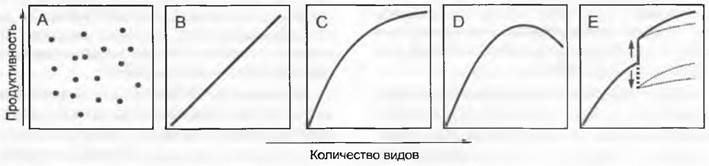
However, direct evidence from natural ecosystems is lacking for these compelling and widely used principles in computer modeling (following D. Tilman and E. Odum). The niche complementarity model was originally based on artificially created model systems of herbaceous plants. Two distinct effects have been observed: (1) plots with higher species richness (more than four species) are more likely to achieve high projective cover (cover) more rapidly, resulting in superior soil-protection capabilities; (2) when comparing only those plots with varying species numbers that achieve full projective cover under conditions of good soil fertility, the maximum seasonal biomass also increases with species richness (1-, 2-, 4-, 8-, and 32-species mixtures were compared in a pan-European experiment by A. Hector et al., Fig. 14.26, C). A closed grassland community with a higher number of species and diverse spectra of shoot types and leaf arrangements unquestionably utilizes sunlight more efficiently than a monoculture or a species-poor community. Similarly, a multi-species community extracts more mineral nutrients from the soil than a low-diversity community.
Fig. 14.26. A relationship may exist between biodiversity and ecosystem functions. This can be demonstrated using biodiversity-dependent productivity (biomass) as an example. Five diagrams represent five possible TYPES OF RELATIONSHIPS. Relationships B through D apply only to homogeneous formations (turfgrass, forests); A — no relationship; B — linear relationship; C — saturation-curve relationship; D — optimum curve; E — an example where either the addition or loss of a few species occurs ("keystone" species, such as legumes or a single tree species in a meadow), or a transition takes place from a later successional phase to an earlier one (typically following a storm or fire), resulting in an abrupt change in function. No natural example exists solely for variant B.
A genetically narrow "occupancy of working space within an ecosystem" (encompassing only a few species) may lack "insurance" saturation. Such saturation is typically a sign of high competitive strength, which is generally traded off against stress and disturbance tolerance. Yet, even very simple, specialized (stress- and disturbance-tolerant) species communities can guarantee ecosystem stability (in the sense of integrity)—such as boreal forests and certain grassland systems in cold regions. They are often even less sensitive to mechanical impacts (e.g., storms, overgrazing) or fires than highly complex species communities, which tend to leave open spaces after such events and are thrown back into earlier successional stages.
Finally, ecosystem integrity is frequently tied to the presence of keystone species, meaning that the loss of a single species (such as a dominant canopy tree species) leads to profound changes. Thus, the question is not only how many species can (or must) be lost (the rivet hypothesis) for the system to lose equilibrium, but also *which* species they are. Species identification thus becomes critically important. The aforementioned relationships between biodiversity and productivity (Fig. 14.26) are heavily influenced by the absence or presence of legumes. Species richness alone is therefore an insufficient criterion for maintaining system integrity and functionality.
The notion of cybernetic "fine-tuning" of stability through high diversity and self-regulation—which is based more on theoretical concepts than on empirical facts—contradicts the particular sensitivity of complex ecosystems such as tropical savannas, where the population growth or removal of certain species (e.g., elephants or apex predators) drives the entire system into a successional state (similarly triggered or reduced by cyclical fires associated with the accumulation of dead grass litter; see 15.2.5).
The high, long-acquired ecosystem stability found in The Heart of the tropics often correlates with high biodiversity, but the latter does not necessarily drive high stability and integrity. This argument also works in reverse. For naturally species-poor and regularly disturbed systems, the "insurance" hypothesis is of paramount importance for soil protection and, consequently, for securing the existential basis for future generations of organisms. The irreparable loss of a single species can abruptly alter such a system and lead to resource depletion (soil exhaustion).
14.2.5. FLORISTIC REGIONS AND Floristic Kingdoms
By examining the distributional boundaries of A large number of taxa, one must conclude that they are distributed unevenly, yet show rather clear similarities in certain areas. This corresponds to the fact that transitional zones with a strong floristic gradient and heterogeneous species composition (A/B) lie between regions possessing a homogeneous flora and characteristic species composition (A or B). In most cases, these transition zones coincide with actual dispersal barriers or with zones defined by climatic shifts. Two floristic regions can be compared regarding shared or distinct species and endemic taxa, allowing the difference to be quantified as floristic contrast. Thus, on a floristic and areal-geographic basis, it has become possible to spatially subdivide the entire biosphere (see endpapers). The largest groupings of floristic regions are termed floristic kingdoms. Six Floristic Kingdoms of the world flora are distinguished, each characterized by specific families and most important genera.
• Holarctic — the largest floristic kingdom, encompassing the entire Northern Hemisphere with the arctic, boreal, temperate, sub-mediterranean, and mediterranean floristic zones: Pinaceae, Betulaceae, Fagaceae, Salicaceae, as well as numerous Ranunculaceae and Rosaceae.
• Neotropical — the kingdom spanning the subtropics and tropics of the Americas: Bromeliaceae (Tillandsia), Cactaceae; center of diversity for Solanaceae (Solanum).
• Paleotropical — the kingdom encompassing the tropics and subtropics of Africa and Asia together with Malesia: Dipterocarpaceae (Southeast Asia), Combretaceae (Africa), Pandanaceae, Zingiberaceae, and the center of diversity for Moraceae (Ficus, Malesia) and succulent Euphorbiaceae (Africa, India).
• Cape — a small but highly distinctive floristic kingdom in southern Africa: Proteaceae, succulent Aizoaceae (Lithops, Mesembryanthemum), as well as the center of distribution for Ericaceae and Restionaceae (sedge-like monocots).
• Australian — the kingdom largely covering Australia: Myrtaceae (Eucalyptus, Leptospermum), Proteaceae (Banksia), Casuarinaceae, Xanthorrhoeaceae (grass trees), alongside a center of diversity for the genus Acacia.
• Antarctic — a largely extinct floristic kingdom, remnants of which persist in the extreme south of America, the southern tip of New Zealand, and sub-Antarctic islands: Fagaceae are represented here by the closely related family Nothofagaceae (Nothofagus), and cushion plants like Azorella (Apiaceae); currently, only 2 native angiosperm species grow on the Antarctic coast: Deschampsia antarctica (Poaceae) and Colobanthus quitensis (Caryophyllaceae).
• Oceanic — the floristic kingdom of the World Ocean and Pacific islands, featuring widely distributed tropical coastal genera and species such as Cocos nucifera and Rhizophora sp. (mangroves).
These floristic kingdoms form the foundation for further Discussion of the Earth's floristic and vegetation zones (see 15.2). Subsequently, they can be subdivided into hierarchically ordered floristic provinces, regions, and districts (see Fig. 14.19, main distribution ranges of geoelements that have invaded Central Europe).
Last update: 07/08/2026
Editorial and Educational Adaptation: This material has been compiled based on the primary/original source text. The project team performed an editorial review, corrected technical inaccuracies, structured sections, and adapted the content for an educational format.
What was processed:
- elimination of formatting defects (OCR errors, structural breaks, corrupted characters);
- editorial organization of content;
- standardization of terminology in accordance with academic sources;
- verification of factual statements against the original source text.
All mentions of the author, publication year, and origin of the primary text have been preserved in accordance with the source.