Plant Physiology - Musienko M. M. 2001
Respiration
Endogenous mechanisms of respiration regulation in plants
An increase in the functional activity of Cells is accompanied by enhanced Respiration. This is mainly achieved through The Mechanism of respiratory control, or acceptor control of respiration. Respiratory control is the dependence of The rate of oxygen consumption by Cell/35.html">Mitochondria on the concentration of adenosine diphosphate, which acts as an acceptor of inorganic phosphorus in Oxidative Phosphorylation.
Under conditions where electron transport in the Respiratory Chain is tightly coupled with ATP synthesis, the intensity of THE RESPIRATORY PROCESS in mitochondria depends on the ADP concentration, or more precisely, on The ratio of the active Components of the ATP system:
Class="center">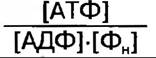
It should be noted that inorganic phosphate is generally present in sufficient quantities in all plant Cell compartments and therefore cannot act as a limiting factor. When a cell is in a resting state, the aforementioned ratio is quite high because almost all ADP is phosphorylated. When cellular functional activity increases, ATP is consumed in energy-dependent processes, resulting in an increased ADP concentration. This, in turn, leads to an elevated rate of electron transfer in the Respiratory Chain and, consequently, accelerates oxidative phosphorylation. Importantly, in this case, the ADP level controls electron transfer and oxidative phosphorylation not as an allosteric factor, but as a phosphorylation substrate. However, the state of the adenine nucleotide system is best reflected by the ratio known as the energy charge:
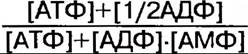
It characterizes the degree to which the entire adenine nucleotide system is saturated with high-energy phosphate groups.
As follows from the respiration equation given at the beginning of the chapter, an understanding of the intensity of this process can be obtained by measuring The amount of oxygen absorbed or carbon dioxide released by the tissue. Table 13 presents data characterizing the respiration intensity of Tissues in certain plants:
Table 13. Respiration intensity of tissues in certain plants at a Temperature of 15-20 °C (mg CO2/g dry weight per day)
|
Object |
Respiration intensity |
|
Wheat leaves |
138.7 |
|
Young wheat roots |
53.4 |
|
Linden buds |
7.8 |
|
Germinating sunflower seeds |
43.7 |
|
Sugar beet ROOT crops |
6.7 |
|
Lemon, whole fruits |
12.4 |
|
Potato |
2.45 |
Internal Mechanisms of Respiration Regulation
Individual stages of such a complex function of the plant Organism as respiration take place in different compartments of The plant cell. Accordingly, various Enzymes that activate biochemical reactions at specific stages are distributed throughout The Cell. For instance, enzymes catalyzing Glycolysis and the Pentose Phosphate Pathway are concentrated in the Cytoplasm. The Enzymes of the Krebs cycle are localized primarily in the mitochondrial matrix, whereas those of the respiratory chain are found in The inner mitochondrial membrane. The localization of enzyme systems, along with their Qualitative and quantitative composition, plays a crucial role among the endogenous mechanisms of respiration regulation (Fig. 109).
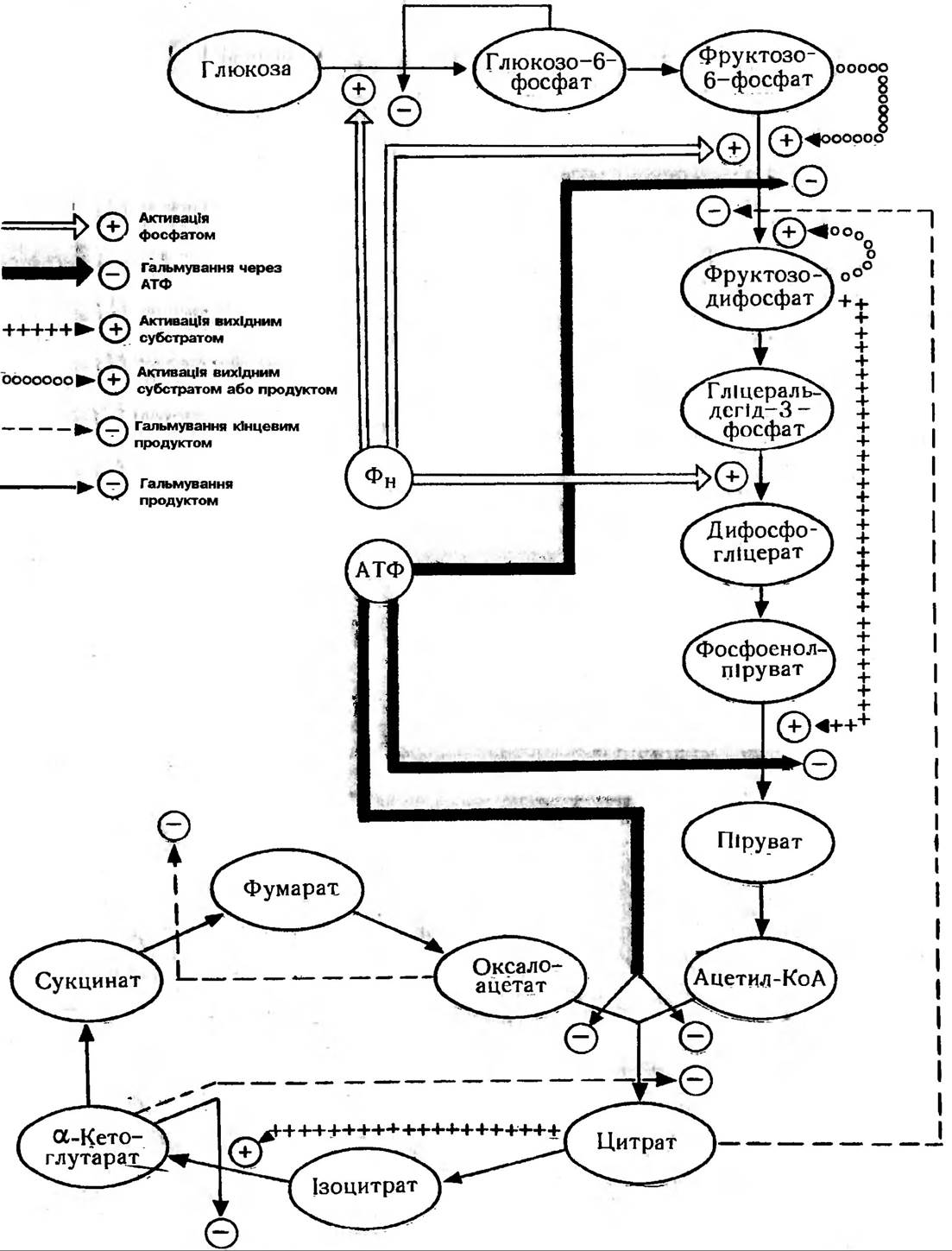
Fig. 109. Pathways regulating the functioning of the glycolysis — Krebs cycle system
As can be seen from the figure, substrate control of respiration is achieved by regulating the availability, type, and quantity of the substrate. Another fairly common pathway is The regulation of oxidoreductase activity in interconnected respiratory cycles, the Mitochondrial Electron Transport chain (ETC), and Other Enzymes (oxidases, oxygenases) localized in the cytoplasm and organoids through competition for shared metabolites.
Enzyme activity depends on acidity (pH), the concentration of relevant ions, etc. In particular, phytohormones influence respiration through the targeted synthesis of Proteins. The Synthesis of specific enzymes is under genomic control and occurs in accordance with the functional state of the cells and the developmental program.
Regulation of Respiration by end products is of great importance. Thus, when the influx of acetyl-CoA slows down, oxaloacetic acid accumulates in the Krebs cycle. It inhibits The activity of the enzyme malate dehydrogenase, thereby halting the cycle and preventing The conversion of all cycle intermediates into the final product, oxaloacetic acid. Finally, ATP, ADP, NADH, and NAD+, as cycle intermediates, inhibit (negative feedback) or activate (positive feedback) individual Links of the respiratory process via feedback systems.
Last update: 07/08/2026
Editorial and Educational Adaptation: This material has been compiled based on the primary/original source text. The project team performed an editorial review, corrected technical inaccuracies, structured sections, and adapted the content for an educational format.
What was processed:
- elimination of formatting defects (OCR errors, structural breaks, corrupted characters);
- editorial organization of content;
- standardization of terminology in accordance with academic sources;
- verification of factual statements against the original source text.
All mentions of the author, publication year, and origin of the primary text have been preserved in accordance with the source.