Biochemistry in Tables, Schemes, and Graphs - S.D. Zhamsaranova 2009
Energy Metabolism
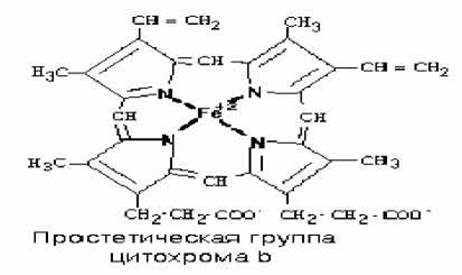
Mitochondrial Electron Transport Chain
Class="center">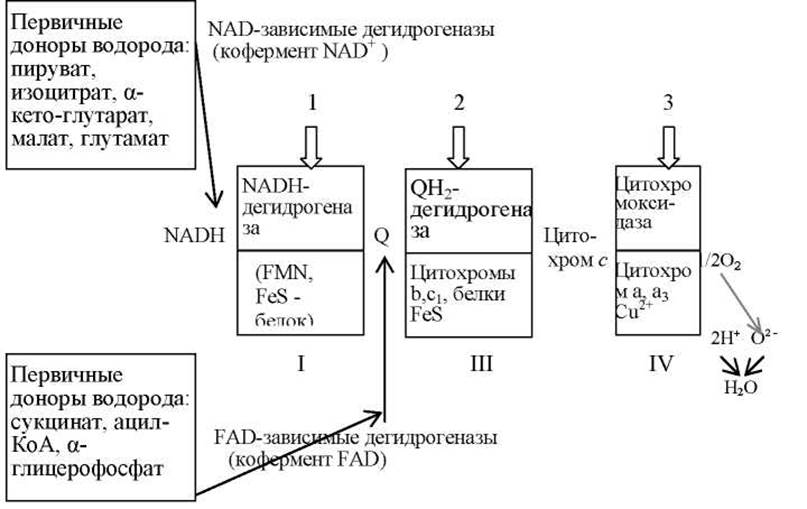
I, III, IV are high-molecular-weight complexes embedded in The inner mitochondrial membrane; complex II is succinate dehydrogenase, which, unlike other FАD-dependent dehydrogenases, is also localized in the inner mitochondrial membrane, though it is not shown in the figure.
The sites of action of ETC inhibitors are indicated by bold arrows: 1 - rotenone, barbiturates; 2 - antimycin; 3 - cyanides, CO, H2S.
COUPLING OF Respiration AND ATP SYNTHESIS (Oxidative Phosphorylation)
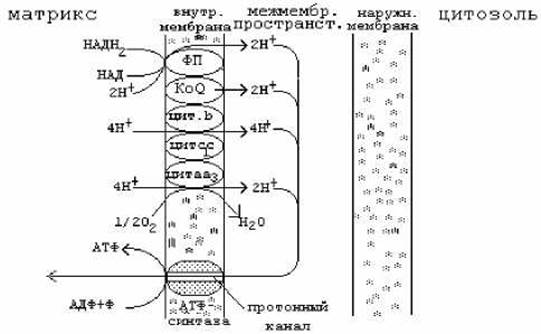
The main electron carriers are organized into 3 complexes within the inner mitochondrial membrane. Utilizing the energy of electrons, these complexes drive the translocation of H+ from the matrix into the intermembrane space. This results in the generation of a proton Electrochemical Potential, ∆μН+. Upon reaching a threshold value of the electrochemical potential, ATP synthase is activated, opening a channel through which protons flow back from the intermembrane space into the matrix, while the energy of ∆μН+ is harnessed for ATP synthesis.
Each of the 3 ETC complexes provides the necessary proton gradient to activate ATP synthase and synthesize 1 molecule of ATP. The number of moles of ATP formed per 1 atom of oxygen reduced to H2O in the Respiratory Chain (i.e., upon The transfer of 2 electrons along the ETC) is expressed as the phosphorylation coefficient (P/O ratio). When hydrogen enters the ETC via NADH, the P/O ratio reaches its maximum value of 3. When hydrogen enters via coenzyme Q, P/O = 2.
SPECIFIC AND COMMON PATHWAYS OF Catabolism
The common pathway of catabolism serves as the primary source of hydrogen Donors for the Electron Transport Chain.
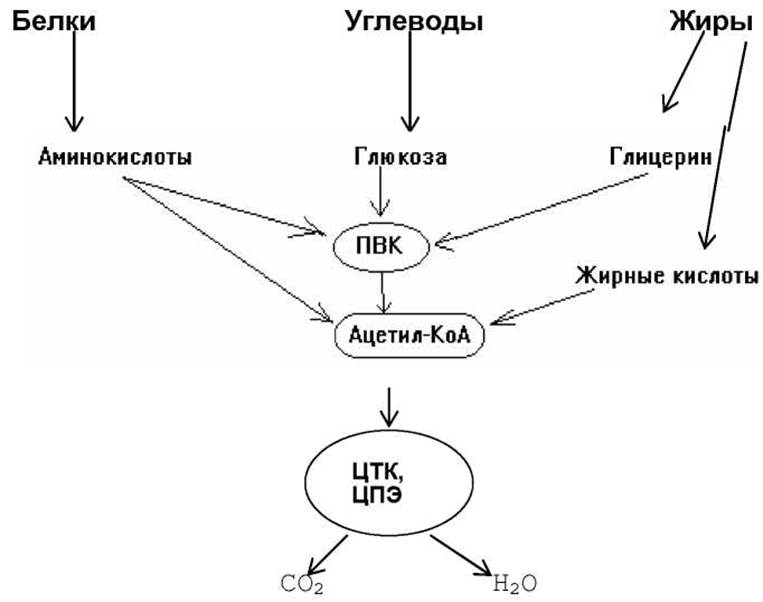
The Initial Stages of catabolism (specific Catabolic pathways) for the major dietary nutrients—Proteins, fats, and CARBOHYDRATES—proceed with the participation of Enzymes specific to each class of substances and culminate in The formation of 2 metabolites: pyruvic acid (Pyruvate) and acetic acid in the form of acetyl-CoA.
Following the formation of pyruvate, the subsequent breakdown of substances into final products СО2 and Н2О proceeds identically via the common pathway of catabolism (CPC).
The common pathway of catabolism includes:
1. The oxidative decarboxylation of pyruvate.
2. The citrate cycle (Krebs cycle, or Tricarboxylic Acid Cycle - TCA cycle).
The common pathway of catabolism generates primary hydrogen donors for The electron transport chain (ETC), which are oxidized by NAD+-dependent or FAD-dependent dehydrogenases that transfer hydrogen to the ETC.
The Reactions of the CPC take place in the mitochondrial matrix, and the reduced Coenzymes transfer hydrogen directly to the ETC components located in the inner mitochondrial membrane.
The first reaction of the CPC is the Oxidative Decarboxylation of pyruvate. This reaction is catalyzed by a highly organized pyruvate dehydrogenase complex, which consists of 3 different enzymes and 5 coenzymes.
PYRUVATE DEHYDROGENASE COMPLEX
Enzyme |
Number of monomers |
Coenzyme |
Vitamin |
Pyruvate decarboxylase (E1) |
120 (30 tetramers) |
TPP |
B1 |
Dihydrolipoyl transacetylase (E2) |
180 (60 trimers) |
Lipoamide HSCoA |
Lipoic Acid Pantothenic acid |
Dihydrolipoyl dehydrogenase (E3) |
12 (6 dimers) |
FAD NAD+ |
B2 PP |
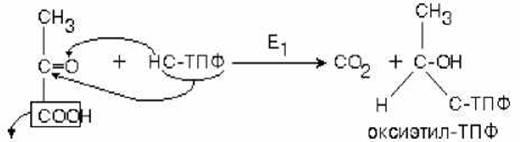
Pyruvate decarboxylase cleaves off CO2, and the remaining hydroxyethyl group binds to TPP.
substrate oxidation has not yet occurred; this is merely a preparation stage for it
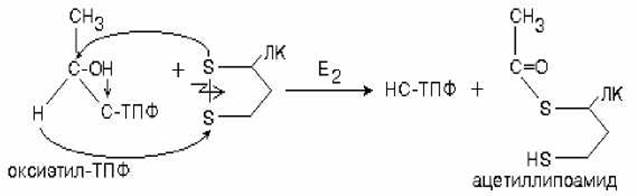
At this stage, the substrate undergoes oxidation by losing two hydrogen atoms; by this point, the hydroxyethyl group has already been oxidized to an acetic acid residue, while the reduction of lipoic acid has simultaneously begun.
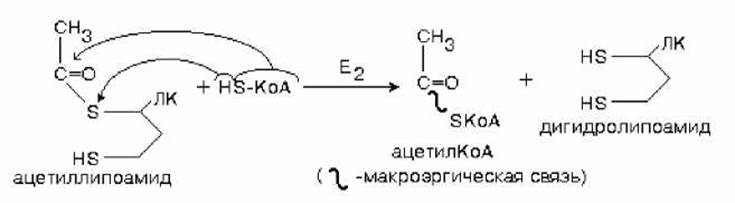
At this stage, the enzyme transfers the acetic acid residue to a coenzyme A (CoA) molecule. CoA contains a pantothenic acid residue (vitamin B3). The Active Site of CoA is the thioethanolamine residue along with its -SH group.
The energy released from this oxidation is conserved as a high-energy bond in the active form of acetic acid (acetyl-CoA).
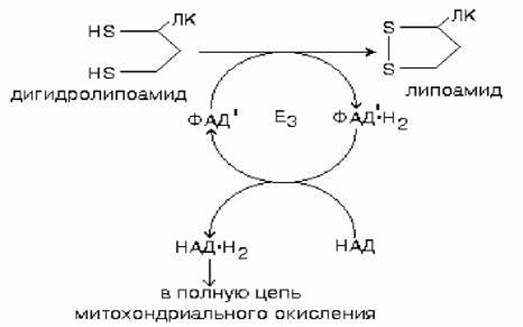
The final step is catalyzed by the enzyme DIHYDROLIPOAMIDE DEHYDROGENASE.
The coenzyme for this step is a specialized FAD with a low redox potential (denoted as FAD’). It transfers protons and electrons from dihydrolipoate to NAD, which serves as the final coenzyme in the multi-enzyme complex.
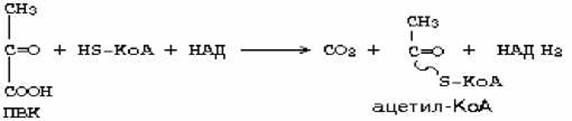
Consequently, we can write the overall equation as follows:
TRICARBOXYLIC ACID CYCLE
(TCA cycle, citrate cycle, Krebs cycle)
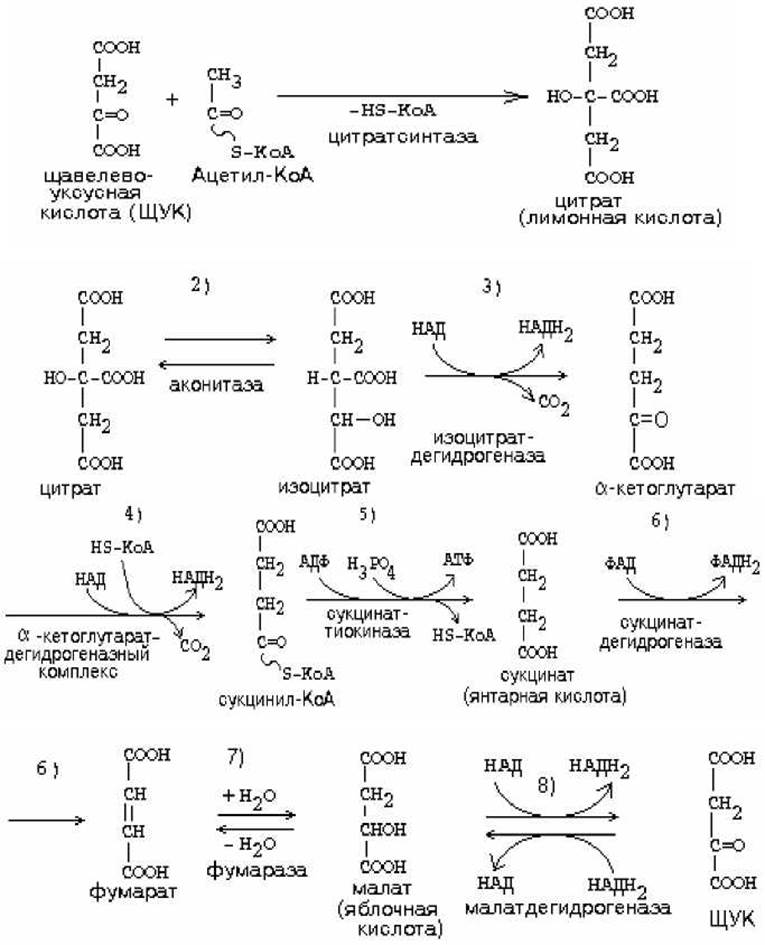
The TCA cycle, much like mitochondrial oxidation reactions, takes place within the Cell/35.html">Mitochondria. It consists of a series of interconnected reactions forming a closed loop.
OVERALL EQUATION OF THE TCA CYCLE
Last update: 06/08/2026
Editorial and Educational Adaptation: This material has been compiled based on the primary/original source text. The project team performed an editorial review, corrected technical inaccuracies, structured sections, and adapted the content for an educational format.
What was processed:
- elimination of formatting defects (OCR errors, structural breaks, corrupted characters);
- editorial organization of content;
- standardization of terminology in accordance with academic sources;
- verification of factual statements against the original source text.
All mentions of the author, publication year, and origin of the primary text have been preserved in accordance with the source.