Biochemistry in Tables, Schemes, and Graphs - S.D. Zhamsaranova 2009
Energy Metabolism
Class="center">General scheme of METABOLISM and Energy TRANSFER
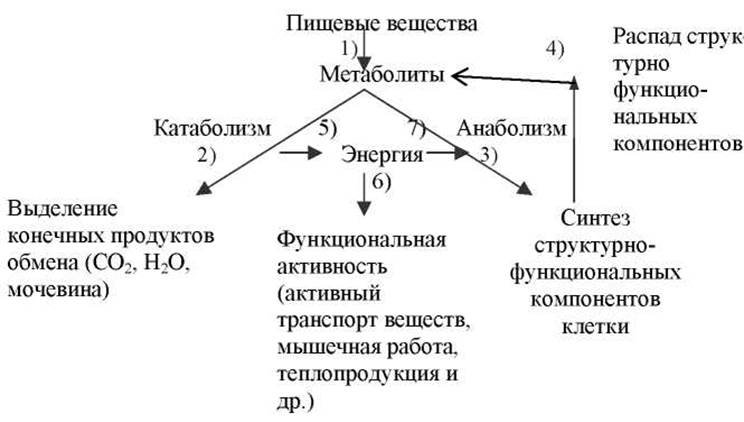
1 - Digestion; 2,4 - Catabolism; 3 - anabolism; 5 - exergonic reactions; 6,7 - endergonic reactions
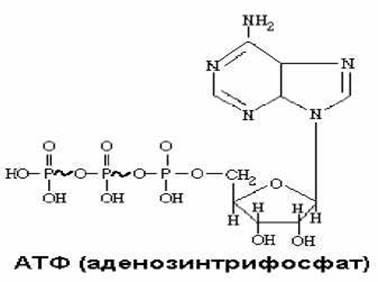
The evolution of life on Earth followed a path utilizing, as the primary exergonic process to meet the energy demands of living organisms, a chemical transformation virtually universal to all living nature—the Hydrolysis of one of the pyrophosphate bonds of adenosine-5'-triphosphate.
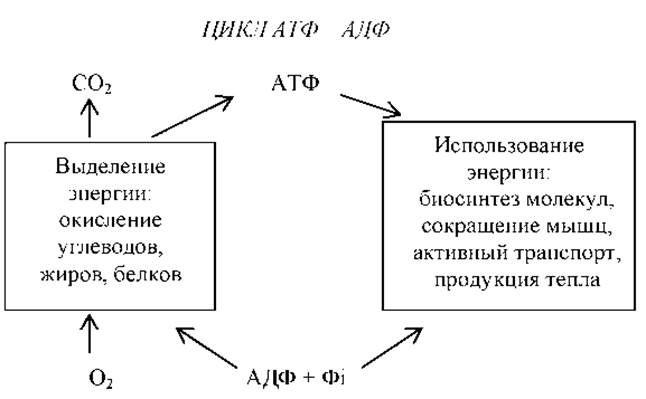
The oxidation of Organic compounds within the body by atmospheric oxygen, yielding Water and carbon dioxide, is referred to as tissue Respiration.
Tissue respiration comprises:
a) the removal of hydrogen from a substrate (dehydrogenation)
b) a multi-step process of electron transport to oxygen.
The synthesis of ATP from ADP and H3PO4 driven by The energy released during tissue respiration is called Oxidative Phosphorylation.
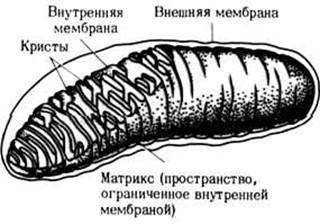
MITOCHONDRIAL Structure
Enzymes responsible for removing hydrogen from substrates (dehydrogenases) are located primarily in the mitochondrial matrix. Electron transfer to oxygen proceeds via a system of carriers embedded in The inner mitochondrial membrane, forming the Electron Transport Chain (ETC).
The ETC includes 3 enzyme complexes: NADH dehydrogenase (I), QH2 dehydrogenase (III), and cytochrome c oxidase (IV), as well as low-molecular-weight carriers: the hydrophobic coenzyme Q molecule and cytochrome c, a small protein. All ETC components are arranged within the mitochondrial membrane in order of increasing redox potential, with oxygen possessing the highest redox potential. This ensures the sequential transfer of electrons from NADH to oxygen, releasing energy at each step of the ETC.
Last update: 06/08/2026
Editorial and Educational Adaptation: This material has been compiled based on the primary/original source text. The project team performed an editorial review, corrected technical inaccuracies, structured sections, and adapted the content for an educational format.
What was processed:
- elimination of formatting defects (OCR errors, structural breaks, corrupted characters);
- editorial organization of content;
- standardization of terminology in accordance with academic sources;
- verification of factual statements against the original source text.
All mentions of the author, publication year, and origin of the primary text have been preserved in accordance with the source.