BIOLOGY Volume 3 - A Guide to General Biology - 2004
21. REPRODUCTION
21.8. Human Reproduction
21.8.10. Harmful Substances Capable of Crossing the Placenta
Effects of Cigarette Smoking
Harmful components of tobacco smoke include tars, irritants, carbon monoxide, and nicotine. If a mother smokes, the last two enter her bloodstream and subsequently cross the Placenta into the Fetal Circulation. There has been much debate as to whether smoking affects the unborn child and, if so, how serious the problem is.
The most compelling evidence concerns The Effect of smoking on birth weight. The average weight of a newborn is 3.40 kg (3400 g). If a mother smokes 10–20 cigarettes a day throughout her Pregnancy, her baby weighs on average 200 g less at birth, i.e., 6% below normal. Smoking 30 cigarettes a day reduces birth weight by 10%. This condition is referred to as intrauterine growth restriction. It can lead to premature birth. Babies with a below-normal birth weight or those born prematurely face a higher risk of health complications, leading to increased perinatal mortality (death immediately before or shortly after birth). Midwives and other healthcare professionals dealing with newborns are well familiar with growth restriction and state that the appearance of the umbilical cord and placenta can indicate whether a mother was a heavy smoker. This is evidenced by umbilical Blood Vessels that are noticeably narrower than normal and a placenta that is smaller than usual. Nicotine is known to cause vasoconstriction, which leads to a reduced Blood flow through the placenta. Continuous exposure to nicotine persistently disrupts the Development of blood vessels in the placenta and umbilical cord. If Blood supply to the fetus is restricted, its oxygen and nutrient supply becomes inadequate, which can cause intrauterine growth restriction. Carbon monoxide may also play some role, as it reduces the oxygen-carrying capacity of Hemoglobin; however, there is yet no conclusive evidence that this harms the fetus.
There are other Problems associated with smoking during pregnancy. Smoking women experience a higher rate of premature birth and late spontaneous abortions, along with an elevated risk of perinatal mortality. Studies tracking children from birth to age seven in the UK showed that the risk of perinatal mortality was 30% higher for children of smoking mothers, and the risk of Congenital Heart defects was 50% higher. They started reading at age 7—on average 6 months later than children of non-smoking mothers. These facts alone do not prove that smoking is to blame for all these problems; some common underlying factor may be at play. For instance, smoking is more prevalent among lower-income groups, who are also prone to poverty and poor Nutrition. However, carefully controlled studies comparing smokers with a control group of non-smokers matched for other important parameters (such as body weight, nutrition, and social status) have shown that smoking indeed contributes to conditions such as premature birth and low birth weight.
Most women are well aware that smoking can harm the fetus. So why do some pregnant women continue to smoke? Many experience feelings of guilt or anxiety, yet keep smoking throughout pregnancy. For them, smoking has simply become a physical or psychological dependency that is difficult to break, especially if close friends or coworkers smoke, or if the social environment is stressful. Sometimes women feel that quitting would make them so irritable that other family members would suffer. In short, although smoking is harmful, it is not easily overcome.
Alcoholic Beverages
Alcohol easily crosses the placenta. However, as with smoking, the extent of alcohol's harm to the fetus remains controversial, raising the same question of whether other confounding factors associated with alcohol abuse, such as poor nutrition, are involved.
Before examining the effects of alcohol, it is helpful to understand standard units of alcohol consumption. Half a pint (0.28 L) of beer, a Glass of wine, sherry, or spirits contains approximately 1 unit of pure alcohol (8 g). Estimates suggest that consuming this amount of alcohol daily increases the risk of developmental disorders by 1.7% and reduces fetal growth by 1%. Women who consume more than 5 units a day are classified as alcoholic (for men, this threshold is 7 units). Consuming between 7.5 and 10 units a day is believed to cause Liver cirrhosis in adults—a disease typically associated with alcoholism. Such high alcohol consumption during pregnancy can cause a condition known as fetal alcohol syndrome. This may present with one or more of the following symptoms:
1) intellectual disability;
2) microcephaly (abnormally small HEAD and consequently Brain size);
3) behavioral disorders (such as hyperactivity or an inability to concentrate);
4) reduced growth rate persisting after birth;
5) poor Muscle tone;
6) flattened facial features (underdeveloped cheekbones), a long, thin upper lip, a short, upturned Nose, and occasionally a cleft palate.
The greatest damage appears to occur during the Cytology/cytology/16.html">Early stages of pregnancy, a period of rapid brain development in the child. Bearing in mind this particularly detrimental effect on the brain, many physicians believe that, strictly speaking, no safe level of alcohol consumption exists and recommend abstaining from alcohol entirely during pregnancy. At the same time, a more pragmatic approach suggests that having an occasional drink is likely acceptable, provided the amount consumed on each occasion is very small.
In addition to fetal alcohol syndrome (the third leading cause of intellectual disability in the US), American studies indicate that if a mother consumes more than 100 g of alcohol per week, the likelihood of having a low-birth-weight baby is more than doubled compared to mothers who drink less than 50 g of alcohol per week. Spontaneous abortions are also more frequent in the former group. As mentioned earlier, isolating the effects of alcohol in such scenarios from other sociological factors is difficult.
Narcotics and Medicinal Drugs
The fetus is especially vulnerable to the harmful effects of any drug during the Organogenesis period, which begins in the third week of pregnancy. At this time, a woman may only suspect she is pregnant. Therefore, It is important to consult a physician even before conception, which is now becoming standard practice. Couples planning to have children should consider lifestyle changes in advance if necessary. Strictly speaking, alcohol and nicotine are also drugs, but they are generally considered "socially acceptable" because they are not prohibited by law. In this section, we examine both illicit drugs and pharmaceutical products.
ILLICIT DRUGS. Among these drugs, heroin and cocaine—particularly highly refined cocaine, known as crack—cause the greatest concern. If a woman is addicted to one of these substances, her baby is also at risk of developing an addiction and typically suffers from withdrawal symptoms after birth. During intrauterine development, the fetus may sustain permanent brain damage, which can lead to lifelong intellectual disability or behavioral disorders. A substance-dependent mother is unlikely to prioritize her own health, often resulting in premature birth and all associated complications, including high perinatal mortality. According to US statistics, the perinatal mortality rate for infants born to heroin-addicted women was 2.7 times higher than in matched socio-economic and racial control groups. These infants suffered from higher rates of jaundice (a liver disease) and congenital anomalies, a fivefold higher incidence of growth restriction, and twice The rate of premature birth. Furthermore, complicated deliveries were more frequent. Both cocaine and heroin damage The Nervous system. Approximately 300,000 crack-exposed infants are born in the US annually.
Intravenous drug users face a higher risk of contracting HIV or hepatitis B through shared needles than the general population. LSD and marijuana can also harm the fetus. Marijuana appears to shorten the duration of pregnancy by approximately one week.
Pharmaceuticals. Over-the-counter medications are rigorously tested for adverse effects, but they can only be considered safe when instructions are strictly followed. However, whenever feasible, it is probably prudent to avoid taking medications altogether, especially during early pregnancy, as most cross the placenta easily, and claiming absolute safety in all cases is unjustified.
The thalidomide tragedy led to stricter safety precautions in pharmaceutical drug testing. Thalidomide was introduced in the early 1960s and prescribed to pregnant women, particularly for severe morning sickness, which can sometimes be debilitating. It was soon discovered that the surge in babies born with deformed limbs was caused by thalidomide, prompting its ban. However, prior to this ban, several thousand infants had already been born with characteristic malformations: limbs were either missing or underdeveloped. The bones within these limbs were also reduced or entirely absent. Frequently, hands or feet grew directly from the torso (Fig. 21.52). Depending on the stage of pregnancy at which the mother took thalidomide, either the upper limbs, the lower limbs, or both were affected. The drug also caused developmental abnormalities in The Heart, intestines, eyes, and ears.
Class="center">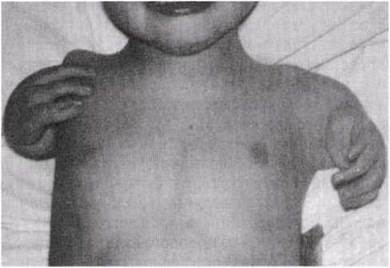
Fig. 21.52. Newborn with limb malformations caused by thalidomide.
Most Bacteria are too large to cross the placenta, but viruses are generally small enough to do so. Consequently, a mother infected with a viral disease can transmit it to the fetus, causing severe harm—especially during early development when Organs are still forming. The three greatest viral threats are rubella (German measles), HIV infection, and hepatitis B.
Infection of the embryo or fetus with rubella can lead to Spontaneous Abortion or congenital birth defects. The most common of these are blindness, deafness, heart defects, and various neurological disorders. Pronounced intellectual disability may also occur. If infected During the first month of pregnancy, 50% of infants develop congenital defects. National vaccination programs, which place strong emphasis on immunizing women, have helped reduce the risk of rubella infection during pregnancy.
HIV infection and hepatitis B do not cause congenital birth defects, but they are life-threatening.
Rhesus Factor
The Rhesus (Rh) factor is an antigen found On the surface membranes of red Blood Cells. It is present in 84% of people, who are designated as Rhesus-positive (Rh+); the remaining individuals lack the Rhesus factor and are Rhesus-negative (Rh-). The presence or absence of the Rhesus factor is genetically determined.
Red blood cells are normally too large to cross the placenta. However, during childbirth, when the placenta is damaged, fetal red blood cells can enter the maternal circulation.
Complications arise when the mother is Rhesus-negative and the fetus is Rhesus-positive. If fetal red blood cells enter the mother's bloodstream, her immune system recognizes the Rhesus (D) Antigens as foreign and begins producing anti-Rhesus (anti-D) Antibodies. During a subsequent pregnancy with a Rhesus-positive infant, her immune system is already primed to produce anti-D antibodies. These antibodies can cross the placenta into the fetal bloodstream and cause complications that are sometimes fatal. For a more detailed Structure/133.html">Discussion of this problem and its Prevention, see Section 14.9.8.
21.8. Why should a Rhesus-negative woman of childbearing age never be given a transfusion of Rhesus-positive blood?
21.9. Why do no problems arise if the infant is Rhesus-negative and the mother is Rhesus-positive?
Last update: 06/08/2026
Editorial and Educational Adaptation: This material has been compiled based on the primary/original source text. The project team performed an editorial review, corrected technical inaccuracies, structured sections, and adapted the content for an educational format.
What was processed:
- elimination of formatting defects (OCR errors, structural breaks, corrupted characters);
- editorial organization of content;
- standardization of terminology in accordance with academic sources;
- verification of factual statements against the original source text.
All mentions of the author, publication year, and origin of the primary text have been preserved in accordance with the source.