Human Biochemistry, Volume 1 - Murray R. 1993
Bioenergetics and Carbohydrate and Lipid Metabolism
Gluconeogenesis and the Pentose Phosphate Pathway
Pentose Phosphate Pathway or Hexose Monophosphate Shunt - Metabolic Significance of the Pentose Phosphate Pathway
Comparison with Glycolysis
The Pentose Phosphate Pathway differs significantly from glycolysis. Oxidation takes place in The First stage and involves NADP rather than NAD as in glycolysis; one of the products of The pentose phosphate pathway is CO2, which is not formed in glycolytic reactions. Finally, the pentose phosphate pathway does not generate ATP.
Generation of reducing equivalents
The physiological significance of this metabolic pathway in various Tissues can be inferred from its activity. The pentose phosphate pathway is highly active in the Liver, adipose tissue, adrenal cortex, Thyroid Gland, erythrocytes, Testes, and lactating Mammary Glands; it is inactive in the non-Cytology/practical/135.html">Lactating mammary gland and has low activity in Skeletal Muscle. All tissues with a high activity of this pathway utilize NADPH for reductive Biosynthesis reactions, such as the synthesis of Fatty acids, Steroids, Amino Acids (via Glutamate dehydrogenase), or the reduction of Glutathione in erythrocytes. Presumably, under conditions of active Lipogenesis or in the presence of any system utilizing NADPH, the degradation of glucose via the pentose phosphate pathway increases due to a rise in the NADP:NADPH ratio. Postprandial conditions can induce the Synthesis of glucose-6-phosphate dehydrogenase and 6-phosphogluconate dehydrogenase.
Formation of ribose
The pentose phosphate pathway supplies ribose for nucleotide and nucleic acid synthesis (Fig. 20.5). The source of ribose is the intermediate ribose-5-phosphate, which reacts with ATP to form PRPP, utilized in nucleotide biosynthesis (see Ch. 35). Muscle tissue contains very low amounts of glucose-6-phosphate dehydrogenase and 6-phosphogluconate dehydrogenase. Nevertheless, skeletal muscle is capable of synthesizing ribose. This is presumably achieved by the Reversal of the non-oxidative phase of the pentose phosphate pathway utilizing fructose-6-phosphate. Thus, ribose synthesis can take place in a tissue as long as a portion of the Reactions of the pentose phosphate pathway is operational.
Class="center">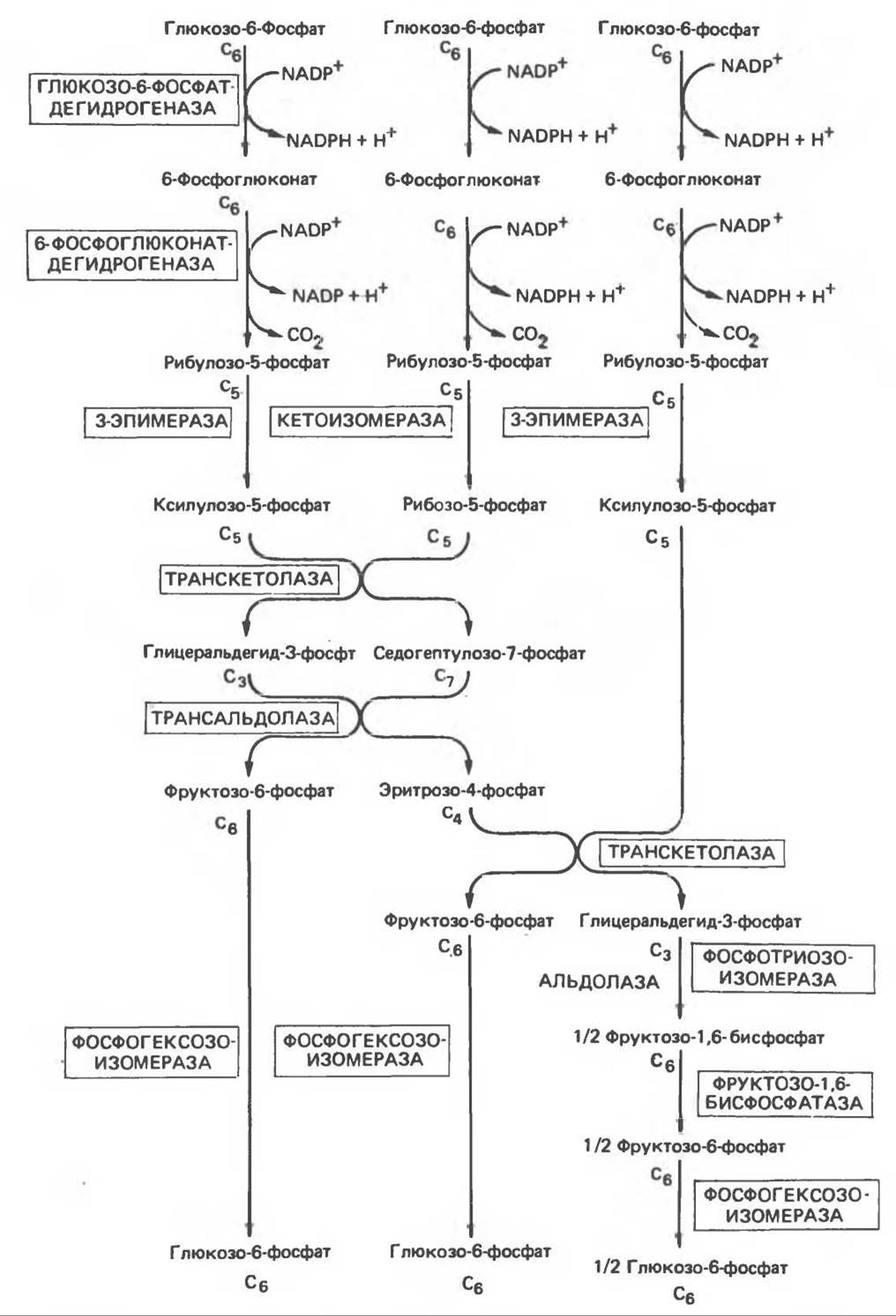
Fig. 20.6. Schematic Overview of metabolite flux in the pentose phosphate pathway and its interconnection with glycolysis.
Last update: 06/08/2026
Editorial and Educational Adaptation: This material has been compiled based on the primary/original source text. The project team performed an editorial review, corrected technical inaccuracies, structured sections, and adapted the content for an educational format.
What was processed:
- elimination of formatting defects (OCR errors, structural breaks, corrupted characters);
- editorial organization of content;
- standardization of terminology in accordance with academic sources;
- verification of factual statements against the original source text.
All mentions of the author, publication year, and origin of the primary text have been preserved in accordance with the source.