LEHNINGER PRINCIPLES OF BIOCHEMISTRY - VOLUME 1. THE FOUNDATIONS OF BIOCHEMISTRY: STRUCTURE AND CATALYSIS - 2011
PART I. STRUCTURE AND CATALYSIS
12. BIOSIGNALING
12.4. Receptor Guanylyl Cyclases, cGMP, and Protein Kinase G
Guanylyl cyclases (Fig. 12-20) are receptor Enzymes that, in their activated state, produce the second messenger 3',5'-cyclic guanosine monophosphate (cyclic GMP, cGMP) from GTP:
Class="center">
Figure 12-20. Two guanylyl cyclase Isoenzymes involved in signal Transduction, (a) One isoenzyme exists in two similar membrane-spanning forms activated by extracellular ligands: atrial natriuretic factor (ANF) (receptors in renal collecting duct Cells and vascular smooth Muscle) and guanylin (receptors in intestinal epithelial cells). The guanylin receptor is also the target of a bacterial enterotoxin that causes severe diarrhea, (b) The other isoenzyme is soluble and is activated by intracellular nitric oxide (NO); this form is found in many Tissues, including The Heart and vascular smooth muscle.

In animals, many effects of cGMP are mediated by cGMP-dependent protein kinase (protein kinase G, PKG). Upon activation by cGMP, PKG phosphorylates Ser and Thr residues in target Proteins. The catalytic and regulatory domains of this enzyme are contained within a single polypeptide chain (Mr ≈ 80,000). Part of the regulatory domain neatly fits into the substrate-binding pocket. The binding of cGMP displaces this “pseudosubstrate” from the binding site, freeing the site for the attachment of target proteins containing the PKG consensus sequence.
Cyclic GMP conveys different information in different tissues. In the Kidneys and intestine, it induces changes in Ion transport and Water retention; in cardiac muscle (a type of smooth muscle), it transmits a relaxation signal; in the Brain, it may be involved in both development and the function of the mature brain. Guanylyl cyclase in the kidneys is activated by the hormone atrial natriuretic factor (ANF), which is released by the atria when the heart stretches due to increased Blood volume. Transported by the blood to the kidneys, ANF activates guanylyl cyclase in collecting duct cells (Fig. 12-20a). This increases the cGMP concentration, which stimulates enhanced renal excretion of Na+ and, consequently, water, driven by changes in osmotic pressure. The loss of water reduces blood volume, counteracting the stimulus that originally triggered ANF secretion. Vascular smooth muscle also contains ANF-receptor guanylyl cyclase; upon binding to its receptor, ANF causes relaxation (vasodilation) of the blood vessel, increasing blood flow while lowering blood pressure.
A similar receptor guanylyl cyclase in Cell/30.html">The Plasma Membrane of intestinal epithelial cells is activated by the intestinal peptide guanylin (Fig. 12-20a), which regulates Cl- secretion in the intestine. This receptor is also the target of a heat-stable peptide enterotoxin produced by Escherichia coli and other Gram-negative Bacteria. The increase in cGMP concentration caused by the enterotoxin enhances Cl- secretion and, consequently, decreases water reabsorption by the intestinal epithelium, leading to diarrhea.
A fundamentally different type of guanylyl cyclase is a cytosolic protein containing a tightly bound heme group (Fig. 12-10b). This protein is activated by nitric oxide (NO). Nitric oxide is produced from Arginine by a Ca2+-dependent NO synthase present in mammalian tissues and diffuses from the source cell into neighboring cells.
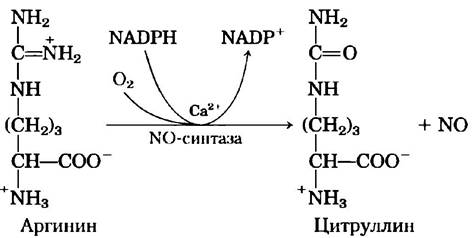
The NO molecule is relatively weakly polarized, allowing it to cross the plasma membrane without the aid of a transporter. In target cells, NO binds to the heme group of guanylyl cyclase and stimulates cGMP production. In the heart, cGMP decreases the force of contraction by stimulating ion pumps that remove Ca2+ from the Cytosol.
■ NO-induced relaxation of cardiac muscle is precisely the response observed when nitroglycerin tablets or other vasodilators are administered to relieve the pain of angina pectoris, which occurs when blocked coronary Arteries cause the heart to contract under oxygen deprivation. Nitric oxide is unstable and its action is short-lived; within seconds, it is oxidized to nitrite or nitrate. Vasodilators provide sustained relaxation of cardiac muscle because they decompose over several hours, ensuring a continuous supply of NO. The value of nitroglycerin as a Treatment for angina was discovered in the 1860s by fortunate coincidence at factories producing nitroglycerin as an explosive. Workers suffering from angina reported that their condition improved significantly during the work week, only for the disease to return on weekends. Doctors treating these workers heard this story so often that they began to look for cause-and-effect relationships—and thus a medicine was born.
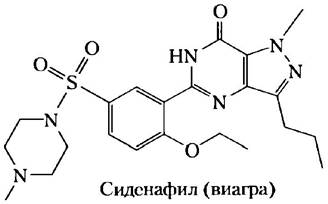
Effects associated with enhanced cGMP synthesis subside after the stimulus ceases, because a specific phosphodiesterase (cGMP-PDE) converts cGMP into inactive 5'-GMP. Humans have several cGMP-PDE isoforms with distinct tissue distributions. The isoform found in penile Blood Vessels is inhibited by the drug sildenafil (Viagra), which thereby maintains elevated cGMP levels following a single stimulus. This is the basis for the drug's use in treating erectile dysfunction. ■
Cyclic GMP has a second MECHANISM OF ACTION in the vertebrate eye: it triggers the opening of ion-specific channels in retinal cones and rods. We will revisit this role of cGMP when discussing visual signal transduction in Section 12.10.
Summary of Section 12.4 Receptor Guanylyl Cyclases, CGMP, and Protein Kinase G
■ Certain signaling molecules, including atrial natriuretic factor and the intestinal peptide guanylin, act through a receptor enzyme with guanylyl cyclase activity. The resulting cGMP acts as a second messenger, activating cGMP-dependent protein kinase (PKG). This enzyme alters METABOLISM through the phosphorylation of specific target proteins.
■ Nitric oxide (NO) is a short-lived messenger that acts by stimulating soluble guanylyl cyclase, thereby increasing cGMP concentration and activating PKG.
Last update: 06/08/2026
Editorial and Educational Adaptation: This material has been compiled based on the primary/original source text. The project team performed an editorial review, corrected technical inaccuracies, structured sections, and adapted the content for an educational format.
What was processed:
- elimination of formatting defects (OCR errors, structural breaks, corrupted characters);
- editorial organization of content;
- standardization of terminology in accordance with academic sources;
- verification of factual statements against the original source text.
All mentions of the author, publication year, and origin of the primary text have been preserved in accordance with the source.