MORPHOLOGICAL AND TINKTORIAL PROPERTIES OF BACTERIA - E. L. Zaitseva - 2015
APPENDIX. SCIENTISTS WHO PROPOSED VARIOUS STAINING METHODS FOR MICROSCOPIC PREPARATIONS
Gustav Giemsa (German: Gustav Giemsa, November 20, 1867 – June 10, 1948) was a German chemist and bacteriologist, best known for developing the solution used in Romanowsky-Giemsa staining.
Class="center">
G. Giemsa studied pharmacology and mineralogy at the University of Leipzig from 1892 to 1894, and chemistry and bacteriology at the University of Berlin. From 1895 to 1898, he worked as a pharmacist in German East Africa. He served as an assistant to Bernhard Noch at the Institute for Maritime and Tropical Diseases (now the Bernhard Nocht Institute for Tropical Medicine) in Hamburg, where he became HEAD of the chemistry department in 1900 (holding this position until 1933). In 1914, Giemsa was awarded the title of professor, and starting in 1919, he began lecturing on Chemotherapy at the University of Hamburg.
In 1904, he published an article proposing an improvement to the Romanowsky method for staining flagellates, Blood Cells, and Bacteria by stabilizing the dye solution with glycerol.
Giemsa's contribution to science is primarily represented by his work in tropical hygiene and medicine, as well as pharmacology (The Development of several new drugs, The Study of quinine derivative properties, and arsenic and bismuth compounds). Along with Manfred Eesterling and Bruno Pützer, Giemsa worked on developing new antimalarial drugs—quinine-series Alkaloids—as well as Methods for ship deratization.
Following Hitler's rise to power, Giemsa joined the NSDAP in May 1933. On November 11, 1933, he attended the celebratory ceremony "Mit Adolf Hitler für des deutschen Volkes Ehre, Freiheit und Recht!" and, alongside other professors and teachers of German higher education institutions, signed a letter of gratitude to Adolf Hitler.
In 1939, co-authoring with Ernst Nauk, he published a travel report on Espírito Santo titled "Scientific Expedition to Espírito Santo: Folk-Biological Studies of the German-Origin Population in Central Brazil Regarding Structure/149.html">The problem of Acclimatization."
Gustav Giemsa was known as a sympathetic and sociable person. A street in Biberwier, where he spent his final years, is named in his honor.
Hans Christian Joachim Gram (Danish: Hans Christian Joachim Gram; September 13, 1852 – November 14, 1938) was a Danish physician and bacteriologist. He was born to Frederik Terkel Julius Gram, a professor of jurisprudence, and Louise Christine Roulund.
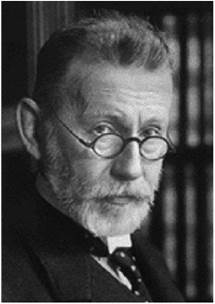
Gram studied botany at the University of Copenhagen and served as a botany assistant to the zoologist Japetus Steenstrup. Working with plants allowed him to learn the fundamentals of pharmacology and master The Use of the Microscope.
He entered medical school in 1878 and graduated in 1883. Between 1878 and 1885, Gram traveled across Europe. His early work focused on the study of human red blood cells. He was among the first to recognize that macrocytes were indicative of pernicious anemia.
In Berlin, in 1884, he developed a method for differentiating two Major Classes of bacteria. This technique, the Gram stain, remains a standard Procedure in medical microbiology (used in bacterial Taxonomy and the microbiological Diagnosis of infectious diseases). Gram was a modest man, and in his first publication, he noted: "Thus I have published the method, although I am aware that as yet it is defective and imperfect; but I hope that in the hands of other investigators it will turn out to be useful."
In 1891, Gram began lecturing in pharmacology and later that same year was appointed professor at the University of Copenhagen. In 1900, he became a professor of medicine. Shortly after his appointment, he published four volumes of clinical lectures that became widely used in Denmark. In 1922, he developed a METHOD FOR DETERMINING fibrin content in blood and plasma. He retired from his position in 1923.
Pavel Feliksovich Zdrodovsky (1890–1976) was a Soviet microbiologist, immunologist, and epidemiologist.

He was born on May 16, 1890, in Uralsk. His father, Felix Frantsevich, a Pole from the village of Zdrody in the Mazovia County of Łomża Governorate, was doing military service in Russia, where he married a Russian peasant girl, Glikeria Petrovna. The newlyweds settled in Uralsk. Felix Frantsevich died of tuberculosis when his son was only 7 years old. The mother was left with three children and no means of subsistence.
Pavel was enrolled in the Uralsk Theological School and, upon graduation, in the Orenburg Theological Seminary. Later, P. F. Zdrodovsky worked as a rural schoolteacher, and in 1909 he entered the Faculty of Medicine at Kazan University.
In the spring of 1914, after completing his coursework, he was mobilized and sent to the front as a medical doctor. In 1916, while still on active military service, he passed his state examinations and received a diploma as a "physician with honors." Following his demobilization in October 1917, he lived in Rostov-on-Don, where he worked at the Don Bacteriological Institute as head of the cholera, typhus, and Diagnostics departments. In July 1920, he defended his doctoral dissertation in medicine at the Don University. That same year, he volunteered for the Red Army and was sent as an epidemiologist with the 11th Army to combat malaria in Baku. Simultaneously, from 1922 to 1930, he worked at the Institute of Microbiology and Hygiene, which he had organized in Baku. From 1924, he served as deputy director, and from 1926 as director of the institute. In 1925, P. F. Zdrodovsky organized the first experiment in the USSR on children's vaccination using diphtheria toxoid. In 1931–1934, after moving to Leningrad, he spearheaded similar diphtheria prophylaxis using toxoid in children; in 1933, he led measures to combat brucellosis in the North Caucasus. Working from 1930 to 1934 at the Institute of Experimental Medicine in Leningrad, where he headed the Epidemiology department, P. F. Zdrodovsky prepared the USSR's first monograph, "The Doctrine of Brucellosis," published in 1933. In 1934, also for the first time in the country, he developed a method for the vacuum preservation of bacteria.
On the night of October 30, 1938, P. F. Zdrodovsky was arrested and imprisoned in the Butyrka jail. On May 15, 1939, despite his refusal to plead guilty, he was sentenced by the Military Collegium of the Supreme Court of the USSR under Article 58 of the RSFSR Criminal Code to 15 years of imprisonment, with 5 years of disenfranchisement and confiscation of property. In the first half of 1939, the sentence was annulled and the case sent for further investigation; he was returned to Moscow and re-imprisoned in the Butyrka jail. In the spring of 1941, he was transferred to Sukhanovo prison. Although he continued to deny his guilt both during the further investigation and at trial, the Collegium of the Supreme Court of the USSR sentenced him again under Article 58 on July 7, 1941, and sent him back to the camps of the Komi ASSR. There, however, he worked as a hospital orderly. In the first quarter of 1942, P. F. Zdrodovsky was brought by a special convoy to Moscow's internal prison, where he worked in an NKVD special laboratory in his specialty, studying the CAUSATIVE AGENT OF epidemic typhus. On November 6, 1944, P. F. Zdrodovsky was released pursuant to a resolution of the Special Convocation of the NKVD of the USSR dated November 1, 1944, with the right to reside in Moscow. Following his release, starting in 1945, he worked at the Institute of Epidemiology and Microbiology of the USSR Academy of Medical Sciences, heading a laboratory. He actively continued his research in the immunology and epidemiology of brucellosis, tropical diseases, and other problems. In 1945, P. F. Zdrodovsky was elected an academician of the Academy of Medical Sciences, and in 1949, he was awarded the Stalin Prize. In 1953, his monograph "The Doctrine of Rickettsia and Rickettsioses," co-authored with his wife E. M. Golinevich, was published. For this work, the authors were awarded the Stalin Prize in 1959. From 1954, he worked at the Sanitation Institute of the USSR Ministry of Defense. On May 12, 1956, the Military Collegium of the USSR Supreme Court overturned the sentence due to the absence of a *corpus delicti*. In 1966, he was awarded the I. I. Mechnikov Gold Medal of the USSR Academy of Sciences, and in 1970, he became a Hero of Socialist Labour. He was decorated with the Order of Lenin, two other orders, and various medals. P. F. Zdrodovsky passed away on July 24, 1976.
Friedrich August Johannes Löffler (1852–1915) was a German bacteriologist and hygienist, and one of the founding fathers of medical microbiology.

He received his medical education in Würzburg and Berlin, served as a military physician, and from 1888 was a professor of hygiene at the University of Greifswald. From 1901, he was a member of the Imperial Health Council.
For many years, he worked under the direction of Robert Koch, making several significant discoveries in the study of pathogenic bacteria. As a research physician, he diligently developed immunization methods against FOOT-and-Mouth disease, rinderpest, and numerous other domestic animal diseases. In 1882, alongside Schütz, he discovered the glanders bacillus.
In 1884, he isolated the causative agent of diphtheria in pure culture, originally discovered by Edwin Klebs (the Klebs-Löffler bacillus). In 1891, he discovered murine typhoid bacteria and utilized them to control field mouse populations.
In 1897, Löffler and Frosch described the causative agent of foot-and-mouth disease, which was smaller in size than a bacterium. This was the first animal virus ever described (10 years after the first plant virus, the tobacco mosaic virus, was described). Together with Uhlenhuth, Löffler developed immunization methods against foot-and-mouth disease and foot rot.
In 1887, Löffler, alongside Ullwurm, founded the journal Centralblatt für Bactériologie und Parasitenkunde. Friedrich August Löffler left behind a rich body of scientific work and was a tireless popularizer of medical science, both in Germany and worldwide.
Dmitry Leonidovich Romanovsky (1861–1921) was a Russian therapist, hematologist, microbiologist, and infectious disease specialist.
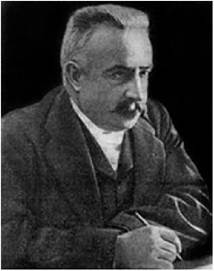
The physician Dmitry Leonidovich Romanovsky was born in 1861 in Pskov Governorate. From 1908 until the end of his life, Dmitry Leonidovich served as a professor at the Clinical Institute for the Advanced Training of Physicians in St. Petersburg. He passed away on February 19, 1921, in Kislovodsk due to angina pectoris.
In his dissertation, On the Parasitology and Therapy of Marsh Fever (1891), D. L. Romanovsky provided a detailed Description of the Fine Structure of the malaria parasite, which had been discovered in 1880 by the French scientist A. Laveran. Using a specialized set of Cell/15.html">Microscopy stains (eosin-methylene blue)—a Modification of the dual-staining blood smear technique proposed in 1889 by the Russian physician C. I. Hencinsky—he demonstrated that malaria parasites in patients treated with quinine suffered structural damage. The most pronounced effect was observed on asexual intracellular forms, whose nuclei disintegrated rapidly. Within just two days, no parasites could be detected in the patients' blood. The results of these experiments led D. L. Romanovsky to argue that quinine harms the parasite far more than the host during malaria Treatment. This Conclusion was of immense historical importance, as previously no one had suspected that a medicinal substance could act in such a manner. It was widely believed that drugs merely reinforced the body's natural defenses or served as a source of supplementary energy. D. L. Romanovsky predicted that in the future, specifically targeted substances would be discovered to combat other diseases, capable of inflicting maximum damage upon parasites while causing minimal harm to host Tissues. Romanovsky's predictions were so far ahead of the science of his time that they completely failed to attract the attention of his contemporaries. However, it was precisely this idea that Paul Ehrlich later revived as the foundation of chemotherapy. The year 2010 marked the 120th anniversary of the first publication describing blood smears stained to reveal the phenomenon known as the Romanovsky effect. Nevertheless, the priority of using a composite stain made of methylene blue and eosin for examining blood preparations and blood parasites belongs to Czesław Iwanowicz Hencinsky, a military physician and prosector at the Odessa City Hospital. In 1888, he published an article, and in 1889, he successfully defended his doctoral dissertation, On the Doctrine of Malaria Microorganisms, which described the application of methylene blue combined with eosin for staining blood smears and blood parasites. The technique gained widespread recognition. Following Hencinsky's publications, several researchers successfully employed this blood-staining method with minor modifications. However, the two-color stain failed to reveal the fine structural details of malaria parasites—the protozoan Nucleus remained invisible, and the morphological features of blood cells were insufficiently distinct. This prompted Romanovsky, who at the time was a physician and head of the ophthalmology department at the St. Petersburg Nicholas Military Hospital, to modify the technique. His choice of Dyes was based on Hencinsky's work. Dmitry Leonidovich was the first to publish findings describing the non-obvious polychromatic effect achieved by staining blood smears and blood parasites with a dye mixture prepared from two separate colorants. He hypothesized that this was due to a third, unindexed dye
(now known as azure B, an oxidation product of methylene blue). The ICSH Expert Panel on Stains and Staining Methods, comprising leading scientists, defines it as follows: "The Romanovsky staining effect occurs when the blue cationic dye azure B and the red-orange anionic dye eosin Y interact with biological substrates to produce more colors than simply blue and red-orange. Purple is the key color that characterizes the Romanovsky effect." Despite its long history, Romanovsky staining remains crucial today for the morphological identification of hematopoietic and other cell types. Research into the mechanisms underlying the Romanovsky effect continues, and new staining variations are actively being developed, including ongoing efforts to implement standardized methodologies in clinical practice.
Friedrich Carl Adolf Neelsen (German: Friedrich Carl Adolf Neelsen; March 29, 1854, Uetersen, Schleswig-Holstein, Denmark – April 11, 1898, Dresden, Saxony, Germany) was a German pathologist.
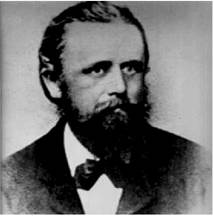
Friedrich Neelsen was born to the deacon Hans Friedrich Neelsen and his wife Berta Sophie, née Lüders. He attended the rectorate school in Uetersen, followed by the school in Altona. He studied medicine at the University of Leipzig, where he earned his doctorate 22 years later. Later, F. Neelsen became a professor at the Institute of Pathology at the University of Rostock. In 1883, alongside Franz Ziehl, he developed an acid-fast staining method widely used in the diagnosis of tuberculosis. He died of laryngeal tuberculosis [1].
Franz Ziehl (German: Franz Ziehl; 1857, Wismar, Germany – 1926, Lübeck, Germany) was a German bacteriologist and a professor in Lübeck.

Building upon the work of Paul Ehrlich, Franz Ziehl developed carbol fuchsin in 1882 as a stain for the tuberculosis bacterium. In 1883, in collaboration with the pathologist Friedrich Neelsen, he developed the staining method used to identify acid-fast mycobacteria.
Last update: 13/08/2026
Editorial and Educational Adaptation: This material has been compiled based on the primary/original source text. The project team performed an editorial review, corrected technical inaccuracies, structured sections, and adapted the content for an educational format.
What was processed:
- elimination of formatting defects (OCR errors, structural breaks, corrupted characters);
- editorial organization of content;
- standardization of terminology in accordance with academic sources;
- verification of factual statements against the original source text.
All mentions of the author, publication year, and origin of the primary text have been preserved in accordance with the source.