MICROBIOLOGY - M.H. Serhiichuk - 2008
Chapter 5. MICROBIAL METABOLISM
SELECTED ANABOLIC PROCESSES IN MICROORGANISMS
Since most anabolic processes in micro- and macroorganisms are identical, we will examine only those that are specifically typical of microorganisms.
Cellular anabolic reactions can be divided into three levels: Level 1 – synthesis of monomers and small molecules; Level 2 – synthesis of polymers and macromolecules; Level 3 – synthesis of structural Cell components. The formation of Cytology/cytology/6.html">Cellular Structural Components involves four Major Classes of macromolecules: Nucleic Acids, Proteins, Polysaccharides, and Complex Lipids. To synthesize these macromolecules, a cell requires over 100 small molecules, including ribonucleotides (4 types), deoxyribonucleotides (4 types), Amino Acids (about 20), Monosaccharides (about 15), over 20 compounds for complex lipid synthesis, 20 Coenzymes and carriers, etc. These are formed from Biosynthesis precursors, also known as key metabolites, intermediate metabolites, or central metabolites. Key metabolites include glucose-1-phosphate, glucose-6-phosphate, ribose-5-phosphate, erythrose-4-phosphate, phosphoenolpyruvate, Pyruvate, 3-phosphoglyceric acid, α-ketoglutaric acid, succinyl-CoA, oxaloacetate, dihydroxyacetone phosphate, and acetyl-CoA.
In heterotrophic microorganisms, key metabolites are drawn from catabolic—or more precisely, amphibolic—pathways, whereas in autotrophic microorganisms, they are synthesized from inorganic carbon. Consequently, the METABOLISM of autotrophs involves a single carbon flow directed toward biosynthesis (СО2 → key metabolites → complex Organic compounds). Heterotrophs, by contrast, exhibit two carbon flows: one (catabolic), directed toward The breakdown of organic substrates via key products into СО2 and Н2О; and another (anabolic), directed from key products toward biosynthesis (Fig. 5.27).
Class="center">
Fig. 5.27. Two carbon flows in the metabolism of heterotrophic microorganisms (a) and a single carbon flow in the metabolism of autotrophic microorganisms (b)
Thus, in chemoorganotrophic microorganisms, the initial substrate is partially broken down into end products with the generation of ATP and reduced equivalents, while another portion serves as building blocks for biosynthesis.
The efflux of key metabolites from cyclic pathways can disrupt their normal functioning. Imagine, for instance, that a cell is growing on glucose as its sole source of energy, electrons, and carbon. To generate energy, it must break down glucose molecules via The Glycolytic Pathway and the TCA cycle. However, for Amino acid biosynthesis, The Cell also needs to withdraw a certain amount of α-ketoglutarate and oxaloacetate (OAA) from the TCA cycle. If a metabolic process begins with 100 glucose molecules, it will yield 200 pyruvates and, consequently, 200 acetyl-CoA molecules destined for the TCA cycle. Suppose that During the first turn of the cycle, 50 molecules of α-ketoglutarate are removed from the TCA cycle for glutamic acid biosynthesis, and 50 molecules of OAA are removed for aspartic acid synthesis. This leaves only 100 molecules of OAA to condense with the next batch of acetyl-CoA. On the second turn of the cycle, another 200 acetyl-CoA molecules enter the TCA cycle, but only 100 can be incorporated because only 100 molecules of OAA remain in the cycle. Once again, 50 molecules of α-ketoglutarate and 50 molecules of OAA are drained from the cycle for biosynthesis. On the third turn of the cycle, 200 acetyl-CoA molecules enter the TCA cycle, but their acceptor (OAA) is entirely depleted. Therefore, without continuous replenishment of the pool of key metabolites diverted to biosynthesis, cyclic pathways cannot function. Such replenishment is accomplished through specialized anaplerotic reactions (replenishing reactions).
Several types of reactions are classified as anaplerotic:
1. Formation of oxaloacetate (OAA) from pyruvate or phosphoenolpyruvate (the Wood-Werkman reaction).
2. Replenishment of the OAA pool via the glyoxylate shunt.
3. Conversion of aspartic acid into oxaloacetate (see AMINO ACID Transamination reactions).
4. Conversion of glutamic acid into α-ketoglutaric acid via deamination.
The most important anaplerotic reaction in nature is the carboxylation of pyruvate to OAA, catalyzed by pyruvate carboxylase:

This reaction occurs in the Mitochondria of animal Cells, but not in plant cells. It establishes a direct link between Glycolysis and the TCA cycle. Pyruvate carboxylase is activated by acetyl-CoA; therefore, whenever The amount of acetyl-CoA exceeds OAA reserves, the level of OAA rapidly increases via the action of pyruvate carboxylase. This reaction is energy-consuming.
The Wood-Werkman reaction (Fig. 5.28): Phosphoenolpyruvate (PEP) is carboxylated by phosphoenolpyruvate carboxylase:

This reaction occurs in Yeasts, Bacteria, and higher plants, but never in animals. It utilizes an energy-rich compound—phosphoenolpyruvate—without the direct Hydrolysis of ATP.
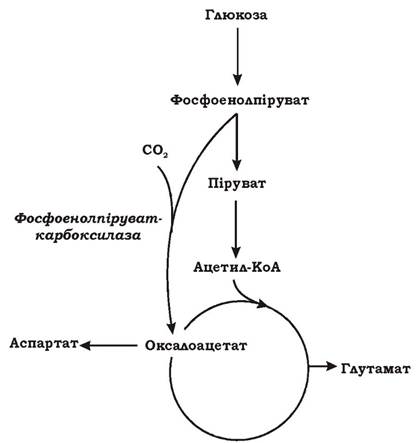
Fig. 5.28. The Wood-Werkman anaplerotic reaction
The glyoxylate shunt is a Modification of the TCA cycle whose primary function is the synthesis of an additional OAA molecule (Fig. 5.29). It differs from the standard TCA cycle by the presence of two Enzymes: isocitrate lyase and malate synthase. Isocitrate lyase catalyzes the Cleavage of isocitrate into succinate and glyoxylate. Malate synthase participates in the Condensation of an additional acetyl-CoA molecule with glyoxylate to form malate.

Fig. 5.29. Glyoxylate cycle
Thus, in The glyoxylate cycle, two molecules of acetyl-CoA are involved, and an additional molecule of OAA is synthesized. The glyoxylate cycle is present in microorganisms and plants, but is absent in animals.
Last update: 13/08/2026
Editorial and Educational Adaptation: This material has been compiled based on the primary/original source text. The project team performed an editorial review, corrected technical inaccuracies, structured sections, and adapted the content for an educational format.
What was processed:
- elimination of formatting defects (OCR errors, structural breaks, corrupted characters);
- editorial organization of content;
- standardization of terminology in accordance with academic sources;
- verification of factual statements against the original source text.
All mentions of the author, publication year, and origin of the primary text have been preserved in accordance with the source.