Fundamentals of Molecular Biology - V.I. Rezyapkin 2009
Genome Organization
Transcription of DNA-Containing Virus Genomes
The Molecular Mechanism of viral METABOLISM/31.html">Transcription is fundamentally similar to that of the host Cell.
Transcription regulation in Viruses is of particular interest. This is because various viral Proteins must be synthesized in different quantities—virion proteins in large amounts, and Enzymes in smaller ones. Furthermore, viral genes are expressed with varying intensity throughout their life cycle.
Transcription regulation is largely mediated by promoters and terminators. In addition, primary transcripts can undergo Processing. Eukaryotic viral mRNAs are characterized by splicing, 5'-end capping, and 3'-end polyadenylation. It should be noted that the Translation process differs between eukaryotic Viruses and Phages. Primarily, this is because phage mRNA can be polycistronic, whereas eukaryotic viral mRNA is typically functionally monocistronic.
Transcription of DNA-Containing Phage Genomes
Transcription of DNA-containing phage genes can be carried out by either cellular or virus-specific RNA polymerases. For instance, Transcription of the genome of filamentous phages (M13, fd, etc.) is performed by cellular RNA polymerase. Their genome encodes 10 proteins. The genes of these phages can be divided into two groups: actively transcribed genes and genes transcribed at a lower rate. Products of the first Gene group are required in significant amounts. The genomic region encompassing these genes features several strong promoters and a strong terminator. Consequently, transcription of genes located in this region initiates from various promoters, whereas termination occurs at a single site. As a result, transcription yields mRNAs of varying lengths with identical 3'-regions. The proteins encoded from the 3'-end side of the mRNA will ultimately be represented by a larger number of cistrons (Fig. 11.11).
Class="center">
Fig. 11.11. Actively transcribed genes of filamentous phages
The second group of genes encodes minor proteins required in negligible amounts. Their promoters are weak, which determines a low transcription efficiency.
Thus, the differential level of Gene Expression IN filamentous phages is determined by promoter strength and the Specific characteristics of mRNA synthesis, with transcripts differing in their 5'-regions.
In phage SPO1, which develops in B. subtilis Cells, transcription regulation occurs through a different mechanism. Its genome contains three groups of genes: early, middle, and late. Early Genes are transcribed immediately after infection within 4-5 min; then middle genes are transcribed. After 8-12 min, transcription of middle genes slows down, and late genes begin to be transcribed. The early phage genes do not differ from cellular genes and are transcribed by cellular RNA polymerase, whose subunit composition is a2ßß’σ55. The σ55 factor determines the ability of RNA polymerase to recognize promoters. One of the early gene products is the gp28 protein. This protein replaces the σ55 factor within the RNA polymerase and binds to the core enzyme a2ßß’, forming the a2ßß’gp28 complex. In this state, RNA polymerase loses its affinity for early gene promoters and begins transcribing middle genes. In turn, the products of middle genes are two proteins, gp33 and gp34. The latter displace gp28, forming the a2ßß’gp33gp34 complex, which drives transcription of late genes.
Thus, phage SPO1 utilizes the cellular RNA polymerase for transcribing its genes, with its ability to read specific genes depending on the presence of certain phage-specific proteins within its composition.
In phage T7, gene transcription is carried out by both cellular and phage-specific RNA polymerases. The phage genome contains early and late genes. Upon entry into The Cell, early genes are transcribed first. This transcription is performed by bacterial RNA polymerase. One of the early gene products is a phage-specific RNA polymerase, which subsequently transcribes the late genes. It is worth noting that the promoters of early and late genes differ. While early gene promoters resemble bacterial ones, late gene promoters have a different Organization. Another product of the early genes is an additional transcription regulator. This protein inactivates the cellular RNA polymerase, thereby halting the transcription of early phage genes.
Transcription Regulation of the phage N4 genome operates differently. Mature phage particles contain a phage-specific RNA polymerase. This RNA polymerase ensures the transcription of early genes. Among the early gene products is a second RNA polymerase, which reads the middle genes. Meanwhile, the late phage genes are apparently transcribed by the E. coli RNA polymerase.
Antitermination plays a significant role in regulating phage gene expression. Accordingly, let us examine transcription regulation for certain genes of phage λ. Phage λ belongs to temperate phages; it either induces a typical lytic infection or integrates its genome into the host chromosome. Transcription of phage genes is performed by cellular RNA polymerase. At an early developmental stage, the latter interacts with a promoter and transcribes the N gene. Transcription at this stage terminates at the terminator region (Fig. 11.12). The product of the N gene is an antiterminator protein that helps RNA polymerase read through the terminator and transcribe the downstream genes (Fig. 11.12). Thus, in the presence of protein N, extended mRNA molecules are produced, the translation of which ensures the synthesis of additional proteins.
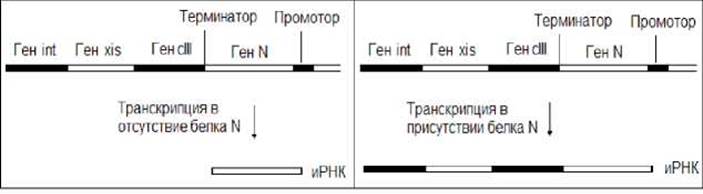
Fig. 11.12. Introduction/30.html">Regulation of Gene Expression in phage λ via antitermination
Another mechanism of gene expression regulation exists in phage λ. The integrase gene—the protein responsible for integrating the phage genome into the cellular genome—can be transcribed from two different promoters. The transcript initiated from one of the promoters contains complementary sequences that form a double-stranded intramolecular Structure, which is then degraded by RNase III. As a result, the Cistron encoding integrase is degraded, and the protein is not synthesized (Fig. 11.13). Conversely, the transcript initiated from the other promoter is stable and is translated to produce integrase.

Fig. 11.13. The double-stranded mRNA structure is degraded by RNase III
Transcription of Eukaryotic DNA-Containing Virus Genomes
The efficiency of transcription of DNA-containing eukaryotic viral genes depends on the "strength" of promoters and terminators. Unlike phage genes, eukaryotic viral genes possess a mosaic structure, and their expression can also be regulated by enhancers. The Production of Eukaryotic viral mRNAs involves 5'-end capping, 3'-end polyadenylation, splicing, and Alternative Splicing. These modifications are frequently carried out by cellular enzymes.
Transcription of eukaryotic DNA-containing virus genomes can be performed by different RNA polymerases. For instance, transcription of the adenovirus genome occurs in The Nucleus via cellular enzymes. A significant portion of the genes is transcribed by RNA polymerase II, while a smaller portion is transcribed by RNA polymerase III. At the same time, the transcription System of the vaccinia virus is localized in the Cytoplasm. This is one of the largest viruses, with a Genome Size of approximately 200,000 bp. The transcription apparatus, including the virus-specific RNA polymerase, is encoded within the viral genome and resides directly inside the core of the virion. The virus exhibits early and late genes, with late gene promoters differing from those of early genes. Early gene promoters are recognized by unmodified virus-specific RNA polymerase, whereas late genes are read by a modified RNA polymerase. Interestingly, the modified enzyme incorporates a subunit of cellular RNA polymerase II. Post-transcriptional modification of primary transcripts is carried out by enzymes encoded in the viral genome.
Last update: 12/08/2026
Editorial and Educational Adaptation: This material has been compiled based on the primary/original source text. The project team performed an editorial review, corrected technical inaccuracies, structured sections, and adapted the content for an educational format.
What was processed:
- elimination of formatting defects (OCR errors, structural breaks, corrupted characters);
- editorial organization of content;
- standardization of terminology in accordance with academic sources;
- verification of factual statements against the original source text.
All mentions of the author, publication year, and origin of the primary text have been preserved in accordance with the source.