BIOTECHNOLOGY - V. H. Herasymenko - 2006
Part I. General Biotechnology
Chapter 1. BIOTECHNOLOGY AS A SCIENTIFIC DISCIPLINE
1.2. BIOLOGICAL OBJECTS AND METHODS OF BIOTECHNOLOGY
Chemical and biological processes are those that employ biological objects of diverse nature (microbial, plant, or animal), for instance, in The production of various commodities such as Antibiotics, Vaccines, Enzymes, feed and food protein, Hormones, Amino Acids, biogas, organic fertilizers, and others.
Biotechnology objects are highly diverse, spanning a range from organized entities (Viruses) to humans (Fig. 1.1).
Biological objects are characterized by parameters such as the level of structural Organization, the capacity for reproduction, and the presence or absence of an independent METABOLISM when cultivated under appropriate conditions. The Nature of biological objects refers to their structural organization. In this context, biological objects can include molecules (enzymes, immunomodulators, nucleosides, oligo- and Polypeptides, etc.), organized entities (viruses, phages), unicellular organisms (Bacteria, Yeasts), and multicellular individuals (filamentous higher Fungi, plant Tissues, single-layer Cell cultures
of mammals), as well as whole PLANT AND ANIMAL organisms. However, even when a biomolecule is used as a biotechnology object, its initial Biosynthesis is in most cases carried out by the respective Cells. Consequently, it can be stated that biotechnology objects belong either to microbes or to plant and animal organisms.
Thus, regardless of the taxonomic position of the biological object, Structure/182.html">Practical Application involves either natural organized entities (phages, viruses) and cells with native Genetic information, or cells with artificially engineered genetic information. In other words, cells are utilized in any case—whether derived from microorganisms, plants, animals, or humans.
Class="center">
Fig. 1.1. Classification of biotechnology objects
(according to N. P. Yelinov, 1995)
Currently, the majority of biotechnology objects are microbes, a world that is vast and extremely diverse. They include all prokaryotes—bacteria, actinomycetes, rickettsiae, blue-green Algae—and a portion of eukaryotes, such as Yeast, filamentous fungi, Protozoa, and algae (Fig. 1.2). Among plants, microscopic algae represent microbes, while among animals, microscopic protozoa do so.

Fig. 1.2. Classification of microorganisms
(after J. Bailey, D. Ollis, 1989)
The foundation of modern biotechnological production is microbiological synthesis, meaning the synthesis of various substances using microorganisms. Plant and animal-derived entities have not yet achieved widespread application due to their strict cultivation requirements, which significantly increase production costs.
For the Implementation of biotechnological processes, the key parameters of biological objects include purity, The rate of cell proliferation and viral particle reproduction, as well as the activity and stability of Biomolecules or biosystems.
When using enzymes (in an isolated or immobilized state) as biocatalysts, it becomes necessary to protect them from degradation by common saprophytic microflora. Such flora can contaminate the biotechnological process from the outside due to system non-sterility, for instance, through equipment leakage.
The rate of cell proliferation and the reproduction of Viral Particles are directly proportional to biomass accumulation and metabolite production.
The activity and stability of biological agents in an active state are critical indicators of their suitability for long-term use in biotechnology.
The core element of a biotechnological process, which defines its very essence, is The Cell. It is precisely within the cell that the target product is synthesized. As accurately noted by Yu. A. Ovchinnikov (1985), the cell is a miniature chemical plant operating with immense productivity, ultimate coordination, and according to a predetermined program. Every minute, it synthesizes hundreds of highly complex compounds, including giant Biopolymers, primarily Proteins.
A generalized flowchart for obtaining biotechnological products is shown in Fig. 1.3.
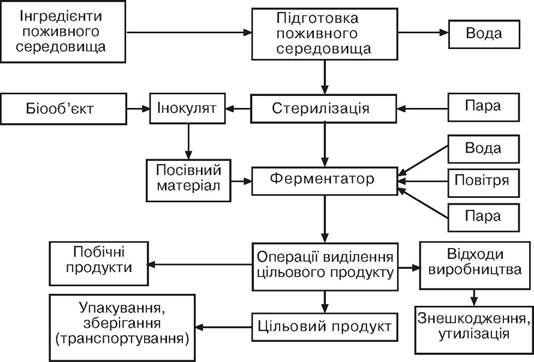
Fig. 1.3. Generalized schematic diagram of biotechnological processes
(after N.P. Yelinov, 1995)
Biotechnological Methods. Biotechnology possesses its own Specific methods. These include large-scale submerged cultivation of biological objects in batch, fed-batch, or continuous modes, as well as the cultivation of plant and animal tissue cells under specialized conditions. Biotechnological cultivation methods are carried out using specialized equipment; for instance, bacteria and fungi are grown in fermenters for the production of antibiotics, enzymes, organic acids, certain Vitamins, and other valuable substances.
Similar fermenters are used to cultivate certain human cells (such as blasts) to produce interferon protein, as well as specific types of plant cells. However, the latter are more commonly grown under stationary conditions on solid (e.g., Agar-solidified) media within Glass or plastic containers.
Other methods employed in biotechnology are shared with related disciplines such as microbiology, biochemistry, organic chemistry, and other sciences. Of particular note are the Methods of cell and Introduction/32.html">Genetic Engineering, which form the foundation of modern biotechnology.
A defining characteristic of biotechnological methods is that they must generally be performed under aseptic conditions (from the Greek a- meaning 'not' and septicos meaning 'putrid'), thereby preventing any contamination of the culture medium with pathogenic and saprophytic microorganisms.
Pathogenic species pose a direct hazard to production personnel and consumers of the final products, whereas saprophytic species may act as competitors for nutrient substrates, antagonists, or producers of toxic substances, including pyrogens.
Last update: 11/08/2026
Editorial and Educational Adaptation: This material has been compiled based on the primary/original source text. The project team performed an editorial review, corrected technical inaccuracies, structured sections, and adapted the content for an educational format.
What was processed:
- elimination of formatting defects (OCR errors, structural breaks, corrupted characters);
- editorial organization of content;
- standardization of terminology in accordance with academic sources;
- verification of factual statements against the original source text.
All mentions of the author, publication year, and origin of the primary text have been preserved in accordance with the source.