Fundamentals of Bioinformatics - Ogurtsov A.N. 2013
Foundations of Bioinformatics
Examples of Data Comparison
Biological Classification and Nomenclature
Biological nomenclature is based on the concept that Living organisms are subdivided into species—groups of similar organisms sharing an identical genome.
The Swedish naturalist Carl Linnaeus (Carl von Linné, 1707–1778) classified organisms according to a hierarchy: kingdom, phylum, Class, order, family, genus, and species (Table 3).
Table 3 - Classification of humans and the fruit fly
|
Human |
Fruit fly |
|
|
Kingdom |
Animal |
Animal |
|
Phylum |
Vertebrate |
Invertebrate |
|
Class |
Mammal |
Insect |
|
Order |
Primate |
Dipteran |
|
Family |
Hominid |
Drosophilid |
|
Genus |
Human |
Drosophila |
|
Species |
sapiens |
melanogaster |
Modern taxonomists also introduce several additional levels (taxa).
Currently, the binomial nomenclature system is universally accepted, whereby a species name consists of two Latin words: the first is the genus name, and the second is the specific epithet.
For example, humans belong to the species Homo sapiens, and the fruit fly to Drosophila melanogaster.
Each species is uniquely defined by its binomial name; in addition, some species have common names (for example, Bos taurus is the bull/cow). Of course, most species do not have such names.
Originally, Linnaean Taxonomy was the only system available, based entirely on the observation of Similarities and differences among organisms. With The Development of evolutionary theory, it became clear that this system quite accurately reflects the Lineage of species. However, the question arises: what kinds of similarities indicate that organisms share a common ancestor?
Organs with a common evolutionary origin are called homologous (for example, the human arm and the eagle's wing).
Other very similar organs may have evolved independently As a result of convergent evolution. For instance, the wing of an eagle and the wing of a bee are the result of convergent evolution and perform similar Functions (even though their common ancestor lacked wings entirely).
Conversely, through divergence, homologous organs can differ significantly in Structure and function. For example, the auditory ossicles of the human Middle ear are homologous to the jaw bones of primitive fish, while the Eustachian tube is homologous to gill slits. In most cases, scientists can distinguish between truly homologous organs and those that have become similar through convergence.
The most accurate insights into the phylogenetic relationships of organisms are provided by sequence analysis.
The systematics of higher organisms is well studied, for whom sequence analysis combined with classical Methods of comparative anatomy, paleontology, and Embryology typically provides a complete picture.
The classification of microorganisms is more challenging,
✵ partly because it is not entirely clear which traits should be used for classification;
✵ and partly because intensive Gene migration occurs, which prevents The Genome structure from remaining constant, causing it to change continuously.
Ribosomal RNAs (rRNAs) are an essential component of all organisms.
Based on the analysis of 16S and 18S ribosomal RNAs, Carl Richard Woese divided All living organisms into three domains: Bacteria, Archaea, and Eukaryota (Figure 20).

Figure 20 - Classification scheme of living organisms
Bacteria and Archaea are prokaryotes; their Cells lack a membrane-bound Nucleus. Typical representatives of bacteria include microorganisms that cause many diseases, as well as Escherichia coli, the primary model Organism in molecular biology. The domain Archaea includes thermophiles, halophiles, sulfate-reducing, and methanogenic archaebacteria.
Humans belong to eukaryotes—organisms whose cells contain a nucleus. Eukaryotes also include Yeasts, amoebas, Ciliates, all Multicellular Organisms, and many others.
Bacterial genomes are the most thoroughly studied due to their clinical importance, and it has turned out that they are relatively simple. Nevertheless, we can learn more about our own origins from archaea than from bacteria. Despite obvious differences in life forms and the absence of a nucleus in archaeal cells, they are, in a sense, closer at THE MOLECULAR LEVEL to eukaryotes than to bacteria. It appears that among all living organisms, archaea are the most closely related to the ROOT of the tree of life.
Figure 20 illustrates the deepest level of the tree of life. The branch Eukarya includes animals, plants, Fungi, and unicellular organisms. At the apex of the Eukarya branch are Metazoa (multicellular organisms). The Phylogenetic Tree of Metazoa is shown in Figure 21.
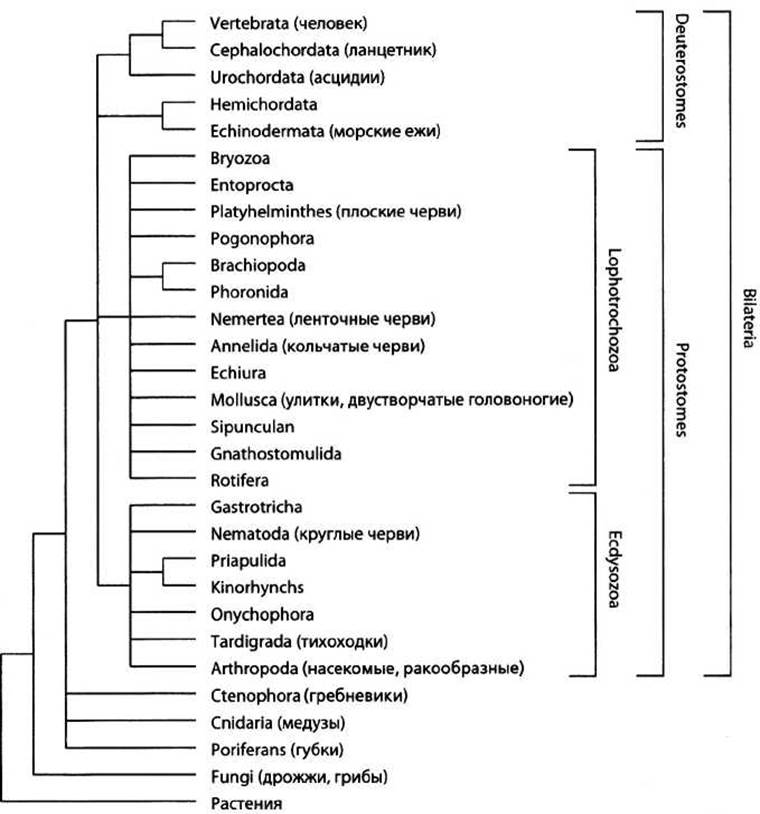
Figure 21 - Phylogenetic tree of Metazoa (Multicellular animals)
The Bilateria group comprises all animals exhibiting bilateral body Symmetry. Protostomes and deuterostomes represent two major lineages that diverged early in evolution, approximately 670 million years ago. They exhibit distinct patterns of embryonic development, including differences in early Cell Cleavage processes, the opposite orientation of the adult gut relative to early blastopore invagination, and the Water/144.html">Origin of the Skeleton from either the mesoderm (in deuterostomes) or the ectoderm (in protostomes).
Protostomes comprise two major subgroups, differentiated based on 18S rRNA analysis (from the small ribosomal subunit) and HOX gene sequences (most of which are homeotic genes—regulatory genes whose Mutations can transform one body part into another). Morphologically, Ecdysozoa are characterized by molting a cuticle—a rigid external layer of organic matter—whereas Lophotrochozoa possess soft bodies.
Humans and our closest relatives are deuterostomes (Figure 22). Chordates, including vertebrates, and Echinoderms are all classified as deuterostomes.
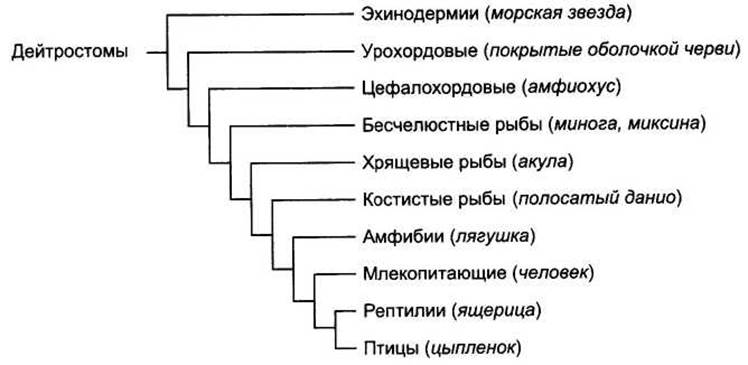
Figure 22 - Phylogenetic tree of deuterostomes. Chordates, including vertebrates, and echinoderms are all deuterostomes
Last update: 11/08/2026
Editorial and Educational Adaptation: This material has been compiled based on the primary/original source text. The project team performed an editorial review, corrected technical inaccuracies, structured sections, and adapted the content for an educational format.
What was processed:
- elimination of formatting defects (OCR errors, structural breaks, corrupted characters);
- editorial organization of content;
- standardization of terminology in accordance with academic sources;
- verification of factual statements against the original source text.
All mentions of the author, publication year, and origin of the primary text have been preserved in accordance with the source.