Basics of Evolution - Korzh O.P. - 2006
Part I. MICROEVOLUTION
Chapter 7. Natural Selection
7.3. Forms of Natural Selection
There are various approaches to classifying forms of natural Selection, with over 30 currently recognized. Some researchers attempt to distinguish between process and result in selection, viewing it as either positive (the creative action of actively shaping a trait) or negative (editing through the simple elimination of individual forms). According to N.V. Timofeeff-Ressovsky and co-authors, such approaches are unproductive, because selection is always a process (possessing both positive and negative directions simultaneously), and its effects can only be evaluated by outcomes after a certain period of time.
Another Classification, in our view excessively detailed, was proposed by Yu.I. Rozhkov and O.V. Pronyaev. According to this classification, the existing diversity of Organism Variability types, environmental conditions, and population and species systems gives rise to a variety of selection processes, which should therefore dictate the classification of selection itself.
The classification proposed by these authors is based on Three types of natural selection: individual, positional, and group. However, they argue that selection acting on Quantitative Traits differs in certain ways from selection acting on qualitative traits (Table 7.1).
Class="center">Table 7.1. Key types and forms of selection acting on quantitative traits (according to Yu.I. Rozhkov, O.V. Pronyaev, 1994)
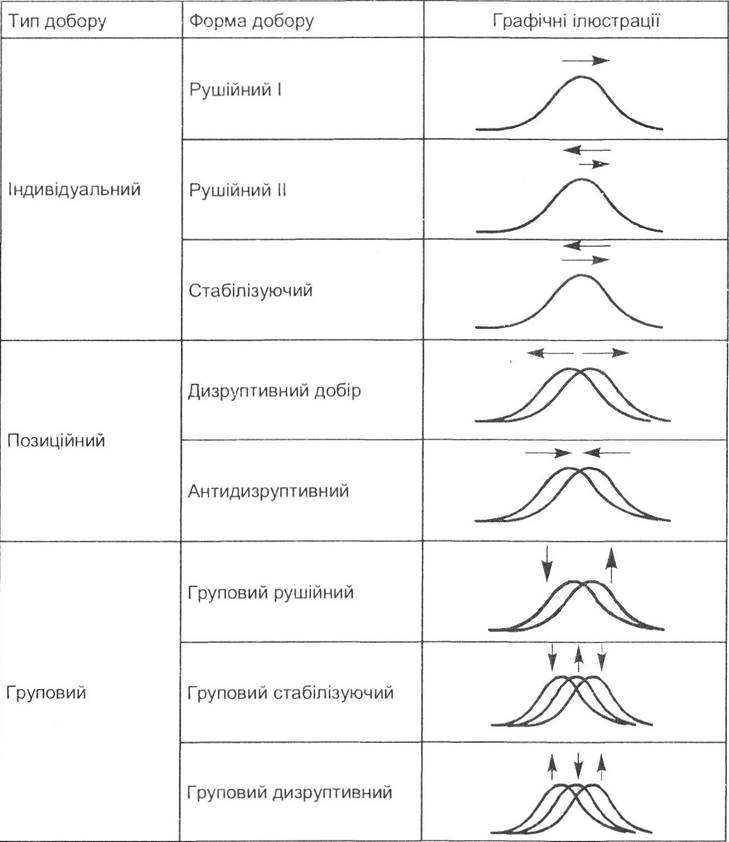
Table 7.2. Key types and forms of selection acting on qualitative traits (according to Yu.I. Rozhkov, O.V. Pronyaev, 1994)
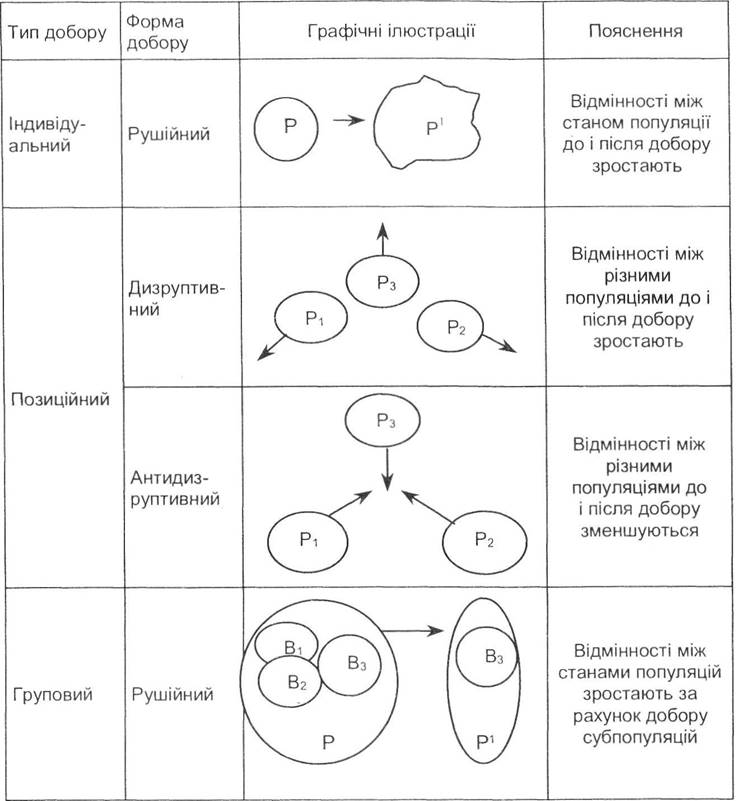
Individual selection involves the sorting of individual organisms within populations. When acting on quantitative traits, three forms of this selection are distinguished: directional I, directional II, and stabilizing. When selection acts on the qualitative traits of specific organisms, only the directional form is preserved.
Group selection simultaneously affects entire groups of varying rank—ranging from family groups to populations and even species. The forms of this type completely mirror the previous ones, both in the case of quantitative and qualitative traits.
Positional selection is intermediate between the preceding types and occurs when individual changes within multiple groups lead either to their mutual divergence (disruptive form) or mutual convergence (antidisruptive form). Unlike the previous types, forms of this category characterize the action of selection on both quantitative and qualitative traits.
While acknowledging the originality of this approach, we should note that it is more practical to single out (albeit conditionally) monofactorial and polyfactorial forms of selection. If we adhere to the classification of selection phenomena on our proposed basis, only the three classical forms—directional, stabilizing, and disruptive—can be classified as monofactorial. All other variants, both those mentioned above and unmentioned ones (e.g., frequency-dependent selection), are polyfactorial and can be represented as a complex of preceding elementary forms.
The evolutionary process is always relatively long-term and primarily consists of the balanced action of all the aforementioned elementary forms of natural selection. At each stage of The formation of a trait used to study the state of specific populations, the operation of different forms of selection can be observed. Initial stages are invariably dominated by disruptive processes that separate a new form (or forms) from the maternal stock. Subsequently, these transition into directional processes aimed at building new adaptive complexes for the newly emerged forms. The process concludes with stabilizing selection, which consolidates the resulting trait complexes.
Since in nature we predominantly encounter the results of selection (organisms already adapted to specific conditions), we observe a significant predominance of the stabilizing form. Frequency-dependent selection can be viewed as an intermediate stage in the formation of a particular trait within a population. It consists of alternating shifts in the direction of natural selection in response to environmental changes that are mostly inconsequential to the organism's viability; for example, Drosophila females mate with white-eyed or red-eyed males when they constitute a minority in the population. Over time, the population may lose some of the Genetic information responsible for polymorphism and periodic shifts in the direction of selection. This can lead to the dominance of stabilizing selection.
Primary Forms of Selection
These include the three classical forms recognized by the majority of specialists, which can be considered relatively monofactorial: directional, stabilizing, and disruptive.
In nature, no single ecological factor acts in isolation, but if the integrated Environmental Impact on a population has a single vector, it can be provisionally considered monofactorial. Sometimes, only two forms of natural selection are distinguished by combining directional and disruptive selection.
Directional natural selection is the most typical form, identified by C. Darwin, which drives the formation of a new complex of adaptive traits. Its essence lies in shifting the population mean of a trait in alignment with the overall direction of environmental pressure (Fig. 7.1). Directional selection produces new adaptations through the directed restructuring of the population's Gene pool, which is accompanied by the reorganization of the individuals' genotypes. This form prevails under conditions of continuous environmental change, and its consequence is either a Modification of the reaction norm or its expansion.
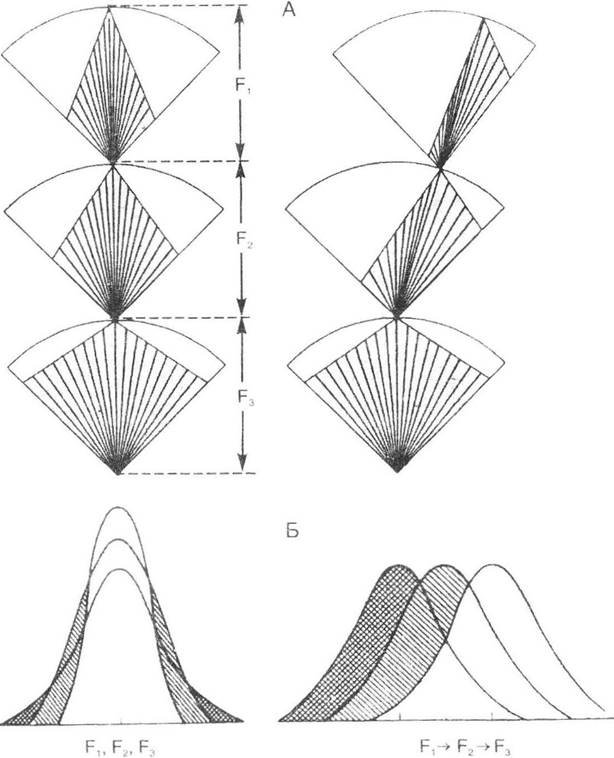
Fig. 7.1. Comparison of directional and stabilizing forms of natural selection
(according to N.V. Timofeeff-Ressovsky, N.N. Vorontsov, A.V. Yablokov, 1969):
A - selection action within a single offspring; B - selection pressure within a population
The Effect of this form of natural selection can be illustrated by The phenomenon of industrial melanism: environmental pollution leads to the replacement of light-colored moths by dark-colored ones. For instance, in England over the past 120 years, about 70 of 700 moth species have shifted from a light coloration to a darker one. Similar Examples include The Emergence of insect strains resistant to insecticides and microorganisms uninfluenced by Antibiotics. These facts demonstrate the adaptive significance of natural selection, although we cannot yet speak of the creation of a new species (in its essence, this process is closer to an elementary evolutionary phenomenon).
The stabilizing form of natural selection was thoroughly investigated by I. I. Schmalhausen. According to Charles Darwin's theory, the consequences of selection are the formation of new adaptive traits and the elimination of those that have lost their adaptive value, as well as the preservation of beneficial adaptations. Initially, it was believed that the traits of organisms remain unchanged across generations because the corresponding genes are preserved intact. However, the existence of hereditary variability convincingly shows that this phenomenon of trait stability requires additional explanation, which is provided by the form of natural selection introduced by I. I. Schmalhausen.
The Essence of stabilizing selection is that in long-term stable environmental conditions, organisms with the most optimal characteristics (the so-called intermediates) acquire selective value. If environmental conditions remain relatively stable (fluctuations in environmental factors are random or periodic) and a certain species of living organisms is adapted to these "familiar" conditions, the phenotypes of individual specimens also undergo random or periodic changes. As long as the environment remains without significant changes, the phenotype of the species remains relatively constant (Fig. 7.1). Consequently, the action of this form of selection is aimed at preserving organisms with average traits and preventing manifestations of phenotypic variability (including Mutations that deviate from the average phenotype). The result of stabilizing selection is a high degree of similarity among individuals of both plants and animals within a population. Moreover, this similarity concerns only the phenotype, whereas the genotype, as a rule, exhibits a significant expansion of variability due to the accumulation of hidden mutations.
According to I. I. Schmalhausen, the most important significance of stabilizing selection lies in the stabilization of the relationships between the organism or population and the environment. Thus, this form of selection not only preserves traits but also stabilizes the relationships between organisms and their surroundings.
Another consequence of the stabilizing form of natural selection is the improvement of ontogenetic processes. This concerns The Development of the optimal phenotype under specific conditions, which occurs through the selection of various genotypes via the so-called canalization of morphogenesis—a process that stabilizes the development of organisms in a specific direction due to the action of modifier genes. C. Waddington and F. Dobzhansky even proposed dividing stabilizing selection into normalizing (preserving established adaptations) and canalizing, under METABOLISM/18.html">The Influence of which ontogeny is improved.
Naturally, ideal adaptation does not exist in nature. Even under stable conditions, the further perfection of an organism can proceed in various ways. This represents yet another manifestation of the creative character of natural selection, which gradually develops certain traits over the long evolutionary history of organisms.
The effect of the stabilizing form of natural selection can be understood through the following example. Sparrows with longer and shorter wings perished during a storm: the former found their excessively long wings a hindrance against the wind, while the latter lacked sufficient strength. Another example is the stability of flower parts compared to the Water/115.html">Vegetative Organs of plants: flower proportions are adapted to insect pollination and therefore must maintain optimal sizes for successful pollination.
Regarding the stabilization of ontogeny (canalizing action), examples include organisms with a very wide norm of reaction, through which various morphs can form under the influence of specific factors. This applies to certain species of buttercups and arrowhead, in which leaf shape directly depends on lighting conditions (the depth at which the plants are submerged). Among animals, the most striking examples are provided by social insects, which exhibit caste polymorphism. Due to feeding peculiarities and the influence of specific pheromones, individuals of a strictly defined caste are formed (in evolutionarily more advanced forms, caste determination shifts to increasingly early Stages of Ontogeny).
The disruptive form of natural selection is not always recognized as independent and can be viewed as a variant of directional selection. Nevertheless, it can be considered primary because the action of selection in this case is primarily directed against the average trait within the population. Since this form promotes the simultaneous development of several directions of variability (phenotypic classes), polymorphism is formed within the population.
When the different directions of disruptive selection are caused by differences in environmental conditions in separate PARTS OF THE range (e.g., clinal variability), the populations inhabiting them acquire stable genotypic and phenotypic differences, which has adaptive significance. If free interbreeding between such populations ceases due to certain isolation mechanisms, their further divergence will be observed, eventually leading to the formation of independent species.
F. Dobzhansky proposed introducing "balancing selection," which has two forms: selection for diversity, i.e., disruptive selection that forms polymorphism, and selection for heterozygosity (heterozygotizing selection), which increases the gene pool of the population. Taking the latter into account allows us to change the perception of the genetic load: it acquires a certain ecological significance by increasing the viability of heterozygotes.
Examples of the action of the disruptive form include phenomena of polymorphism in populations of living organisms. These include the light and dark forms of the two-spotted lady beetle, the variable coloration (matching the Background environment) of snails, mantises, and caterpillars, and even the caste dimorphism characteristic of social insects (morphological differences between animals of different castes). However, the most striking example of this can be considered the formation of insects with very long wings or entirely wingless forms on islands with constant winds. In the latter case, animals with the average trait (short wings) cannot withstand the wind and perish in the sea.
Secondary forms of natural selection. We can classify as secondary those forms of natural selection that arose later in evolution or are complex and can be broken down into several primary ones. An endless number of such forms can be proposed, but all of them ultimately reduce to a complex of primary ones (directional selection II according to Yu. I. Rozhkov and O. V. Pronyaev, frequency-dependent selection, etc.).
Sexual selection arose later in evolution, at least after the formation of separate sexes in animals. Certain tenets regarding this form were formulated by Darwin himself, but The Theory of sexual selection was most actively developed by L. Sh. Davitashvili.
When traits of only one sex are selected, the selection is called sexual. The result of this form of selection is the development of Sexual Dimorphism (Fig. 7.2). The Evolutionary Significance of this phenomenon lies in the fact that an individual immediately recognizes the sex of another representative of its species, allowing it to behave accordingly. In those animal species where sexual dimorphism is absent or relatively weakly expressed, sexual selection concentrates its impact on behavior, promoting the formation of appropriate rituals (the latter are characteristic of animals regardless of the presence of sexual dimorphism). Sexual selection generally contributes to the Progressive development of the species, although in many cases it can cause the development of traits unfavorable for the survival of the individual.
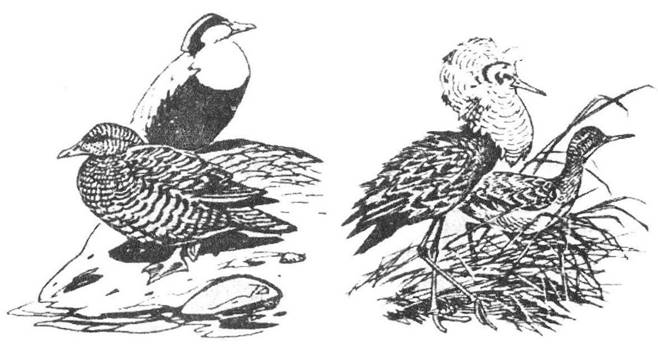
Fig. 7.2. Examples of sexual dimorphism in birds (according to O. V. Mikheyev, 1995):
a — common eider (Somateria mollissima); b — ruff (Philomachus pugnax) in breeding plumage
Previously, there were debates in science regarding the expediency of distinguishing sexual selection as an independent form (even Wallace doubted its appropriateness). However, Darwin emphasized the specific consequences of sexual selection for organisms, which do not coincide with other forms. Traits fixed As a result of this form of natural selection are useful only for a short period—the realization of reproductive potential. All other times they may be neutral or even harmful to a given organism, thereby increasing the likelihood of its death from predators or other causes. At the same time, if the death of individuals (even many) contributes to the effective reproduction of The population as a whole, this phenomenon MUST be regarded as adaptive.
It should not be assumed that sexual selection can act independently of Other forms of natural selection. Moreover, an organ that initially formed under the direct influence of sexual selection may subsequently acquire a new function, while an organ that had nothing to do with reproductive processes can be modified and acquire a certain sexual significance. Therefore, in the formation of sexual characteristics, one can distinguish driving, disruptive, and stabilizing forms of natural selection.
According to L. Sh. Davitashvili, sexual selection is absent in plants, protists, and lower invertebrates. At the same time, even in trilobites (known from the Early Cambrian), one can assume the possibility of lower manifestations of this form of natural selection. The development of sexual selection must have directly depended on the improvement of Sense Organs, primarily Vision and Hearing, as well as the general development of The Nervous system. This is because the formation of mating behavior requires certain prerequisites both in receiving necessary environmental information and in Processing it and executing an adequate response.
The pathways by which sexual selection directs the evolution of major groups can differ significantly, depending on the General Structural Features, population Structure, and behavior of the respective animal groups. While many fish and birds develop bright coloration and exaggerated anatomical-morphological structures, mammals generally possess predominantly pale coloration.
In the historical past, sexual characteristics differed significantly from modern forms. In Cenozoic and Mesozoic reptiles, these formations were extraordinarily large (crests, sails, and various outgrowths — Fig. 7.3), which required significant expenditures of material and energy for their development. Moreover, these structures were immobile or possessed very limited mobility, meaning they did not engage in active displays and hardly performed any other Functions. More modern adaptations (such as feather coloration in birds) prove to be more progressive due to their lightness, capacity for periodic changes, significant lability, ease of use, and multifunctionality. Animal behavior acquires special significance, taking the form of specialized rituals during the reproduction period (mating behavior — Figs. 6.3, 7.2).
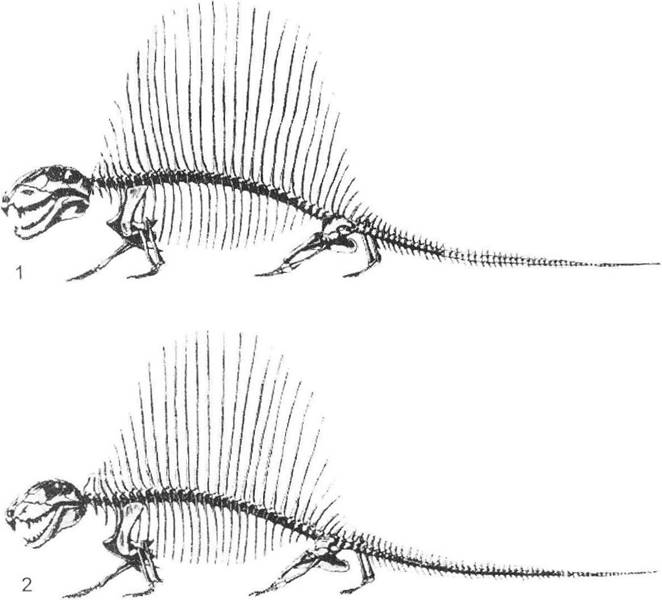
Fig. 7.3. Sexual selection in pelycosaurs exemplified by Dimetrodon limbatus (after Romer and Price (L. Sh. Davitashvili, 1961)):
1 - male (body length about 283 cm); 2 - female (body length about 256 cm)
Secondary sexual characteristics are extremely variable, which is associated with their accelerated evolutionary development. Darwin explained this phenomenon long ago: the Formation of secondary sexual characteristics largely depends on the mate choice of the opposite sex (manifested through the direct preferences of specific organisms). Naturally, this variability is not limitless and has its own norm of reaction. Therefore, the variability of sexual traits mainly involves minor deviations while preserving the overall pattern.
Mating behavior in various animal species undergoes even greater differences compared to Morphology and can evolve significantly faster than morphological structures. According to N. Tinbergen, mating behavior fulfills at least four additional functions: synchronization, spatial orientation, courtship, and reproductive isolation.
Synchronization is necessary for the simultaneous maturation of Gametes; courtship aims to clearly define the roles of partners. Spatial orientation helps partners find one another (acting primarily as an attraction function), whereas reproductive isolation prevents interbreeding with representatives of other species. Therefore, mating behavior cannot be reduced merely to male tournaments for the right to possess a female (in some species, competition occurs between both males and females, and sometimes exclusively among the latter).
A characteristic feature of mating competitions is that they extremely rarely become fierce enough to result in the death of one of the partners. Most of these contests boil down to a display of strength followed by the retreat of the weaker rival. This trend is evolutionarily justified, as the defeated organism does not perish, and the younger individual gets the opportunity to participate in reproduction the following year. Consequently, sexual selection does not so much destroy weaker organisms as exclude them from reproduction.
One of the structures that arise precisely under the influence of sexual selection can be considered the horns of ungulates, the evolution of which was examined in detail by S.O. Severtsov. Today, it is quite difficult to determine with certainty what horns were originally intended for in ungulates at the beginning of their evolution—fighting for females or defense against predators. The small stature and strength of ancestral ruminant ungulates, insufficient to deliver lethal blows during fights for females, indicate that the appearance of horns may have been the result of sexual selection. As animal body size increased, sharp short horns (Fig. 7.4) became dangerous, directing their evolution toward transforming them into tournament weapons.
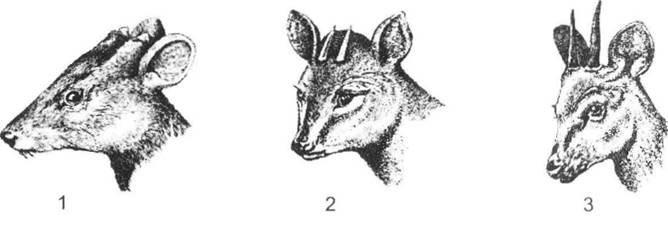
Fig. 7.4. Horn shapes in primitive deer (after S.O. Severtsov, 1951):
1 - HEAD of Elaphodus; 2 - head of Pudu; 3 - head of Mazama rufa
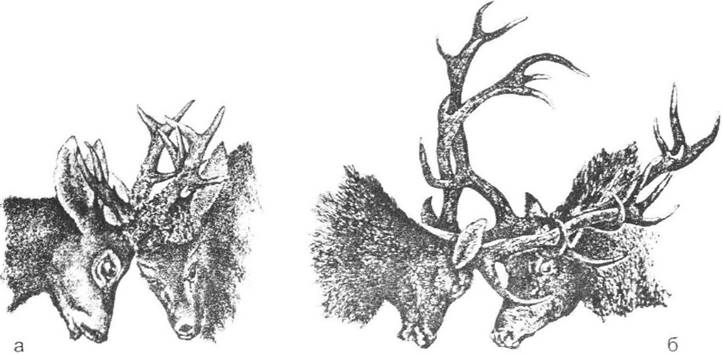
Fig. 7.5. Male tournaments:
a - roe deer (Capreolus capreolus); b - red deer (Cervus elaphus) (after S.O. Severtsov, 1951)
Modern forms such as moose and deer defend themselves against predators with their hooves, while their branched antlers serve exclusively for competing with other males for females (Fig. 7.5). In deer, which frequently engage in clashes over females, the interlocking of branched antlers replaces stabbing with pushing using the full force of the body and legs (except in cases of unbranched antlers, the so-called "killer deer"). Additionally, antlers are shed annually in the spring (the non-breeding period) and then regrowing in time for the new reproductive season. Sharp brow tines, which point forward like hooks but do not participate in mating tournaments, may be used by deer to defend against predators.
A completely different developmental trend is observed in bovids, whose horns are covered with a horny sheath and cannot branch. Males use them not for striking blows, but as "swords," which is why their weight and size are of paramount importance (Fig. 7.6).
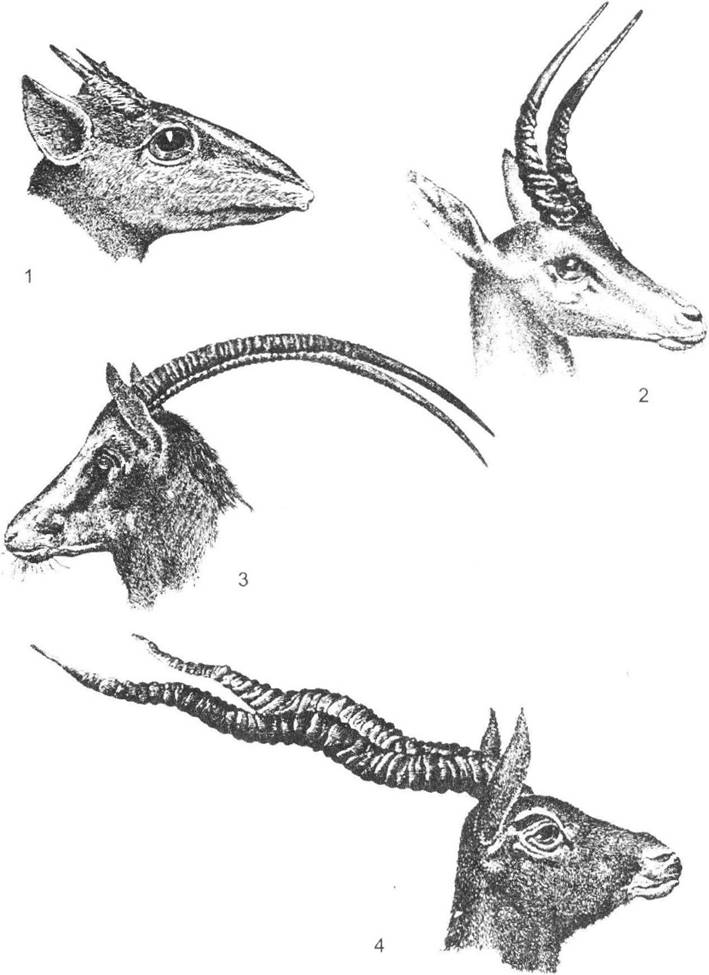
Fig. 7.6. Heads of various antelope species (after S.O. Severtsov, 1951):
1 - Madoqua; 2 - Ammodorcas klarkei; 3 - Oryx leucoryx; 4 — Antilopa cervicapra
Large bovid representatives (such as cattle) can effectively use their horns to defend against predators, reflecting the active operation of interspecific Struggle for Existence. In some forms (such as wildebeests), under the influence of sexual selection, the main part of the horn transforms into a helmet that protects the animal's Skull from head-on blows by rivals, while the tips remain sharp and hooked, thereby increasing defensive efficiency against predators. When significant predatory pressure disappears (a prime example being domestic animals), sexual selection predominates among ungulates, causing a shift in the shape and placement of horns on the skull (they do not extend beyond the plane of the forehead), making it impossible to stab a rival.
Group selection is often contrasted with individual selection as a form of natural selection in which members of a specific group gain a reproductive advantage. This form must likewise be considered secondary, as it emerged relatively late in evolution. Because group selection can only take place against the backdrop of specific social relations among organisms, it arose no earlier than sub-social animal communities.
Some scientists believe this form of selection is nothing more than an assumption, since it is largely based on altruism, which may seemingly contradict the General concept of natural selection. Indeed, group selection often leads to the fixation of traits that are detrimental to the individual organism yet beneficial to the group and the species as a whole.
One example of this process is social insects, in which only a few individuals possess reproductive capabilities, while other members of the colony merely ensure the normal realization of their reproductive potential. It is believed that social insects arose due to the necessity for better nest defense, the transmission of intestinal symbionts, and so on; that is, in this case, the division of labor among colony members—though disadvantageous to the individual—has a direct positive significance for the Evolution of the species as a whole. Non-social forms, especially under conditions of high competition, are significantly inferior to social forms in all respects.
Human Evolution even more clearly highlights the existence of group selection, as it constantly proceeded under its direct influence. All forms, starting from anthropoid apes, that did not follow the path of social development proved doomed.
I.I. Schmalhausen, who was one of the first to single out this form of selection, understood it as the predominance of members of certain groups (primarily in reproduction)—ranging from family groups to suprapopulation formations. Regardless of whether we acknowledge the existence of group selection or not, it remains for now the only more or less realistic explanation for the evolution of society as a biological phenomenon.
Food for Thought
This chapter concludes the exposition of General Principles concerning the mechanisms of macroevolution. Next, we will consider the consequences, namely the formation of adaptations and, as the generalized result of the entire evolutionary process, speciation. Despite the fact that microevolution is the most thoroughly developed part of the Synthetic Theory of evolution, The Need for new generalizations persists here as well. This primarily concerns the individual organism. So far, the mechanisms of microevolution are based either on the pre-organismic level (mutations, etc.) or on supra-organismic levels (populations, waves of life, etc.). Meanwhile, the most crucial unit of life—the individual—remains overlooked by scientists. Can we reconcile ourselves to such a limited approach to The Study of biological phenomena?
Last update: 07/08/2026
Editorial and Educational Adaptation: This material has been compiled based on the primary/original source text. The project team performed an editorial review, corrected technical inaccuracies, structured sections, and adapted the content for an educational format.
What was processed:
- elimination of formatting defects (OCR errors, structural breaks, corrupted characters);
- editorial organization of content;
- standardization of terminology in accordance with academic sources;
- verification of factual statements against the original source text.
All mentions of the author, publication year, and origin of the primary text have been preserved in accordance with the source.