Plant Physiology - Musienko M. M. 2001
General principles of regulation of plant growth and morphogenesis
Membrane regulation
Membrane regulation is fundamentally based on the non-equilibrium state maintained by various membrane chemo-, photo-, and mechanoreceptors. Highly sensitive to quantitative and qualitative changes in both the external and internal environment, they ensure an appropriate cellular response.
Membrane regulation relies on a state of dynamic disequilibrium maintained within each Cell at a specific steady-state level through the action of ion pumps localized in the membranes. A particularly crucial role is played by proton pumps functioning via membrane H+-ATPases or redox chains, which establish the electrochemical H+ ion potential (ΔμН+). This potential comprises two components: the electrical or Membrane Potential (Δψ) and the chemical or concentration potential (ΔpH), meaning that ΔμН+ = Δψ + ΔpH. The membrane potential across the Plasmalemma reaches 100–200 mV, with the inner side of the membrane carrying a negative charge. The energy of this potential is utilized by The Cell to take up cations, anions, sugars, and Other Compounds. Maintaining a steady-state membrane potential is a vital component of Homeostasis. If the plasmalemma membrane potential drops, its value is restored through the opening of potassium channels and the efflux of K+ ions, or via the activation of the proton pump (Polovyi & Salamatova, 1991).
Membrane regulation exerts a decisive influence on shifts in intracellular calcium concentrations. Calcium enters the cell along its electrochemical gradient via calcium channels, and is pumped out via the action of Ca2+-ATPase or through antiport with hydrogen ions. Calcium can be accumulated within and released from vacuoles and The Endoplasmic reticulum. Its concentration in the Cytoplasm is maintained at a rather low level (10-7 M). A slight increase in its concentration to (10-6 M) affects The activity of Ca2+-dependent protein Kinases, protein phosphorylation, cytoskeletal dynamics, secretory and mitotic activity, and other processes. Calcium regulates all these events by binding to calmodulin and other calcium-binding Proteins.
Furthermore, in plant Cells just as in animal cells, the phosphoinositide cycle Functions as a regulatory system. Phosphatidylinositol 4,5-bisphosphate in the plasmalemma is cleaved by membrane phospholipase C into Inositol 1,4,5-trisphosphate and diacylglycerol. The former triggers the release of Ca2+ from the endoplasmic reticulum, while the latter activates protein kinase C in the plasmalemma in a Ca2+-dependent manner. Activated protein kinase C phosphorylates ion channel proteins, thereby regulating their function (see p. 212).
More recently (Kaufman, 1994), it has been discovered that GTP-binding signaling proteins play a significant role in membrane regulation in higher plants. These include so-called large, or heterotrimeric GTP-binding regulatory proteins, as well as small G-proteins. Large G-proteins consist of three subunits (α, β, and γ) but interact with only a single receptor and a single effector system (elicitor system).
The first, α-subunit, with a molecular mass between 35 and 55 kDa, contains a GDP-binding site capable of hydrolyzing GTP. The subsequent β-subunit (≈40 kDa) and γ-subunit (≈10 kDa) form a stable dimer. In the inactive state, the α-subunit is bound to GDP, which is released upon interaction with an excited receptor and replaced by GTP. The α-subunit then dissociates from the (β/γ) dimer, and in this dissociated state, they are able to activate a specific target within the response effector system (Fig. 169).
Class="center">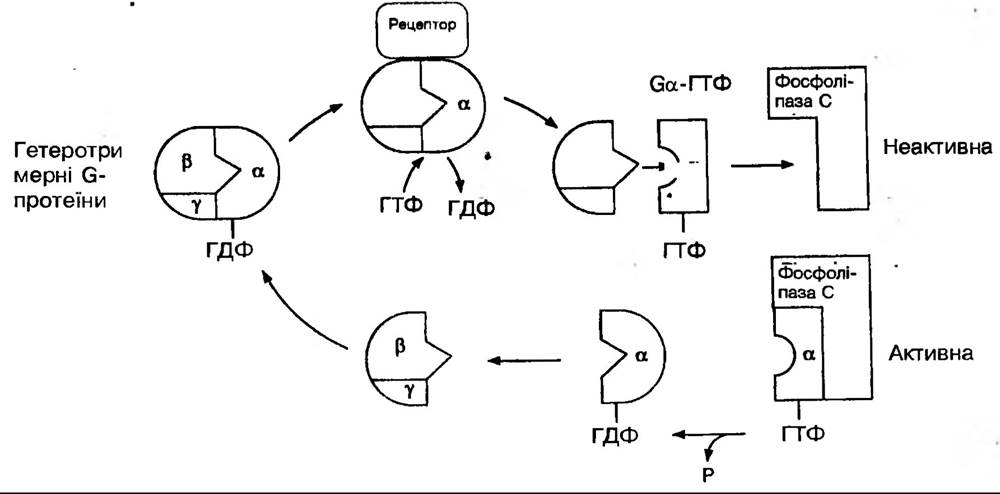
Fig. 169. Schematic representation of G-protein functioning
Interestingly, the α-subunit remains active until GTP Hydrolysis is complete, whereas the (β/γ) dimer exhibits activity until it reassociates with the inactivated α-subunit. They are believed to transmit signals from seven-transmembrane receptors to specific cellular effector systems, such as cyclic adenosine monophosphate (cAMP) or inositol trisphosphate-generating systems. The adenylate cyclase system—which includes 3',5'-AMP and cAMP-dependent protein kinases whose Regulatory Subunits are cAMP-binding proteins—is well known as a universal mechanism for transmitting external signals and executing them at THE MOLECULAR LEVEL in eukaryotes.
Small G-proteins are monomers with a molecular mass ranging from 20 to 30 kDa. They are also capable of binding GTP upon activation and transitioning to an inactive form during GTP hydrolysis.
Three subclasses of small G-proteins have been identified, possessing diverse regulatory functions ranging from protein and vesicle transport to the Regulation of the Cell Cycle, cell growth, differentiation, and the Organization of cytoskeletal microfilament structures.
Practically all Membrane Functions—barrier, transport, energetic, osmotic, structural, biosynthetic, electrical, and receptor—play a specific role in regulatory processes. Moreover, The system of membrane chemo-, photo-, and mechanoreceptors is of paramount importance, allowing the cell to accurately assess quantitative and qualitative Changes in the internal and external environment and respond accordingly.
Last update: 07/08/2026
Editorial and Educational Adaptation: This material has been compiled based on the primary/original source text. The project team performed an editorial review, corrected technical inaccuracies, structured sections, and adapted the content for an educational format.
What was processed:
- elimination of formatting defects (OCR errors, structural breaks, corrupted characters);
- editorial organization of content;
- standardization of terminology in accordance with academic sources;
- verification of factual statements against the original source text.
All mentions of the author, publication year, and origin of the primary text have been preserved in accordance with the source.