Biochemistry: The Chemical Reactions of Living Cells, Volume 2 - D. Metzler 1980
Coenzymes: Specialized Natural Reagents
Lipoic Acid and Oxidative Decarboxylation of α-Keto Acids
Enzymatic Function
The oxidative decarboxylation of α-keto acids involves the Cleavage of a keto acid to yield CO2 and the attachment of the remaining acyl group to CoA:
Class="center">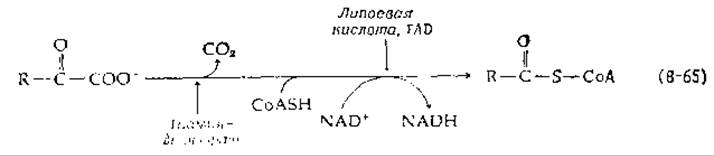
NAD+ acts as an oxidizing agent in this reaction. The reaction is catalyzed by a multienzyme complex with a Molecular Weight of ~1∙106–9∙106, depending on the biological source and the type of substrate [137–139]. Distinct keto acid dehydrogenase systems are known for pyruvic acid, α-ketoglutaric acid, and branched-chain α-keto acids derived metabolically from leucine, isoleucine, and valine. Pyruvate dehydrogenase and α-ketoglutarate dehydrogenase from E. coli have been studied in the most detail. In both cases, the complex can be dissociated into three components. One of these is a decarboxylase (also referred to as a dehydrogenase), which utilizes Thiamine diphosphate as a dissociable cofactor. The second component is the flavoprotein dihydrolipoyl dehydrogenase, and the third is a Lipoic Acid-containing core enzyme.
Electron Cell/15.html">Microscopy reveals that this enzyme exhibits a striking octahedral Symmetry, which has been confirmed by X-Ray Diffraction Analysis. The dihydrolipoyl transacetylase core enzyme from pyruvate dehydrogenase has a molecular weight of ~1.7∙106 and consists of 24 apparently identical subunits, each with a molecular weight of 70,000. Each subunit contains a bound lipoyl residue [138, 139]. The Structure of this enzyme is shown schematically in Fig. 8-17. Associated with the core are approximately 12 decarboxylase-dehydrogenase dimer subunits (molecular weight 192,000) and 6 molecules of a dimeric flavoprotein (molecular weight 112,000). Apparently, the 12 decarboxylase-dehydrogenase dimers are symmetrically distributed along the twelve edges of the transacetylase cube, whereas the 6 flavoprotein dimers occupy the six faces of the cube. Presumably, the active sites of all subunits are closely apposed at the subunit contact regions, where The sequence of catalytic reactions outlined in Fig. 8-18 can take place.
The unique function of lipoic acid is to oxidize the thiamine-bound "active aldehyde" in such a manner that, upon breakdown of the thiamine complex, the acyl group generated by the Oxidative Decarboxylation of the keto acid becomes attached to dihydrolipoic acid. Since lipoic acid is known to be linked to the core enzyme subunits, it is evident that, acting via a 1.5 nm-long "arm," the lipoic acid can reach the thiamine diphosphate Active Site in one of the decarboxylase subunits. Having acquired the acyl group, it swings back to the core enzyme active site associated with CoA. The acyl group is then transferred to CoA to form dihydrolipoic acid, which subsequently swings to a third subunit containing FAD and a disulfide group ready to reoxidize it to lipoic acid.
The reduced flavin-disulfide enzyme is then reoxidized by NAD+ (Fig. 8-18).
It has been suggested that an alternative mechanism to the one shown in Fig. 8-18 may operate. Ferricyanide, which can replace NAD+ as an oxidant in the pyruvate dehydrogenase system, is also capable of nonenzymatically oxidizing the thiamine-bound active aldehyde to 2'-acetylthiamine:
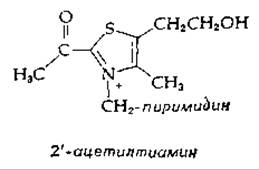

FIG. 8-17. Schematic arrangement of the 24 subunits in the transsuccinylase core of E. coli α-ketoglutarate dehydrogenase. To achieve the observed cubic symmetry, the core subunits must be grouped as trimers at the corners of the cube to form a structure possessing three fourfold axes of rotational symmetry, four threefold axes, and six twofold axes (4:3:2 symmetry). However (see text), the symmetry is imperfect: only half of the subunits contain bound lipoic acid, and there are only six decarboxylase dimers. In the case of E. coli pyruvate dehydrogenase, each transacetylase subunit contains lipoic acid, and the complex incorporates 12 decarboxylase dimers.
The acetyl group of this compound possesses a high group-transfer potential. Thus, it remains a possibility that lipoic acid first oxidizes the active aldehyde to a thiamine-bound acyl derivative, and subsequently, in a second step, accepts the acyl group via a nucleophilic displacement reaction. However, this mechanism fails to account for the unique role of lipoic acid in oxidative decarboxylation.

FIG. 8-18. Sequence of Reactions Catalyzed by α-keto acid dehydrogenases. Substrate and product are enclosed in boxes, and The pathway of the oxidized keto acid is indicated by bold arrows. The swingable "HEAD" of lipoic acid is shown relative to its point of attachment to the core subunit.
The activity of the pyruvate dehydrogenase complex in many mammalian Tissues is partially regulated by a phosphorylation-dephosphorylation mechanism [138, 139a]. Phosphorylation of the decarboxylase (dehydrogenase) subunit by an ATP-dependent kinase results in The formation of an inactive phosphoenzyme. A specific phosphatase reactivates the dehydrogenase (Fig. 6-15).
In addition to the lipoic acid-dependent pyruvate dehydrogenase, E. coli Cells contain pyruvate oxidase, a soluble flavoprotein that acts in concert with a membrane-bound electron transport system to convert pyruvate into acetate and CO2. The Mechanism of this process remains unclear [138b].
Last update: 06/08/2026
Editorial and Educational Adaptation: This material has been compiled based on the primary/original source text. The project team performed an editorial review, corrected technical inaccuracies, structured sections, and adapted the content for an educational format.
What was processed:
- elimination of formatting defects (OCR errors, structural breaks, corrupted characters);
- editorial organization of content;
- standardization of terminology in accordance with academic sources;
- verification of factual statements against the original source text.
All mentions of the author, publication year, and origin of the primary text have been preserved in accordance with the source.