ECOLOGICAL BIOCHEMISTRY - Tutorial - V. M. Isaenko 2005
Chapter 4. ECOLOGICAL AND BIOCHEMICAL INTERACTIONS OF PLANTS AND ANIMALS
4.4. Chemosterilants
Cannabinoids. These substances are produced by hemp and are present in marijuana and hashish (a mixture of Water-insoluble resinous components of hemp). Their composition includes: ∆9-tetrahydrocannabinol, cannabinol, and cannabidiol (Fig. 4.13). The first of these, ∆9-tetrahydrocannabinol, is the most psychomimetically active component of hemp plant preparations, and a mixture of these substances, as shown in experiments on mice, decreases mammalian fertility and increases the frequency of Chromosomal aberrations in them.
Class="center">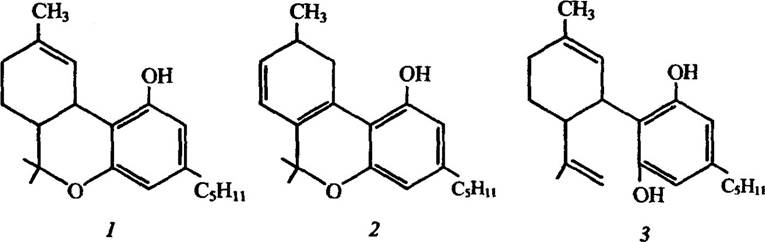
Fig. 4.13. Structure of cannabinoids from hemp:
1 — ∆9-tetrahydrocannabinol; 2 — cannabinol; 3 — cannabidiol
At THE CELLULAR LEVEL, cannabinoids alter the permeability of Introduction/36.html">Biological Membranes, inhibiting the synthesis of cAMP and Prostaglandins in the Ovaries, etc.
Sterilants. The polyphenol gossypol (see Fig. 4.2) from cottonseed induces contraceptive properties when introduced into the Organism of male mammals — it disrupts Spermatogenesis and causes Changes in the ultrastructure and Morphology of spermatozoa. Spermatogenesis disorders are also caused by substances from the chicory ROOT Cichorium intybus.
Indolizidine Alkaloids, particularly swainsonine and slaframine from Astragalus and Oxytropis spp., cause not only Nervous system disorders in sheep, but also abortions and offspring defects.
Conversely, certain plant substances are capable of stimulating mammalian fertility. These include, for example, the phytohormone gibberellic acid and 6-methoxybenzoxazolin.
Examples of insect chemosterilants include alkaloids from the leaves of Catharanthus roseus, which sterilize the bug Dysdercus cingulatus. The evaporation of sweet flag oil Acorus calamus, which contains β-asarone (Fig. 4.14), causes sterility in males of the housefly Musca domestica, females of the weevil Callosobruchus chinensis, beetles of Trogoderma granarium, and the bug Dysdercus koenigii. Female houseflies become sterile when consuming Sterculia foetida oil, which contains sterculic acid (Fig. 4.14).
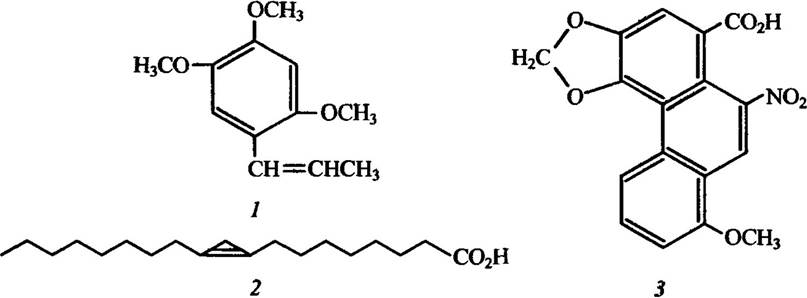
Fig. 4.14. Structure of Plant chemosterilants:
1 — β-asarone; 2 — sterculic acid; 3 — aristolochic acid
There are plant substances that inhibit egg-laying by insects — oviposition deterrents. Among them, contact-acting substances and volatile distal ones acting at a distance in the form of vapors are distinguished. Substances of the second type, whose use is promising in plant cultivation, include carvacrol, citral, citronellol, farnesol, peranyl, eucalyptus oil, etc.
Mutagens, carcinogens, and substances with opposite properties. Among the substances produced by plants, there are those with mutagenic properties. The most common among them are Flavonoids, such as quercetin, kaempferol, isorhamnetin, etc. A number of substances are carcinogenic (Table 4.6, Fig. 4.15).
Table 4.6
SOME PLANT SUBSTANCES WITH CARCINOGENIC PROPERTIES
(after Telitchenko, Ostroumov, 1990, modified)
Substance |
Producer plant |
Pyrrolizidine alkaloids: retronecine, heliotrine, lasiocarpine, symphytine, monocrotaline, retrorsine, etc. |
Boraginaceae, Compositae, Leguminosae |
Cycads Alkenylbenzene derivatives: safrole, β-asarone |
Cycas revoluta, Sassafras albidum, Acorus calamus |
Estragole |
Artemisia dracunculus |
Nitrosamines: dimethylnitrosamine, N'-nitrosonornicotine, N-nitrosodiethanolamine |
Solanum incanum, Nicotiana tabacum |
Coumarin 8-Methoxypsoralen |
Dipteryx odorata, Rutaceae, Umbelliferae, Leguminosae |
Parasorbic acid |
Sorbus aucuparia |
Rotenone |
Derris, Tephrosia |
Sanguinarine |
Papaveraceae |
There are many other plant-derived substances possessing carcinogenic properties: for instance, the bracken fern Pteridium aquilinum produces aquilide A (Fig. 4.15), which accounts for nearly 50% of the mutagenic activity of this plant.
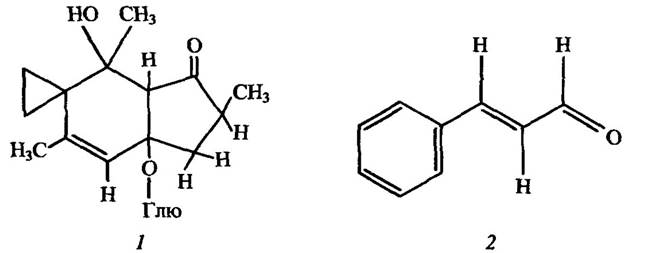
Fig. 4.15. Structure of:
1 — mutagen and carcinogen aquilide A from Pteridium aquilinum; 2 — antimutagen and anticarcinogen cinnamaldehyde from Cinnamomum cassia; Glu — glucose
Conversely, certain plant compounds exhibit anticarcinogenic (antitumor) properties. Notable plant alkaloids with such activity include colchamine from Colchicum speciosum and Colchicum autumnale, vinblastine and vincristine from Vinca sp., cinnamaldehyde from Cinnamomum cassia (Fig. 4.15), and many others.
Plant-derived anticarcinogenic substances include phenols, indoles, aromatic isothiocyanates, methylated flavones, Coumarins, sterols, ascorbic acid, tocopherols, carotenoids, and others. These are typically categorized into agents that prevent carcinogen formation (α-tocopherol, ascorbic, ferulic, gallic, and chlorogenic acids, etc.), blocking agents that prevent carcinogenic compounds from interacting with target molecules (such as antioxidants), and suppressive agents that inhibit tumor development in Tissues (benzyl isothiocyanate, protease inhibitors, etc.).
It is worth noting that in natural ecosystems, plants possess a complex, multi-component biochemical defense system against animals, involving toxin poisoning, deterrence, increased mortality, disruption of ontogenesis, and suppression of fertility. Meanwhile, certain animals have adapted to use specific plant substances as signals (such as feeding attractants and mating stimulants) or as a source of ecologically beneficial compounds (accumulating substances that are toxic to other predators). Another type of beneficial interaction between plants and animals is the attraction of animals (especially insects) for the pollination of flowering plants.
Last update: 06/08/2026
Editorial and Educational Adaptation: This material has been compiled based on the primary/original source text. The project team performed an editorial review, corrected technical inaccuracies, structured sections, and adapted the content for an educational format.
What was processed:
- elimination of formatting defects (OCR errors, structural breaks, corrupted characters);
- editorial organization of content;
- standardization of terminology in accordance with academic sources;
- verification of factual statements against the original source text.
All mentions of the author, publication year, and origin of the primary text have been preserved in accordance with the source.