BIOTECHNOLOGY - Inshyna N.M. - 2009
CHAPTER 5. INDUSTRIAL BIOTECHNOLOGY
Immobilized Enzymes
An important area of biotechnology is the production and application of immobilized Enzymes. Enzyme engineering focuses on the creation of immobilized enzymes. In 1916, J. Nelson and E. Griffin produced the first immobilized enzyme by adsorbing invertase onto charcoal and proved that the enzyme retained its catalytic activity. The term "immobilized enzyme" was introduced in 1971 to describe the restricted spatial movement of protein molecules.
The immobilization technique enhances enzyme stability. Two Main Methods of Enzyme Immobilization are distinguished:
- physical - adsorption onto Water-insoluble carriers (the enzyme is not bound to the carrier by covalent bonds);
- chemical - a covalent bond is formed between the enzyme and the carrier.
Using chemical bonds, enzymes are attached to carriers such as ion-exchange polymers, polyorganosiloxanes, porous Glass, and Polysaccharides. As a result of immobilization, enzymes become resistant to degradation and can be reused multiple times.
Compared to native enzymes, immobilized enzymes offer several advantages:
1) the possibility of enzyme reuse; the enzyme is easily separated from the reaction medium;
2) the enzymatic process can be carried out continuously, allowing control over the reaction rate and product yield;
3) The ability to alter enzyme properties (pH sensitivity, Specificity) through molecular modification;
4) the possibility of regulating the catalytic activity of immobilized enzymes by changing The properties of their carriers.
Organic compounds are most commonly used as carriers for immobilized enzymes and must meet the following requirements:
- high chemical and biological stability;
- high specific surface area with porosity;
- hydrophilicity;
- low cost.
The Classification of organic carriers for immobilized enzymes is shown in Fig. 5.3.
Class="center">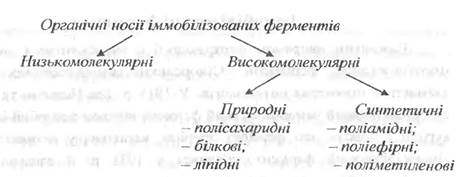
Fig. 5.3. Classification of organic carriers
Among natural high-molecular-weight carriers, polysaccharide and protein carriers are the most frequently used (Table 5.3).
Table 5.3
Comparative characteristics of polysaccharide and protein carriers
Type of carriers |
Advantages |
Disadvantages |
|
Polysaccharide |
Presence of highly reactive groups, hydrophilicity |
Susceptibility to microbial degradation, high cost |
Dextran (Sephadex), Agar, agarose, Cellulose, and their derivatives |
Protein |
Biodegradability, high capacity |
High immunogenicity (except for Collagen and fibrin) |
Keratin, collagen, fibrin, Myosin, albumin |
Among synthetic polymers, polymethyl-type and polyamide carriers are most frequently used. Entrapment of enzymes in polyacrylamide gel, which is resistant to chemical agents, is widely applied. Polymer Supports based on N-vinylpyrrolidone are biologically inert and are used to obtain immobilized enzymes capable of slow biodegradation within the body. A disadvantage of such carriers is their tendency to accumulate in The Human Body. Therefore, preference is given to natural polymers that undergo Enzymatic Hydrolysis. Pharmaceutical formulations most commonly incorporate polysaccharide polymers based on dextran.
Applications of Immobilized enzymes:
— organic synthesis;
— analysis (highly sensitive and utterly specific enzyme immunoassay methods rely on enzymatic action);
— energy conversion processes (photolysis of water);
— textile industry (bleaching and yarn Processing);
— food industry (immobilized enzymes are used to produce glucose-fructose syrups, glucose, malic and aspartic acids, L-Amino Acids, dietary lactose-free milk, and sugars from whey);
- medicine (enzyme immunoassay in clinical Diagnostics; targeted drug delivery; development of sustained-release medications with reduced toxicity and allergenicity);
- pharmaceutics (immobilized enzymes are utilized as topical pharmaceutical agents, as well as in various perfusion devices for the purification of biological fluids, such as the "artificial Kidney" utilizing urease);
immobilized enzymes can function as amplifiers of weak signals (the action of ultrasound, mechanical, or light signals on the carrier alters the catalytic activity of the enzyme-support system). This principle is employed to design mechano- and acoustic sensors.
Last update: 11/08/2026
Editorial and Educational Adaptation: This material has been compiled based on the primary/original source text. The project team performed an editorial review, corrected technical inaccuracies, structured sections, and adapted the content for an educational format.
What was processed:
- elimination of formatting defects (OCR errors, structural breaks, corrupted characters);
- editorial organization of content;
- standardization of terminology in accordance with academic sources;
- verification of factual statements against the original source text.
All mentions of the author, publication year, and origin of the primary text have been preserved in accordance with the source.