BIOTECHNOLOGY - V. H. Gerasymenko - 2006
Part II. Special Biotechnologies
Chapter 7. BIOTECHNOLOGY OF THE PRODUCTION AND APPLICATION OF IMMOBILIZED PREPARATIONS
7.8. CELL IMMOBILIZATION (ADHESION)
7.8.1. Main methods of cell immobilization
Methods for immobilizing microbial Cells can be broadly divided into three types: physical, mechanical, and chemical (Fig. 7.9), though their frequencies of use vary.
Physical methods. These include adsorption and aggregation.
Adsorption is one of the most Traditional Methods of Cell immobilization. Various organic and inorganic carriers—such as natural minerals (sand, clays, wood shavings, etc.) and synthetic Materials (ceramics, capron, polyurethane, etc.)—can be used as adsorbents (Supports). Recently, macroporous carriers have attracted particular attention. However, while offering A number of significant advantages (low cost, simplicity of immobilization, absence of diffusion limitations, and environmental friendliness), this approach has several drawbacks that restrict the application of macroporous carriers. The main one is the relatively weak adhesion of microorganisms.
Aggregation. This method involves binding cells together to form aggregates. It is rarely used in biotechnological processes.
Mechanical methods. Methods involving the entrapment of cells in various gels are the most widely used. Polyacrylamide gel, carrageenan, alginate gels, as well as photoreticulated and urethane polymers, are most frequently employed for this purpose. Cells entrapped in polyacrylamide, calcium alginate, and carrageenan gels can retain their viability and, in the presence of a nutrient medium, proliferate in the near-surface layers of the gel.
Class="center">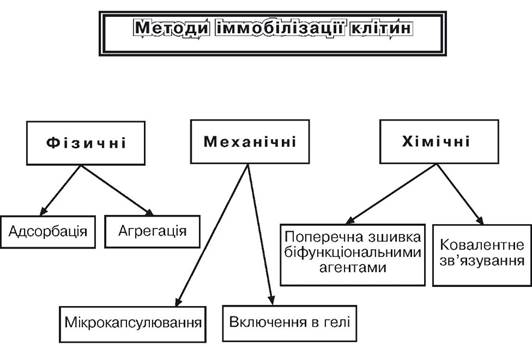
Fig. 7.9. Main Methods of cell immobilization
(N. G. Rybalsky, I. G. Chaplina, 1990)
Depending on The properties of the carrier and The Nature of the process, supports are used in the form of granules, fibers, or membranes.
Microencapsulation is a traditional immobilization method that has recently been gaining widespread use for cell immobilization.
Chemical method. This is based on The formation of covalent bonds with an activated carrier, or on the cross-linking of cells using active amino acid groups and Other Compounds in The Cell wall with bifunctional Reagents, such as glutaraldehyde.
Chemical methods of cell immobilization have not become as widespread as those for immobilizing Enzymes and other BIOLOGICALLY ACTIVE SUBSTANCES. This is primarily due to
the Toxic Effect of various bifunctional reagents on cells, although various methods have recently emerged to mitigate this toxicity, thereby increasing cell viability.
In recent years, an entirely novel approach to conducting enzymatic reactions with both free and immobilized cells has been proposed: two-phase aqueous-organic systems. In this setup, the cells are localized in the aqueous phase and are less exposed to the Water-immiscible organic solvent.
Japanese researchers have developed a method for immobilizing cells in photosensitive polymers. Cells immobilized in this manner are particularly well-suited for use in two-phase systems and The conversion of Steroid compounds. However, this method is unsuitable for living cells, though it yields excellent results for single-stage reactions.
Last update: 11/08/2026
Editorial and Educational Adaptation: This material has been compiled based on the primary/original source text. The project team performed an editorial review, corrected technical inaccuracies, structured sections, and adapted the content for an educational format.
What was processed:
- elimination of formatting defects (OCR errors, structural breaks, corrupted characters);
- editorial organization of content;
- standardization of terminology in accordance with academic sources;
- verification of factual statements against the original source text.
All mentions of the author, publication year, and origin of the primary text have been preserved in accordance with the source.